Berber rugs are deeply rooted in the cultural history of the Middle Atlas Mountains in Morocco. For centuries, these textiles have been woven by tribal communities, serving as essential, functional items that protected families from cold mountain nights, rather than purely decorative objects.
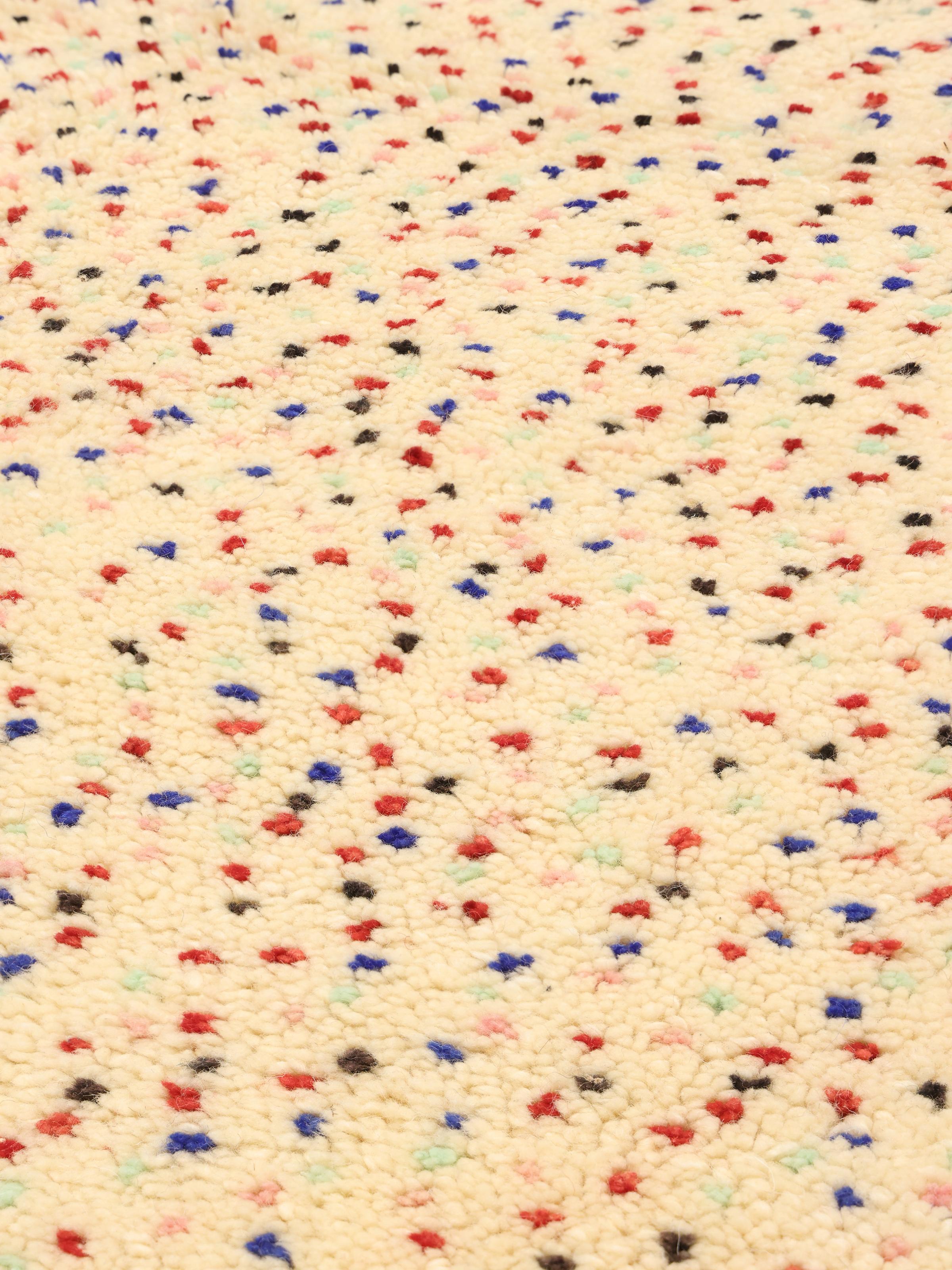
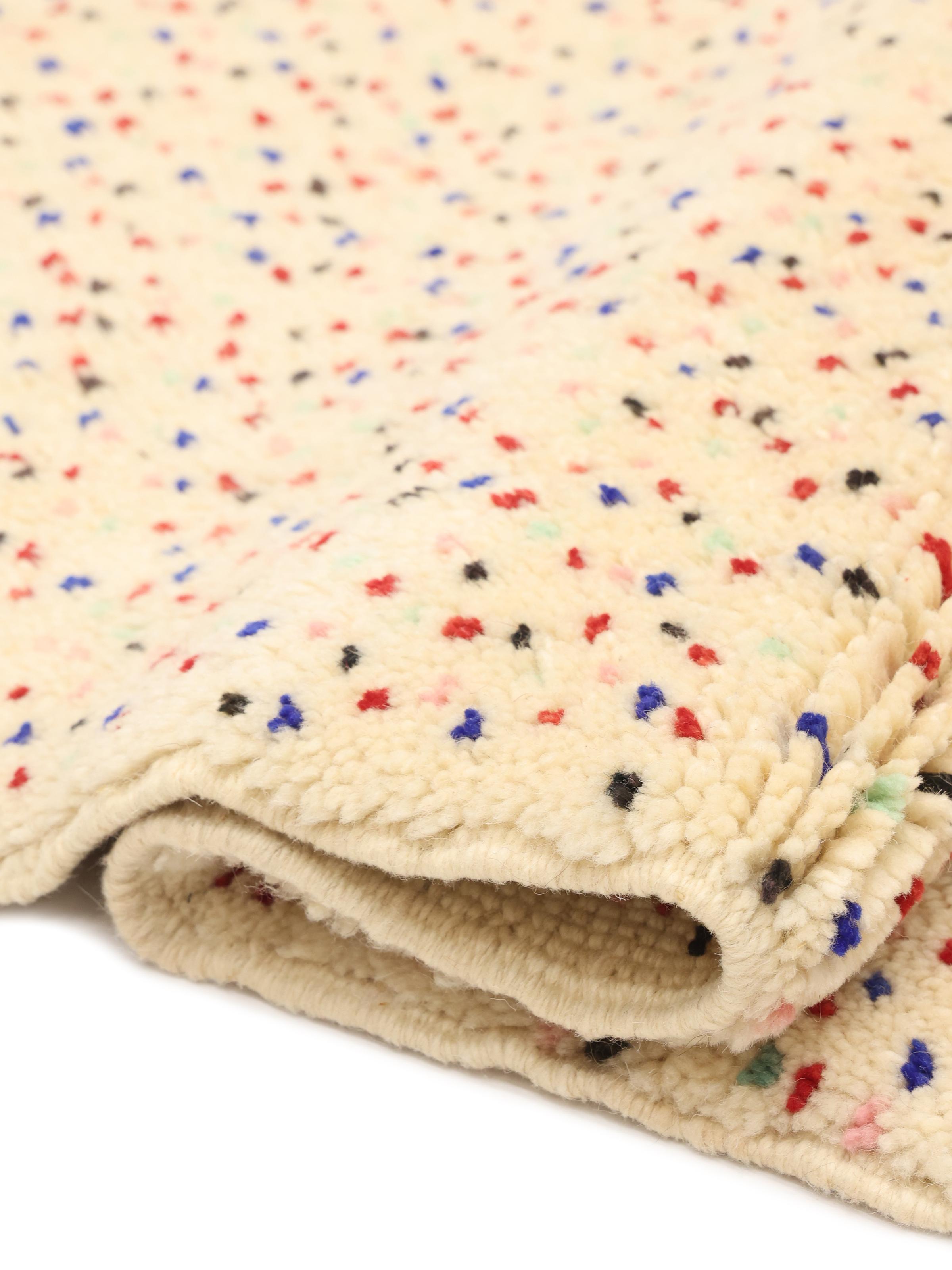
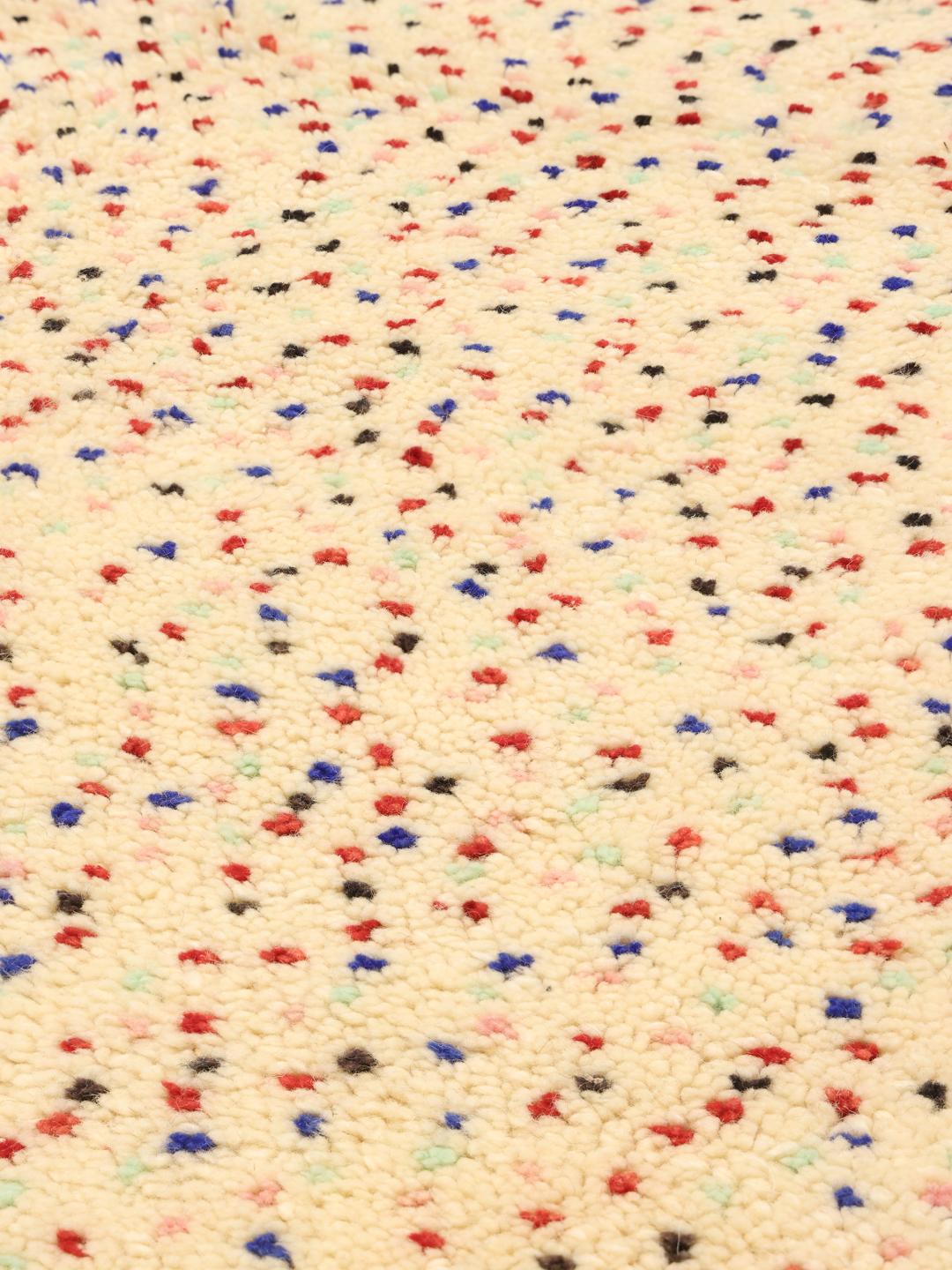
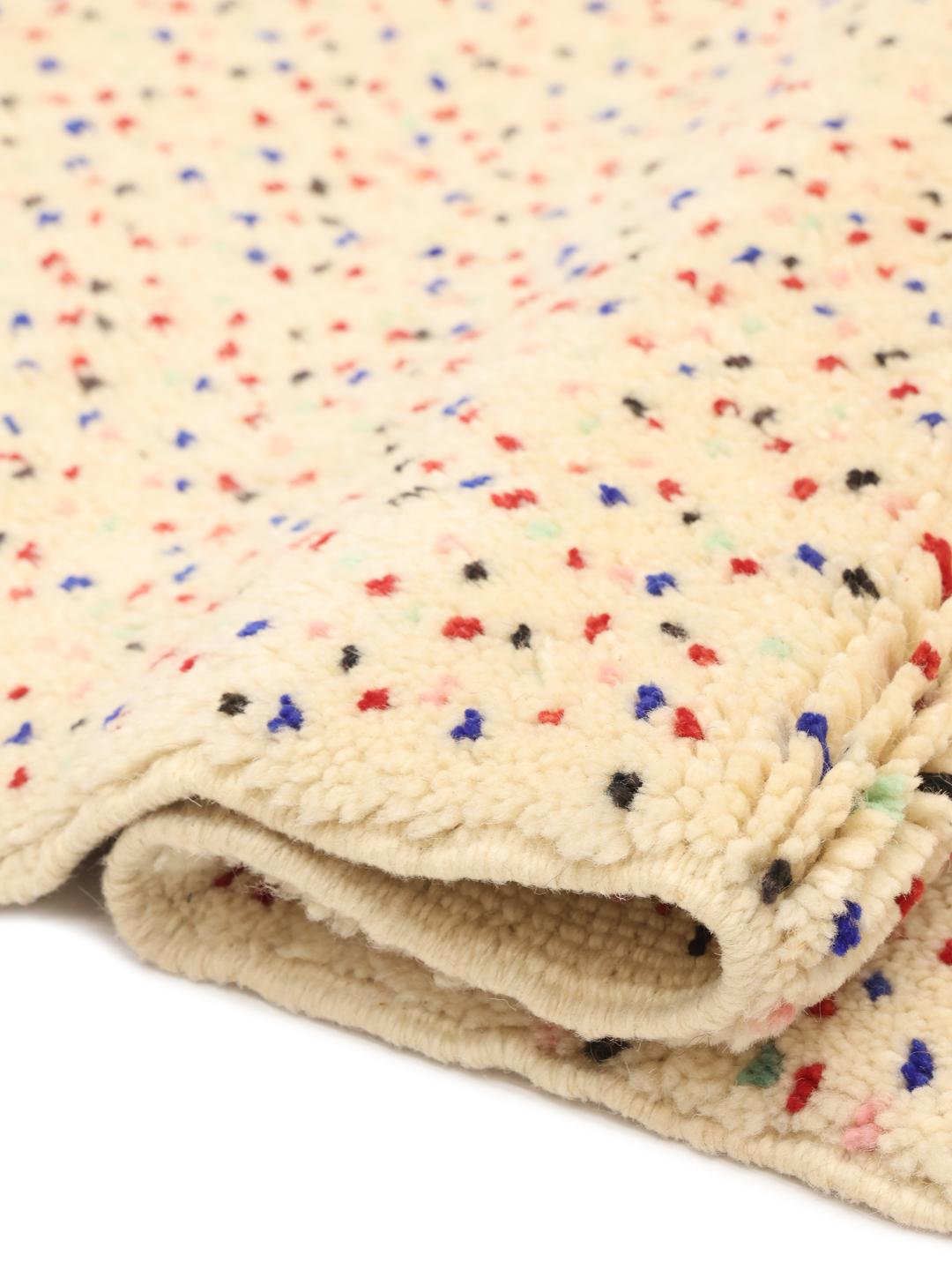
The term Beni Ourain refers to a confederation of tribes who have preserved ancient weaving techniques through generations. These methods involve the use of high-quality, long-staple wool, which is hand-spun to create a pile that is exceptionally soft, durable, and naturally resistant to daily wear.
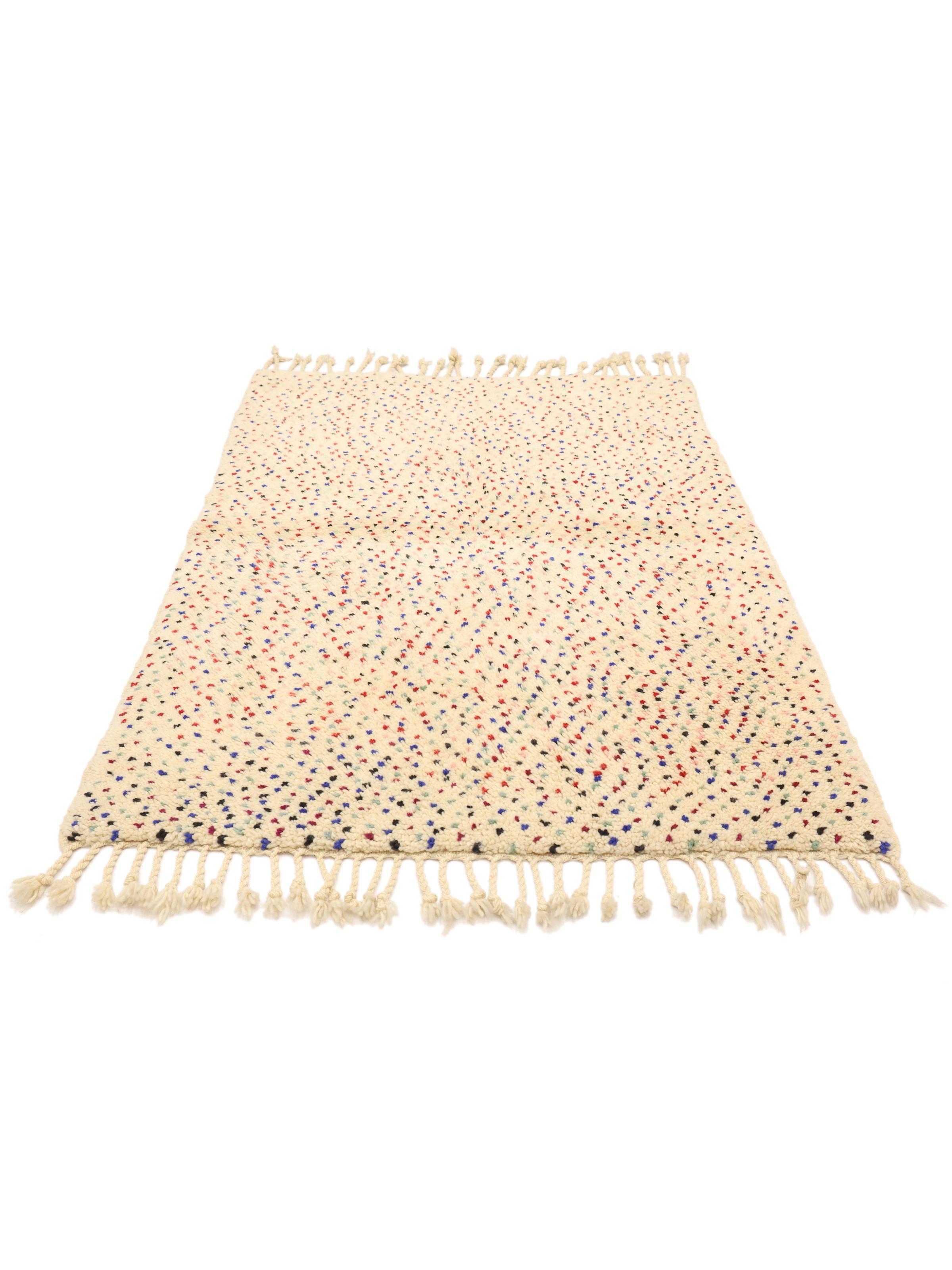
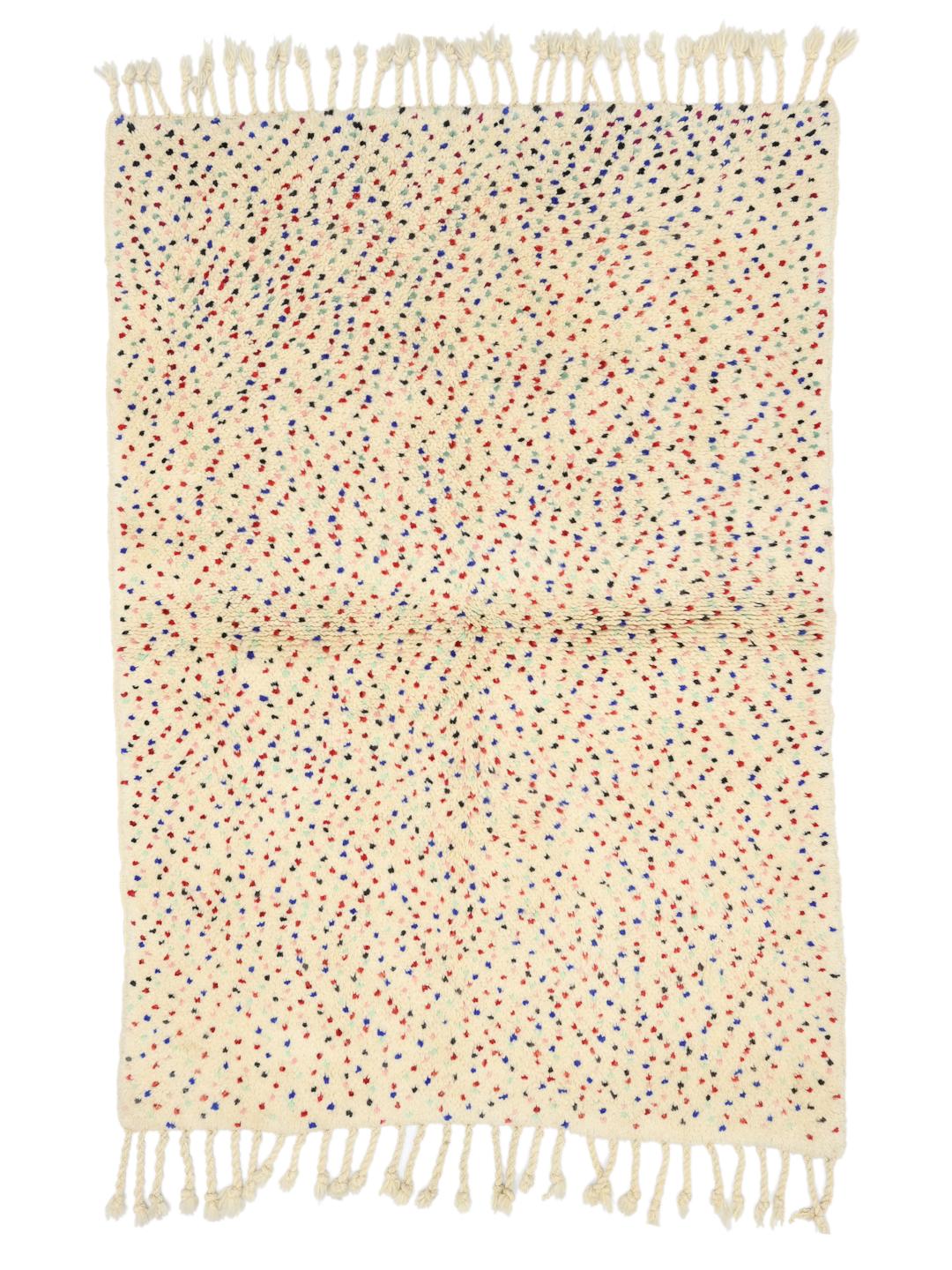
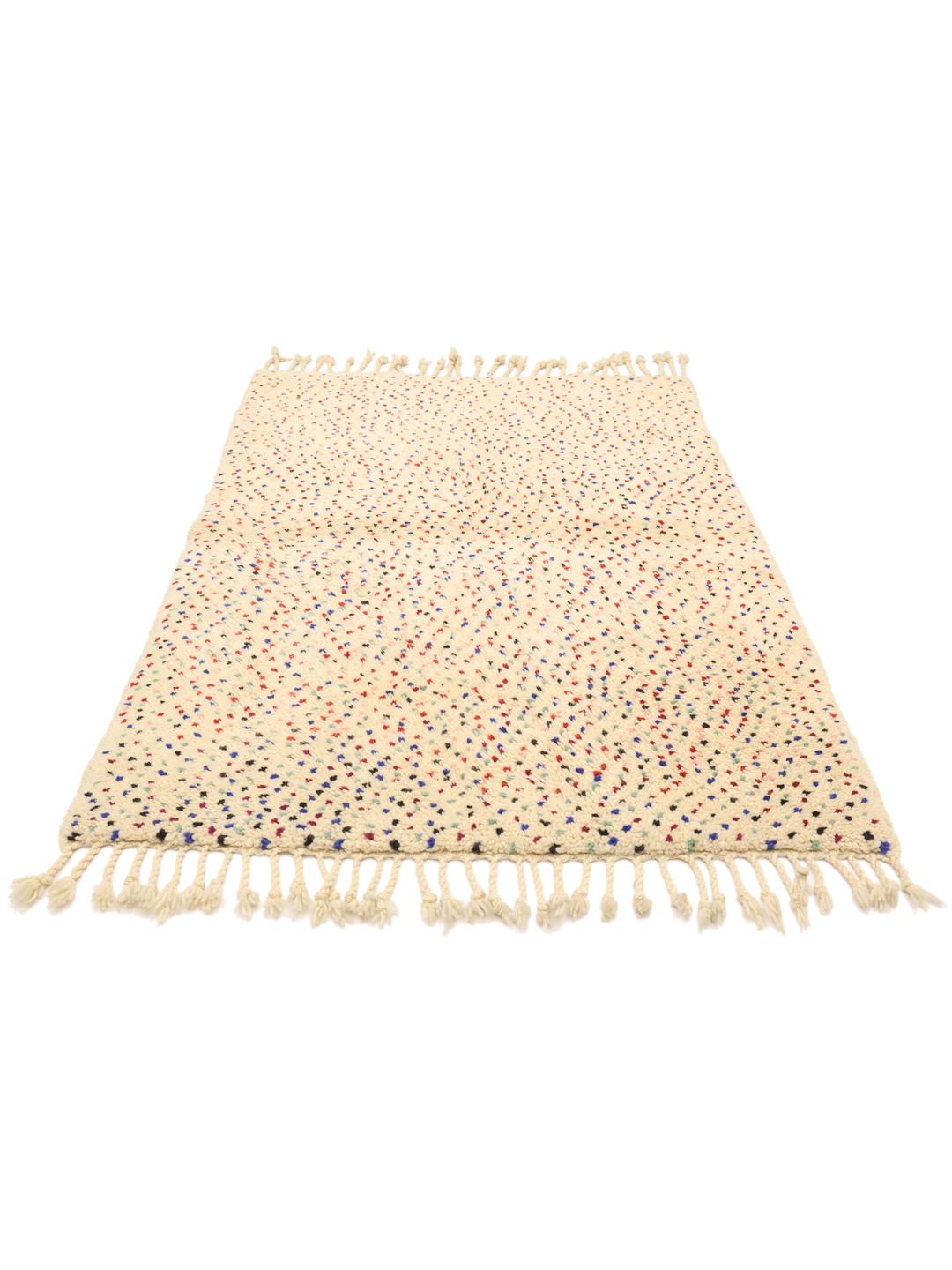
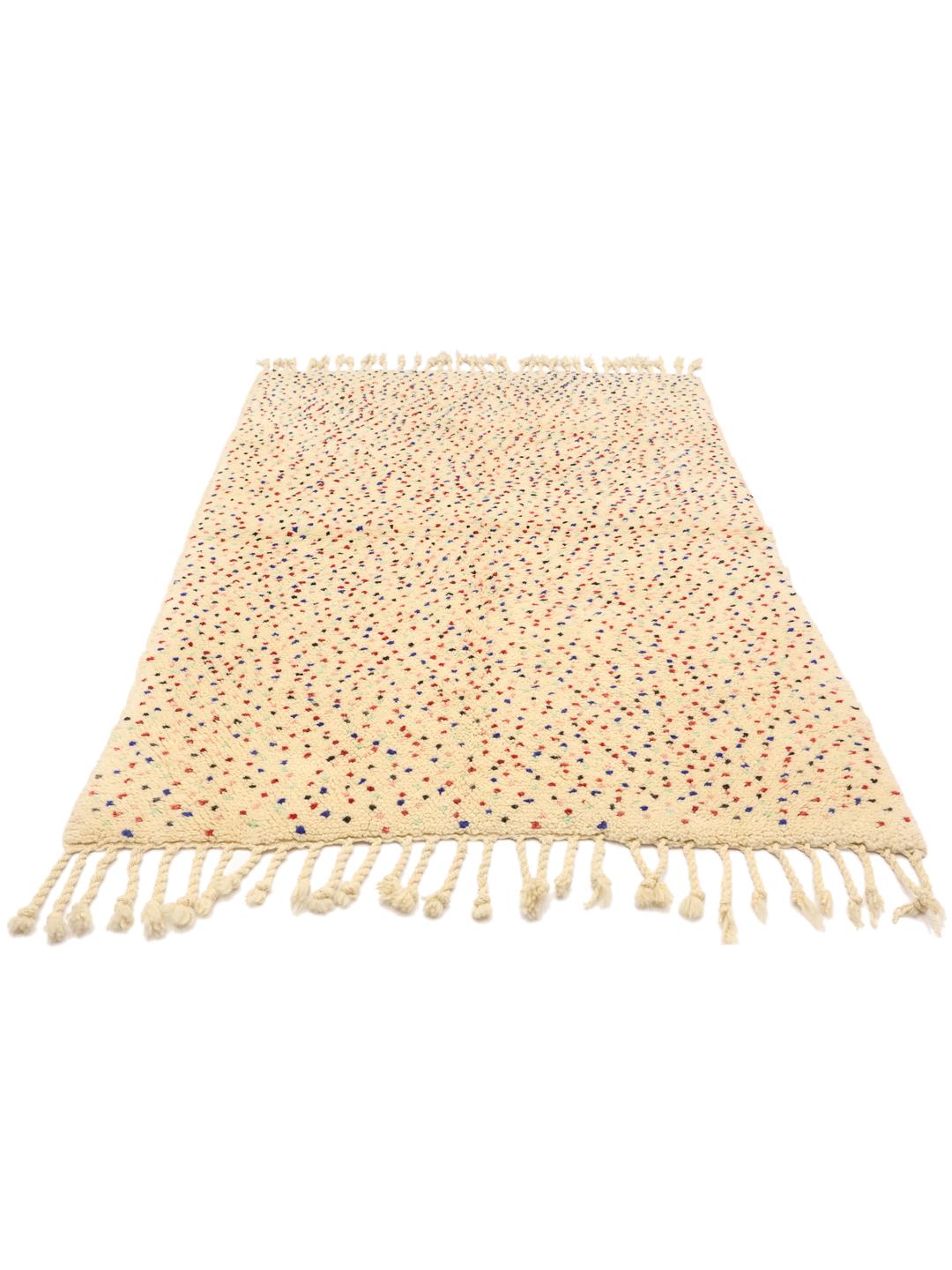
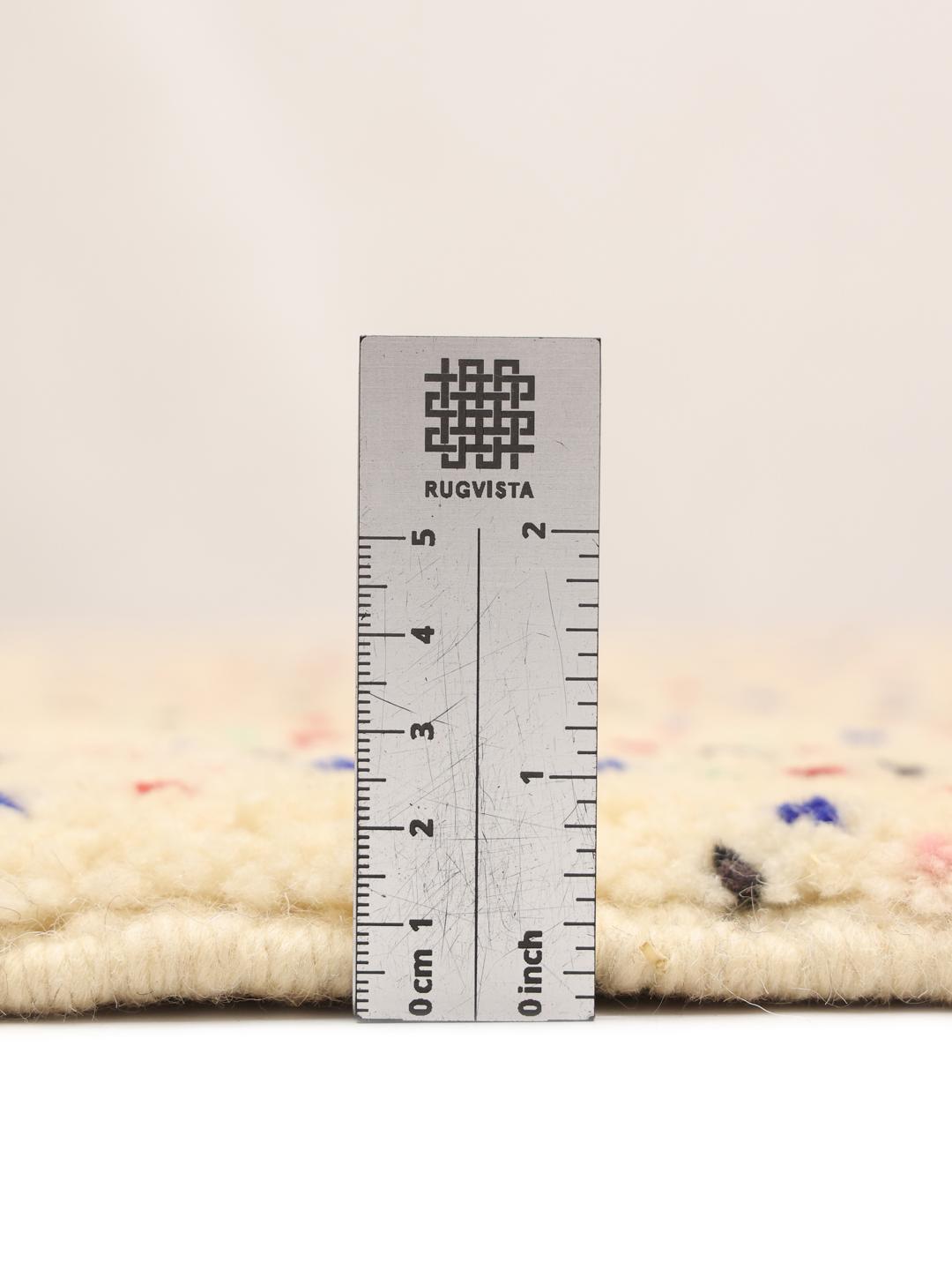
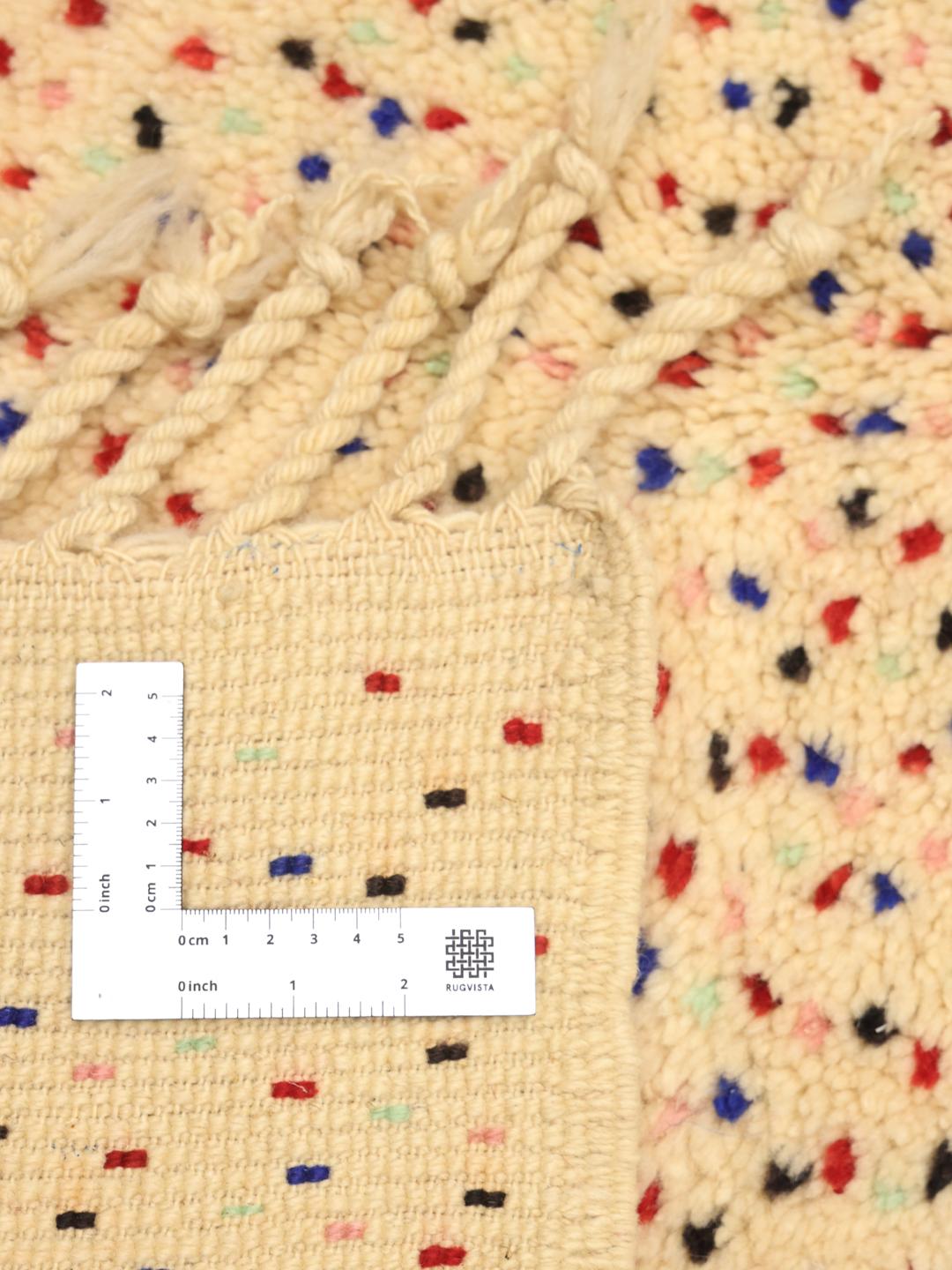
Visually, these rugs are defined by their honest, un-dyed wool backgrounds and bold, dark contrasts. While many historical examples feature stark geometric lines, contemporary variations often incorporate playful, artistic expressions like the colourful accents seen here, demonstrating the ongoing evolution of this craft.
Owning a piece from this tradition is an opportunity to connect with a storied lineage of craftsmanship. These rugs are highly valued by collectors and design enthusiasts alike, not only for their aesthetic appeal but for the human story and cultural heritage woven into every single knot.