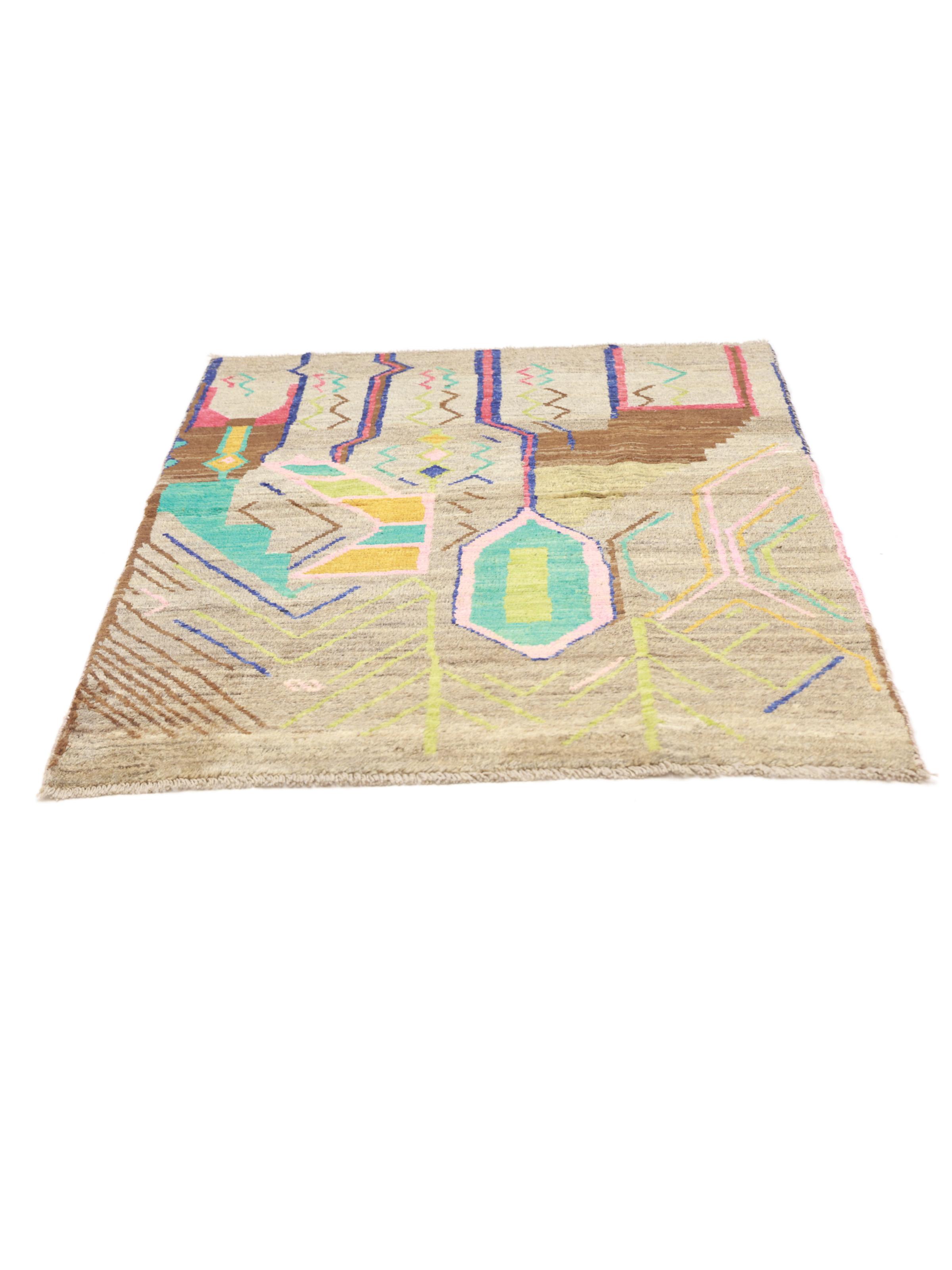
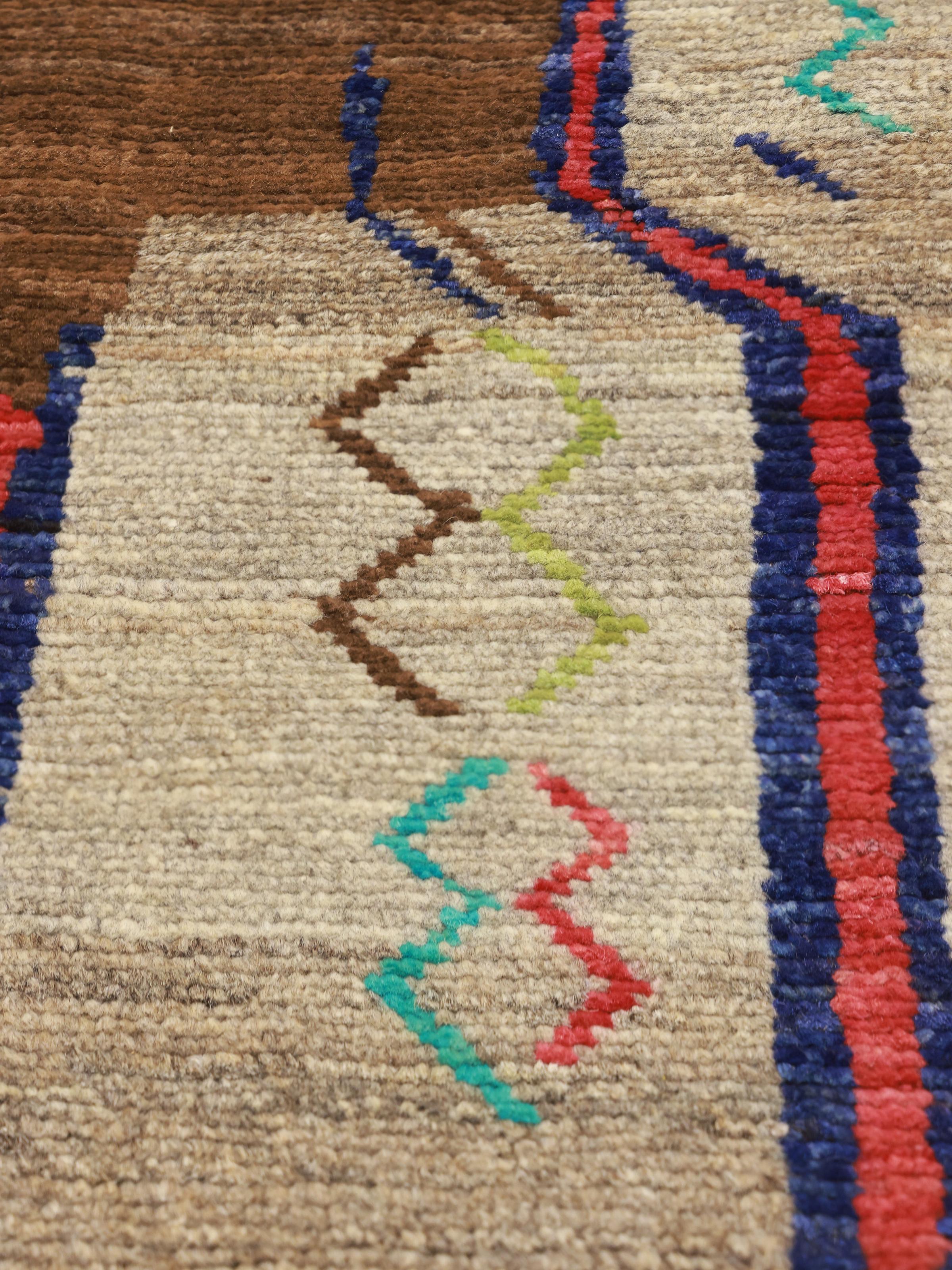
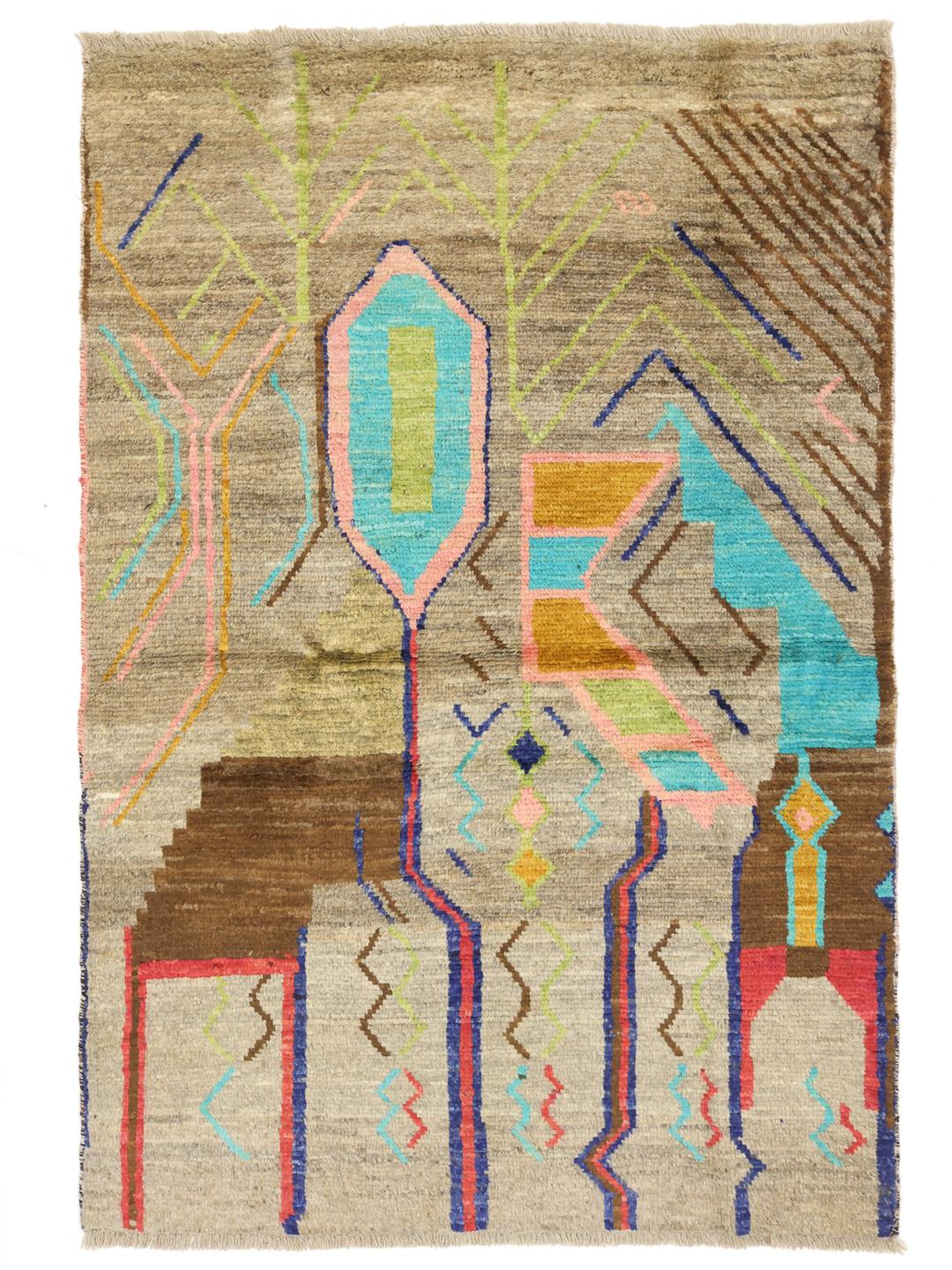
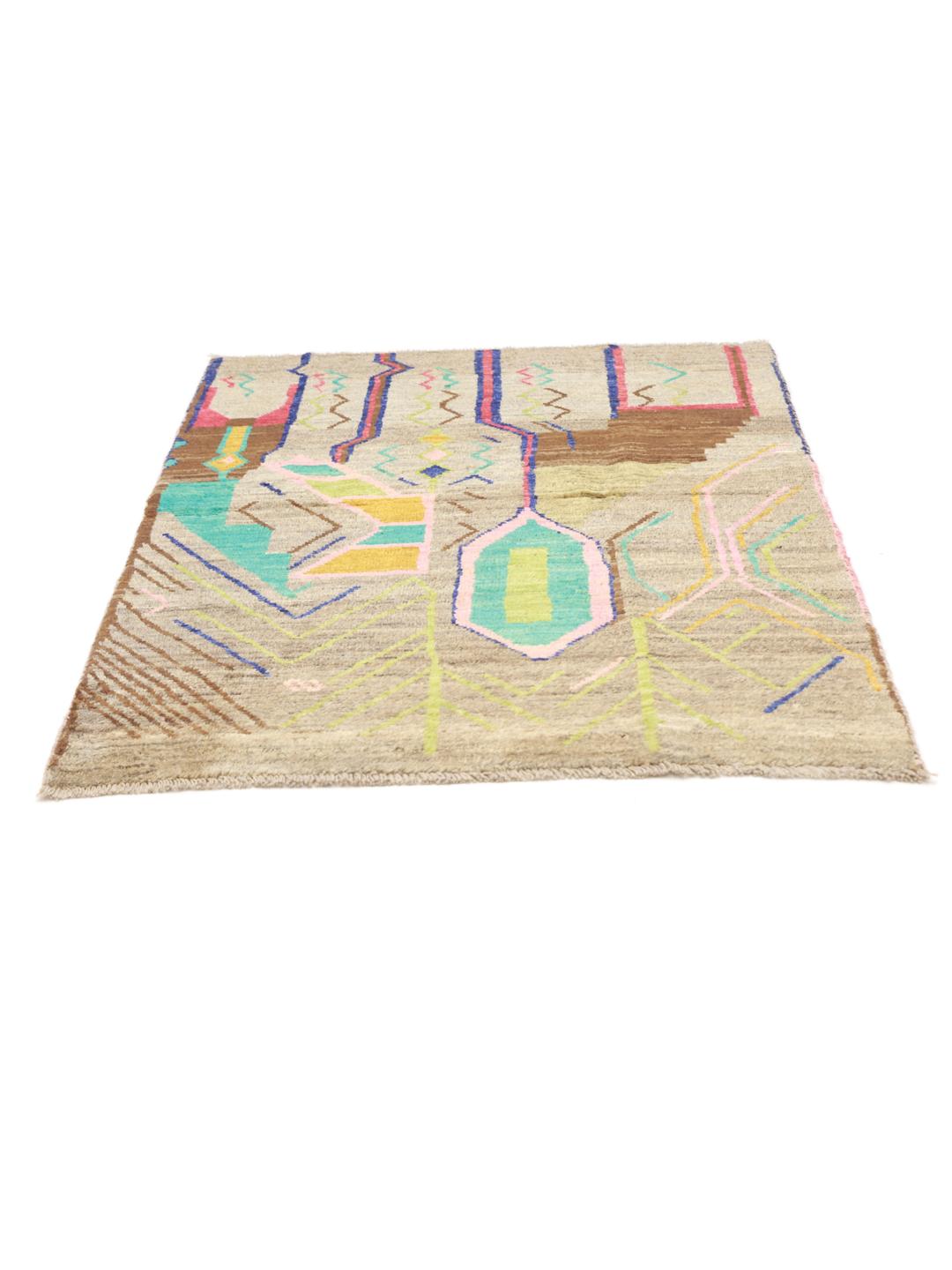
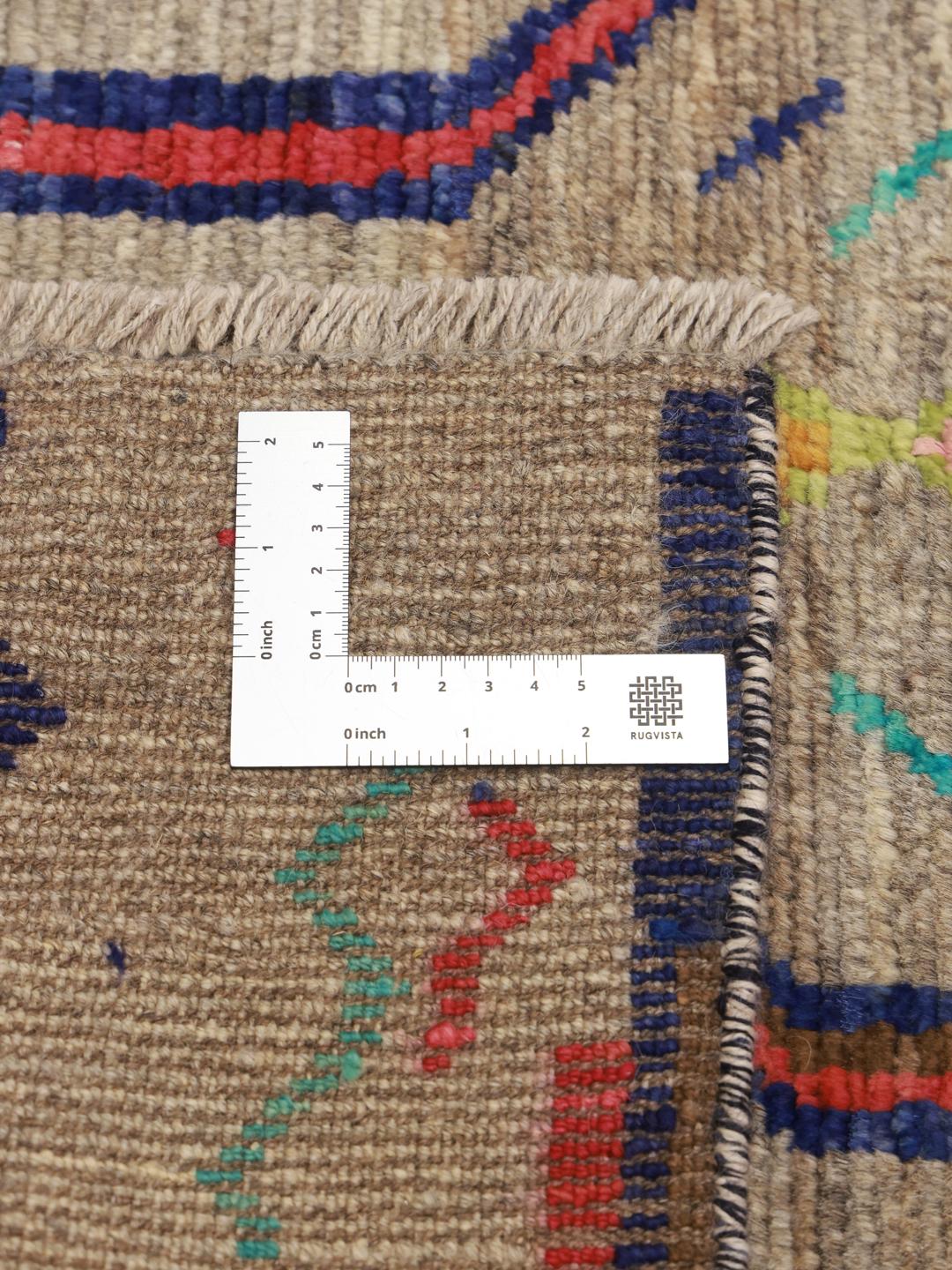
The Berber tradition, while historically associated with North Africa, has seen its design philosophy and weaving techniques travel and adapt across various regions, including Afghanistan. These rugs are celebrated for their organic, often spontaneous designs that move away from the rigid symmetry found in other carpet traditions.
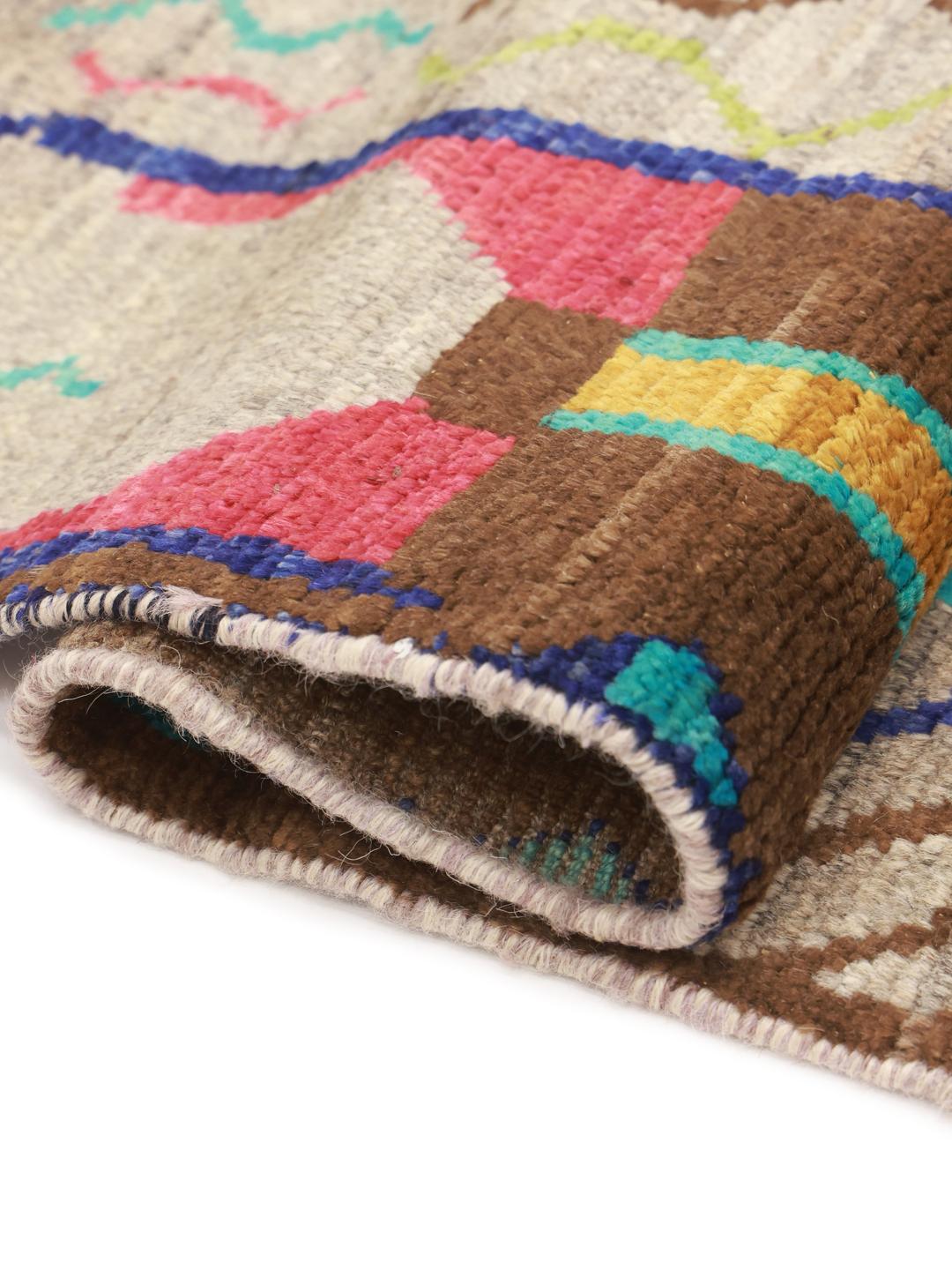
The term Berber in this context refers to a style of weaving that prioritises the natural quality of the Wool and a more relaxed, creative approach to pattern-making. This results in rugs that feel less like formal decor and more like an extension of the weaver's own artistic voice and environment.
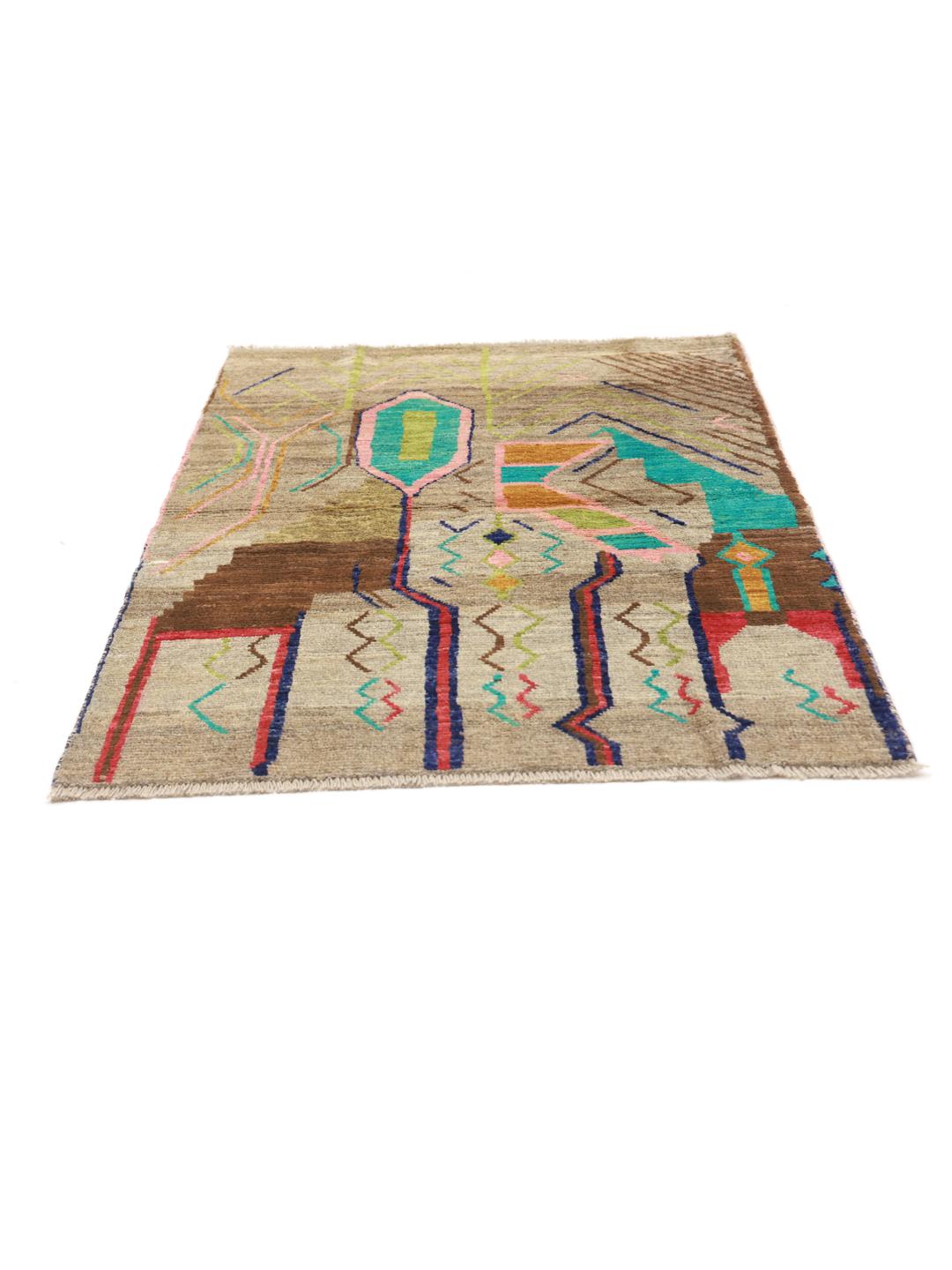
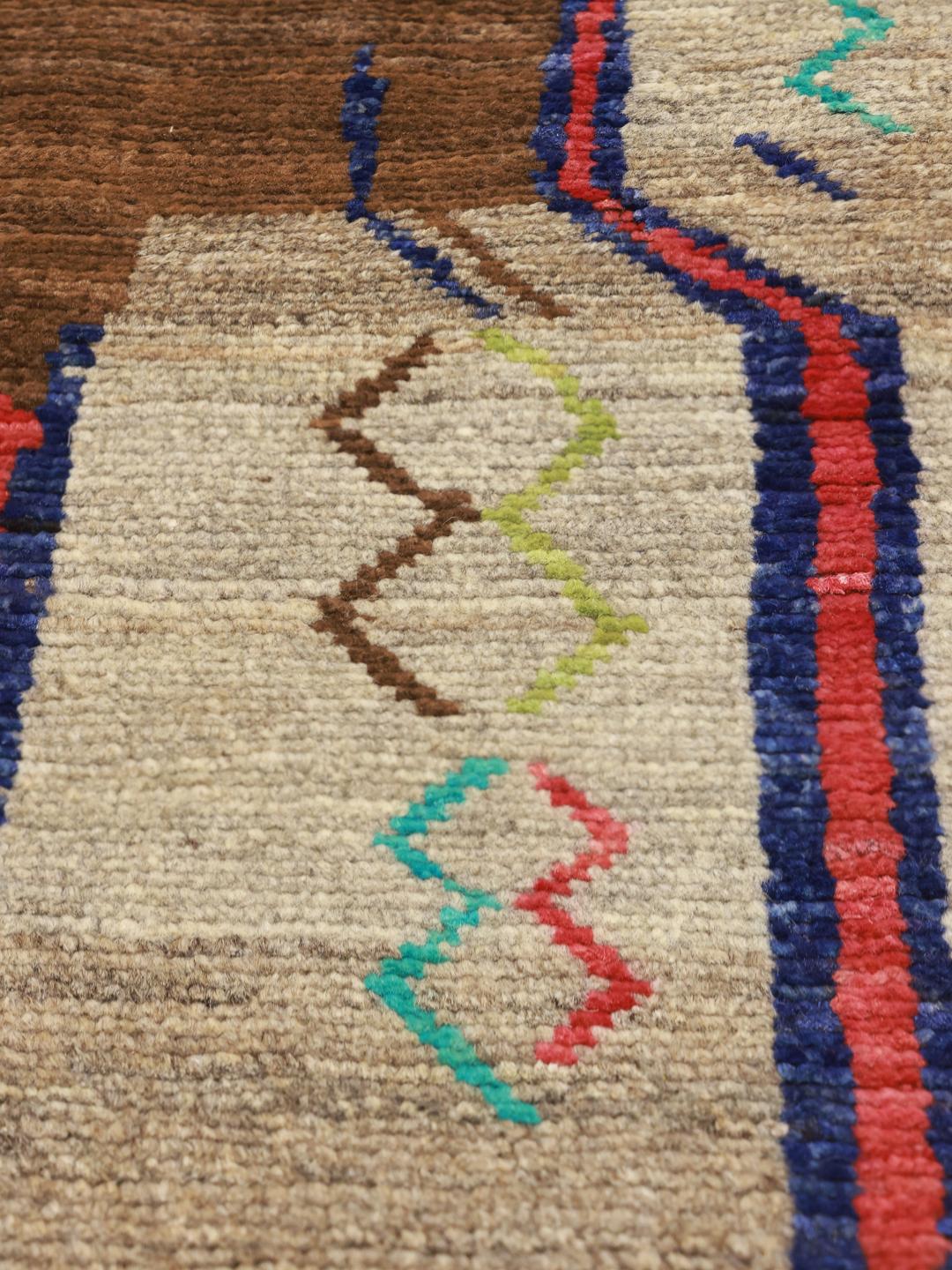
Signature design elements often include tribal-inspired geometric motifs, irregular lines, and a playful use of colour that contrasts with a more neutral, natural-toned field. In this specific piece, the use of bright, contrasting hues against a muted background highlights the artistic freedom that defines this category of rug.
These rugs are highly valued by collectors and homeowners alike for their ability to bridge the gap between traditional craft and contemporary design. Owning such a rug is an investment in cultural heritage, representing a tangible connection to a long-standing practice of hand-weaving that values soul and personality over mass production.