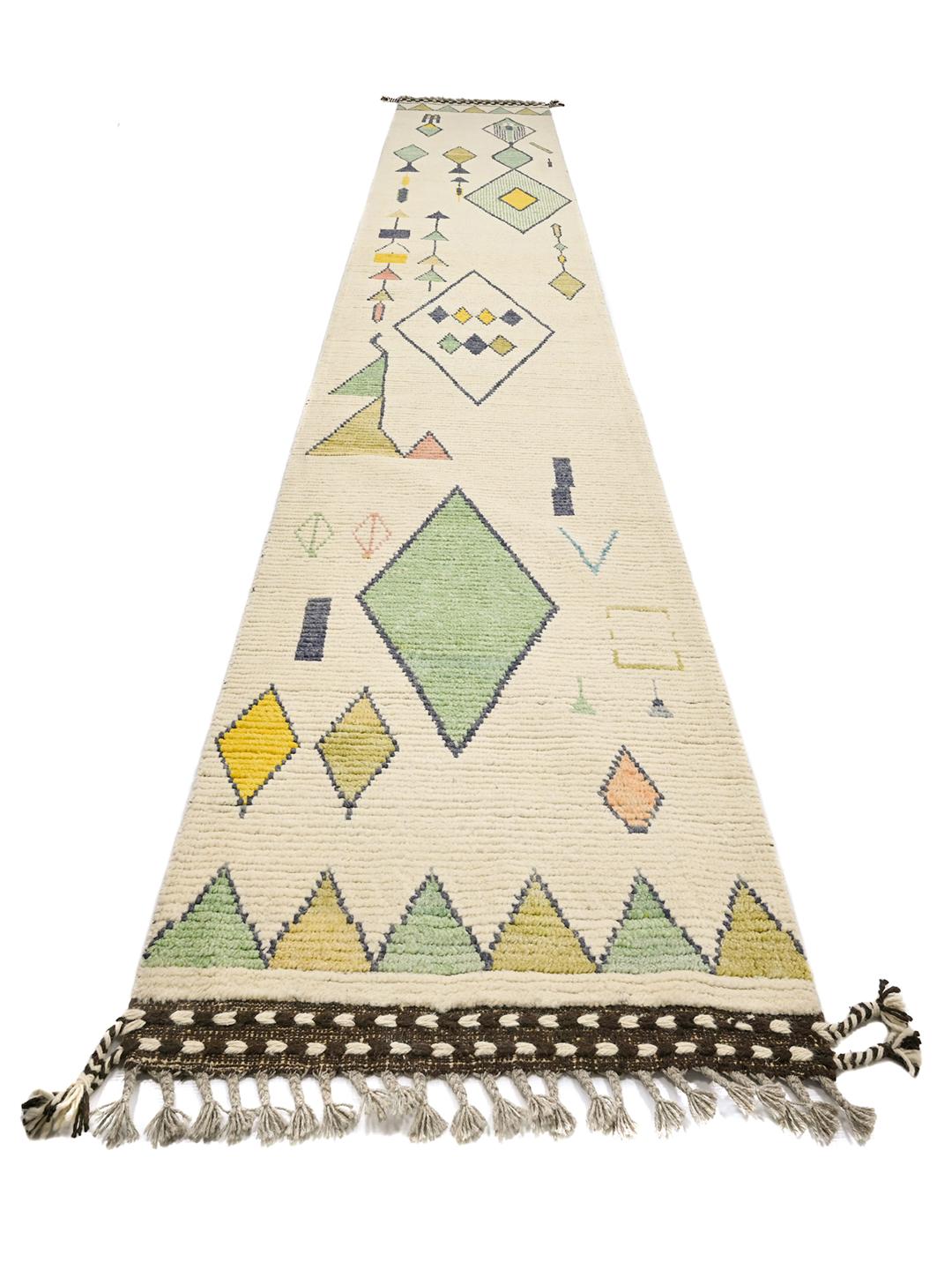
Berber weaving traditions originally developed among indigenous communities across North Africa, famed for their symbolic visual language and spontaneous compositions. Over time, these expressive weaving styles have inspired craft communities in other legendary rug-making regions, including Afghanistan, where weavers adapt these iconic motifs using local techniques.
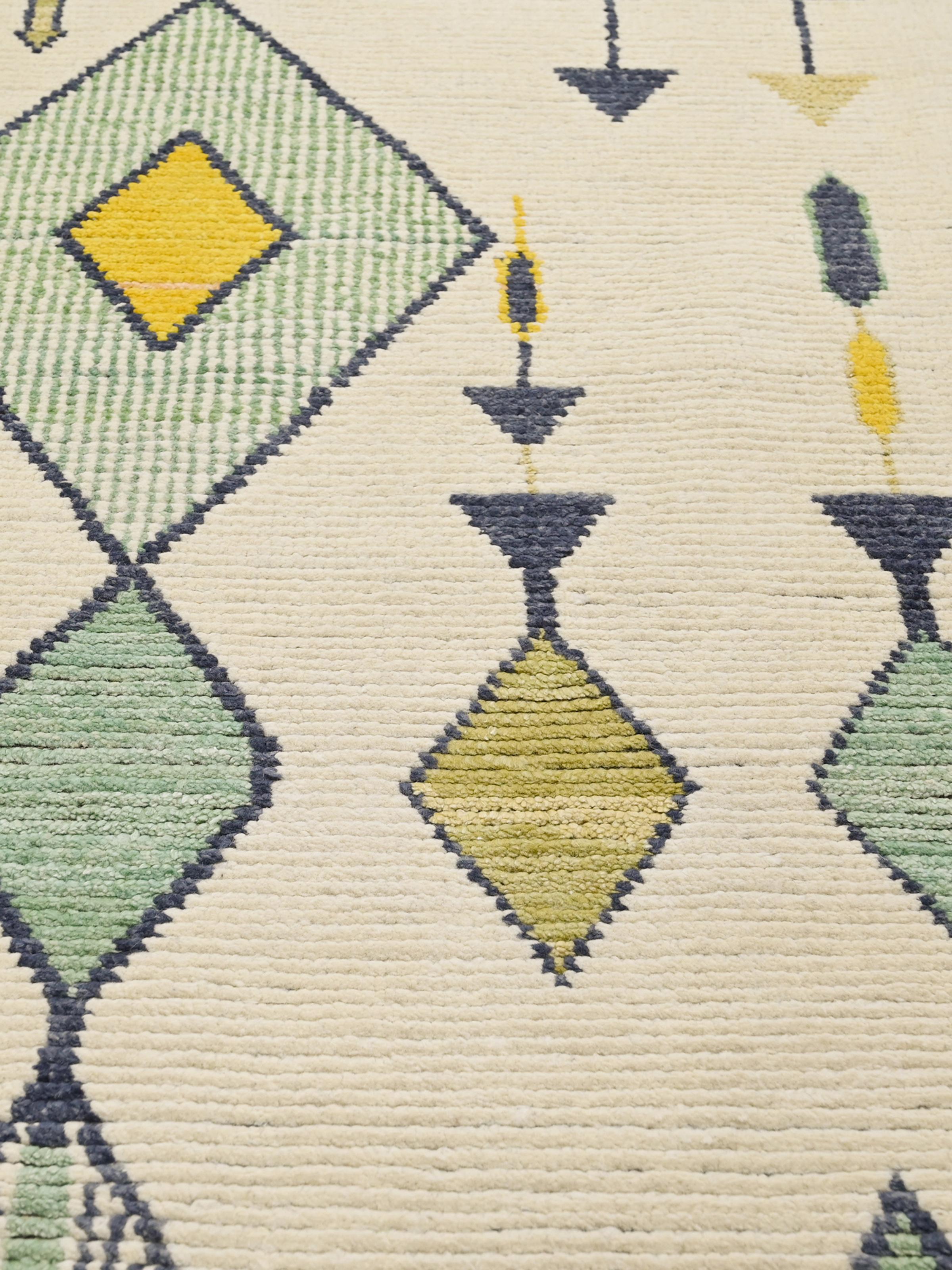
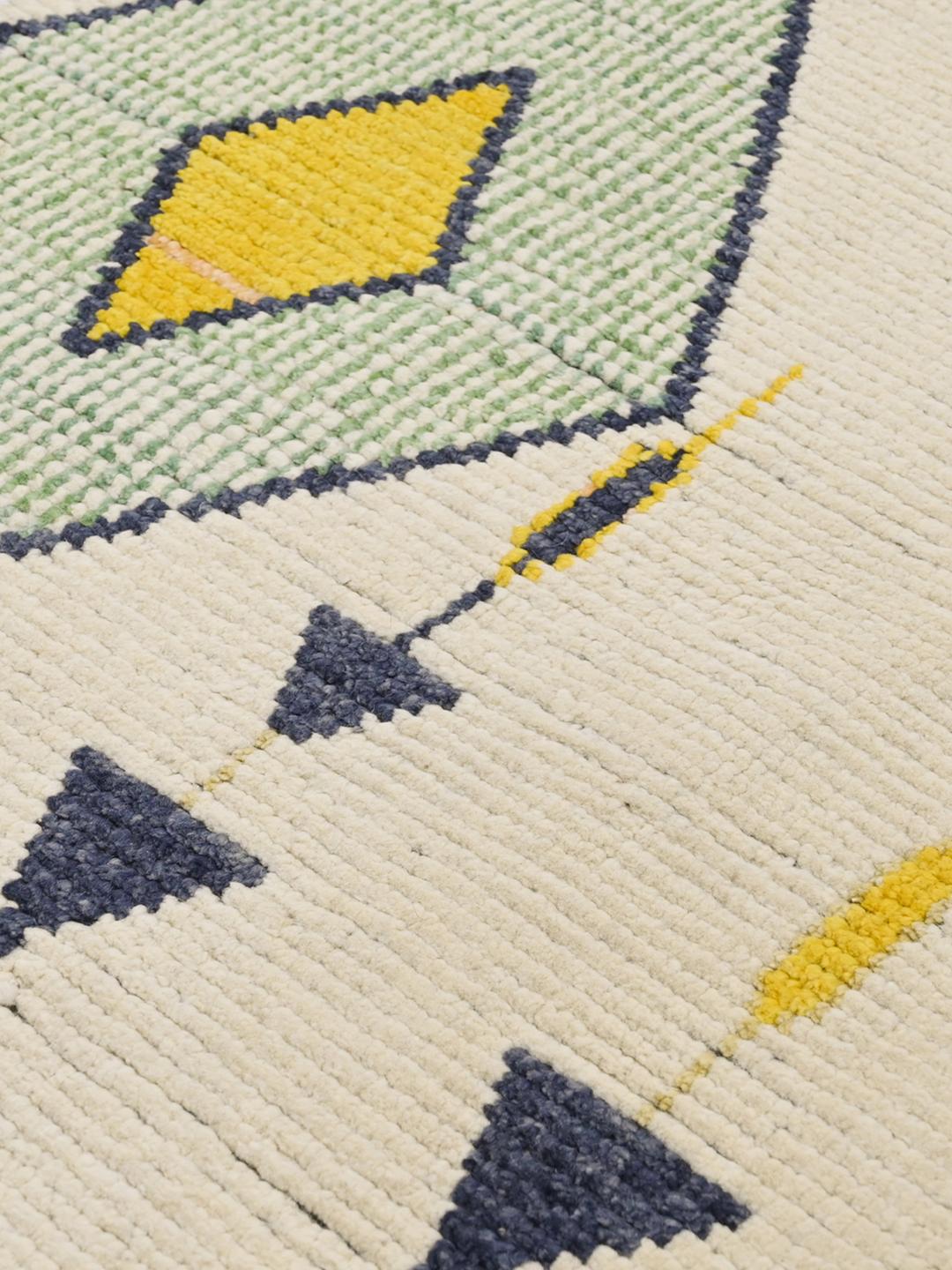
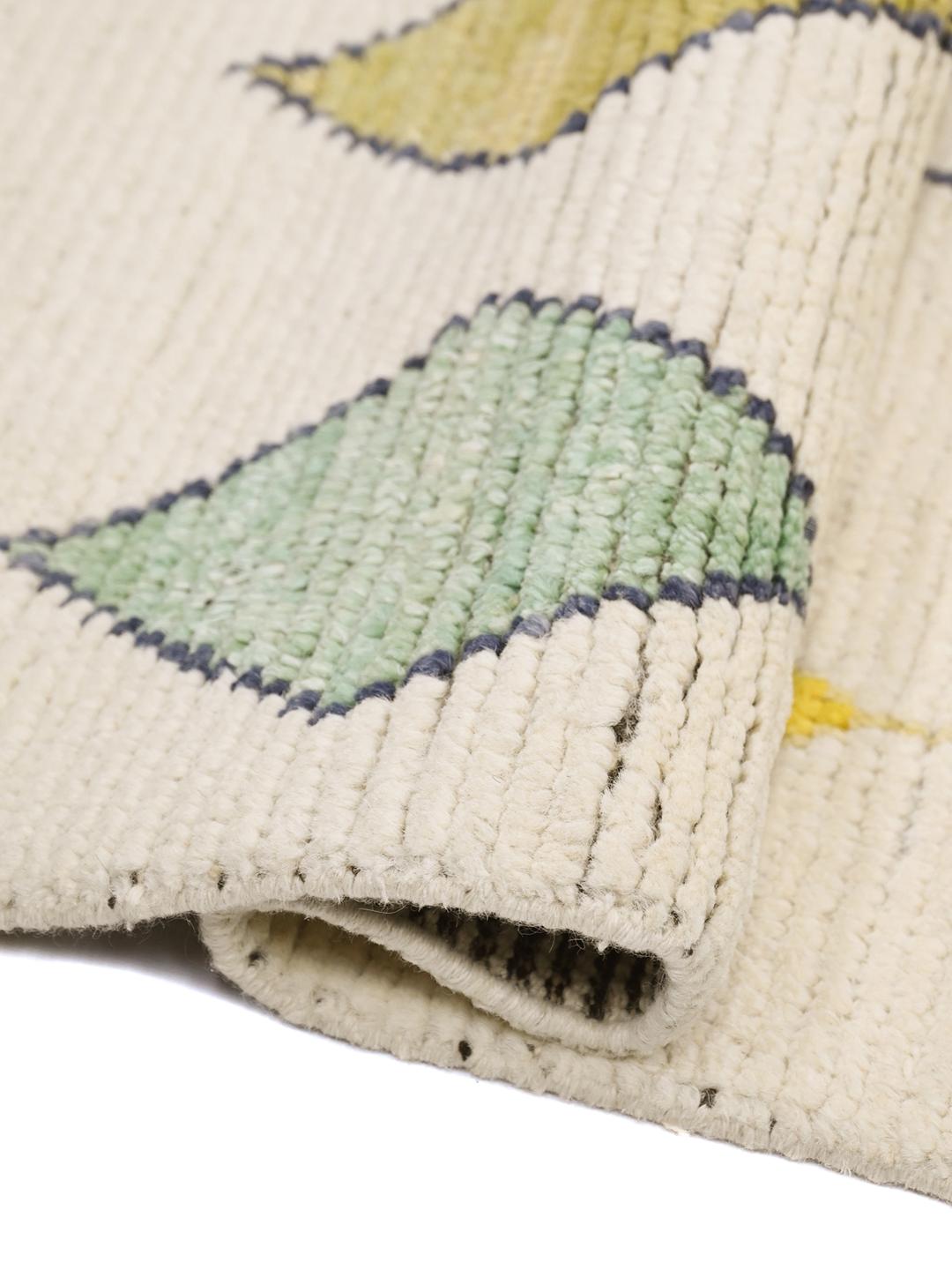
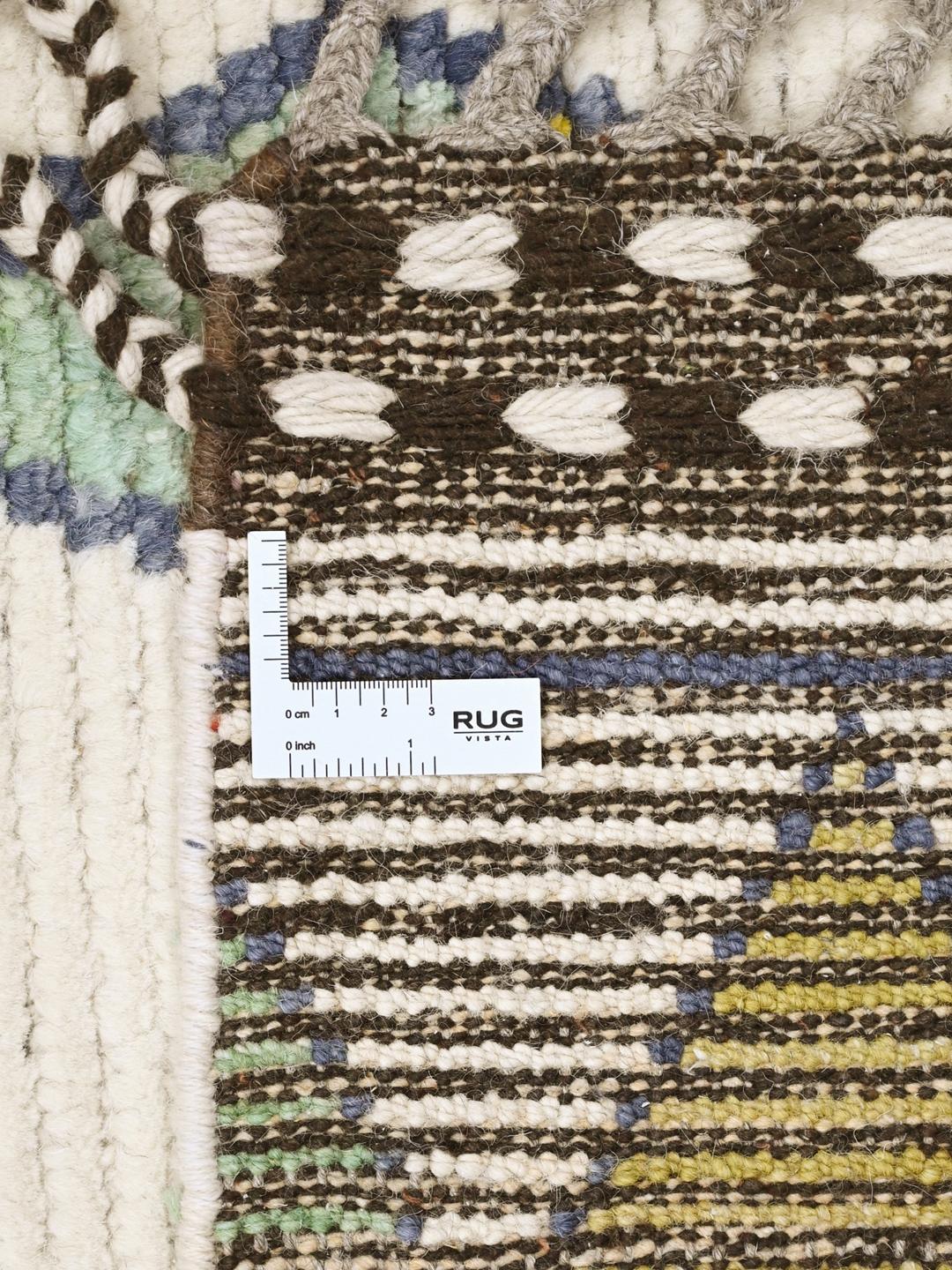
In Afghan hand-knotted traditions, weavers work on upright looms using hand-spun wool for both the pile and structural threads. This construction method ensures the finished piece has structural strength while maintaining a relaxed, tactile feel underfoot.
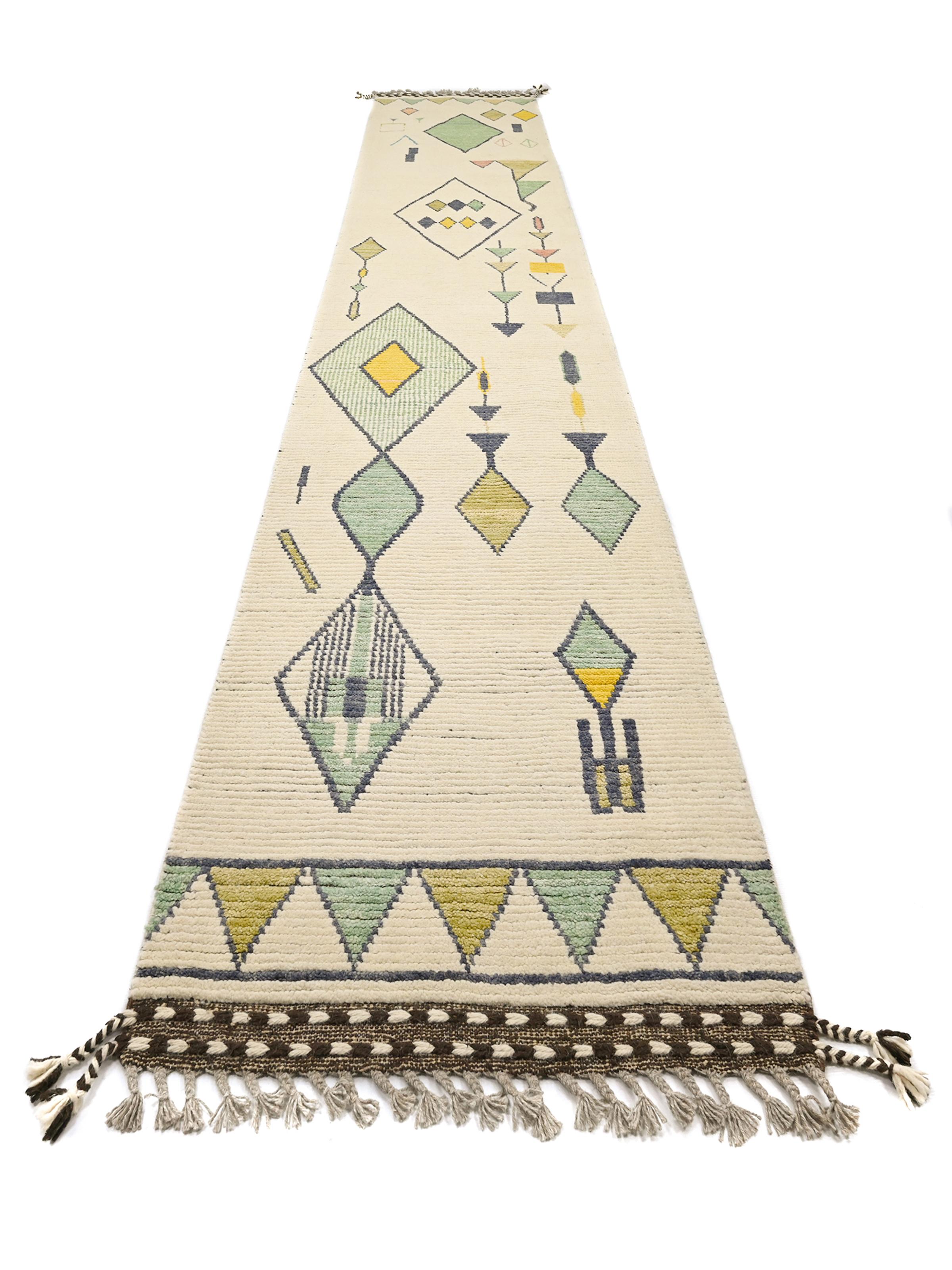
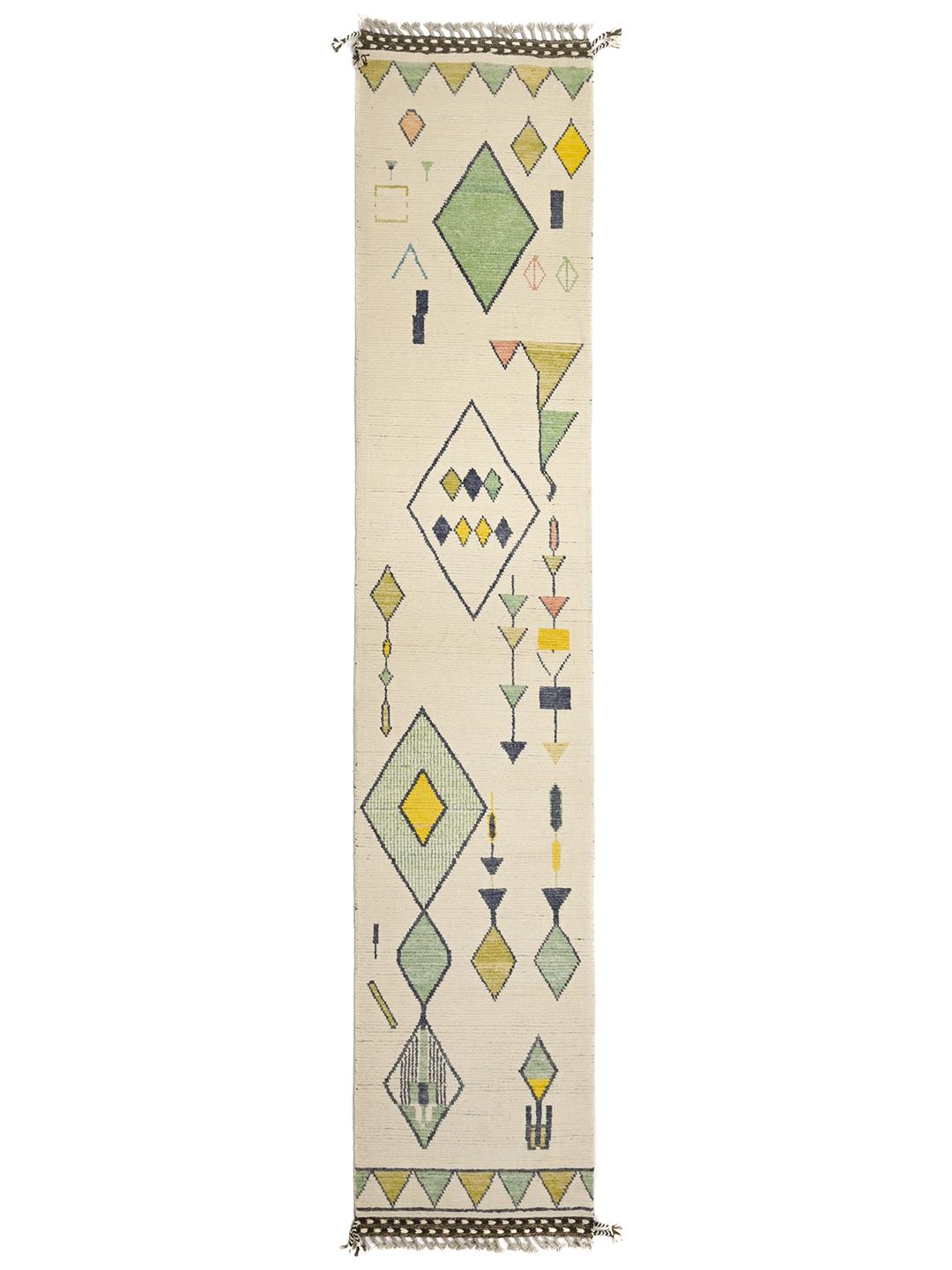
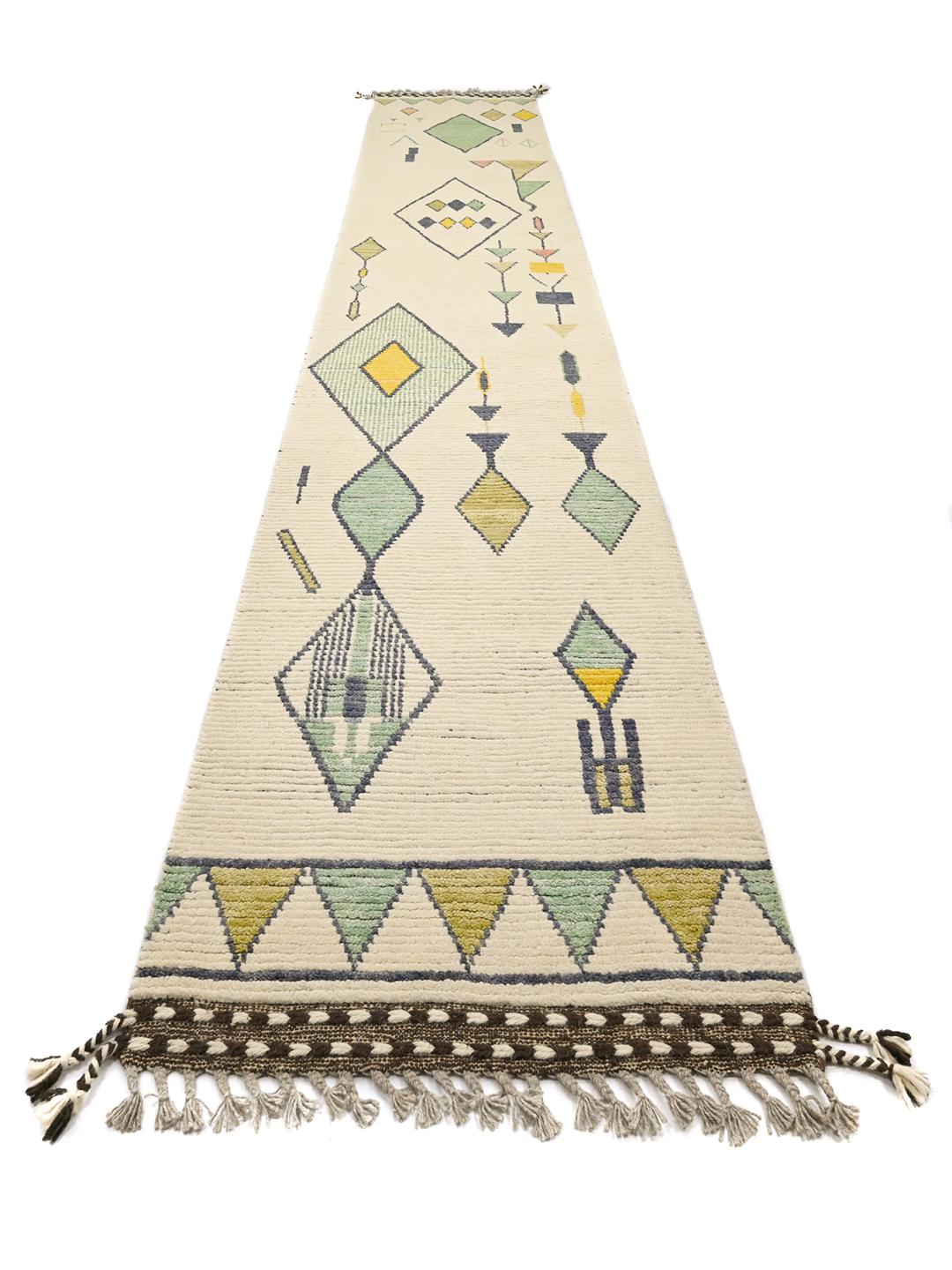
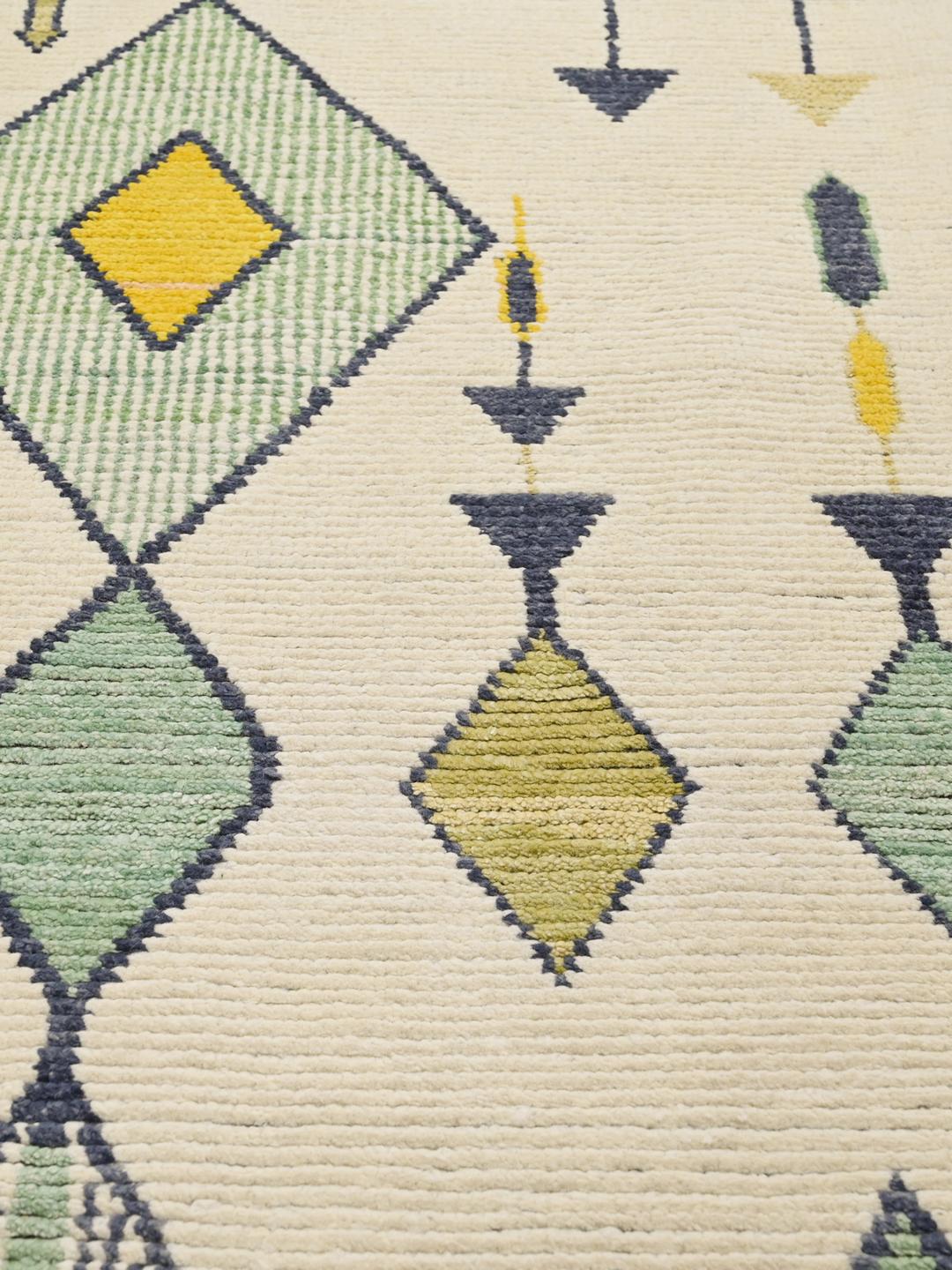
The design of this piece features a light, open field decorated with scattered diamonds, zig-zags, and vertical lines. Unlike formal directional patterns, these tribal symbols were historically used to tell personal stories, represent family blessings, or capture protective signs, giving each rug its own narrative.
Today, colorful Berber-style rugs are celebrated globally by design enthusiasts for their ability to blend traditional storytelling with a modern, artistic look. Acquiring a unique hand-knotted example connects your home to a living craft legacy.