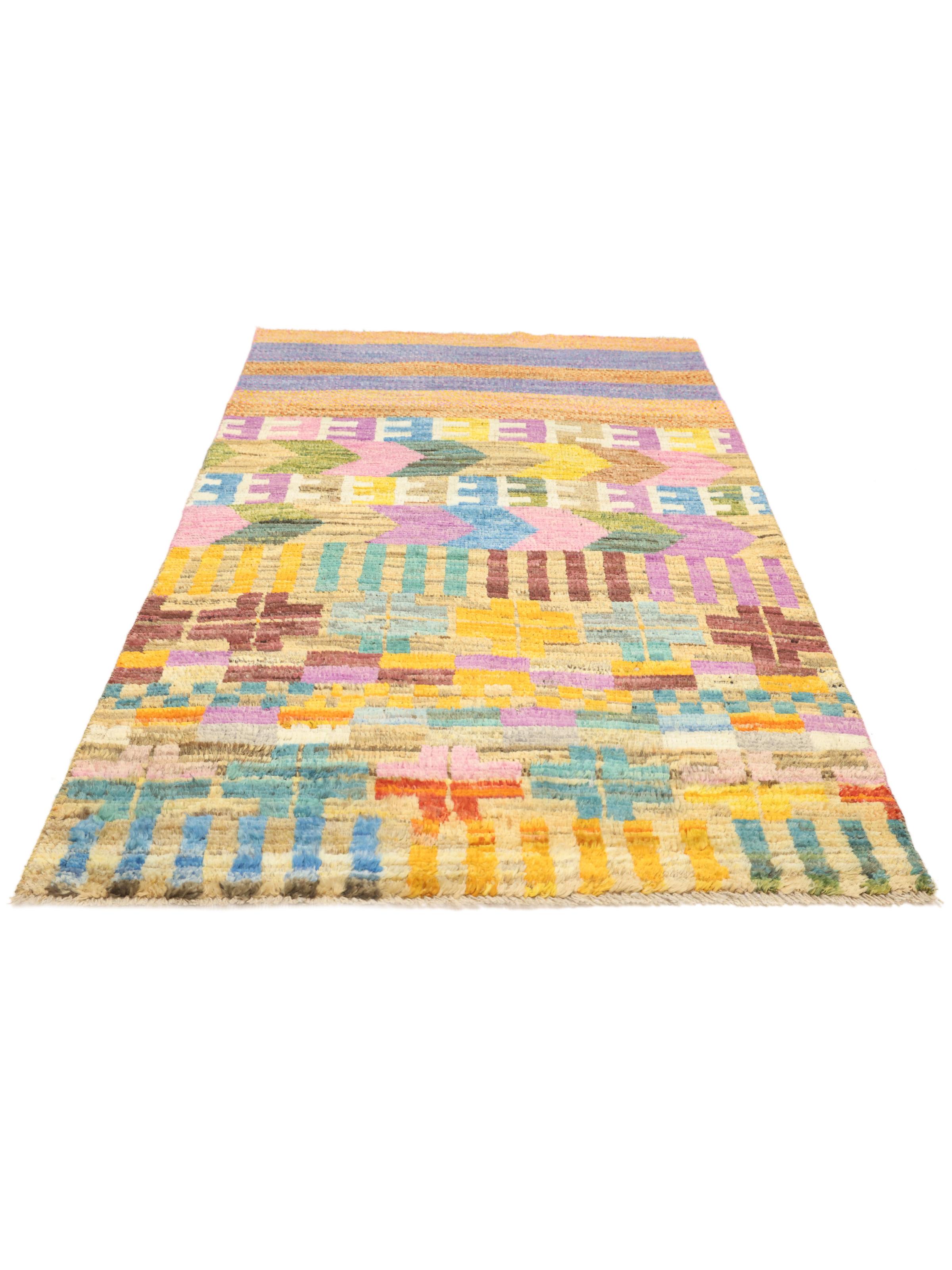
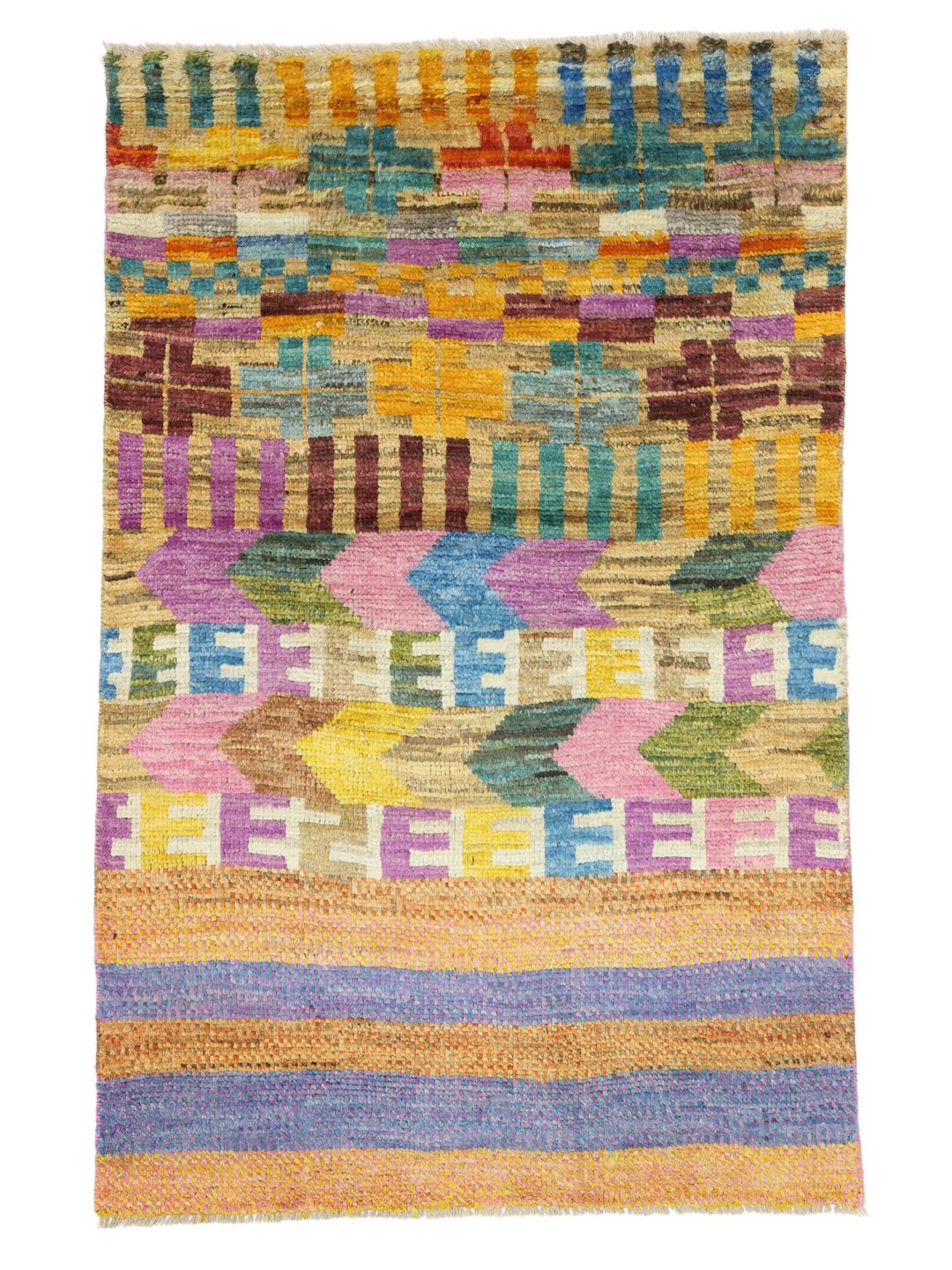
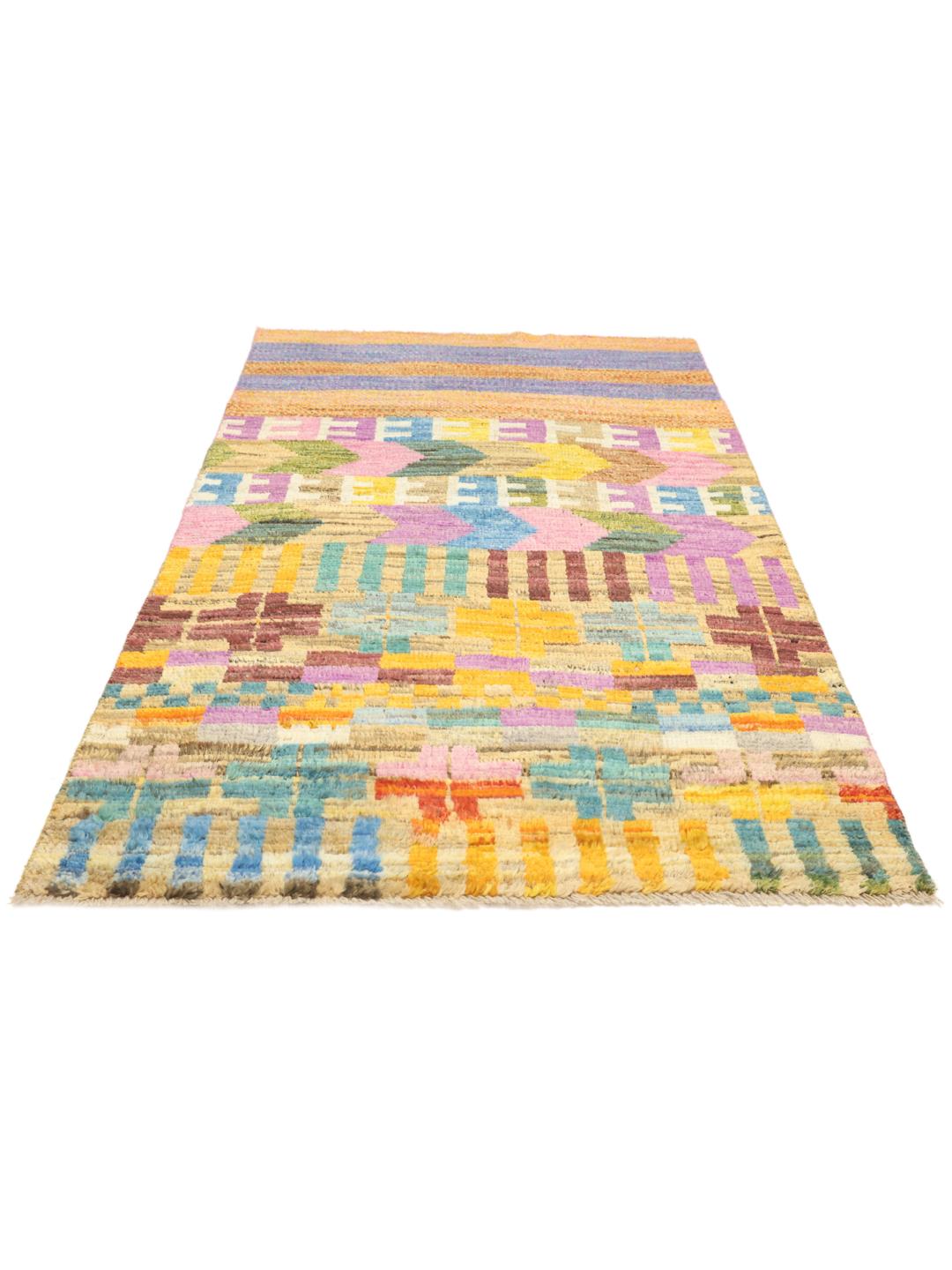
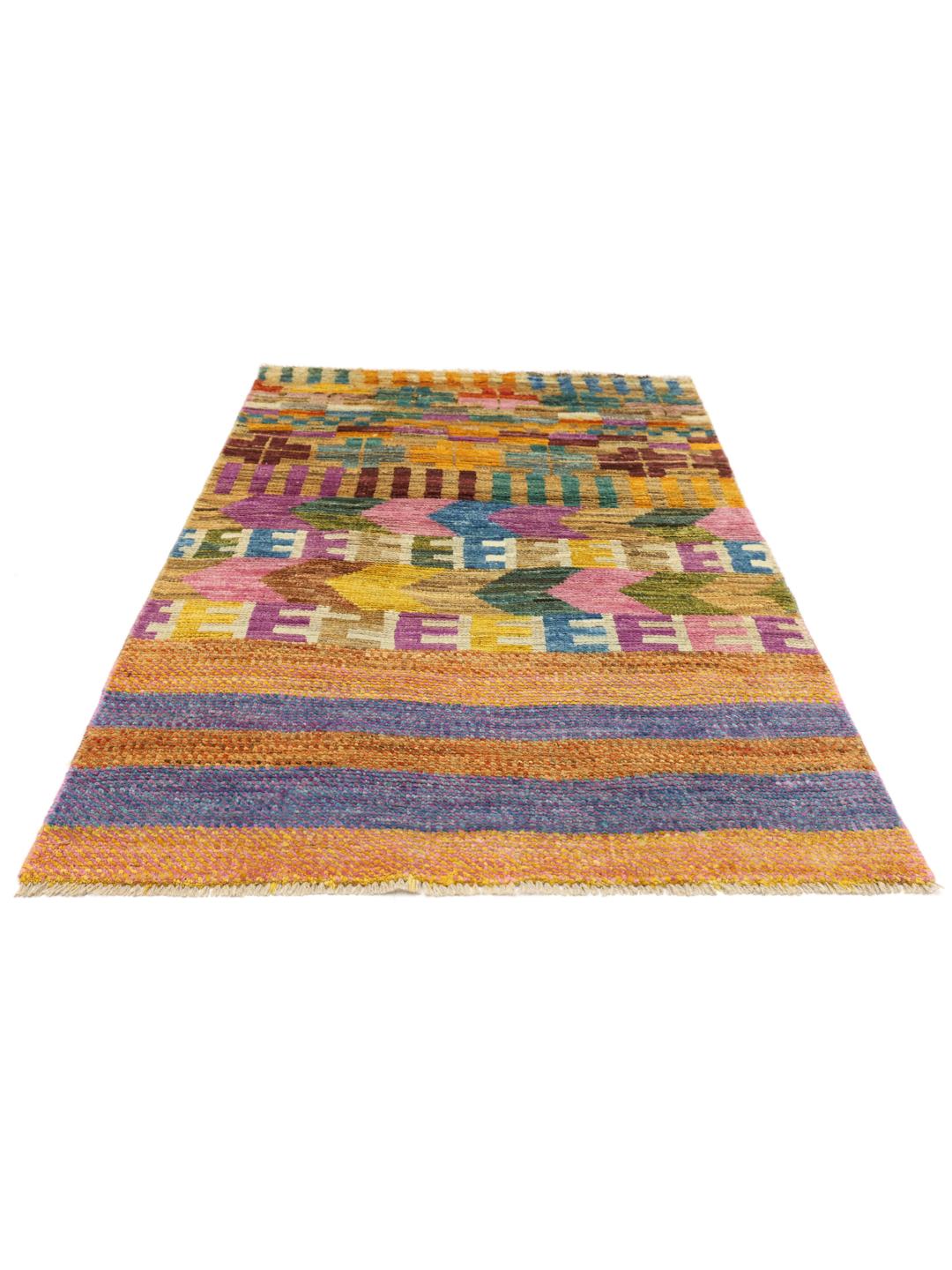
Berber-style rugs are deeply rooted in the weaving traditions of North Africa, yet their influence has spread across the globe, inspiring artisans in regions like Afghanistan to adopt and reinterpret these iconic, expressive designs. This cultural migration has led to a fascinating evolution where the classic, shaggy, and often minimalist aesthetic of traditional Berber weaves meets the rich, complex weaving techniques of Central Asian craft.
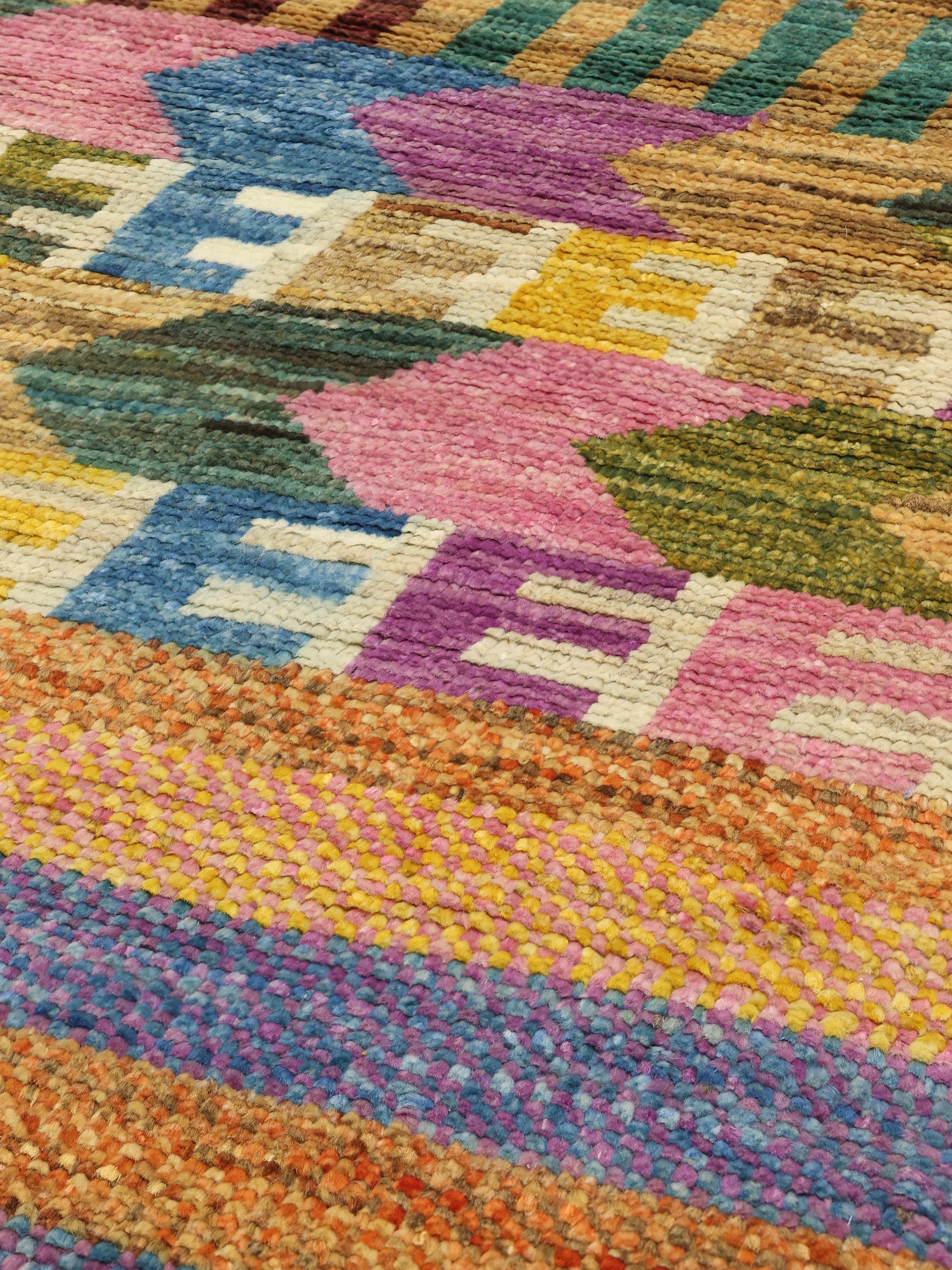
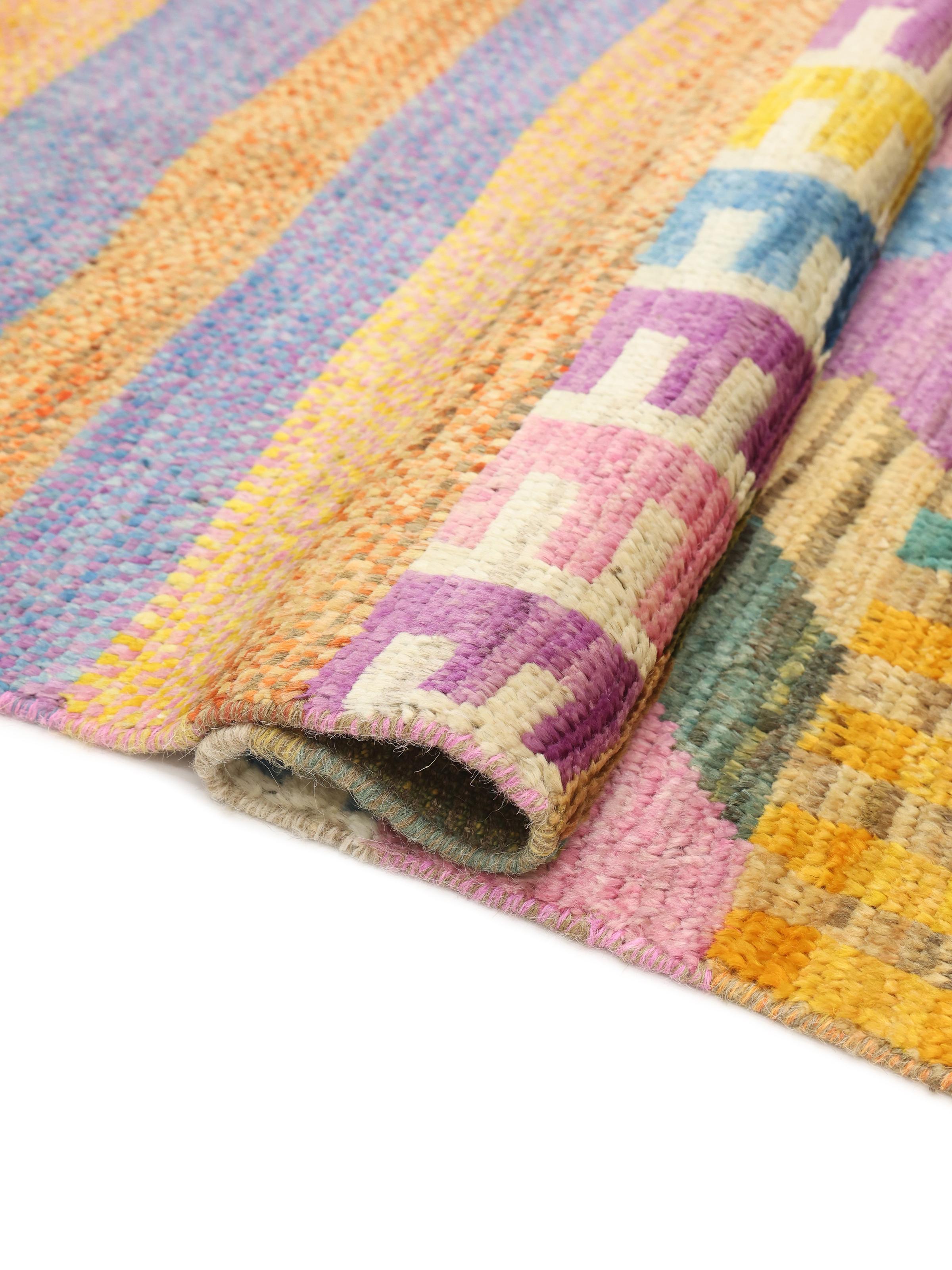
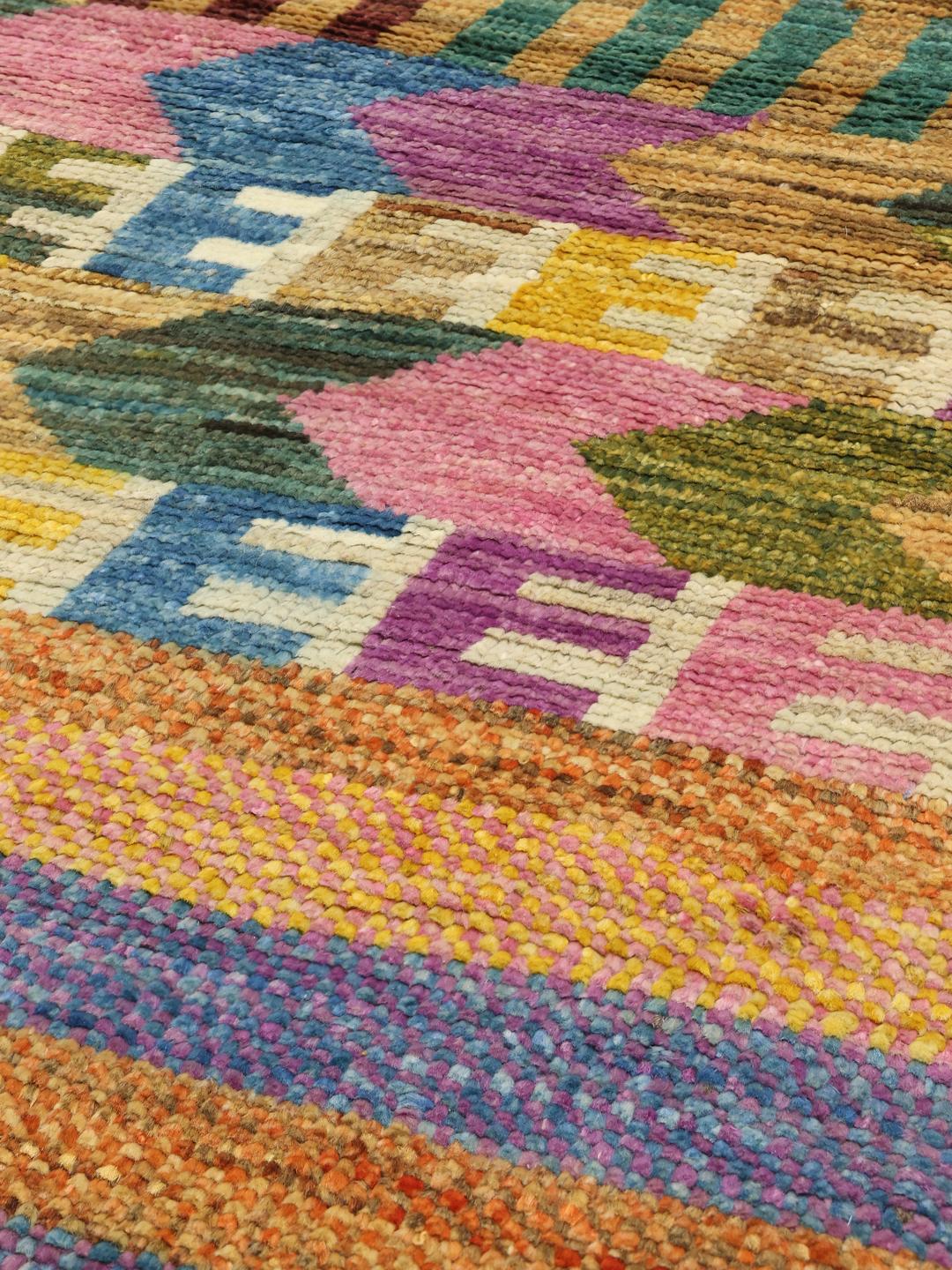
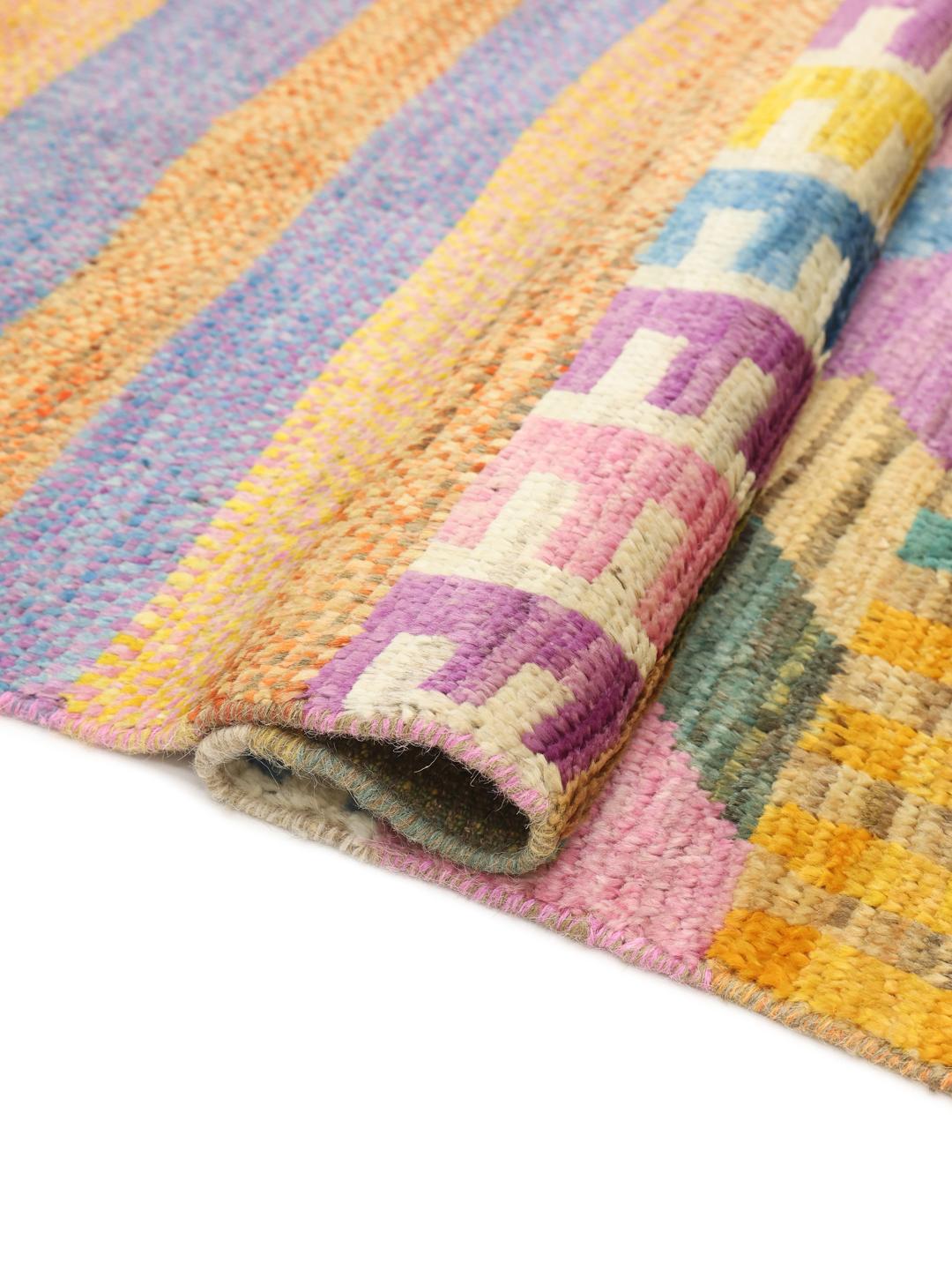
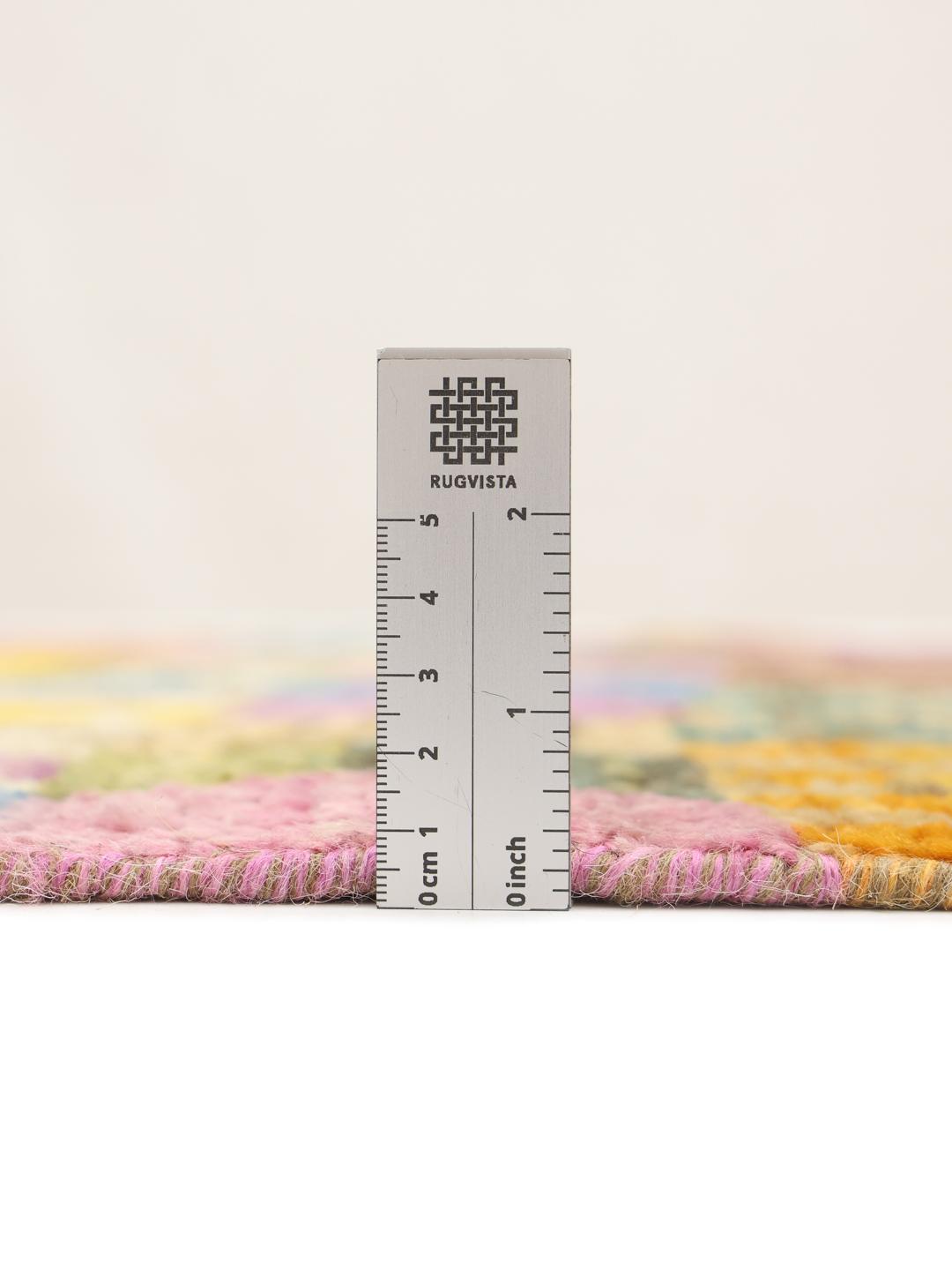
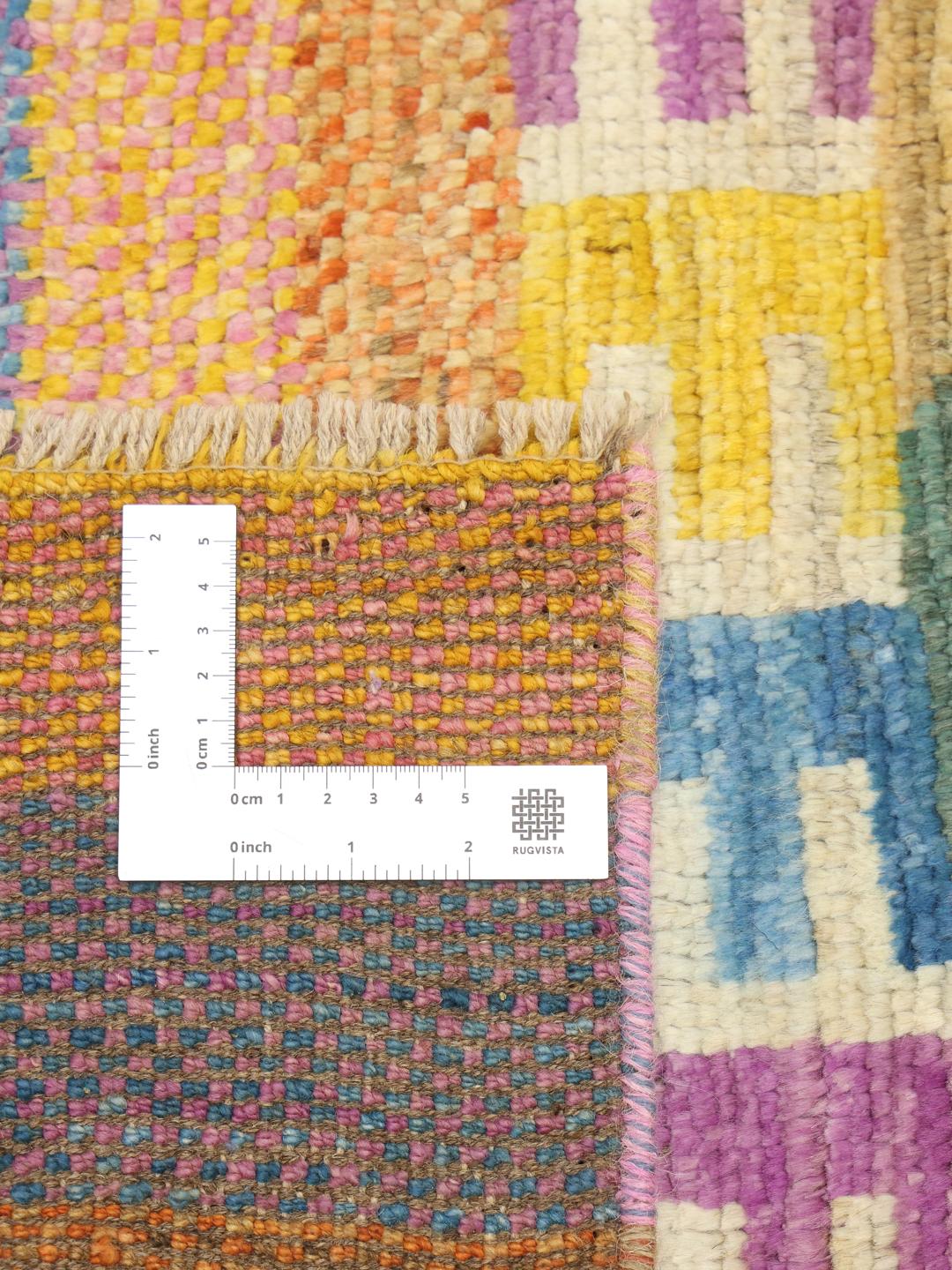
The term 'hand-knotted' refers to the classic method of securing individual tufts of wool around the warp and weft threads of the foundation. This technique is highly valued because it creates a pile that is incredibly resilient and capable of showcasing intricate, crisp designs that remain sharp for decades. It is a slow, rhythmic process that prioritises longevity and structural integrity above all else.
Visually, these rugs are defined by their bold, often symbolic geometric motifs and a free-spirited use of colour. While traditional Berber rugs often favoured neutral palettes, this colourful version embraces a vibrant spectrum that highlights the spontaneity of the design. The patterns seen here—ranging from repeating crosses to chevron-like arrows—are characteristic of a design language that celebrates the beauty of imperfection and the joy of storytelling through textiles.
Collecting a hand-knotted rug from this tradition is an investment in cultural heritage and human skill. These pieces are not merely floor coverings; they are tangible records of an artisan's vision and a testament to the enduring value of manual labour in an automated world. Owning one means participating in a long legacy of craft that values both the beauty of the object and the integrity of its making.