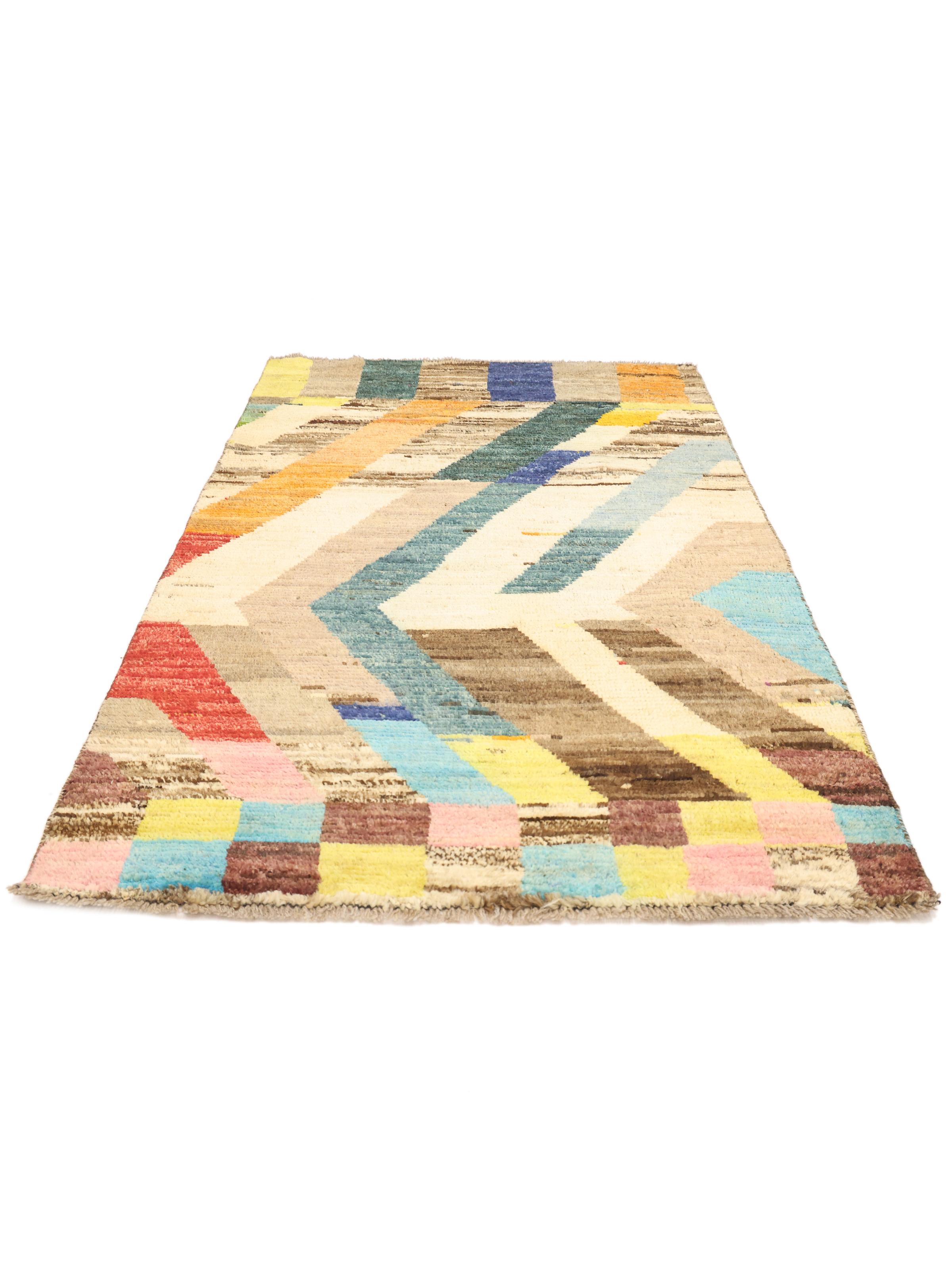
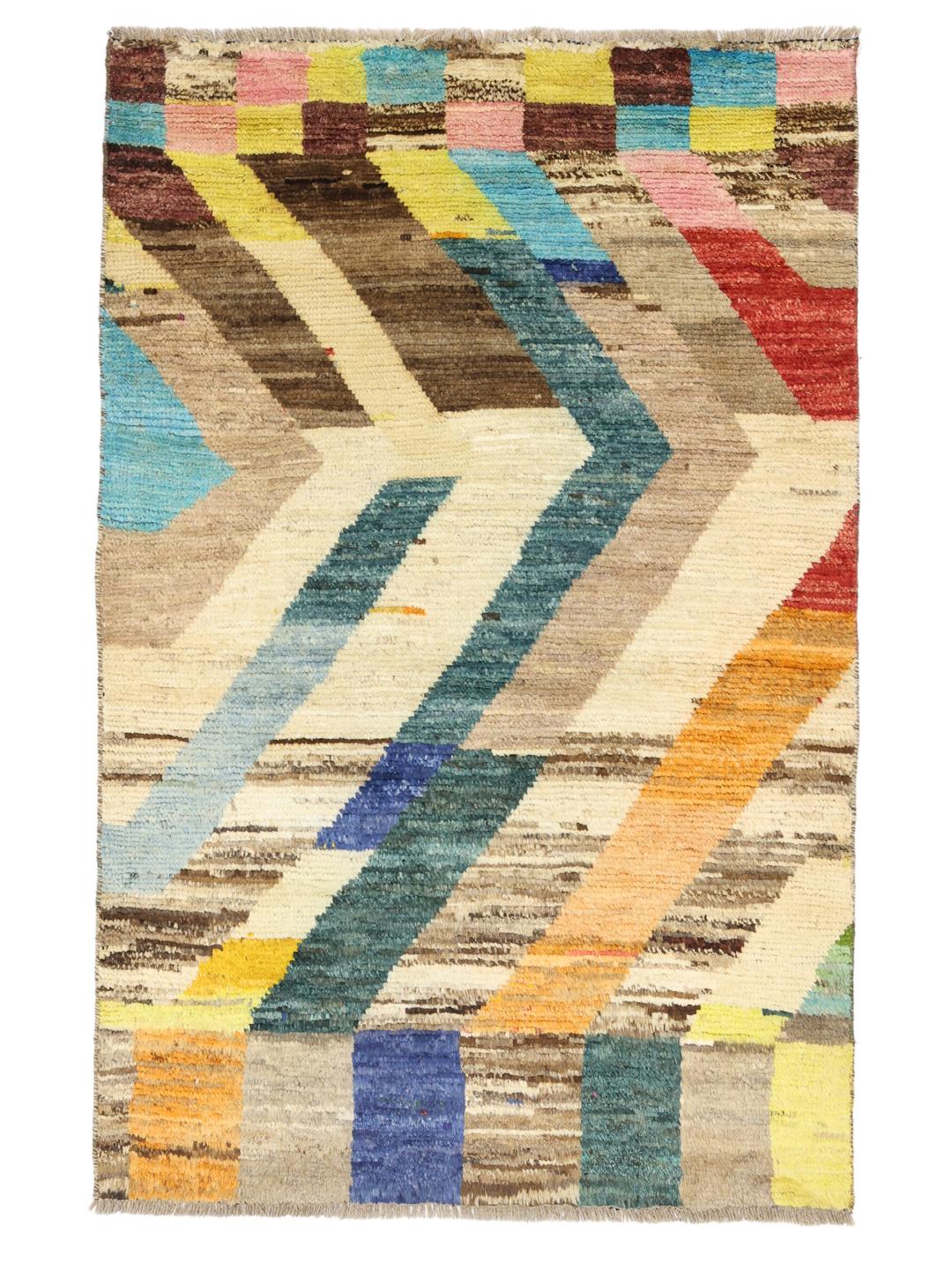
Berber-style rugs trace their origins back to the tribal weavers of North Africa, where they were traditionally crafted for both utility and symbolic expression. Over time, these weaving techniques travelled across different regions, and today, talented artisans in Afghanistan have adapted these methods to create their own unique interpretations. This cross-cultural evolution has resulted in a style that honours ancient traditions while embracing a more modern, global aesthetic.
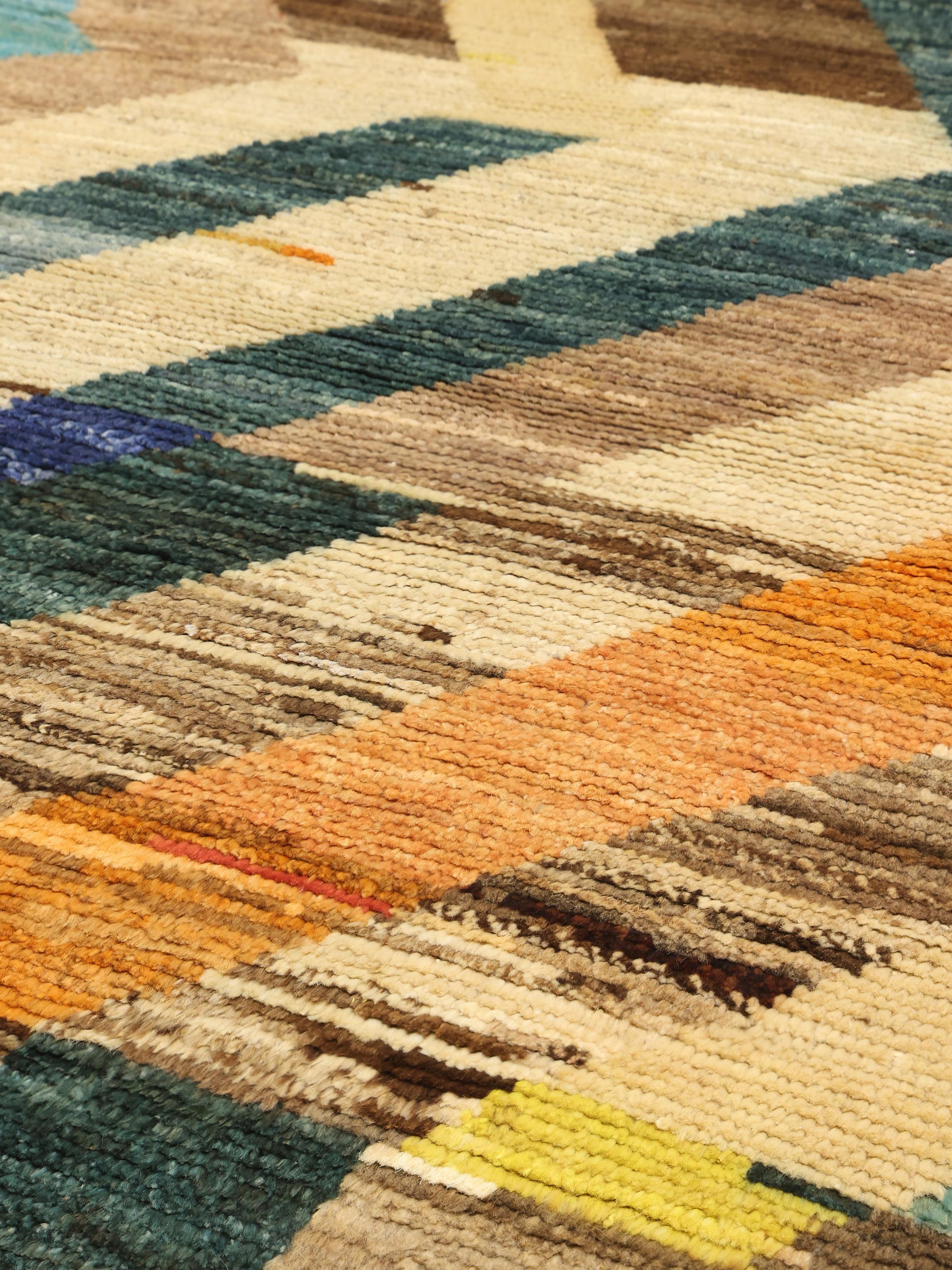
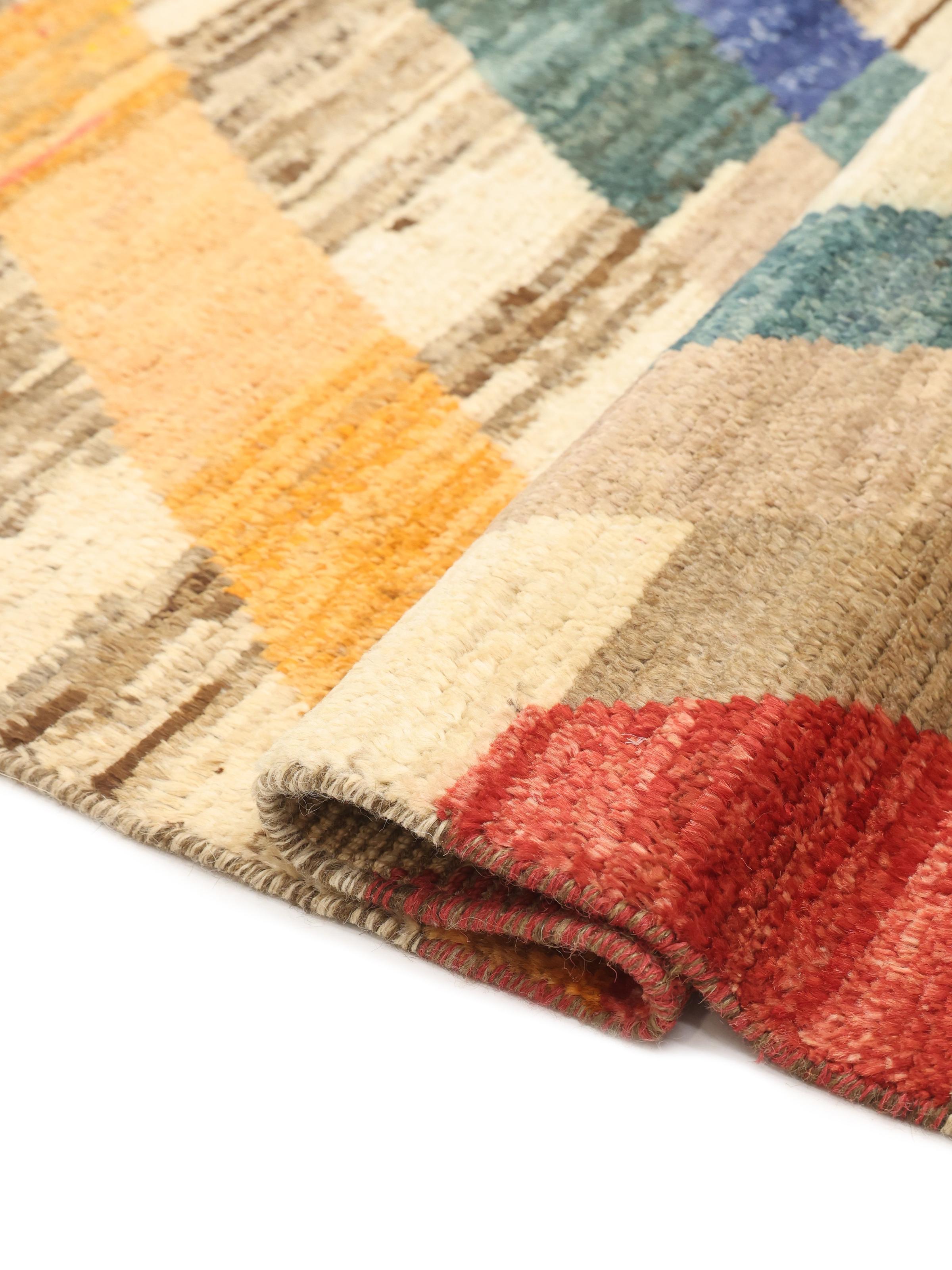
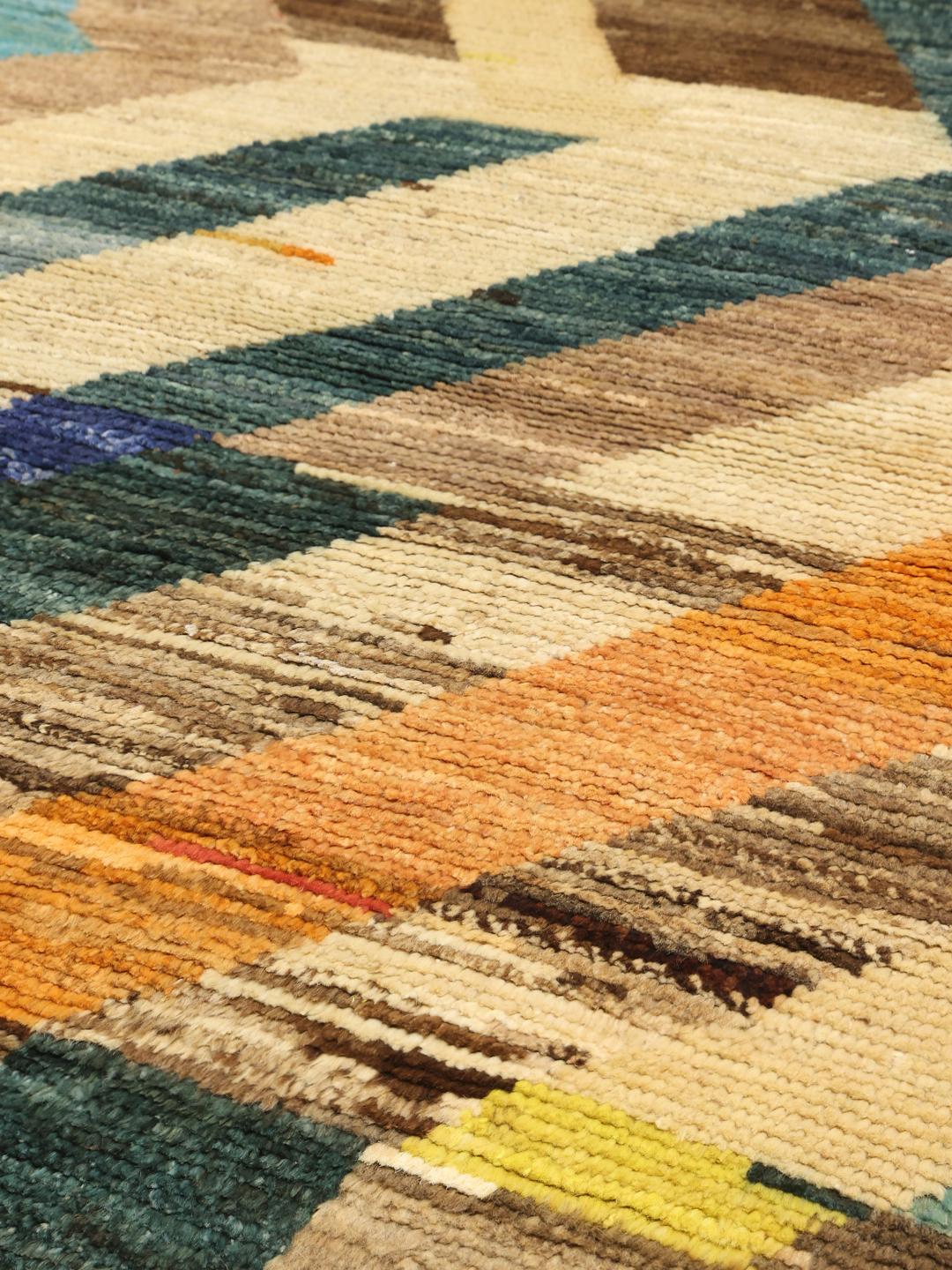
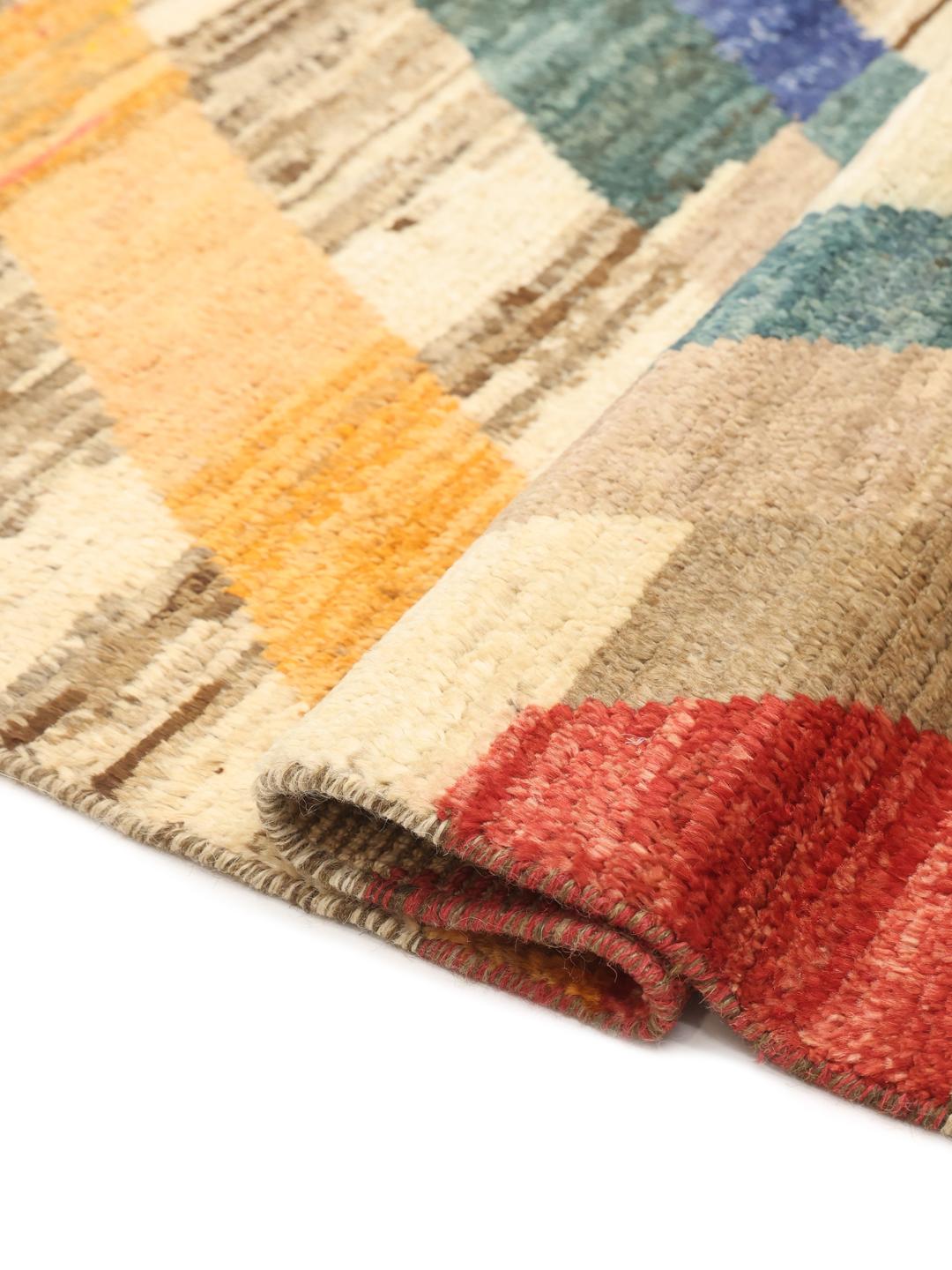
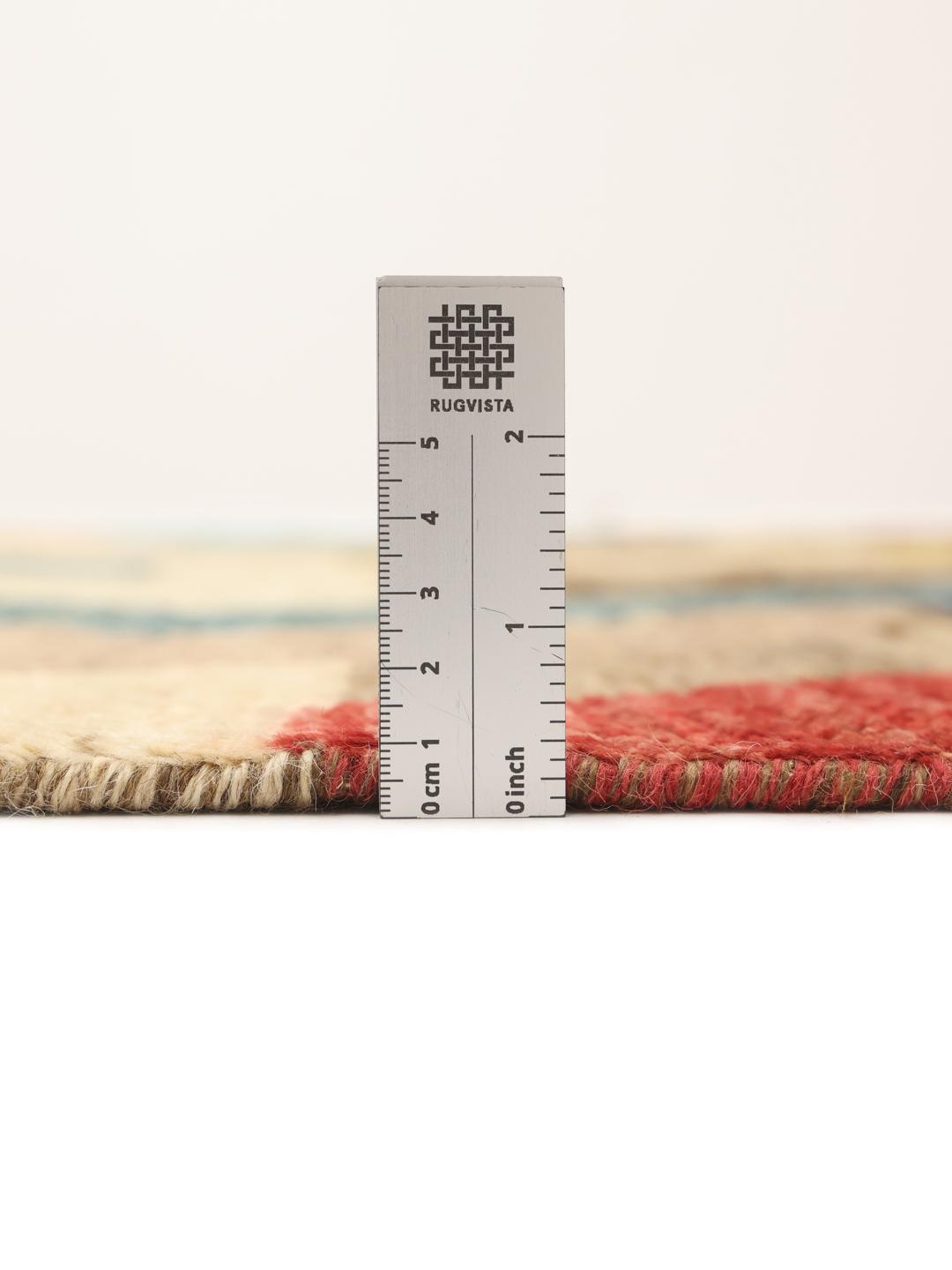
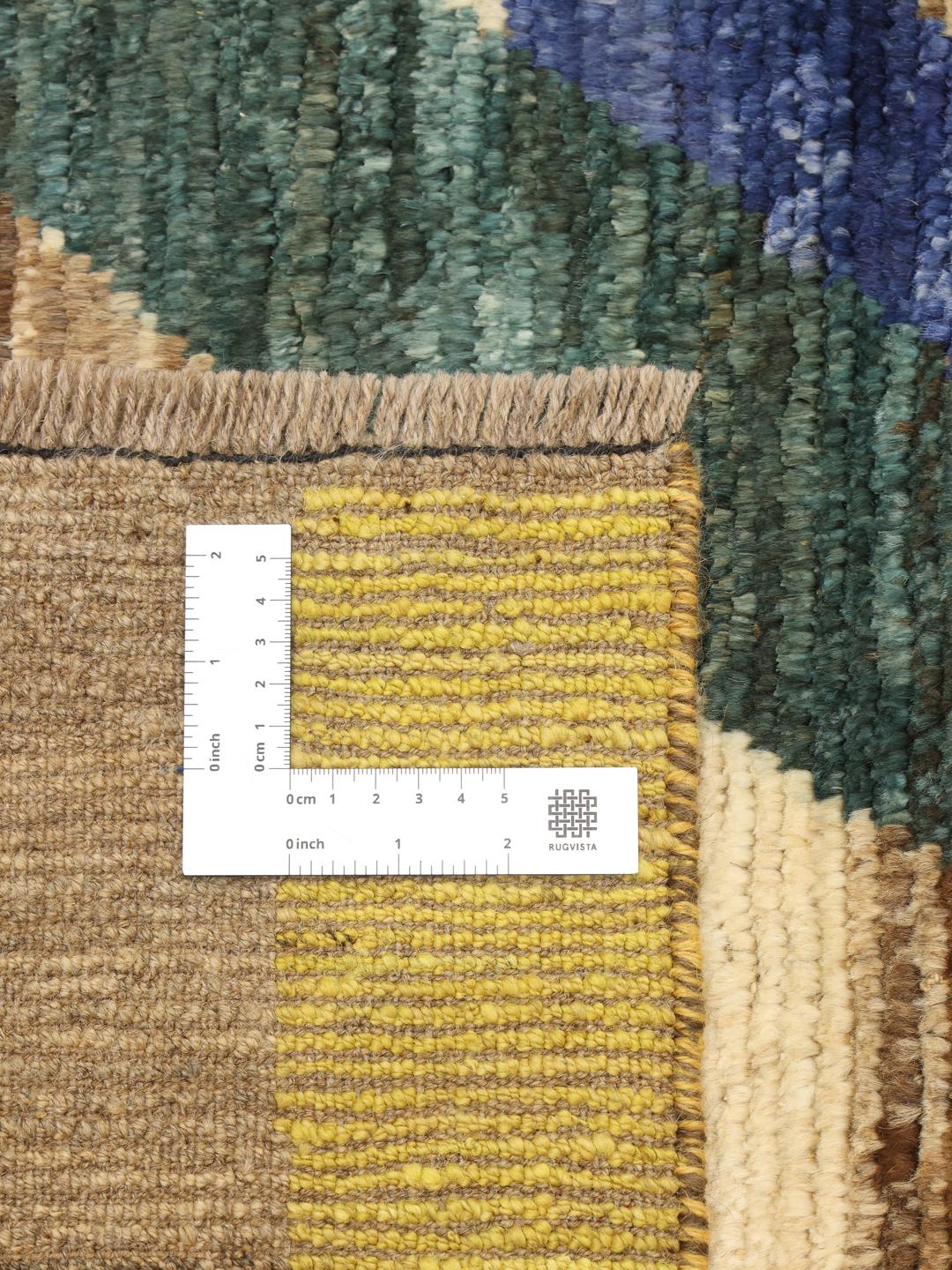
The term 'hand-knotted' refers to the intricate technique where individual strands of wool are tied onto the warp and weft foundation. This method is the hallmark of quality in rug-making, as it allows for greater precision in pattern and a much more durable, dense pile. Unlike machine-made alternatives, this labour-intensive process ensures that the rug has a distinct character and a tactile quality that improves with age.
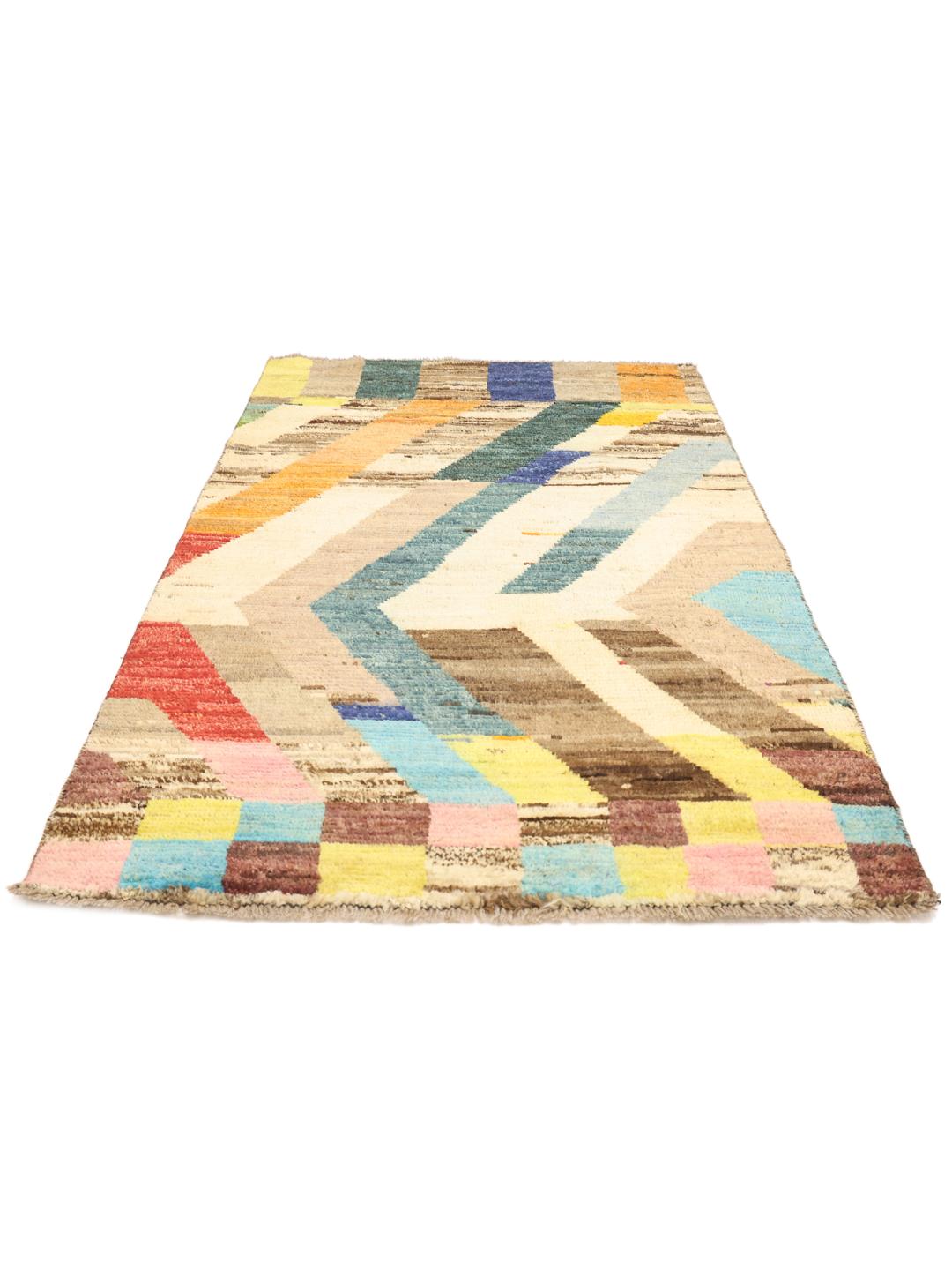
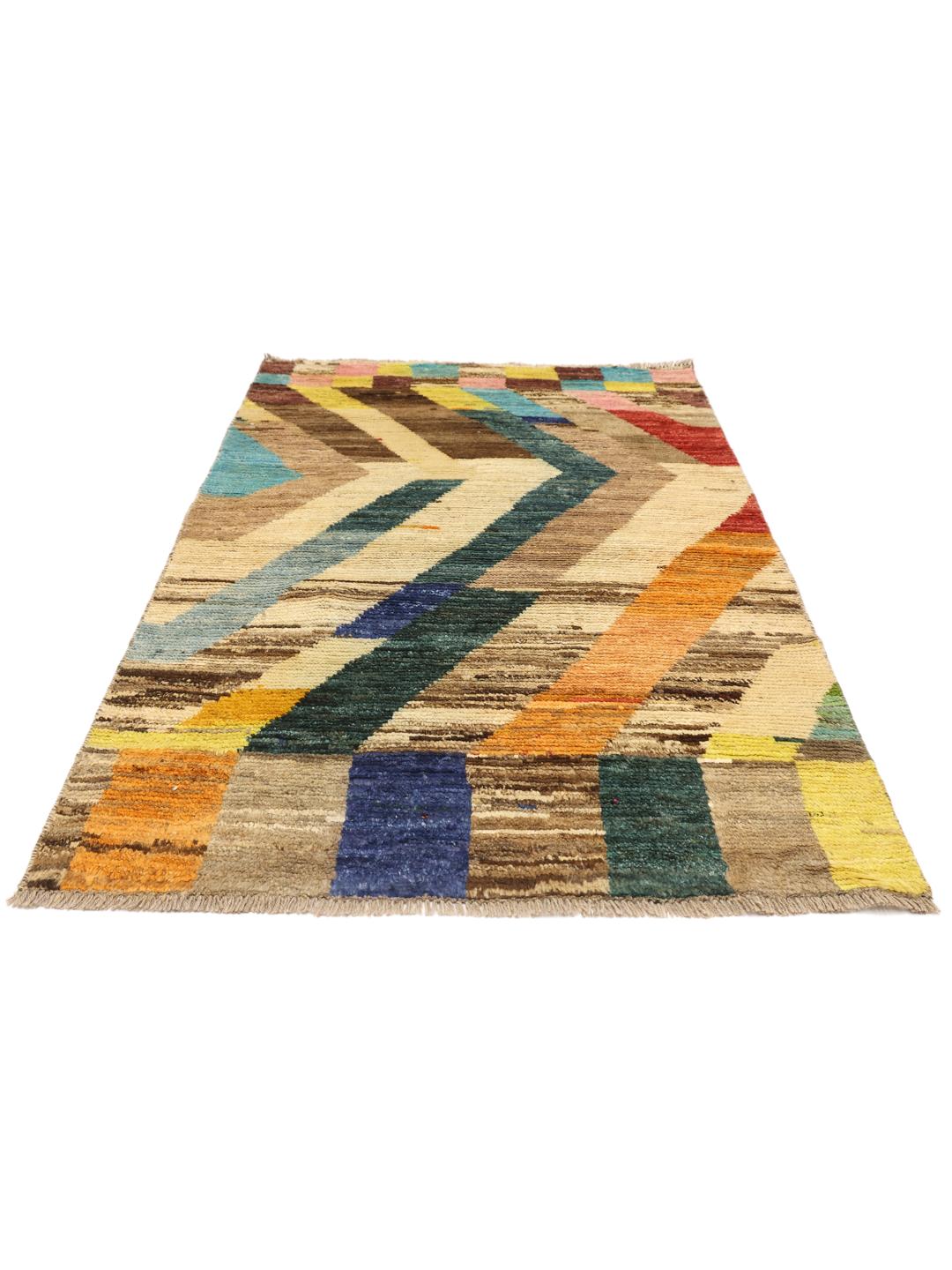
Visually, these rugs are defined by their bold use of colour and geometric motifs, which often serve as a canvas for the weaver's personal creativity. While traditional Berber rugs might stick to more muted, natural tones, this particular piece embraces a vibrant spectrum, making it a striking departure from the norm. The interplay of shapes and hues creates a rhythmic, artistic effect that draws the eye and anchors a room.
Owning a hand-knotted rug from this tradition is about more than just decor; it is about appreciating the skill and history woven into every inch. Collectors and homeowners value these pieces for their authenticity and the human story behind the craft. By bringing this rug into your home, you are connecting with a long-standing lineage of artistry, ensuring your space reflects a deep appreciation for enduring quality and cultural depth.