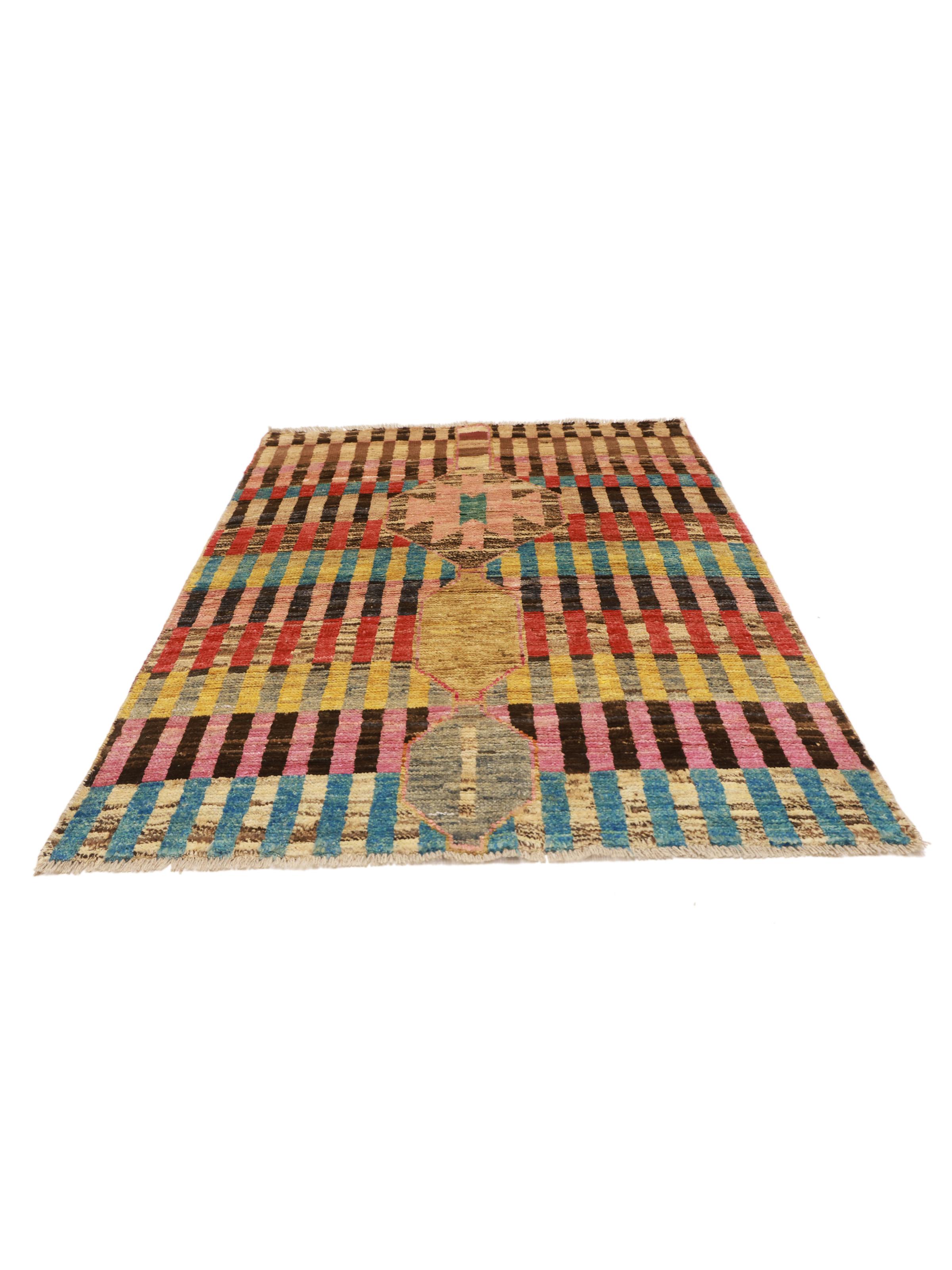
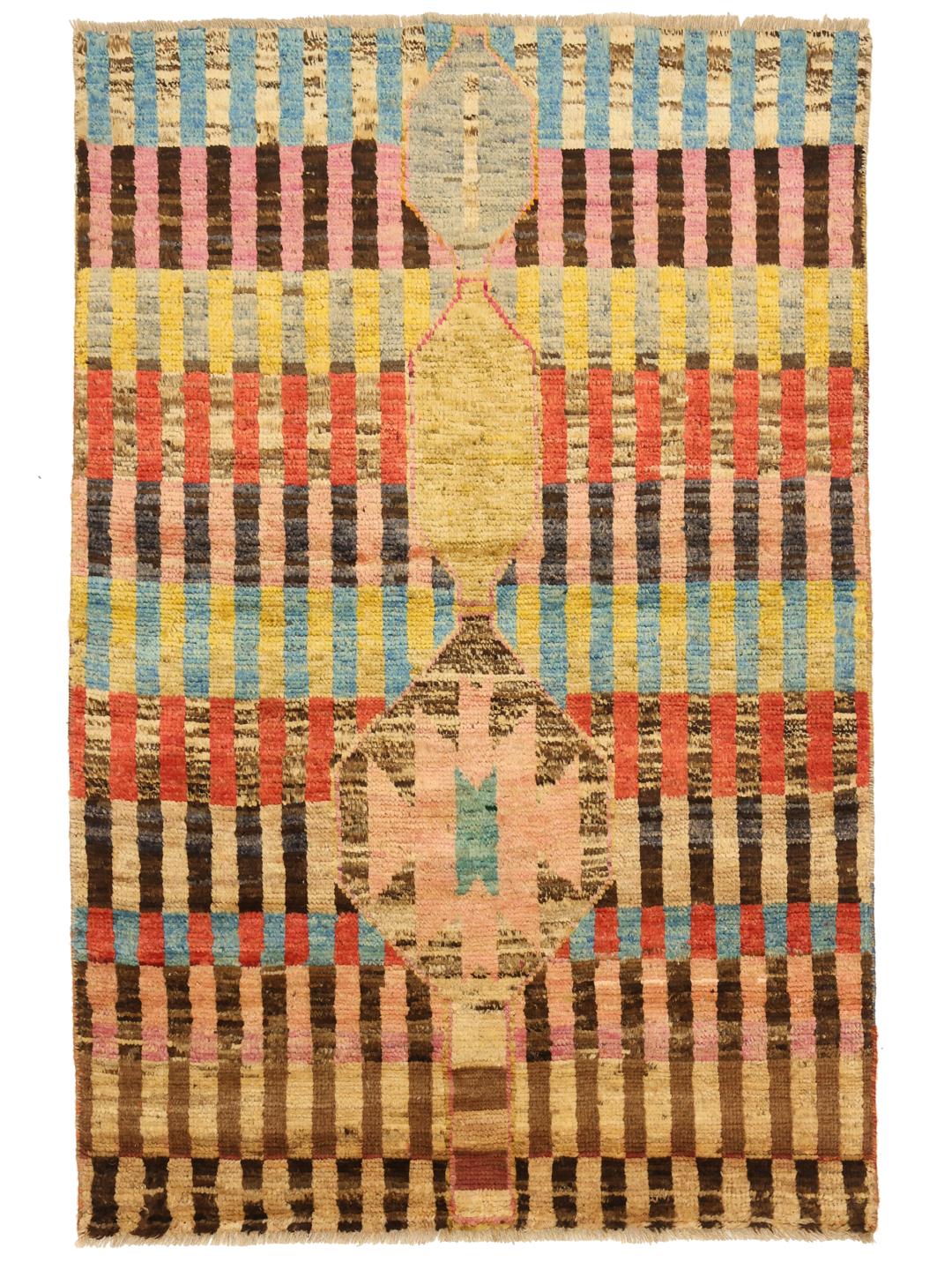
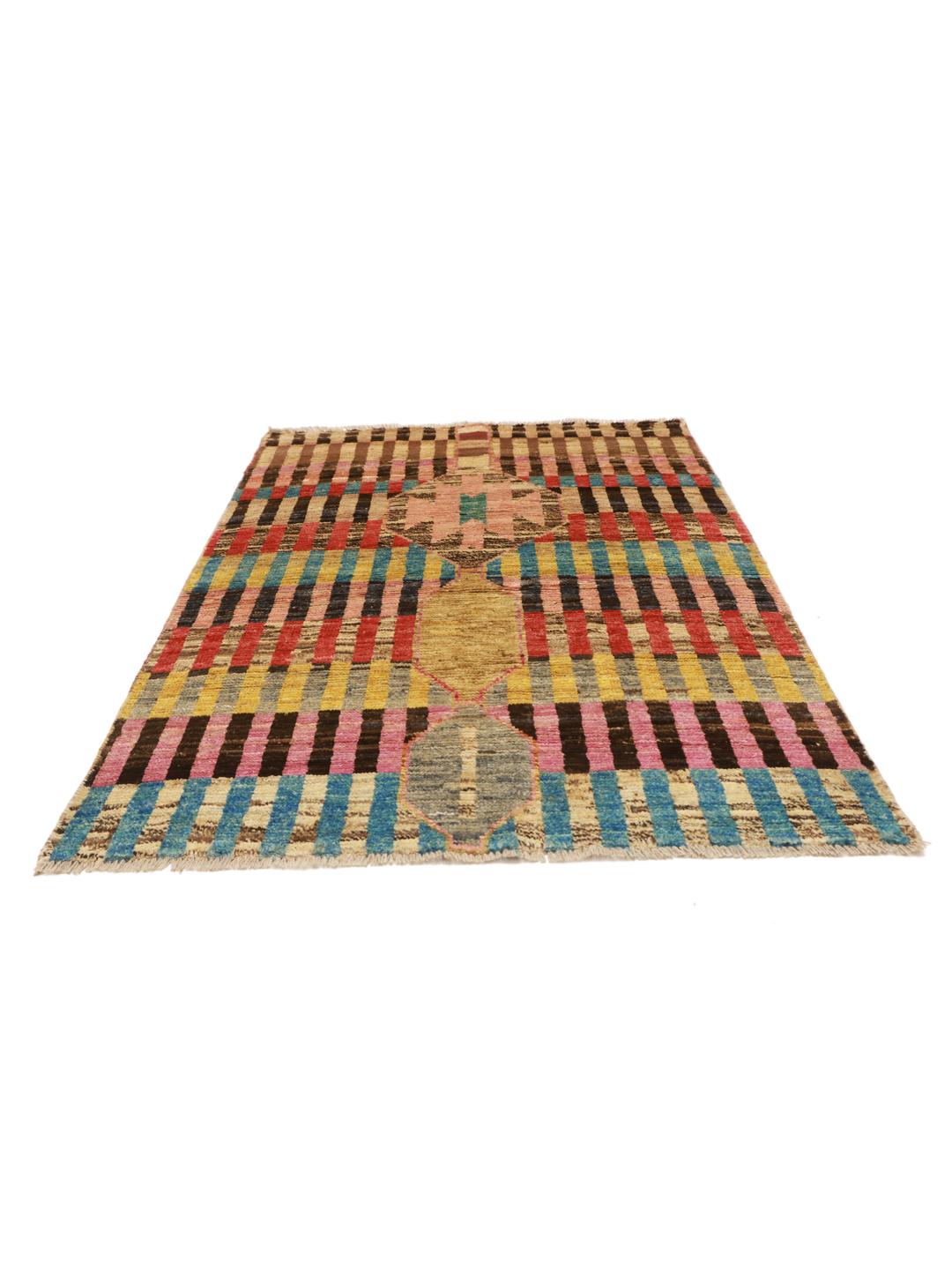
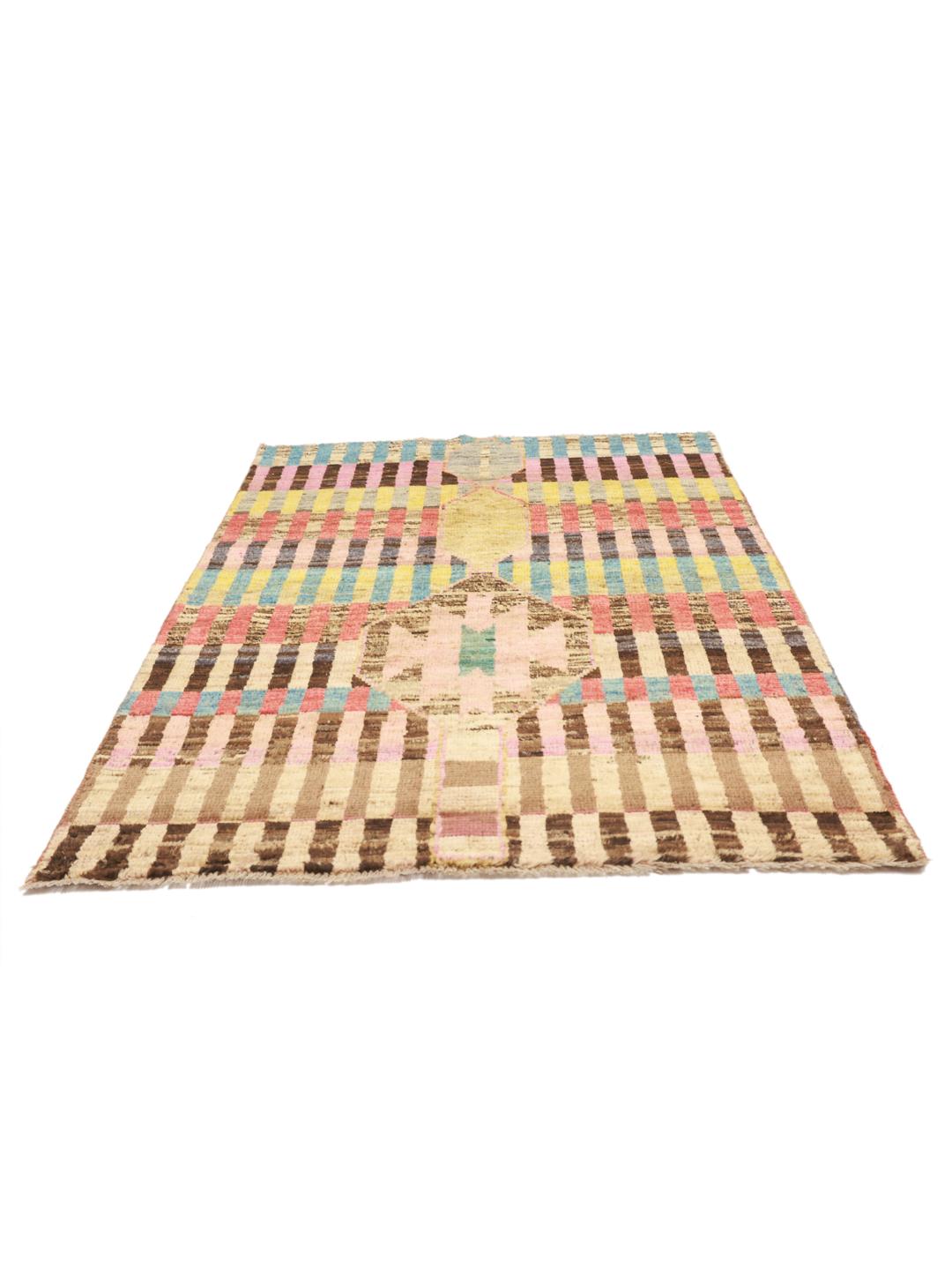
Berber-style rugs are deeply rooted in the nomadic traditions of mountain regions, where they were originally created for functional warmth and comfort within the home. While the style is traditionally associated with North Africa, the migration of these weaving techniques has led to a vibrant evolution in places like Afghanistan, where local artisans have adapted the aesthetic with their own regional Wool and colour palettes.
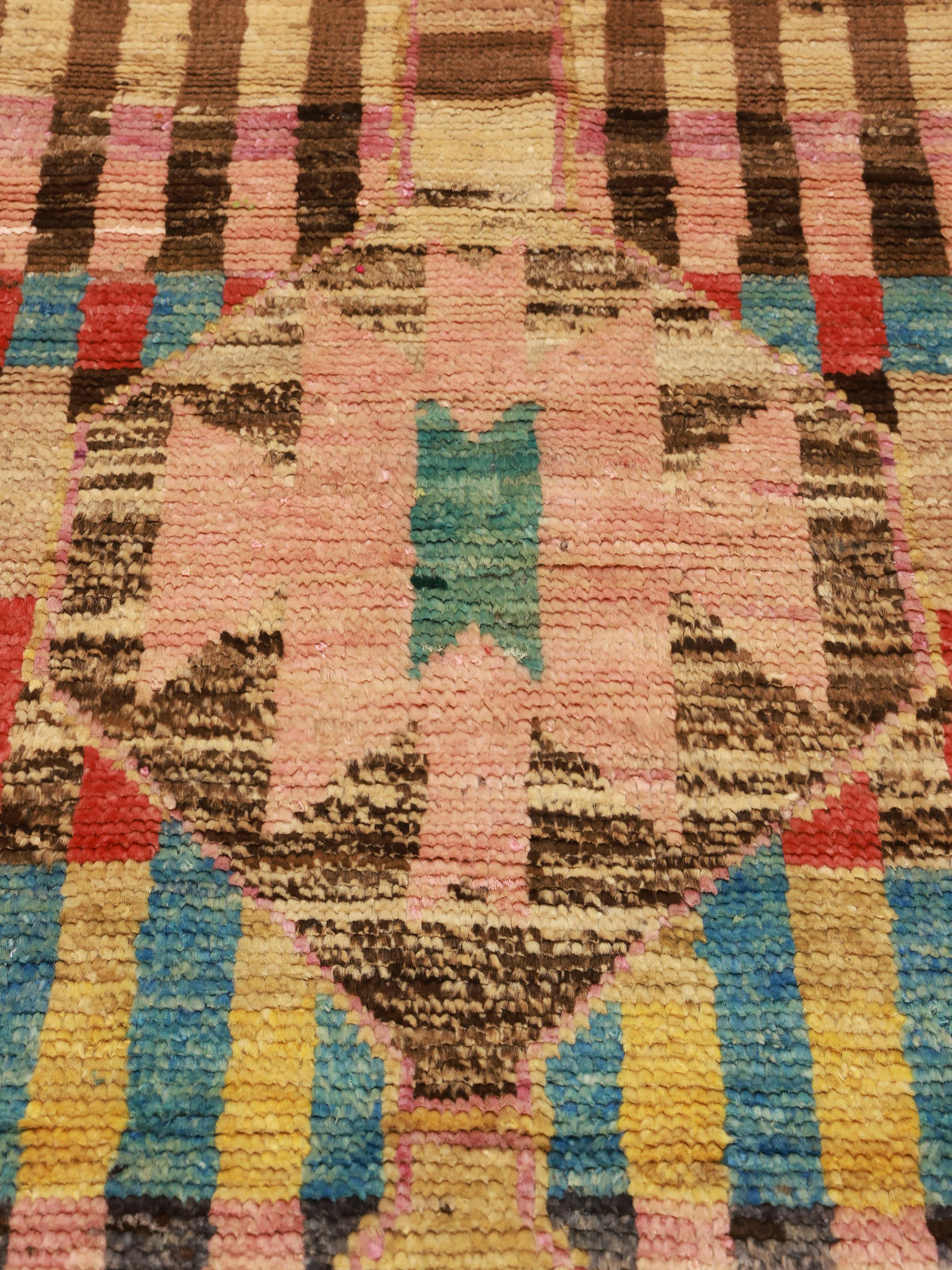
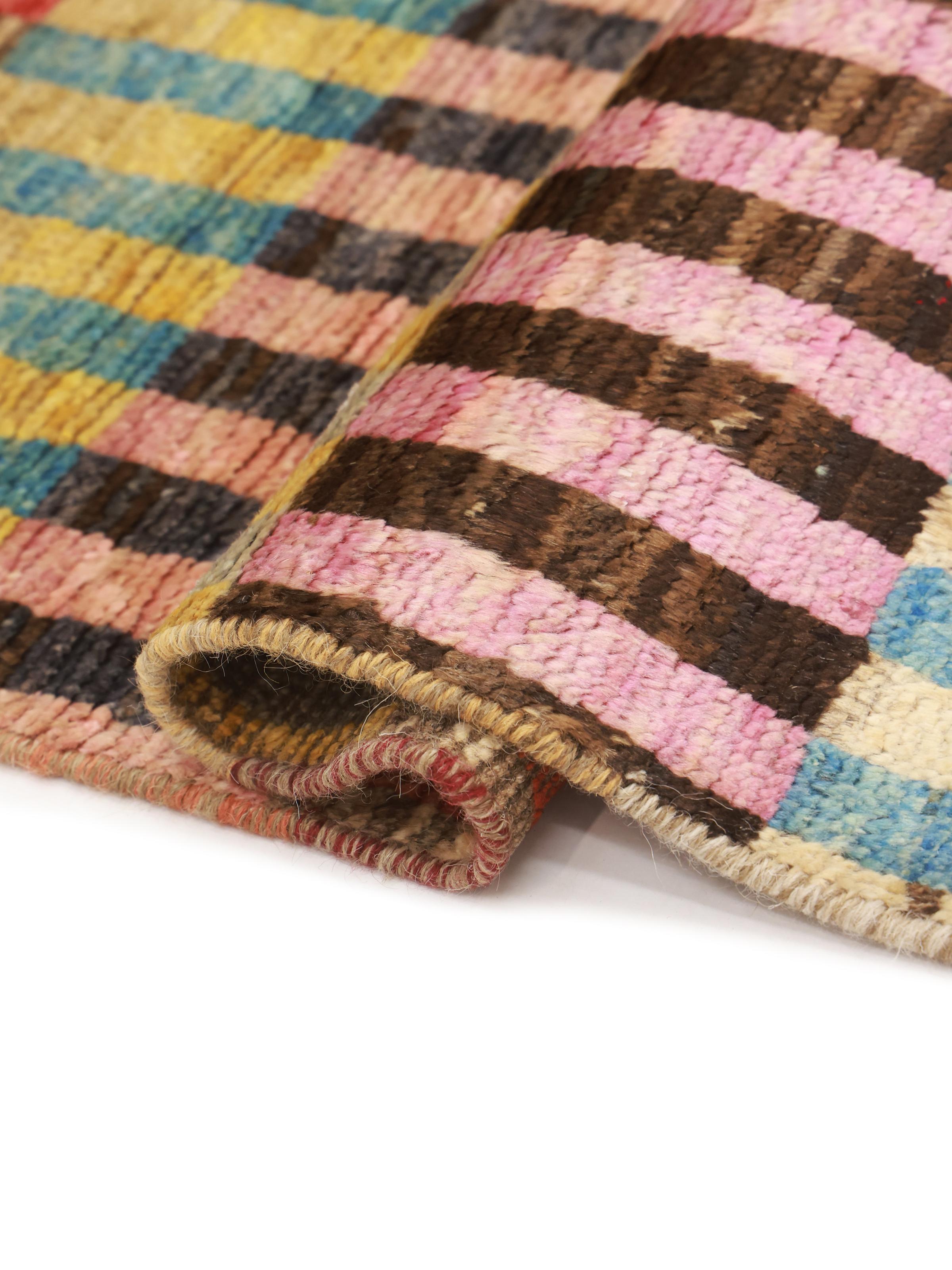
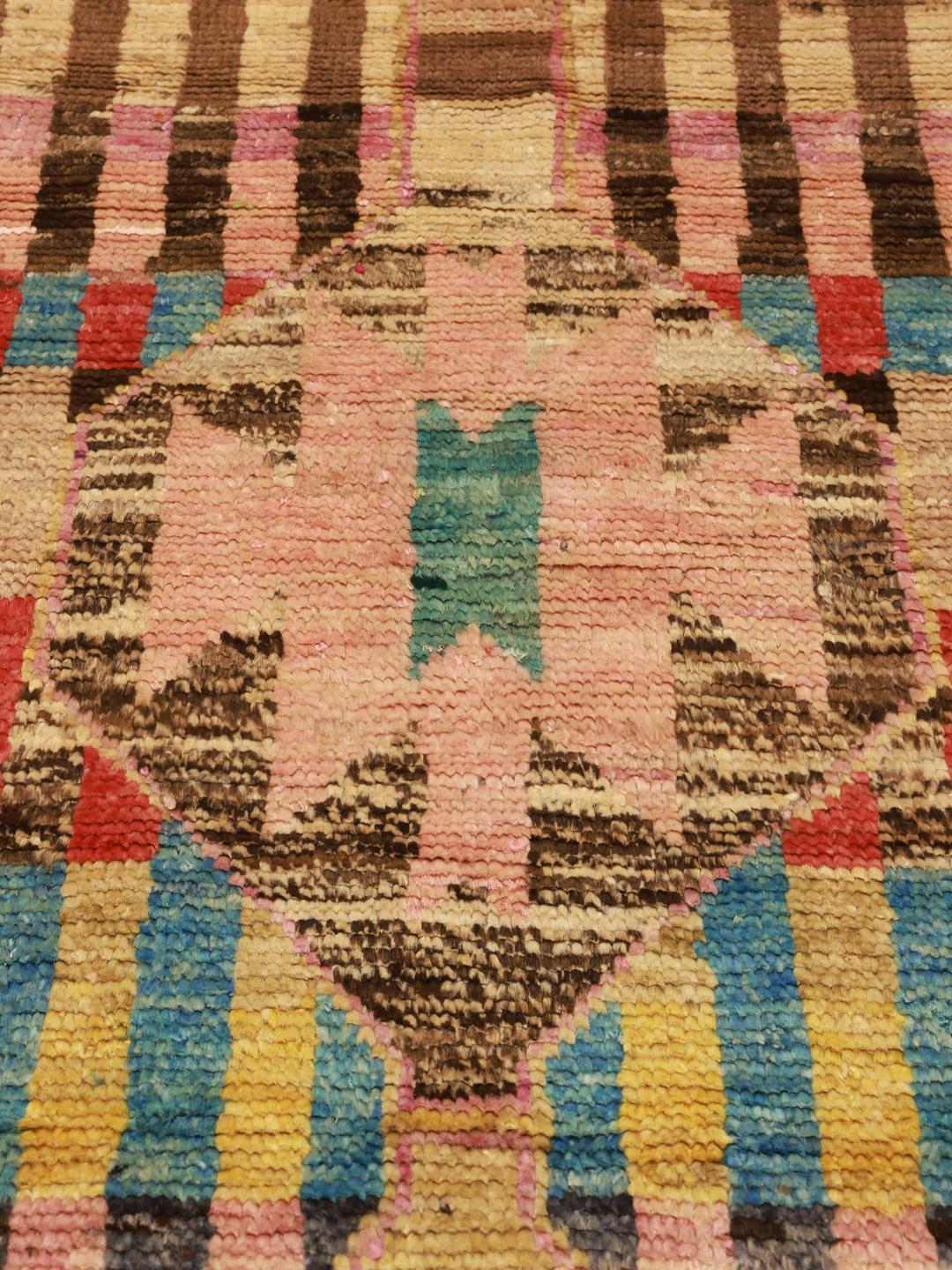
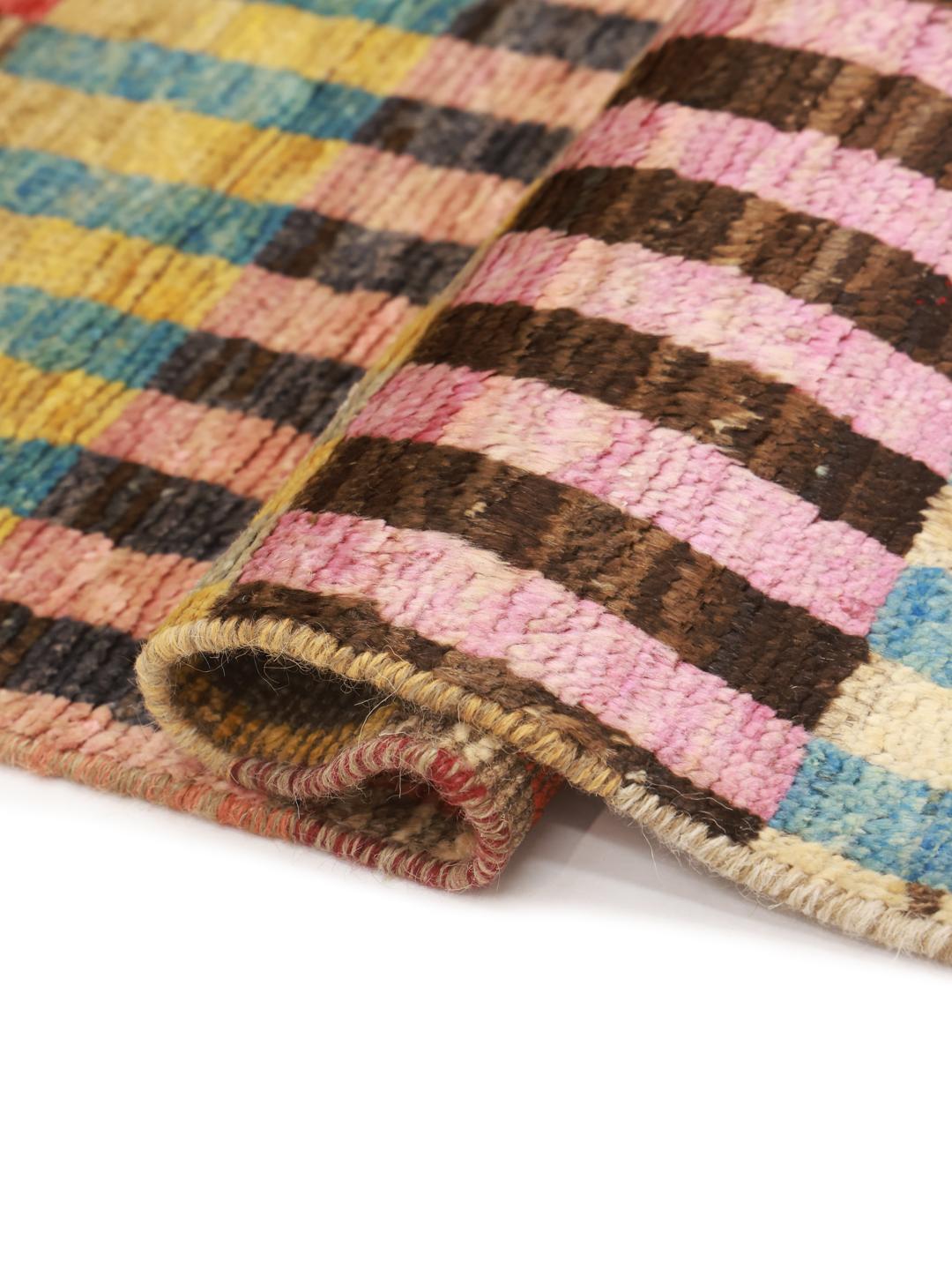
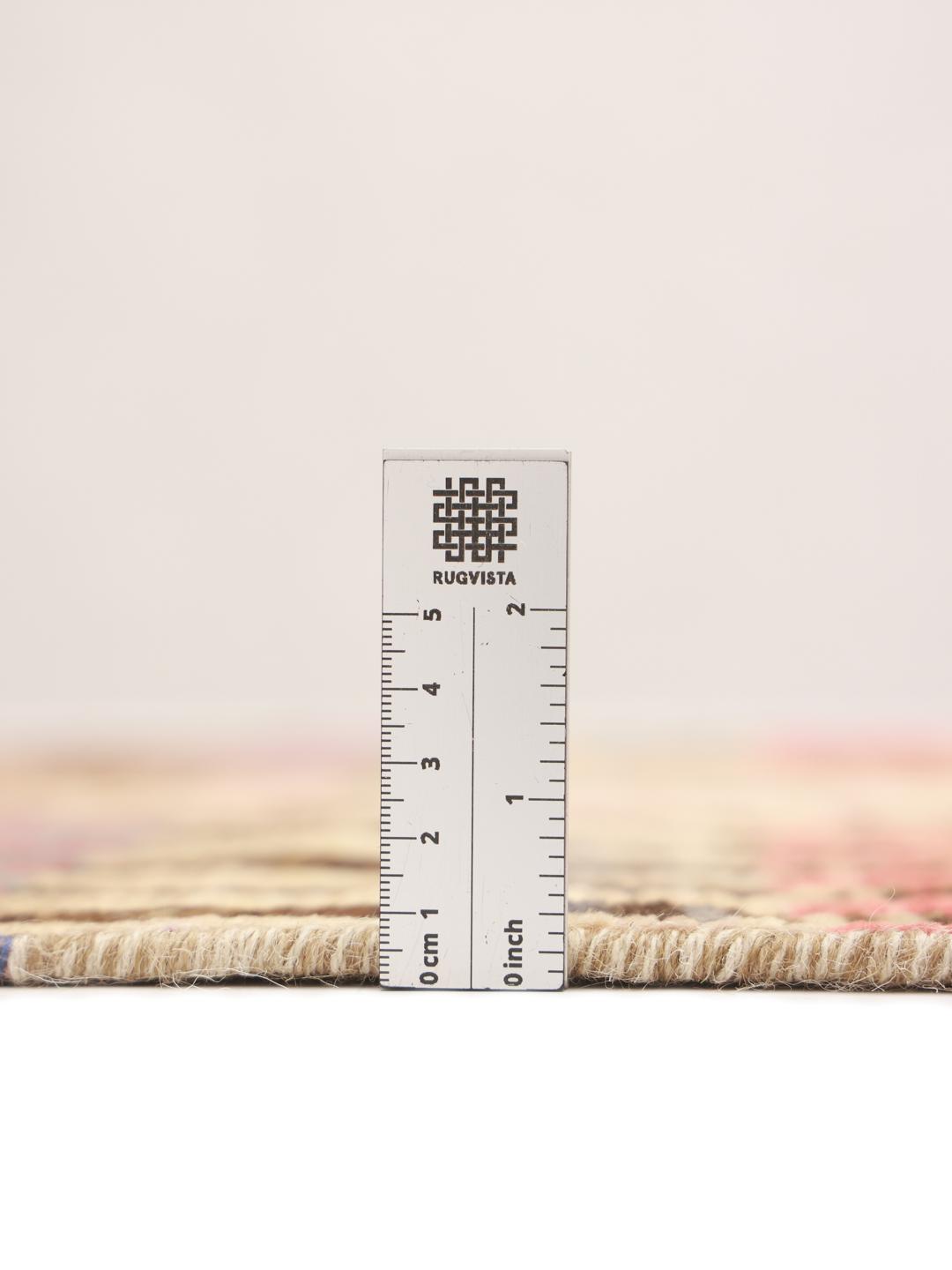
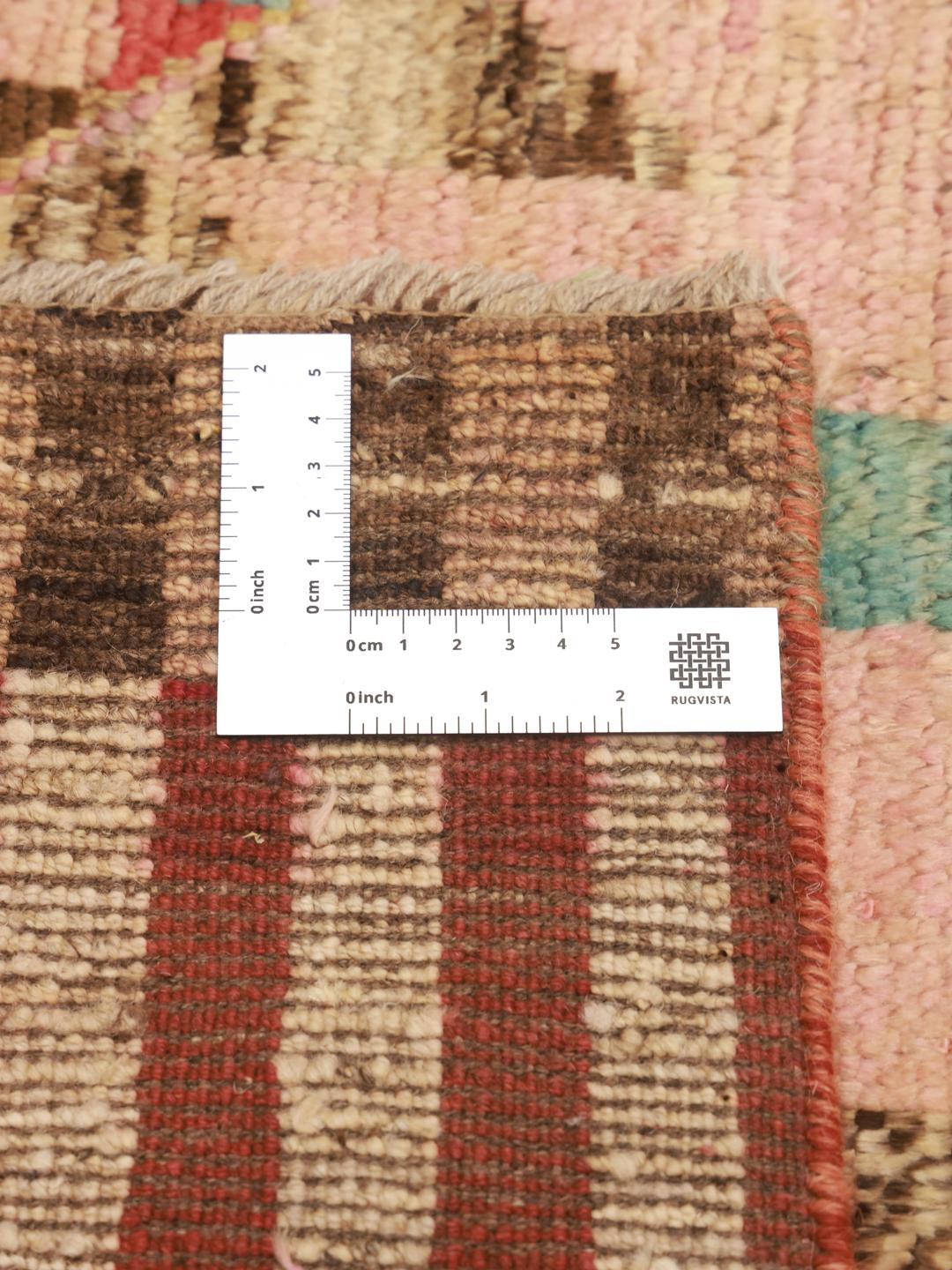
The term hand-knotted refers to the traditional method of securing the pile, which is fundamental to the longevity and value of the rug. By looping individual strands of Wool around the foundation, the weaver creates a dense, resilient surface. This time-honoured technique is what gives such rugs their signature weight and ability to withstand decades of use.
Visually, these rugs are defined by their bold use of colour and geometric motifs. Often featuring stripes and simplified symbols, the design language is expressive and direct. The presence of these specific patterns in this rug is a nod to the ancient storytelling traditions of the weavers, who used these designs to represent elements of their environment and cultural identity.
Collecting a rug from this tradition is an investment in cultural heritage. Each piece represents a bridge between ancient craftsmanship and contemporary design, offering a level of authenticity and character that mass-produced alternatives lack. Owning one means participating in a centuries-old story of skill, artistry, and the enduring human desire to make our living spaces more beautiful.