The story of these rugs begins in the mountainous regions of the Middle East, where nomadic traditions and settled village crafts have intertwined for centuries. These weavers have long utilised the abundance of high-quality, local wool to create functional textiles that serve as both insulation and artistic expression. While they are often referred to as Berber-style due to their shaggy, warm textures and tribal influences, the interpretation from this region brings a distinct, rugged elegance that is entirely its own.
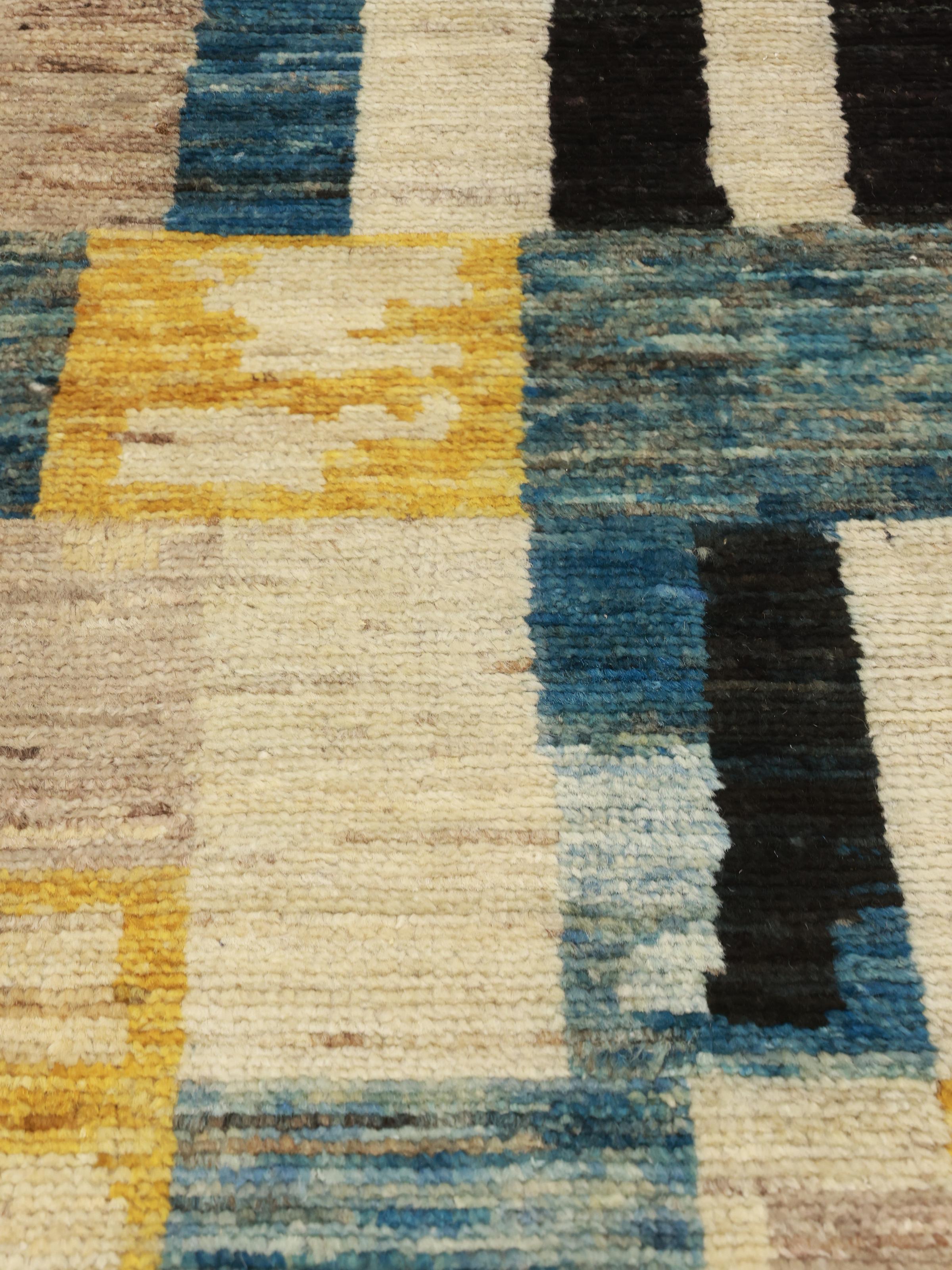
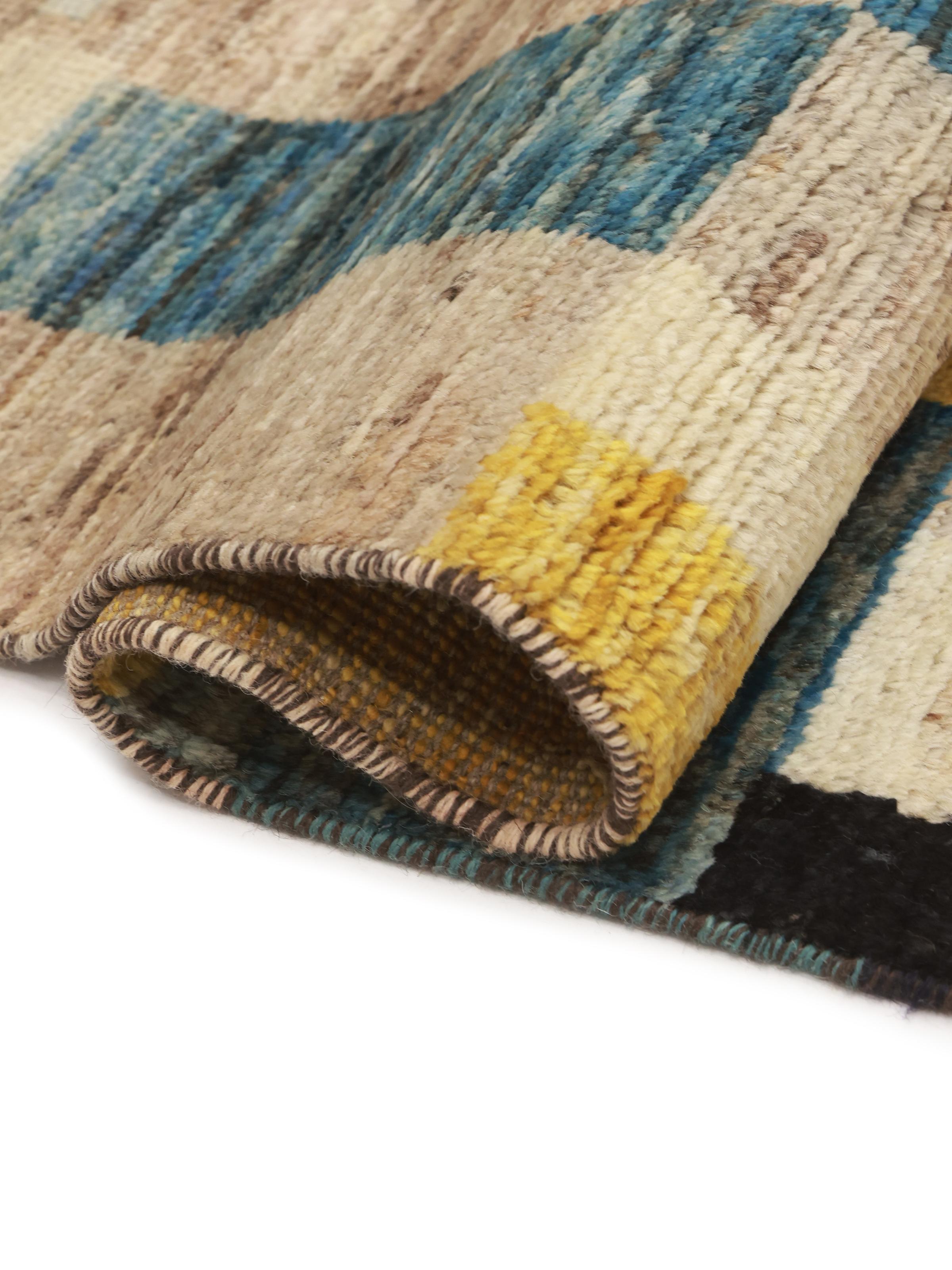
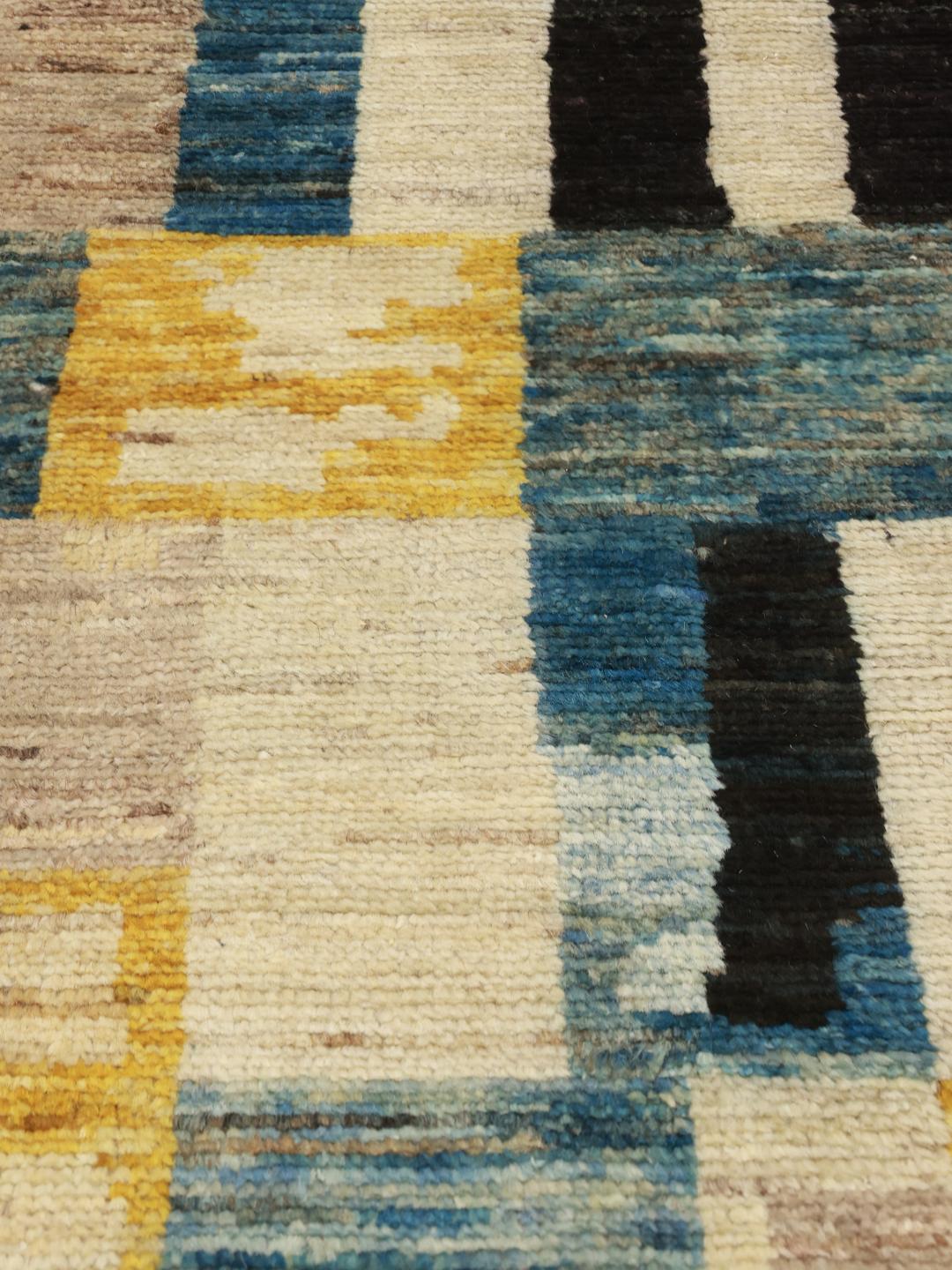
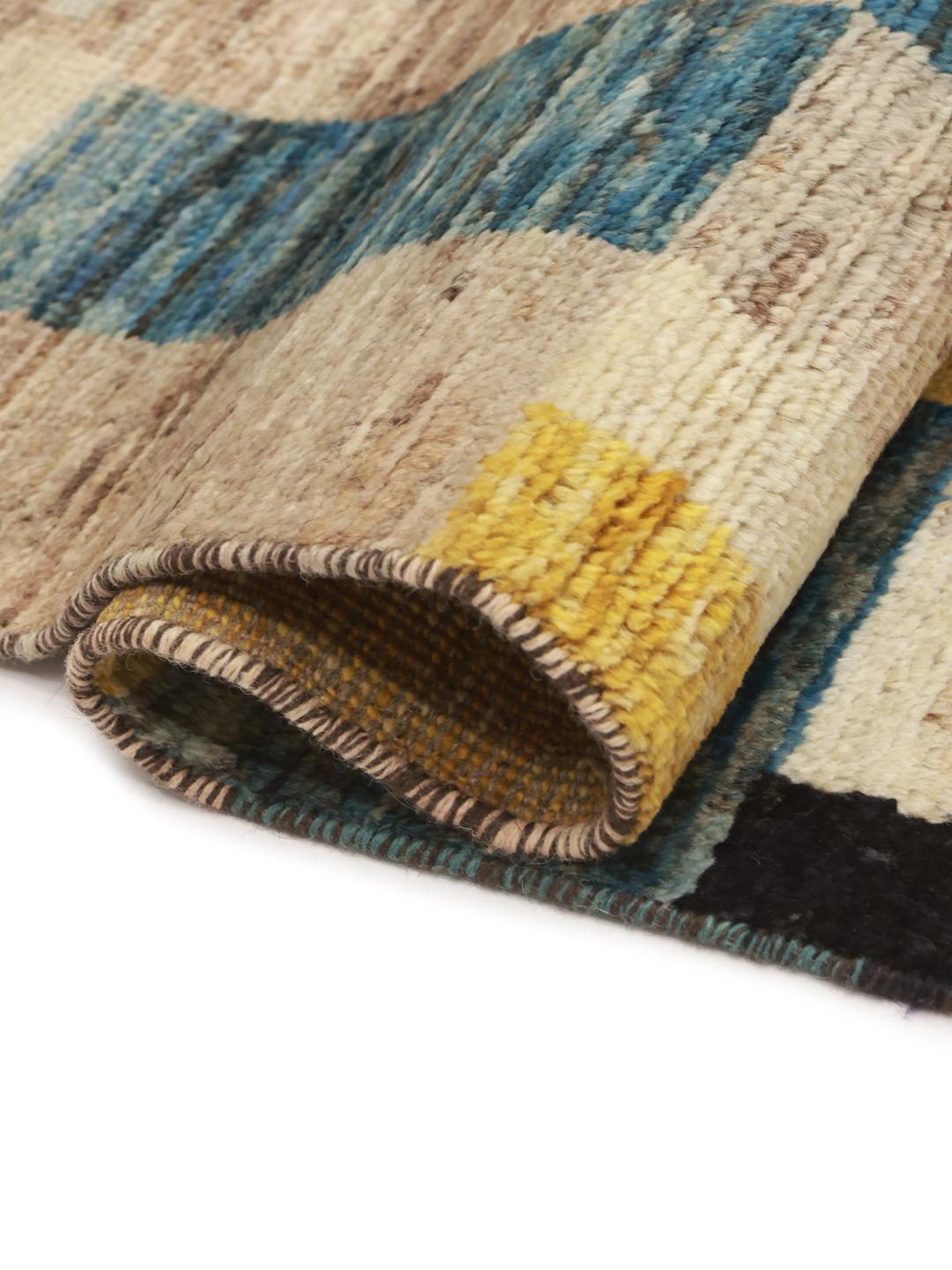
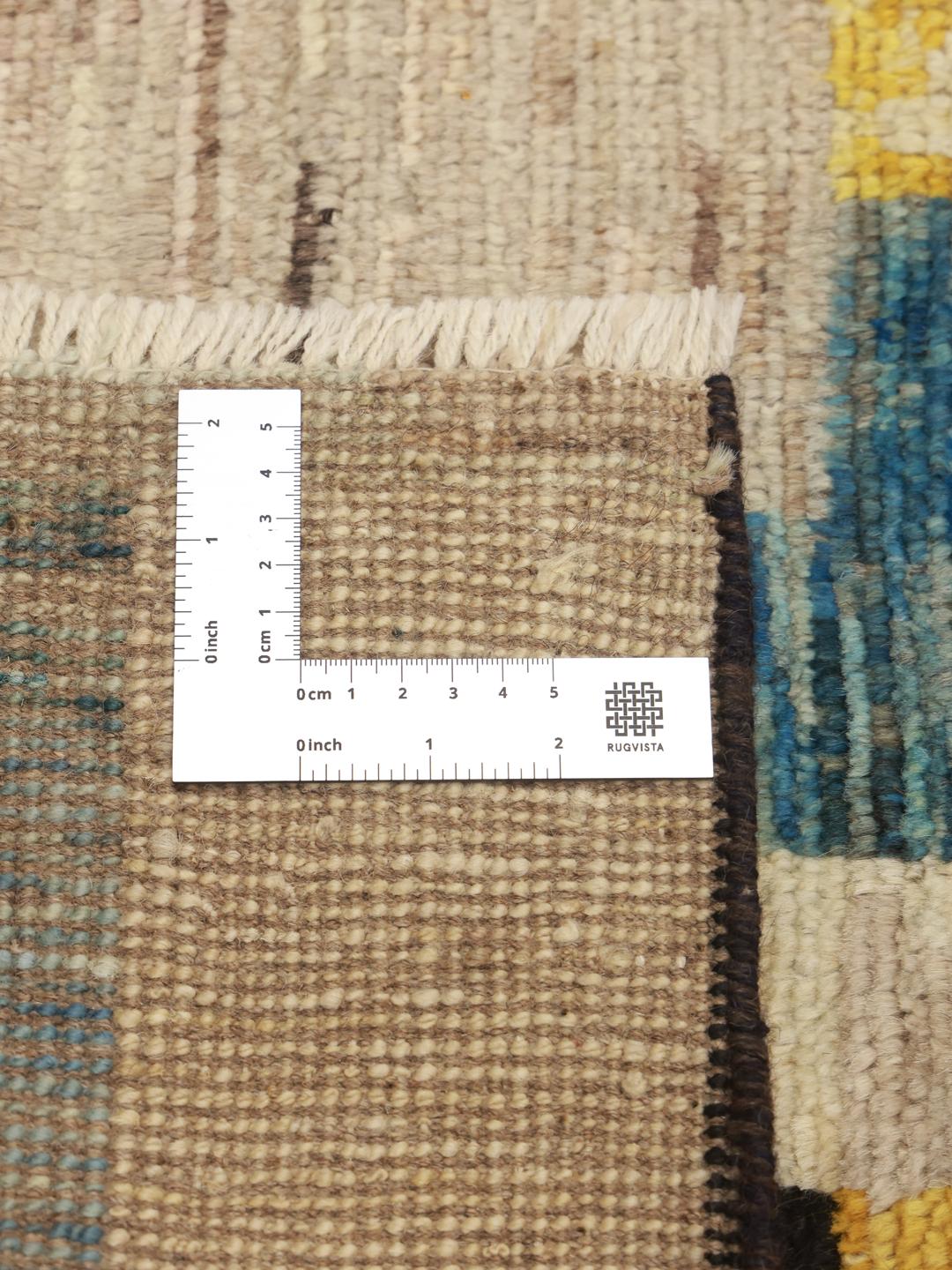
Hand-knotted construction is the hallmark of quality in this tradition, representing a standard of excellence that machines simply cannot emulate. The process involves securing each individual knot by hand, which creates a dense, durable pile that is naturally resistant to wear. This technique is more than just a way to build a rug; it is a manifestation of the artisan's dedication to creating a piece that will age beautifully and become a permanent fixture in the home.
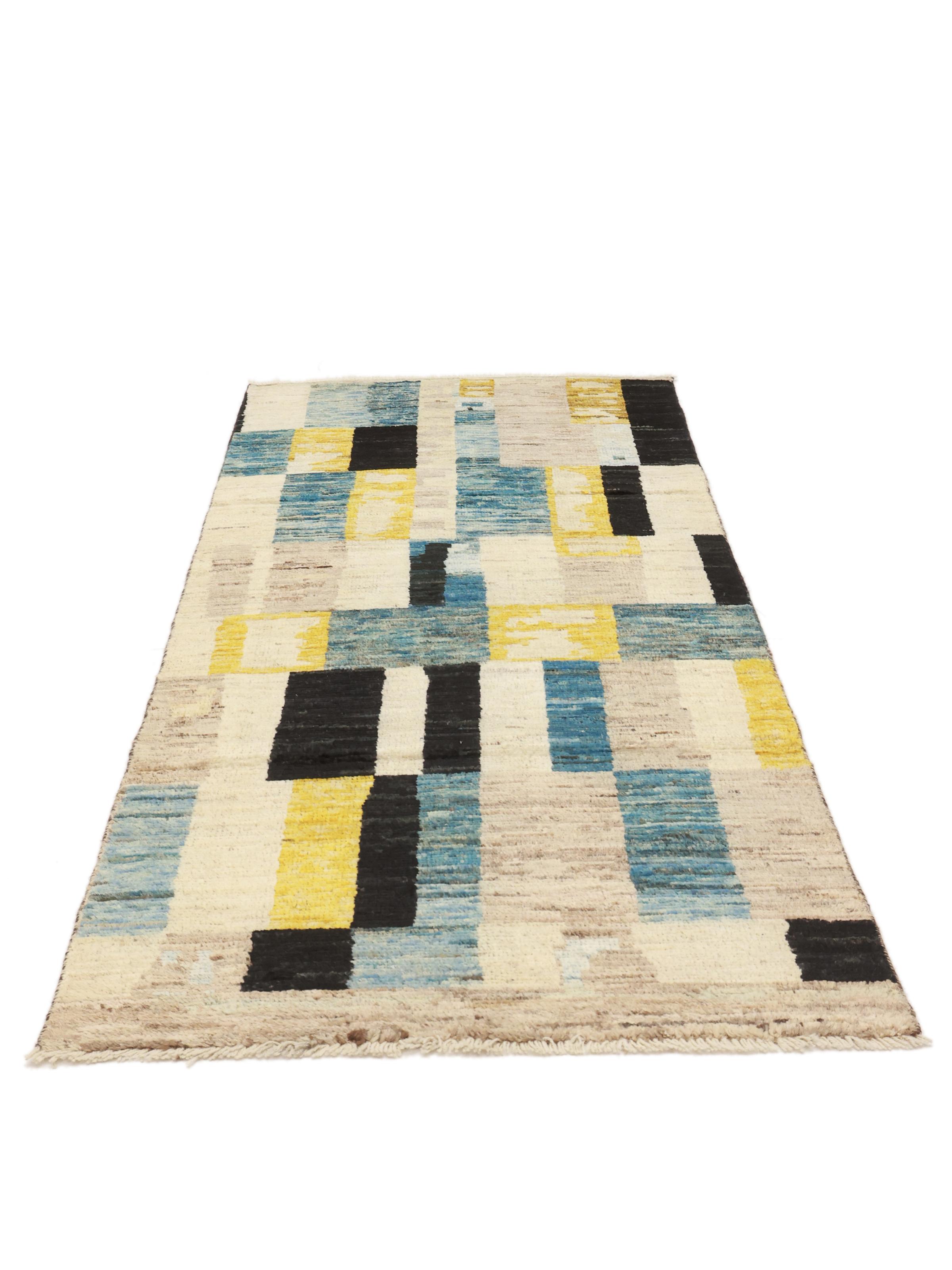
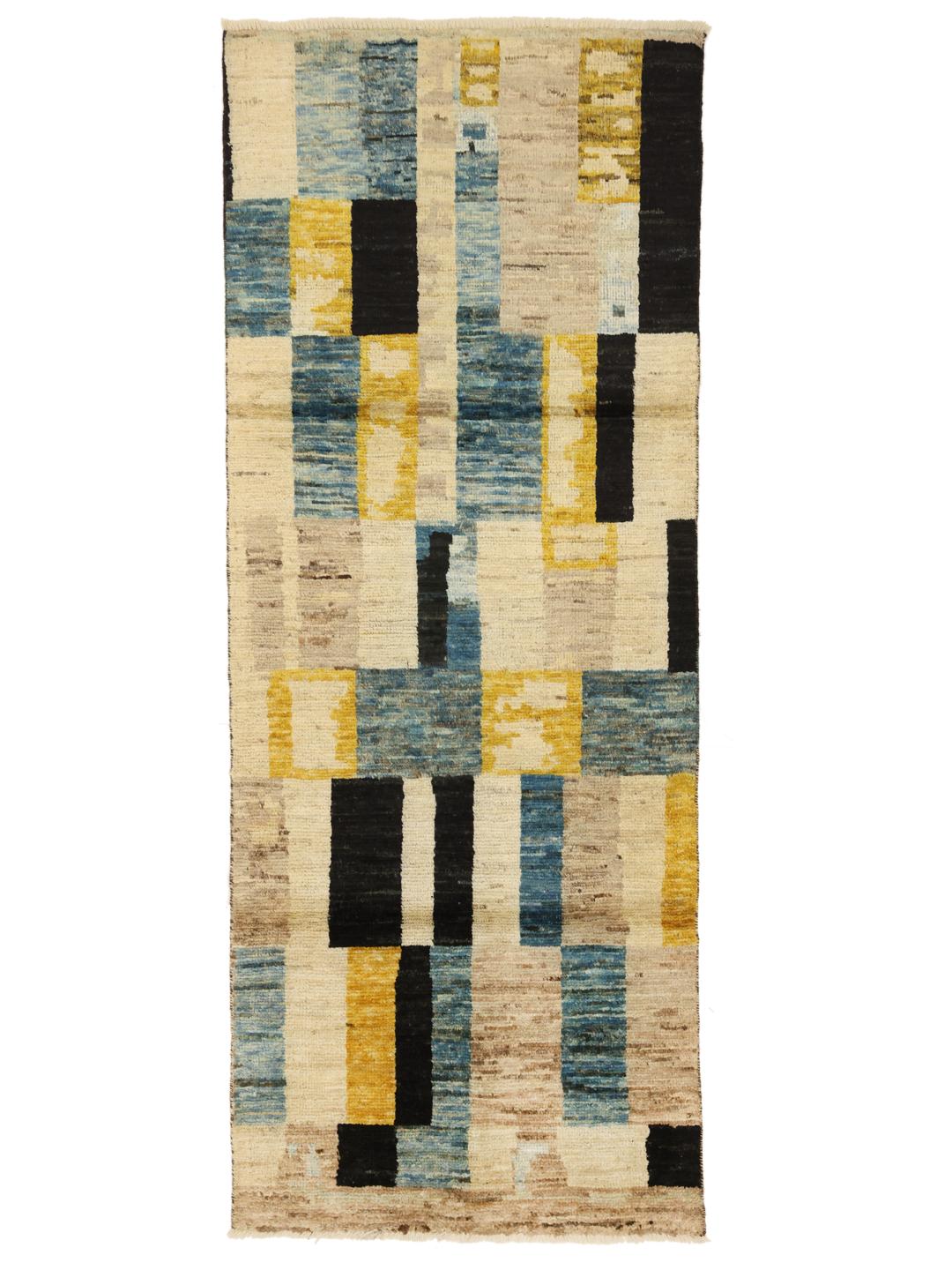
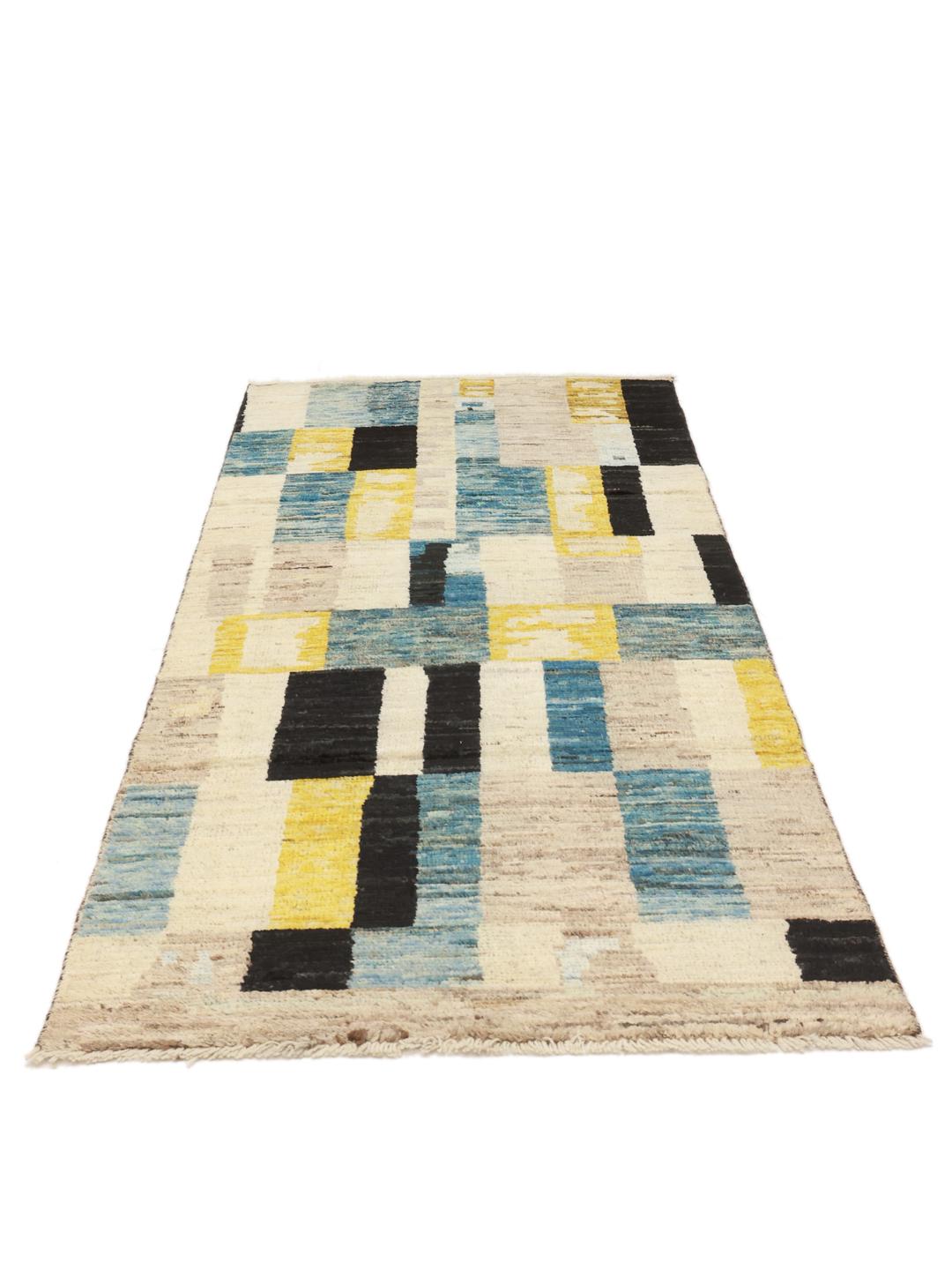
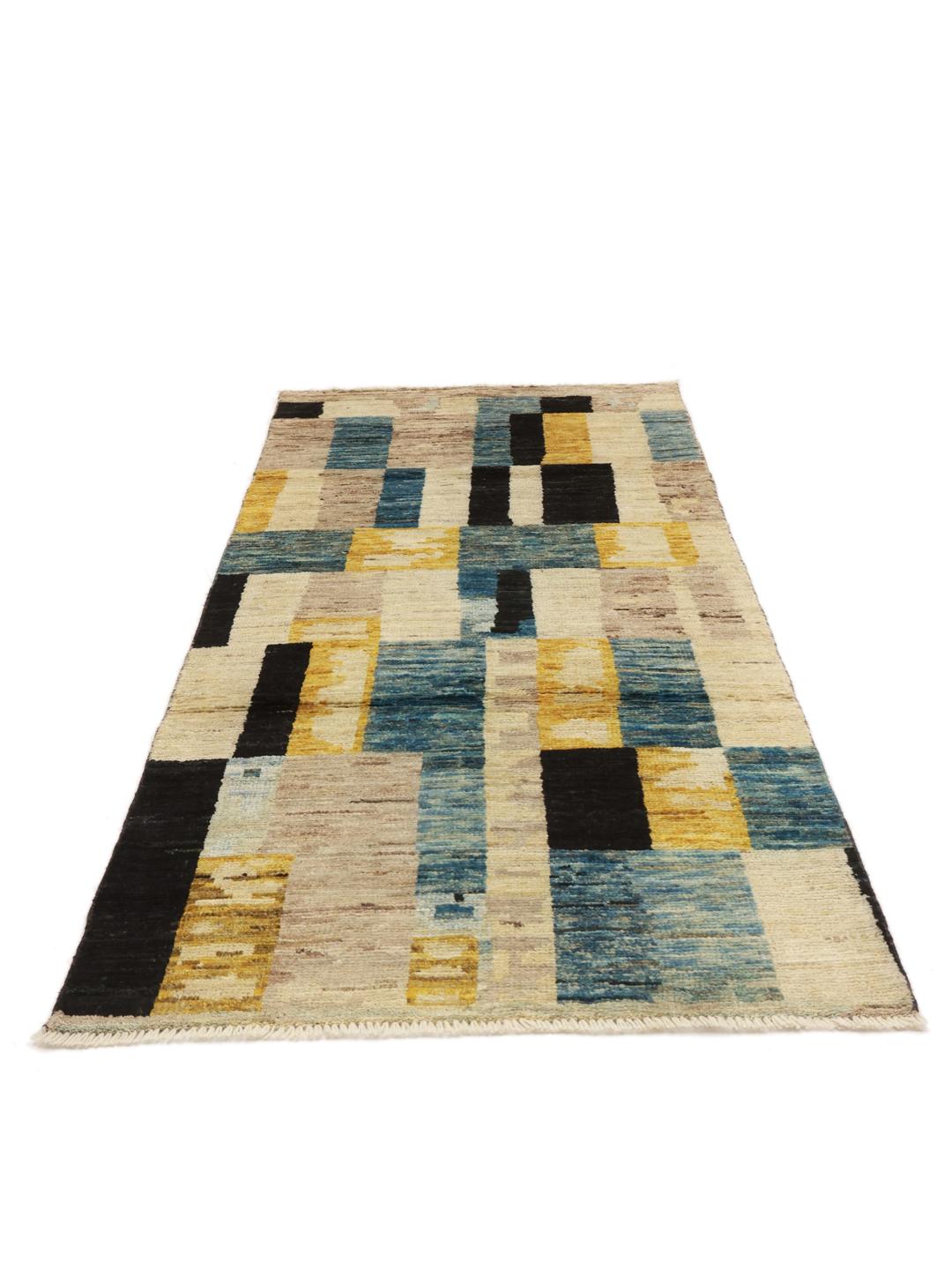
Visually, these rugs are defined by their bold, often abstract or geometric motifs, which frequently draw inspiration from the surrounding landscape and tribal heritage. While traditional colours often lean toward rich, earthy tones, modern interpretations like this one introduce vibrant, contrasting hues that break from convention. The use of deep blues and bright yellows against a neutral background creates a striking visual rhythm, making these rugs highly sought after for contemporary interiors.
To own a piece from this tradition is to hold a connection to a long-standing lineage of craft, skill, and cultural identity. These rugs are valued not just for their utility, but for the human effort and artistic intention embedded in every fibre. As collectors and design enthusiasts look for more authentic, unique home furnishings, these hand-knotted pieces provide a sense of history and permanence that mass-produced items lack.