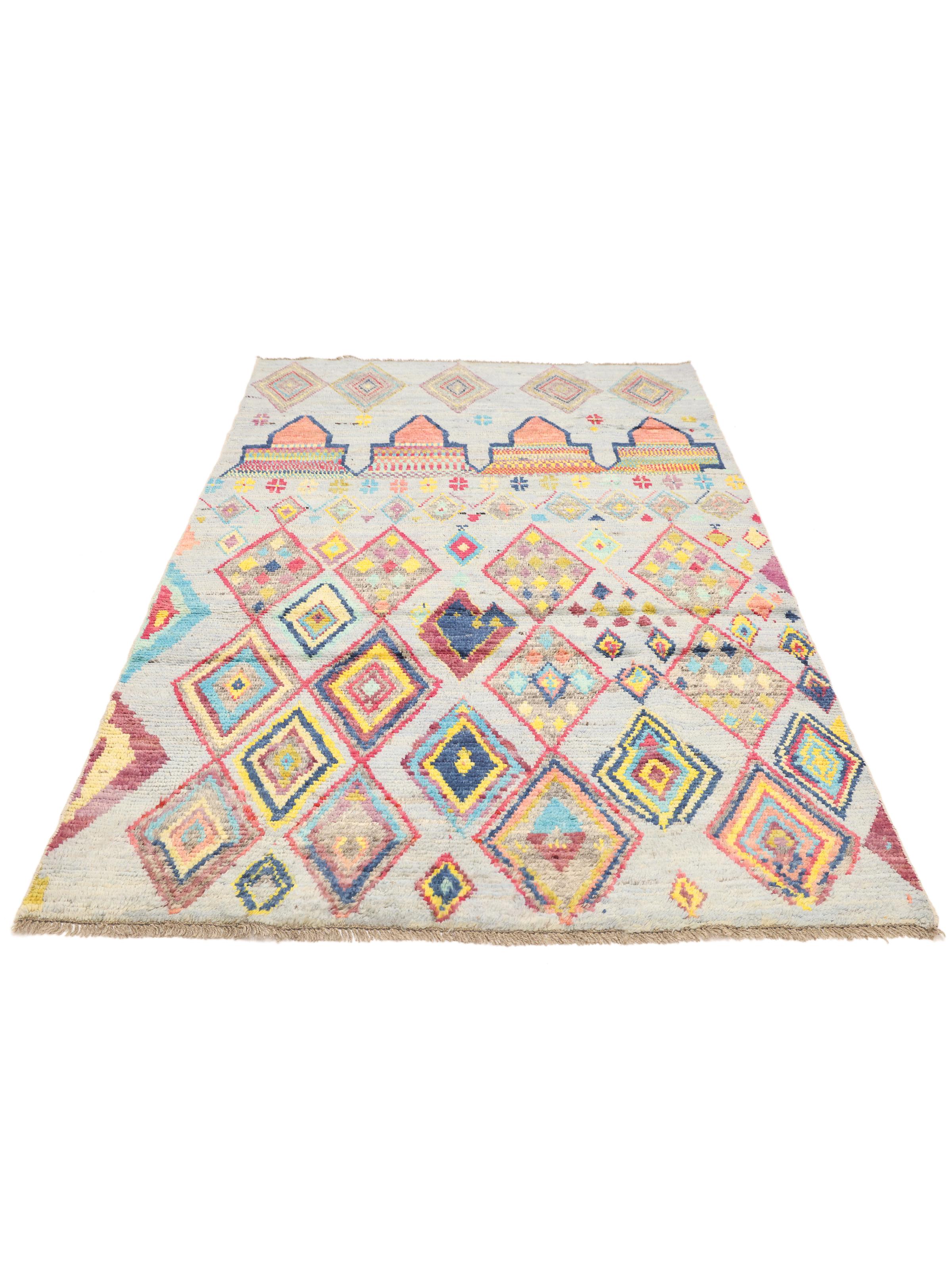
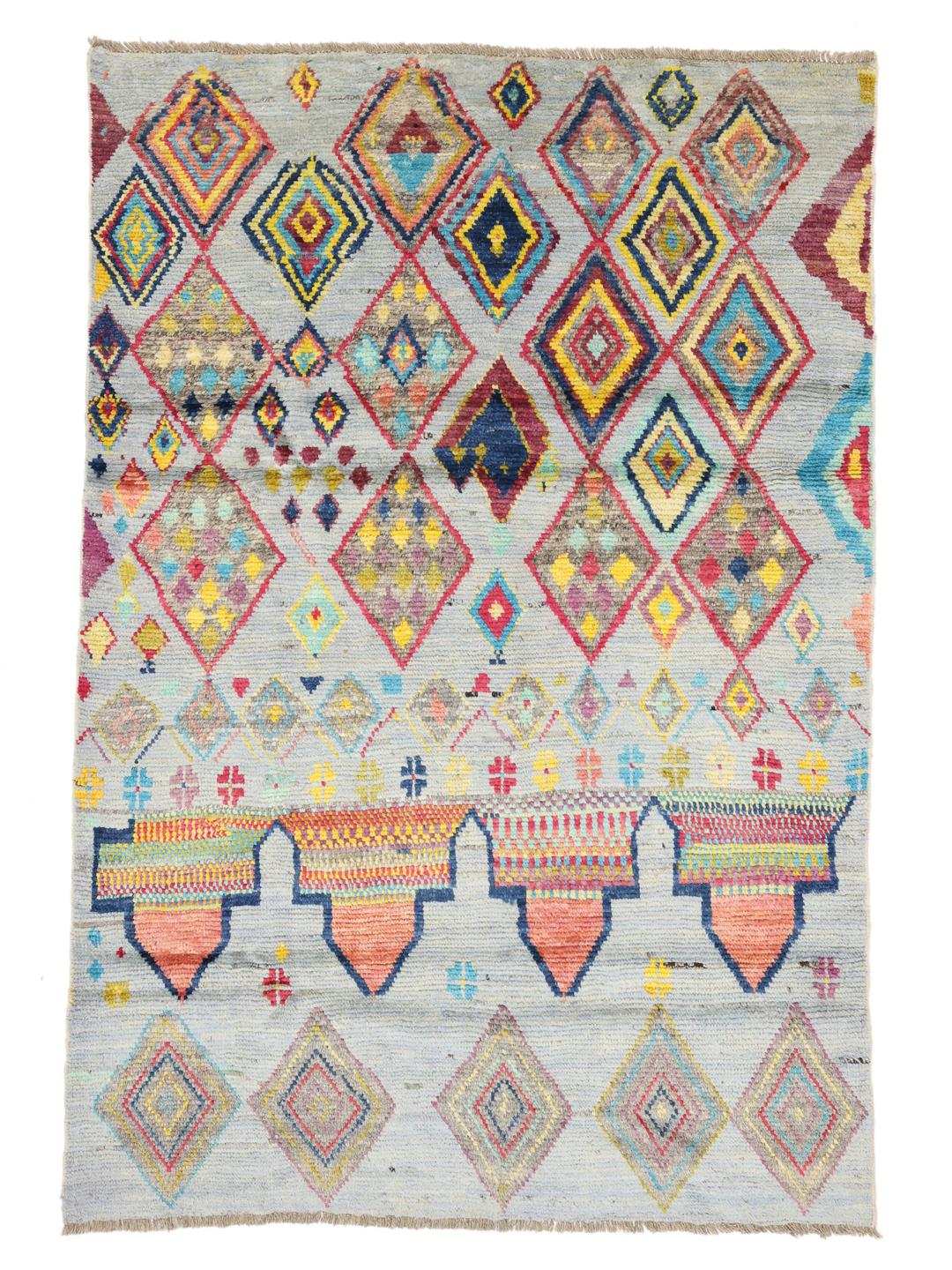
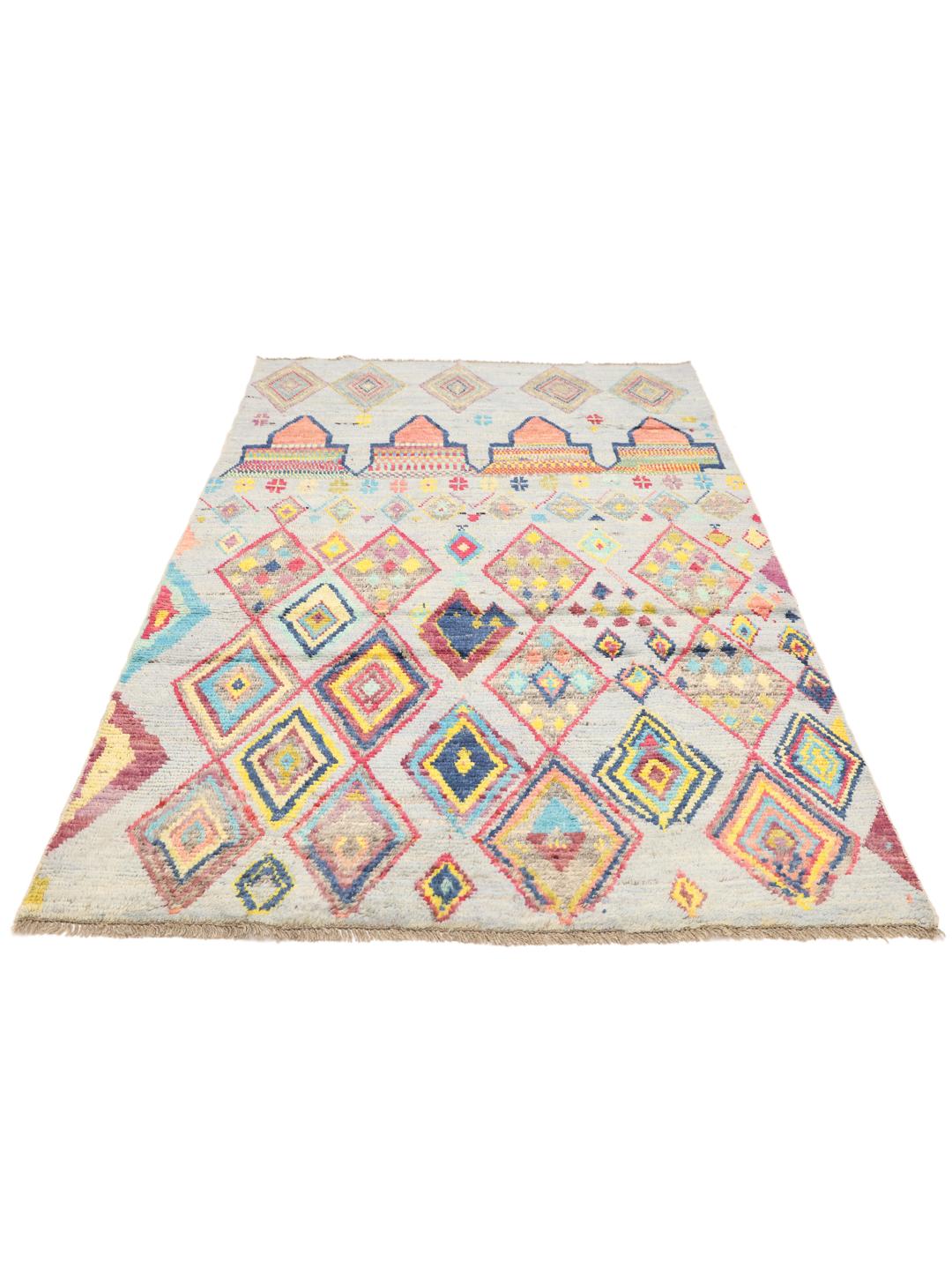
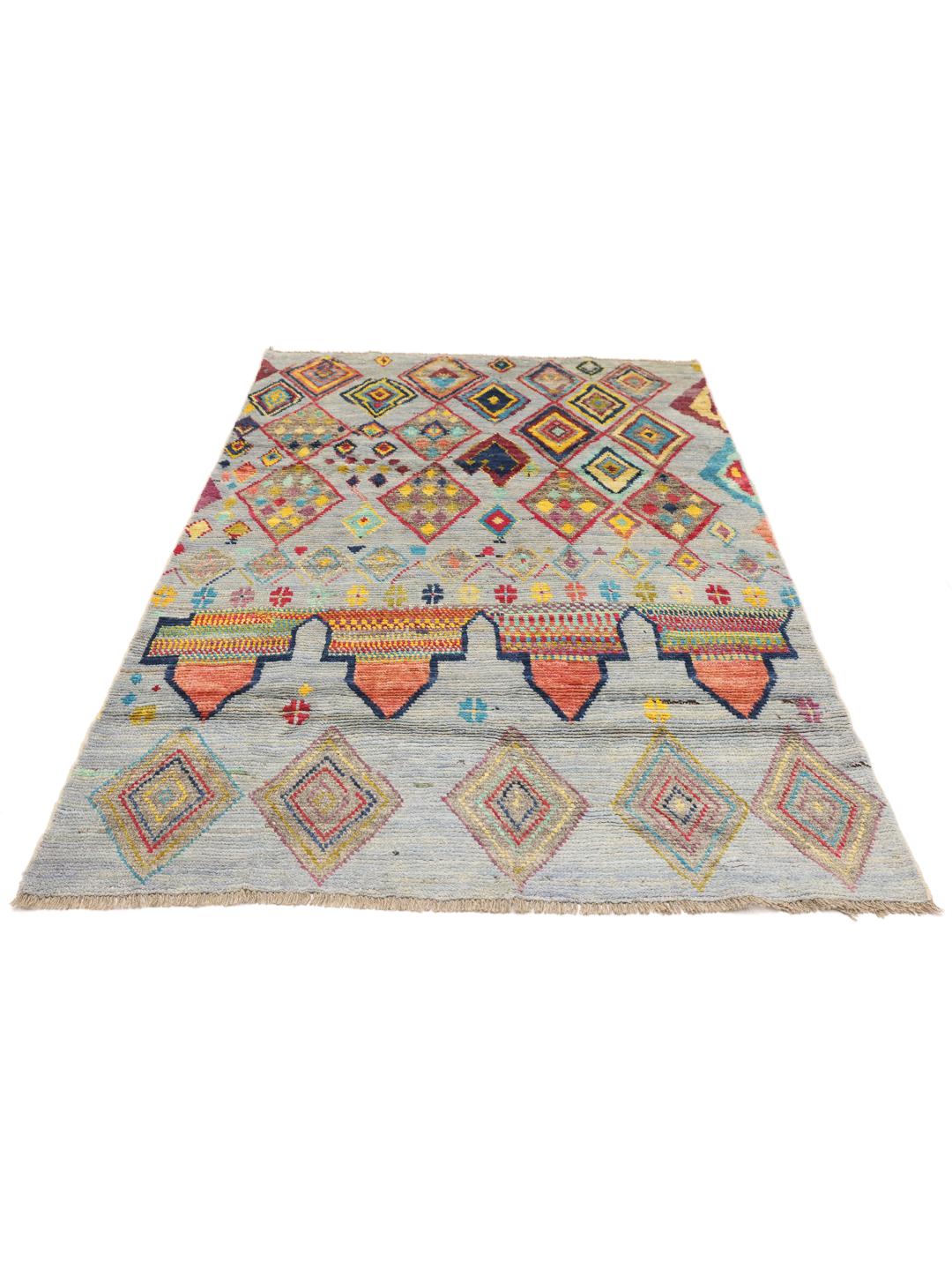
The origins of these vibrant rugs lie in the deep-rooted weaving traditions of the Middle East, where tribal craft has been passed down through generations. While often associated with the nomadic aesthetics of the Atlas Mountains, the style has evolved significantly, finding a new and celebrated home in the skilled workshops of Afghanistan.
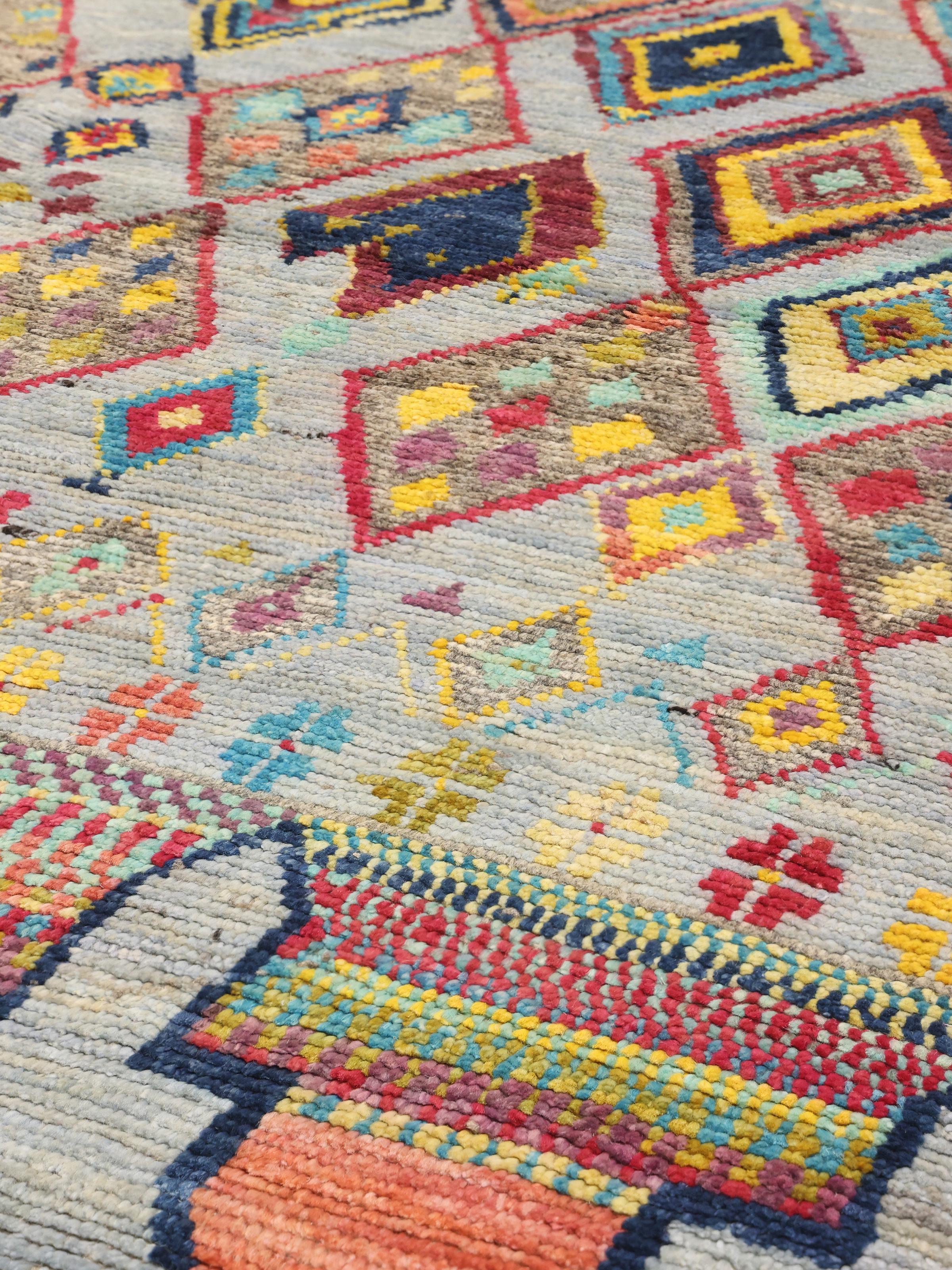
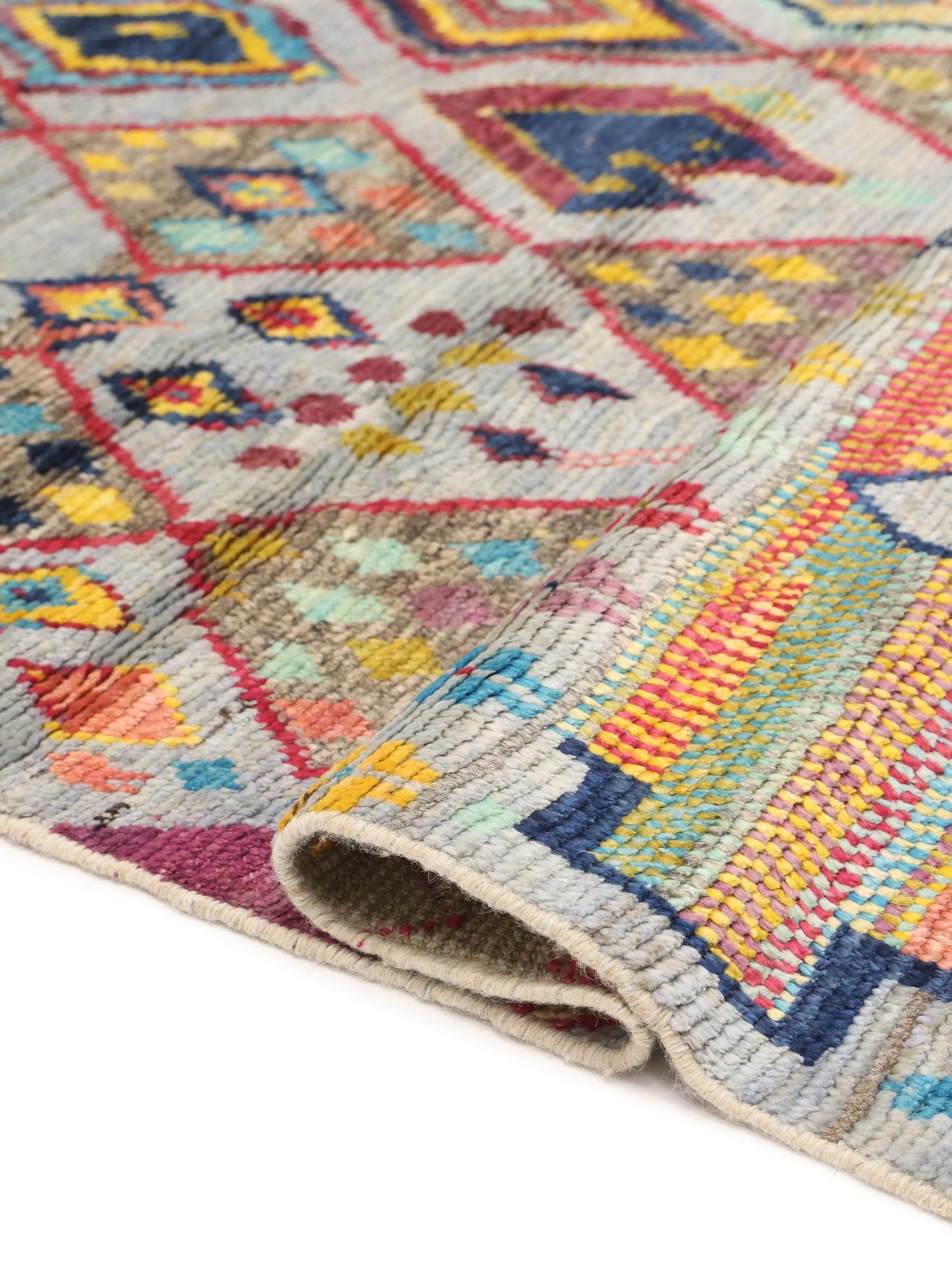
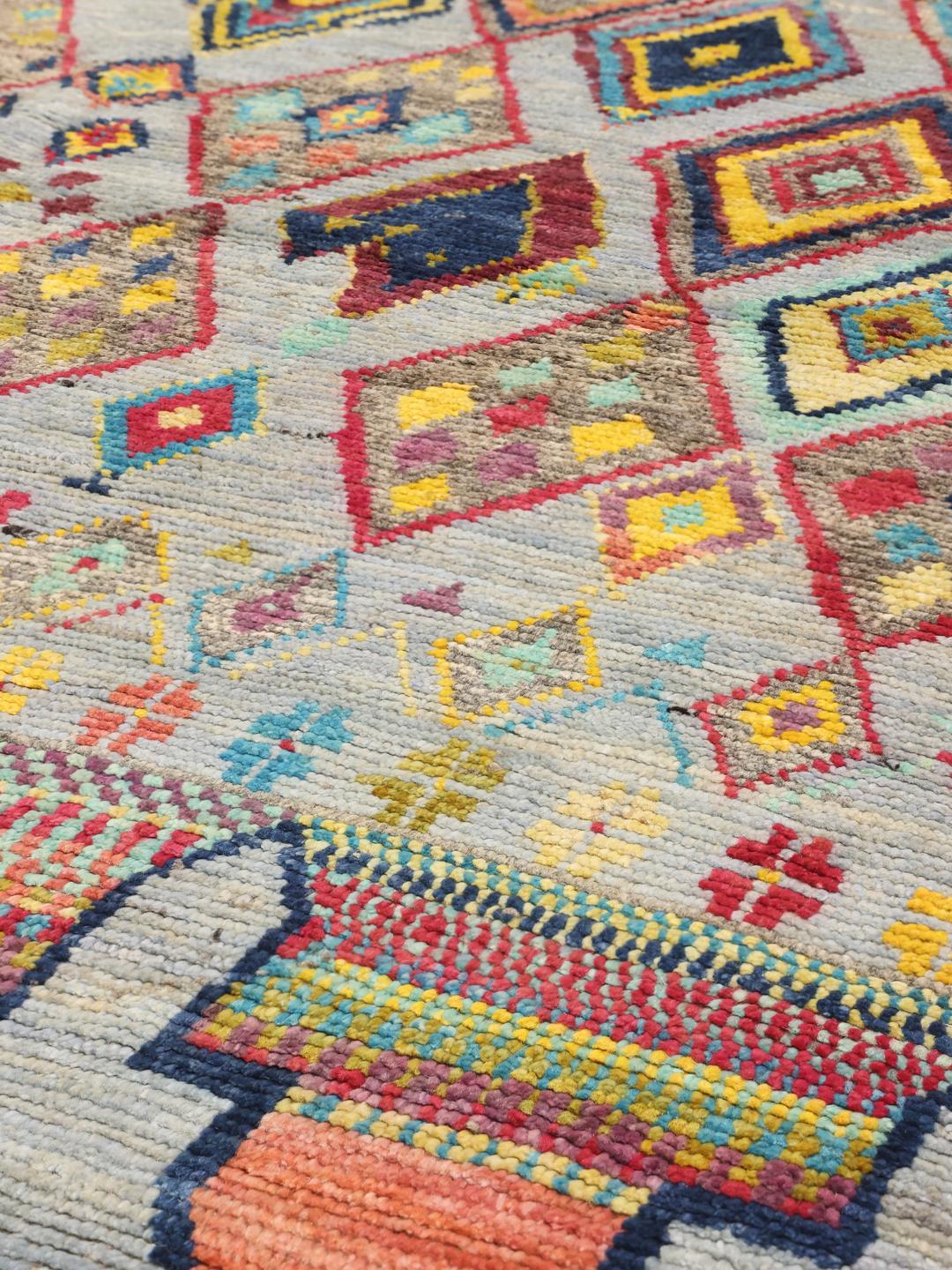
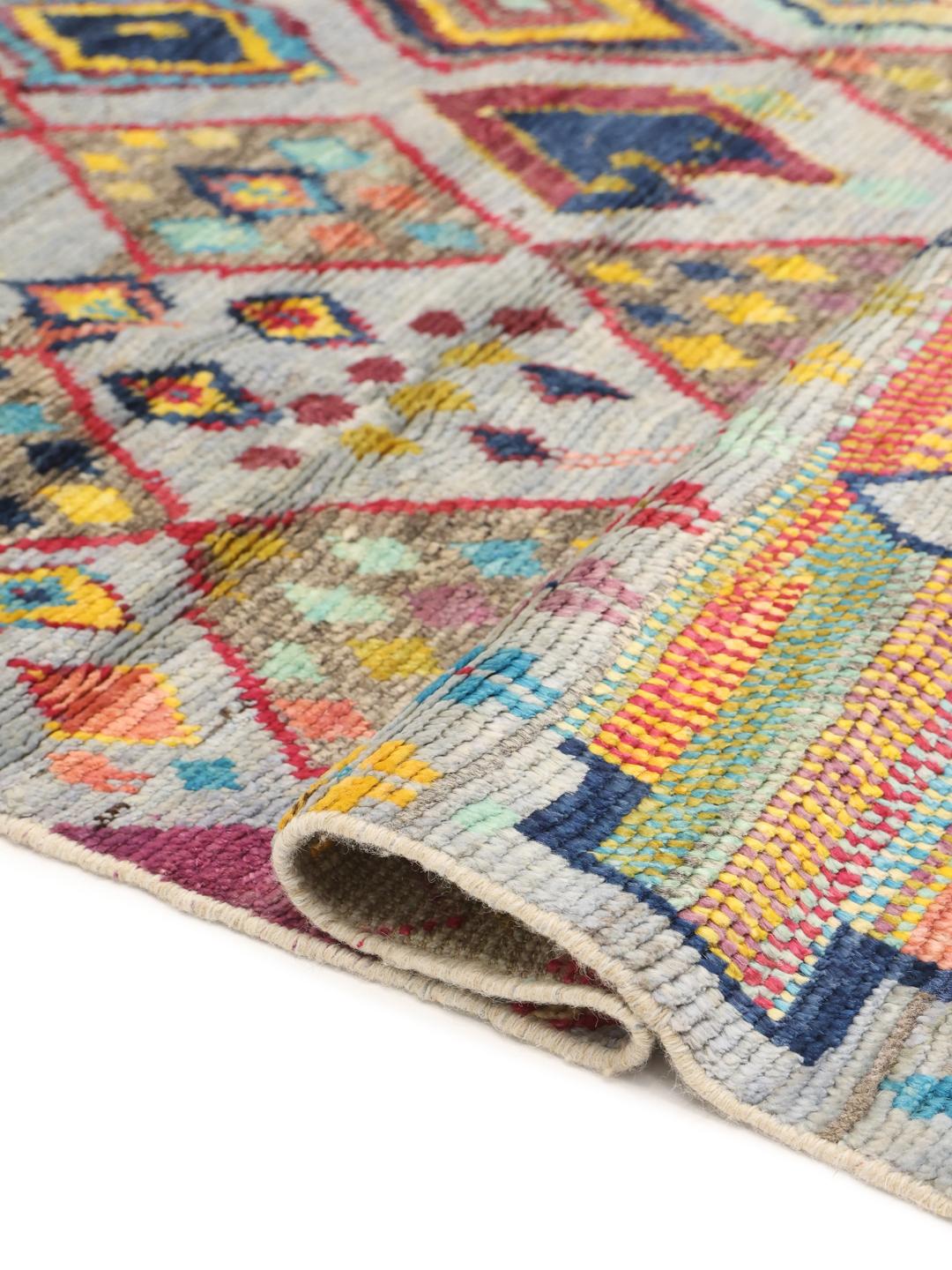
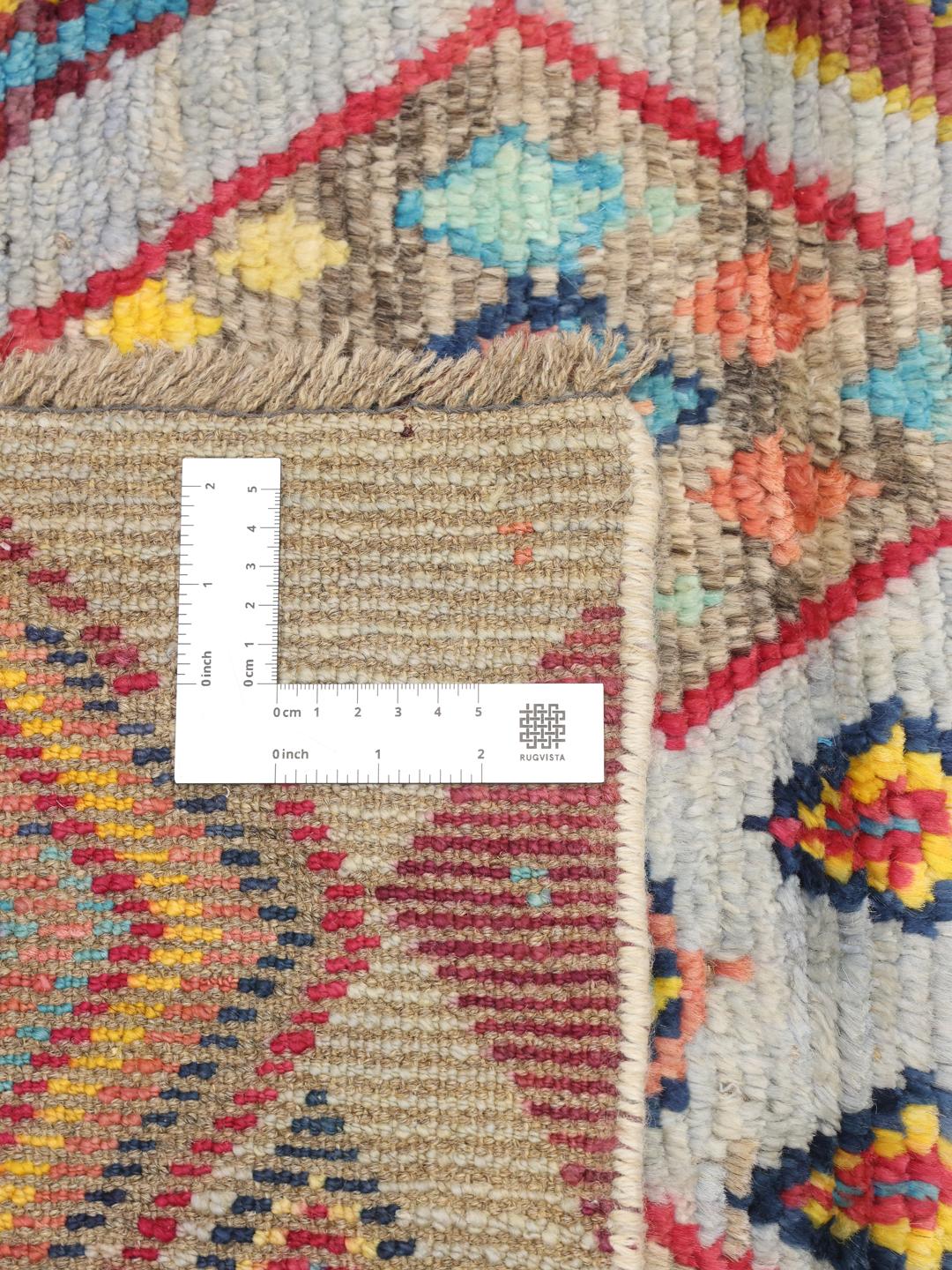
The term hand-knotted refers to the technique where individual loops of wool are tied onto a foundation. This method is the hallmark of premium rug making, as it creates a sturdy, long-lasting structure that allows for intricate design work. This approach ensures that the finished piece is not just a floor covering, but a durable textile that can last for decades.
Visually, these rugs are defined by their bold, geometric language, often utilising diamonds, triangles, and symbolic motifs. While traditional Berber rugs were often neutral, this specific style embraces a much broader, more adventurous colour palette, using bright, contrasting hues to make the patterns pop against the backdrop.
Collecting these rugs is about more than just decoration; it is about preserving a living tradition. Each piece carries the narrative of its weaver and the region it came from, offering a level of authenticity and cultural weight that mass-produced items simply cannot provide.