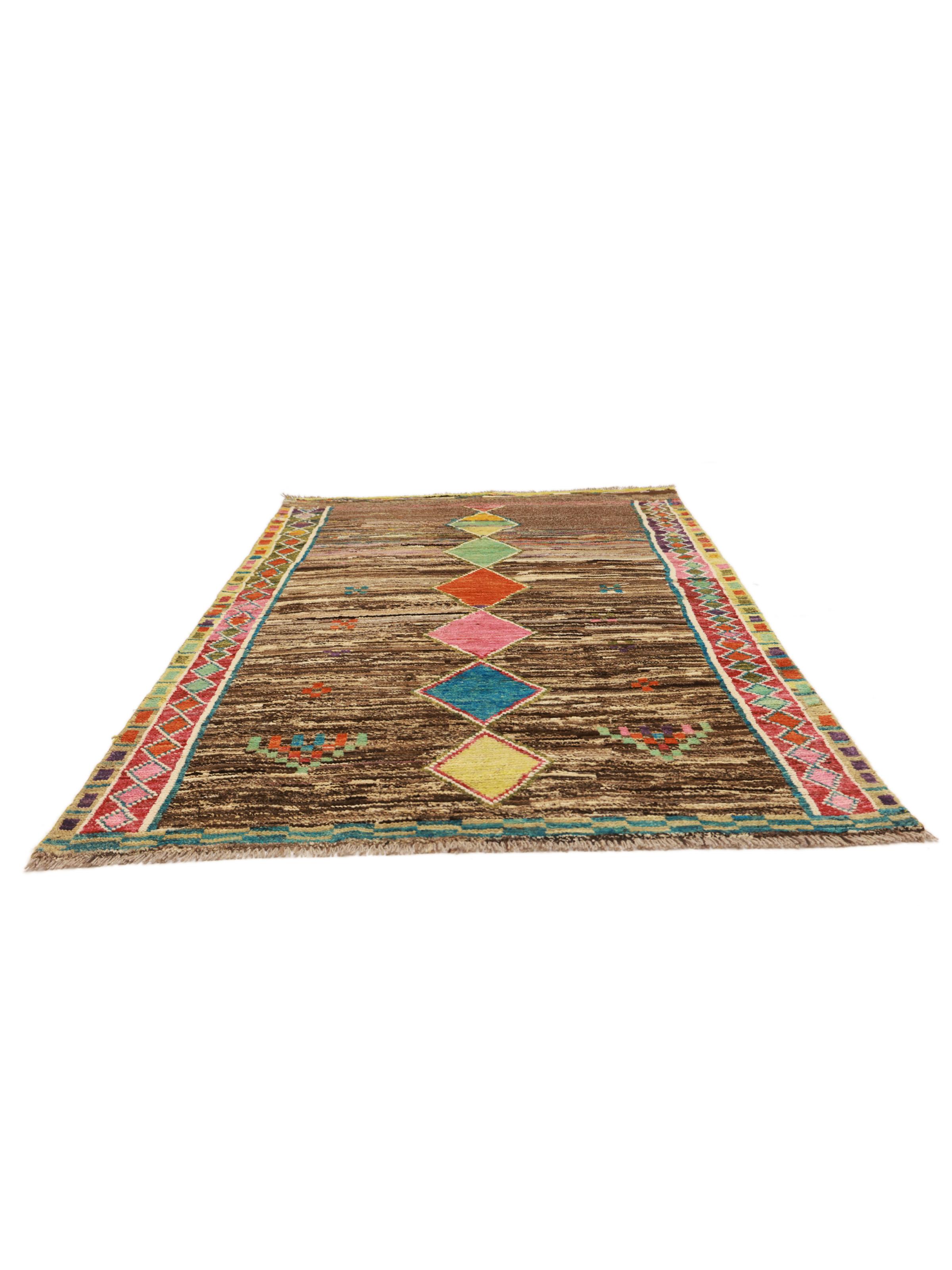
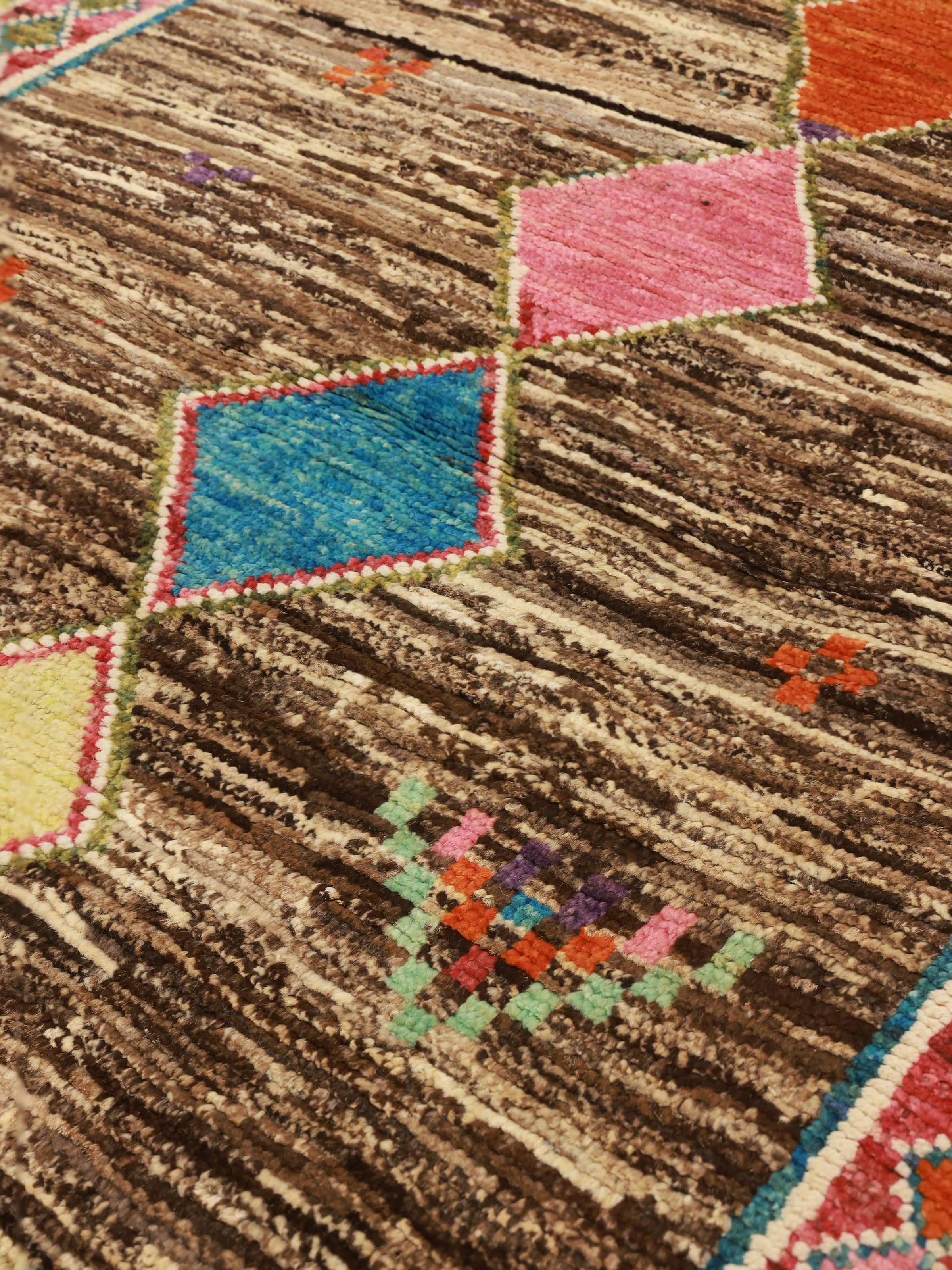
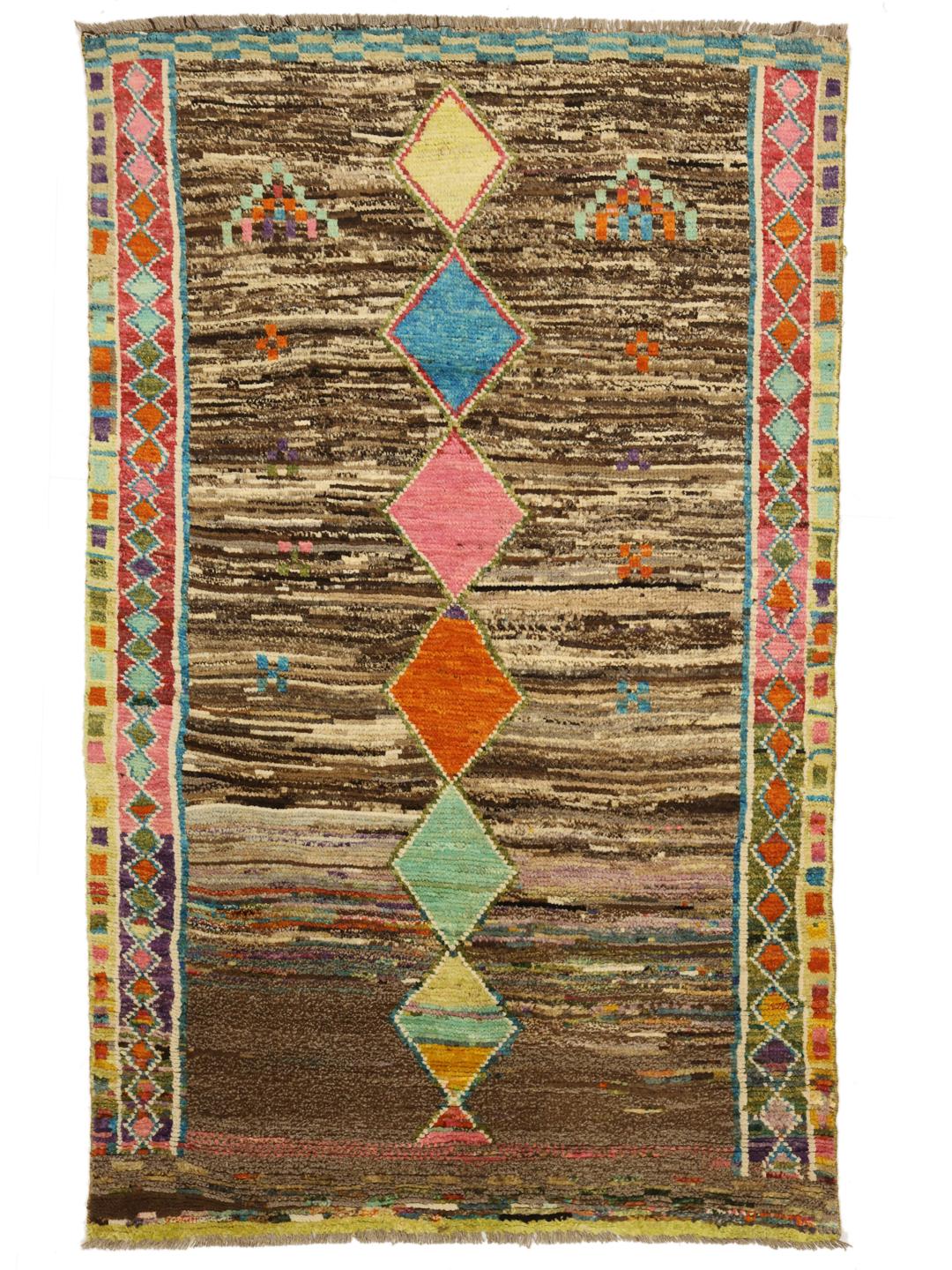
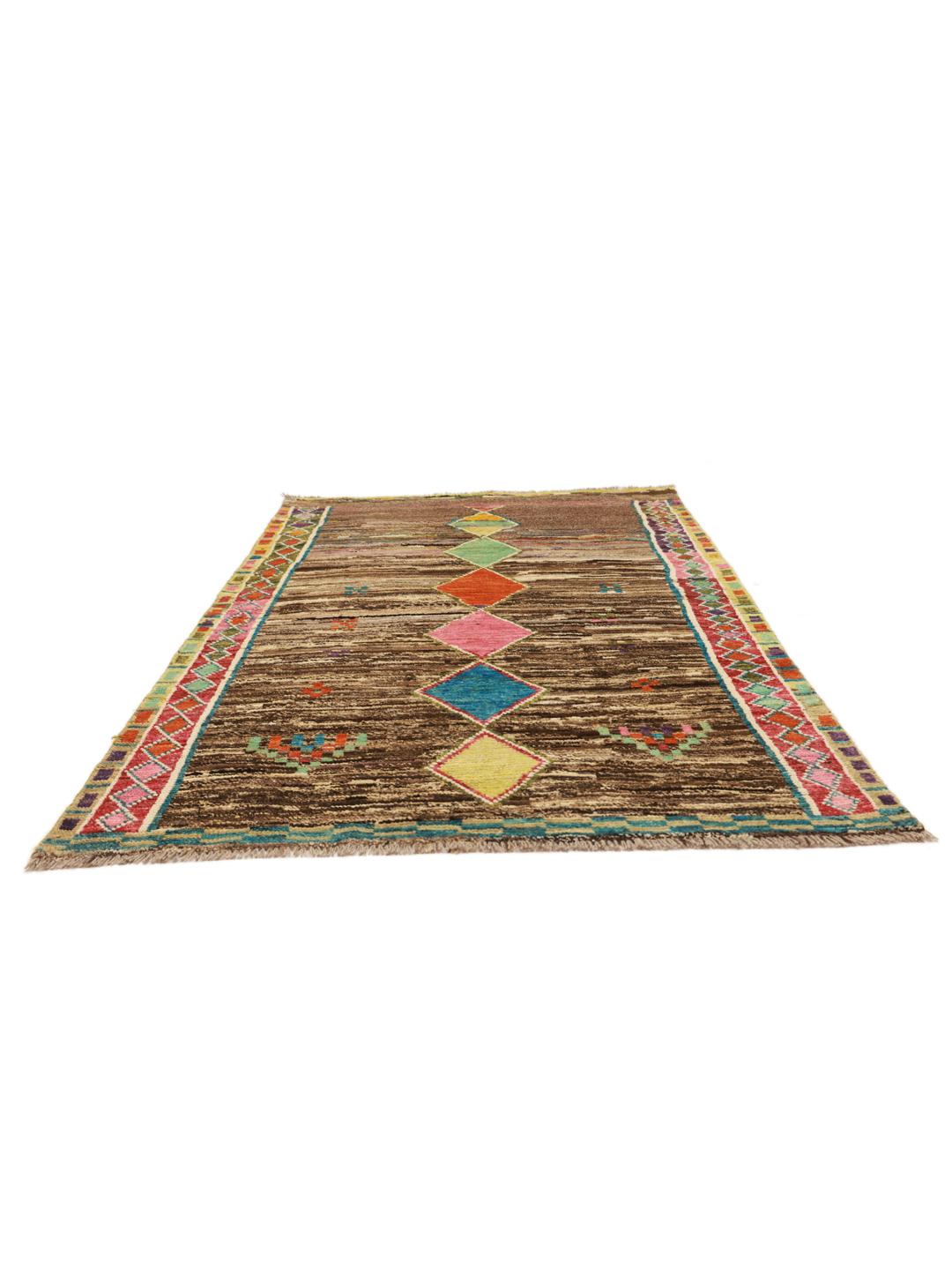
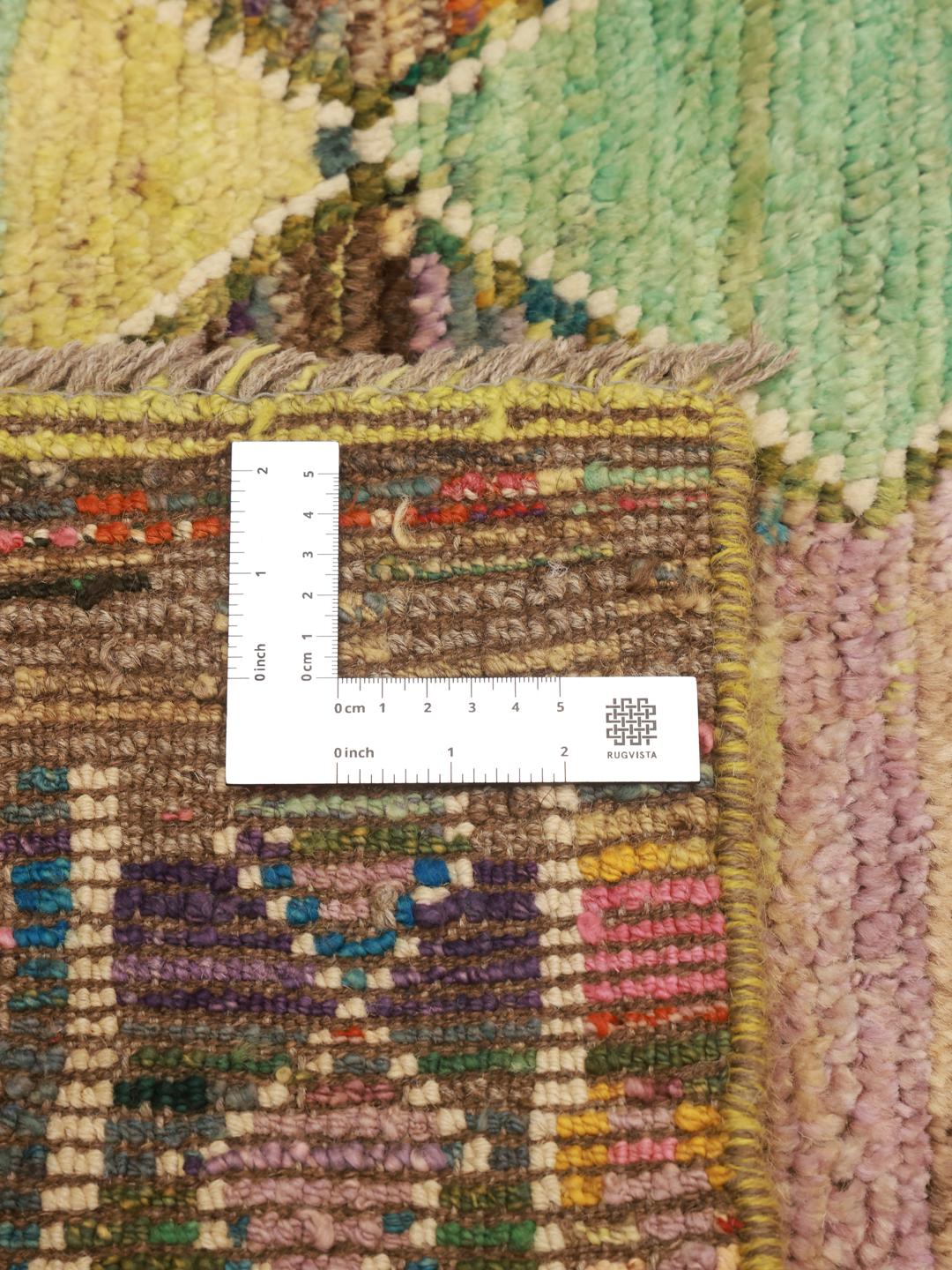
Berber-style rugs are deeply rooted in the nomadic traditions of mountain regions across the Middle East and Central Asia. Originally created for practical use in harsh climates, these rugs were woven by tribal communities to provide warmth and protection, with designs often reflecting the weaver's personal story or their immediate environment.
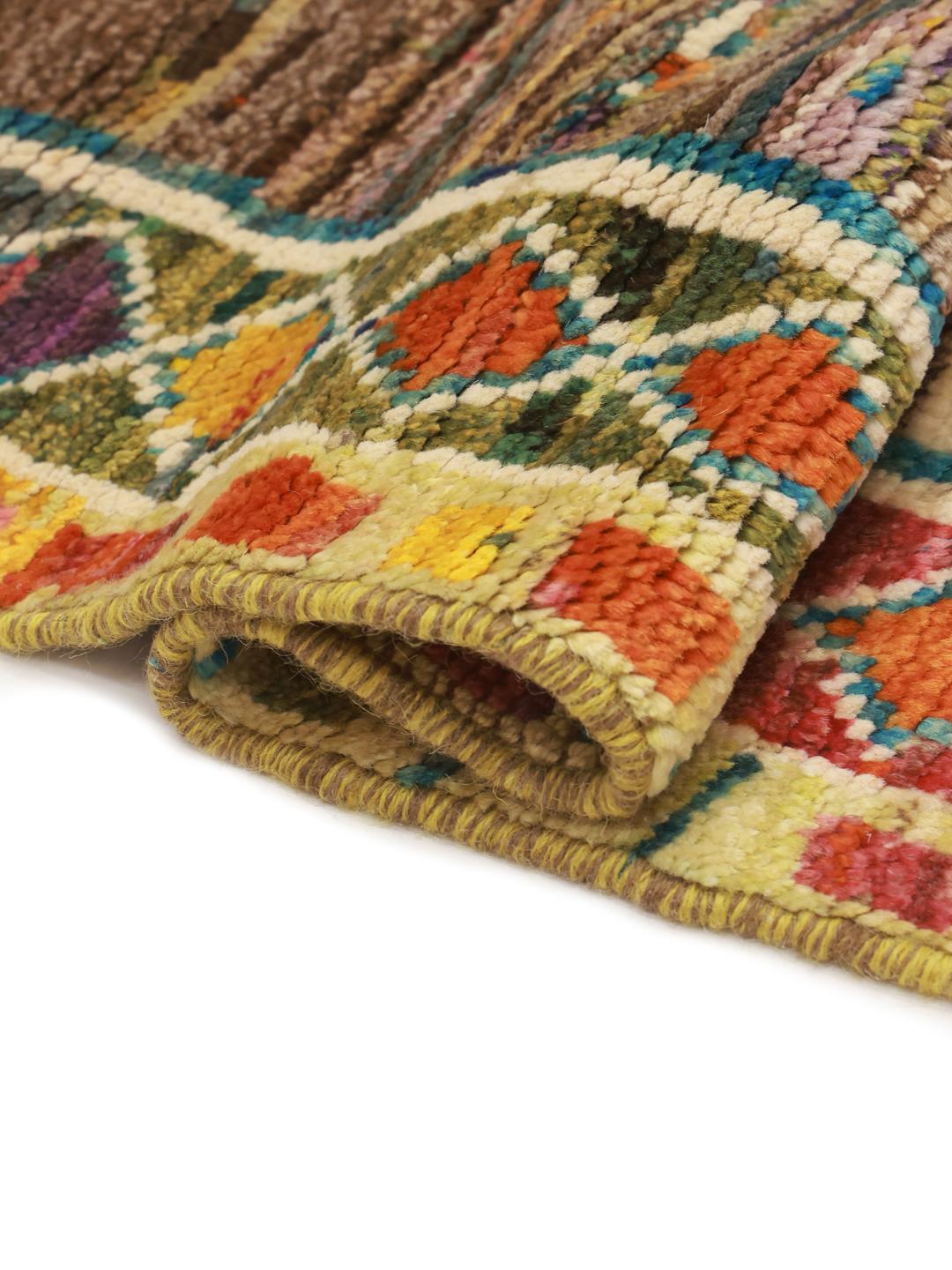
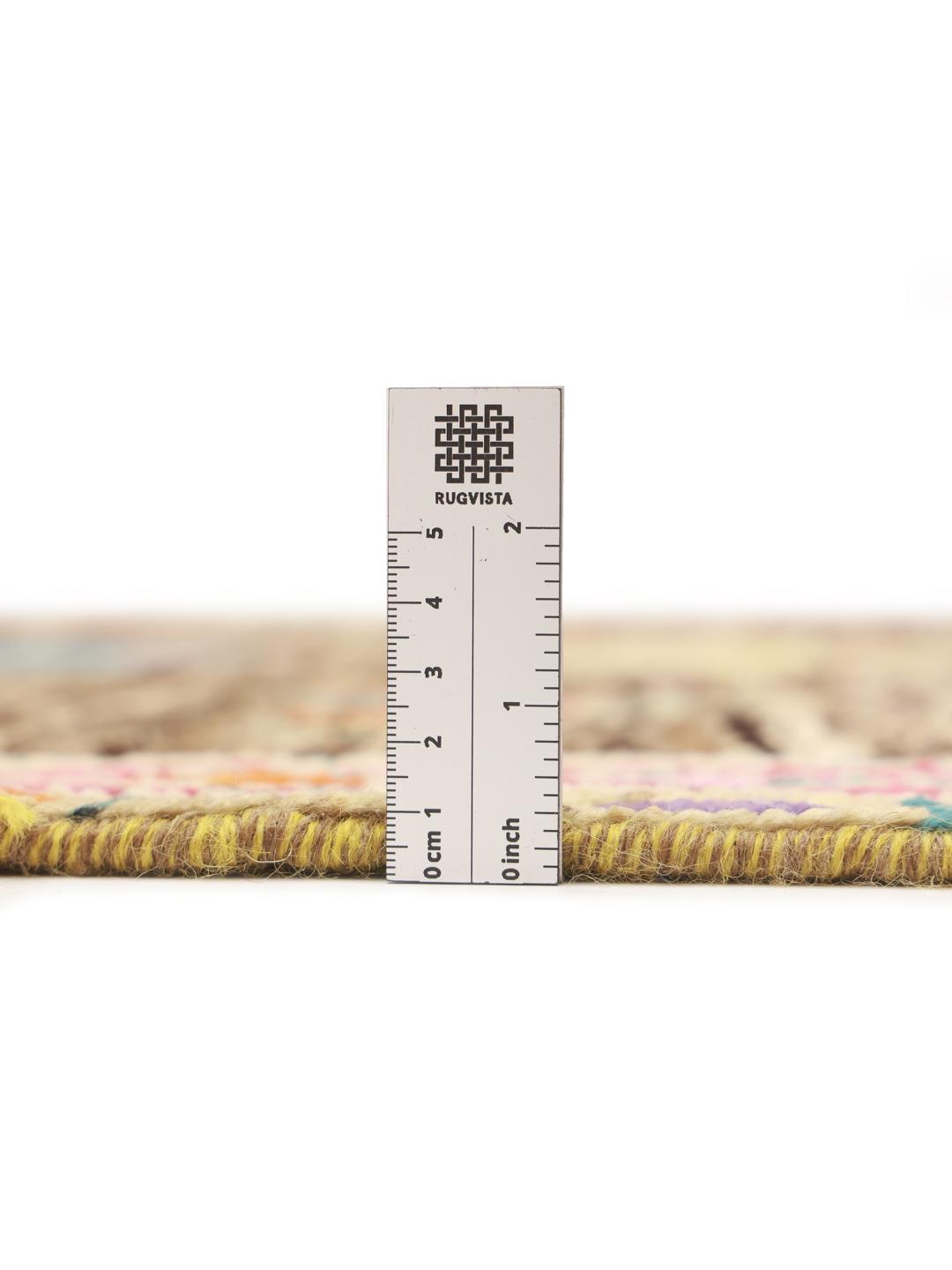
The term 'Berber' originally referred to the indigenous peoples of North Africa, but the style has evolved into a global design language. Today, it describes a specific aesthetic characterised by high-pile, hand-knotted Wool construction and bold, geometric patterns that have found a home in the weaving traditions of Afghanistan.
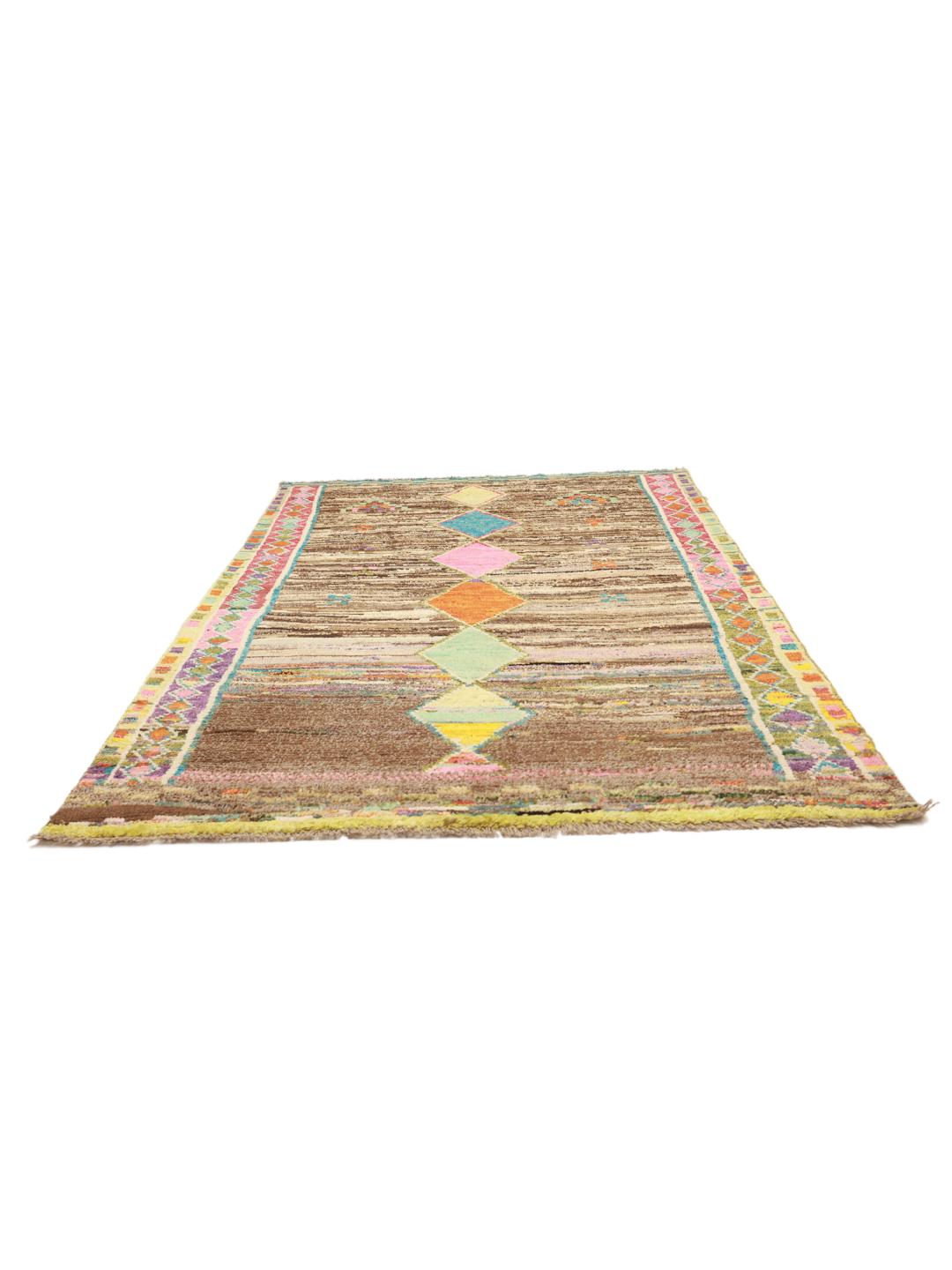
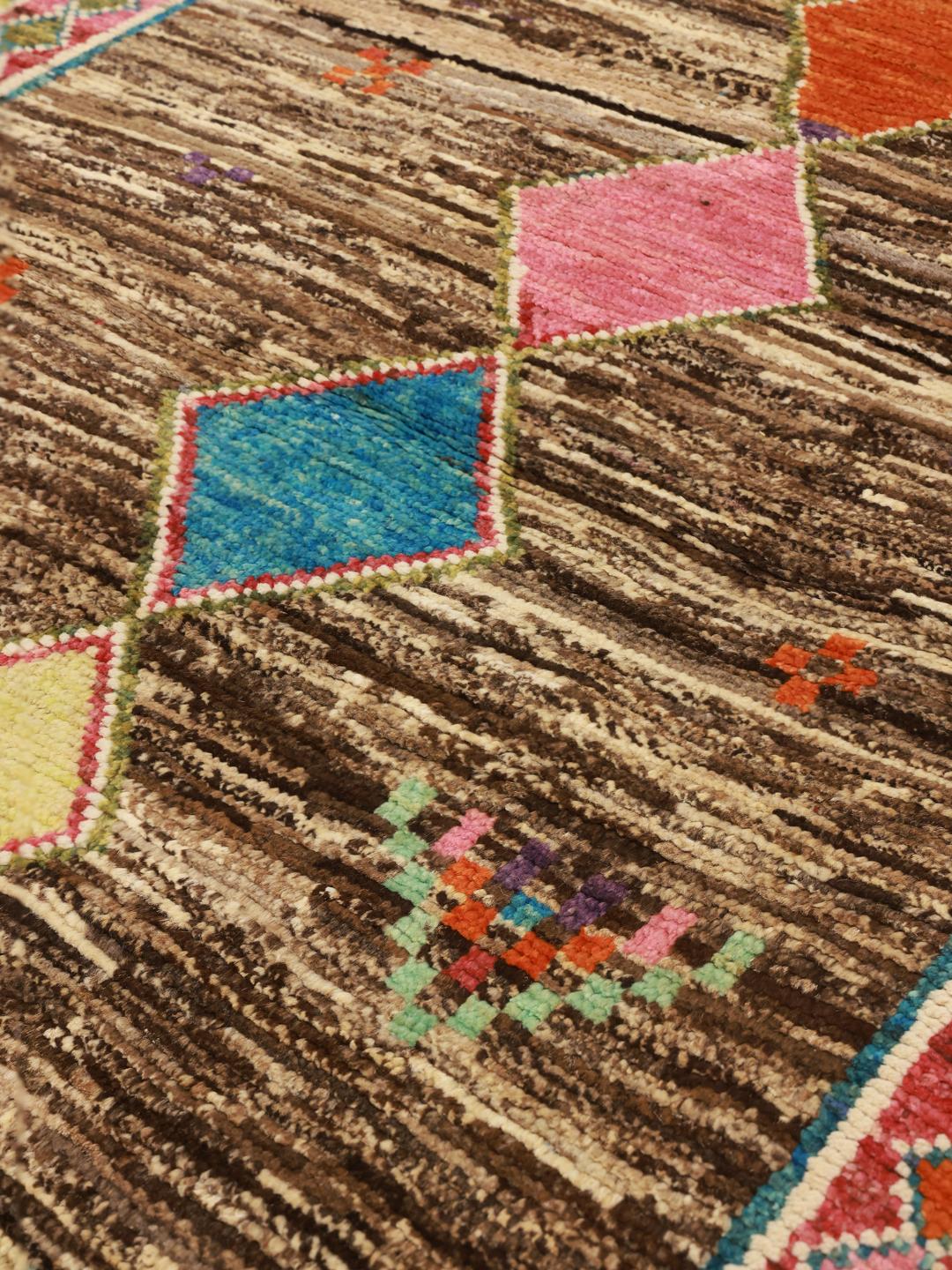
Signature elements of this tradition include the use of repeating geometric shapes, such as diamonds or lozenges, often floating on a field of earthy, natural tones. The inclusion of vibrant, contrasting colours is a hallmark of this tradition, used to punctuate the design and highlight the skill of the weaver.
Owning a hand-knotted rug from this tradition is an investment in cultural heritage. It represents a connection to ancient craft practices where every knot is a deliberate choice, preserving a lineage of design that values individual expression and the enduring quality of natural Wool.