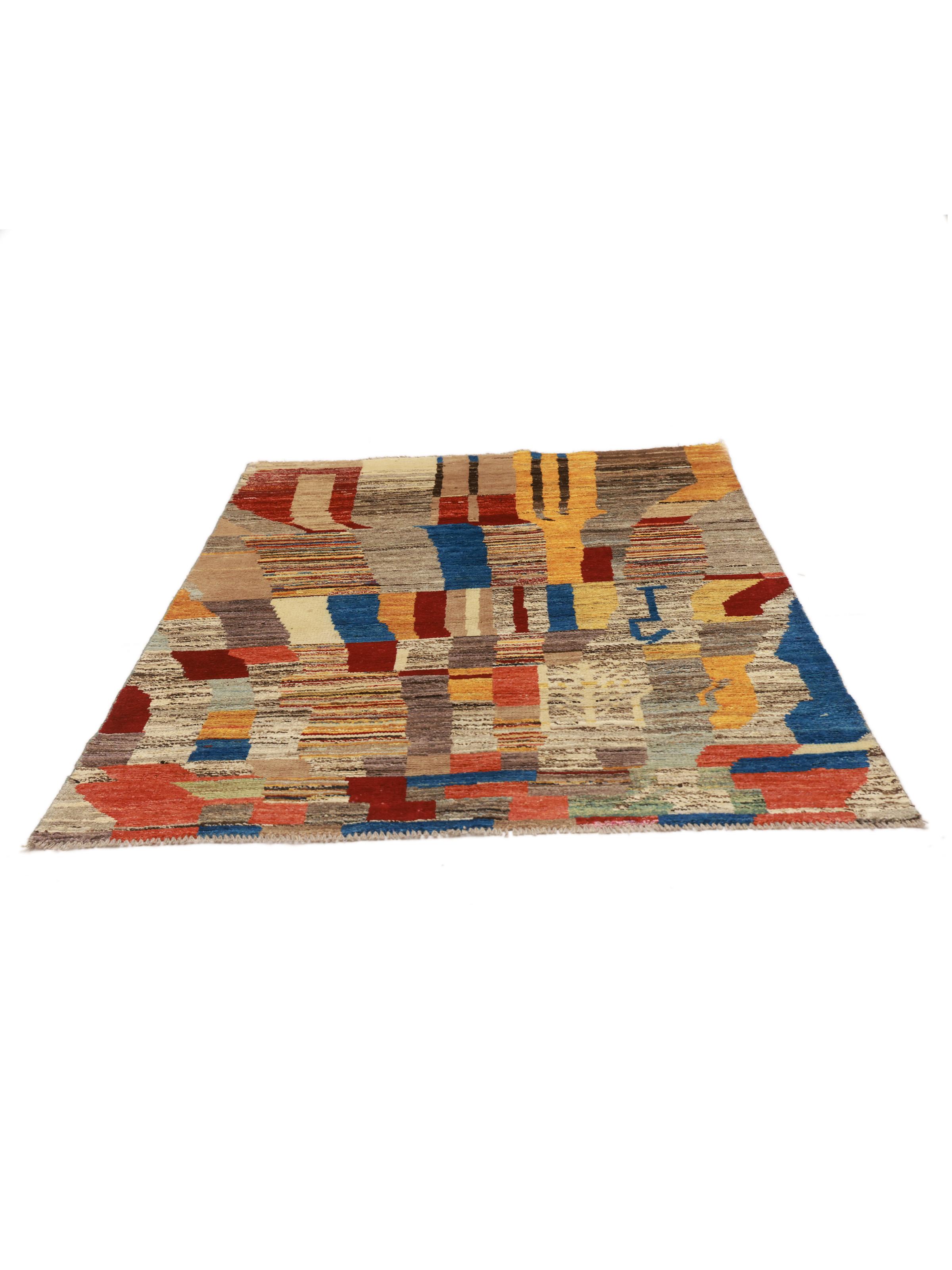
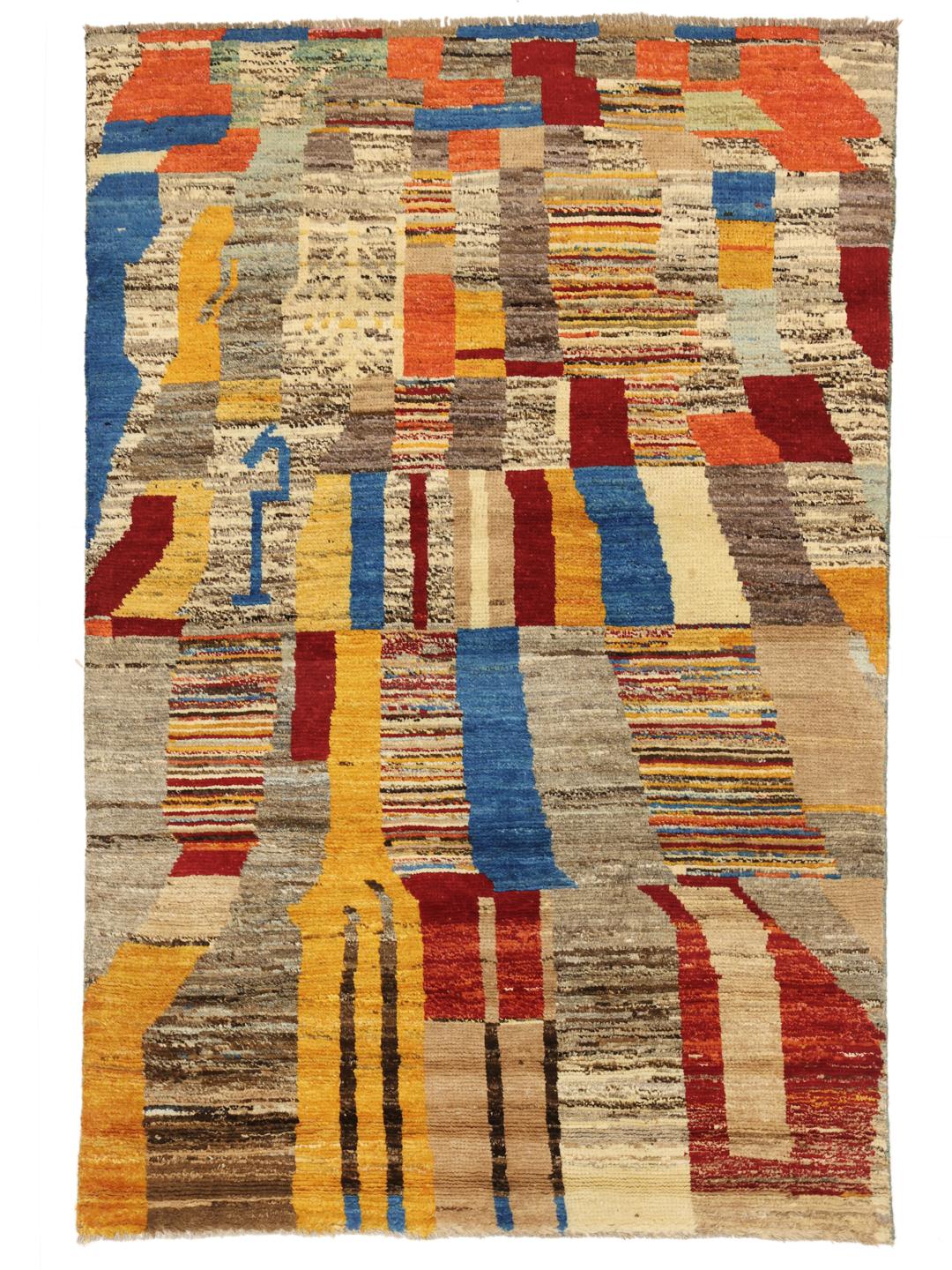
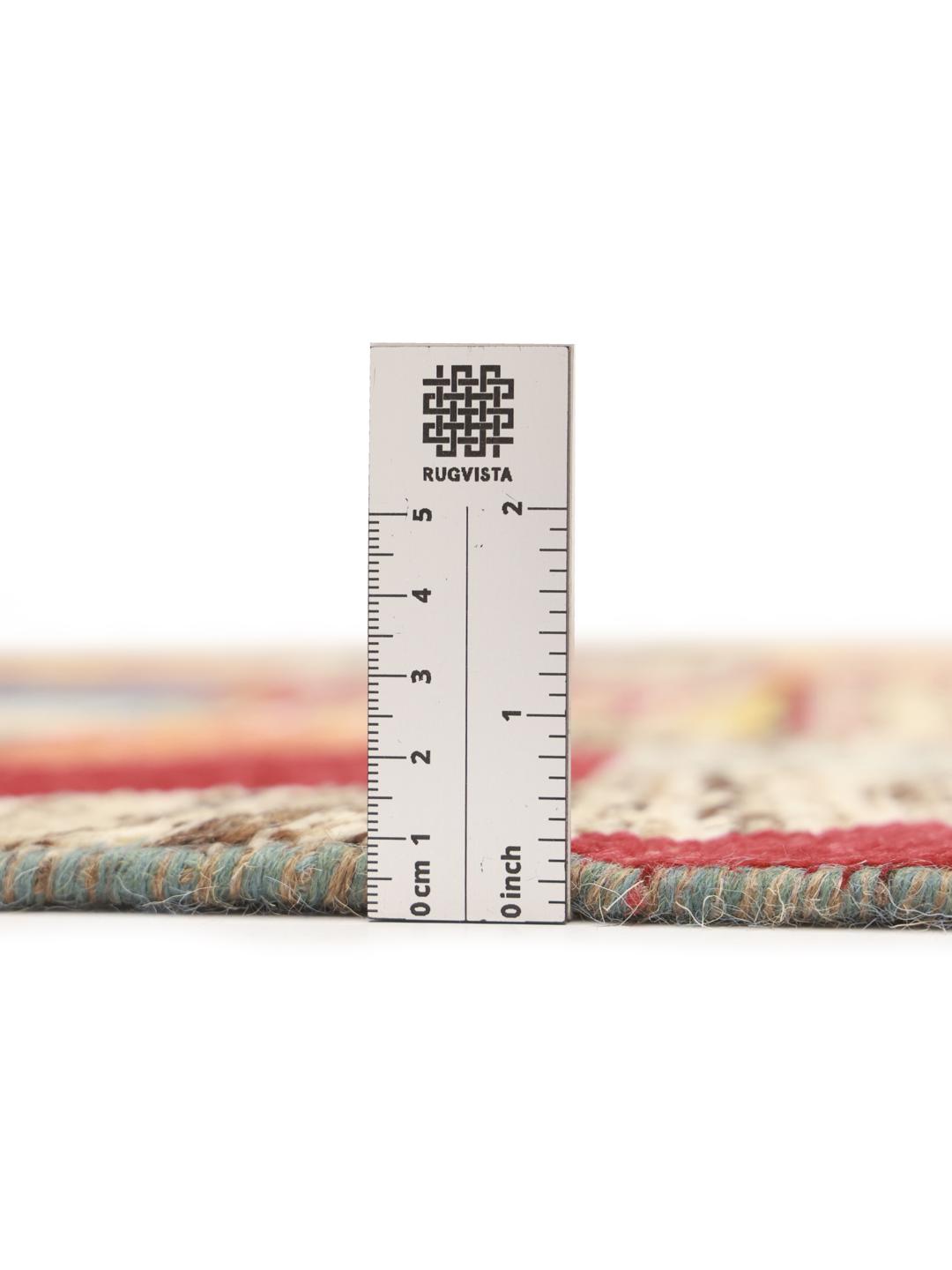
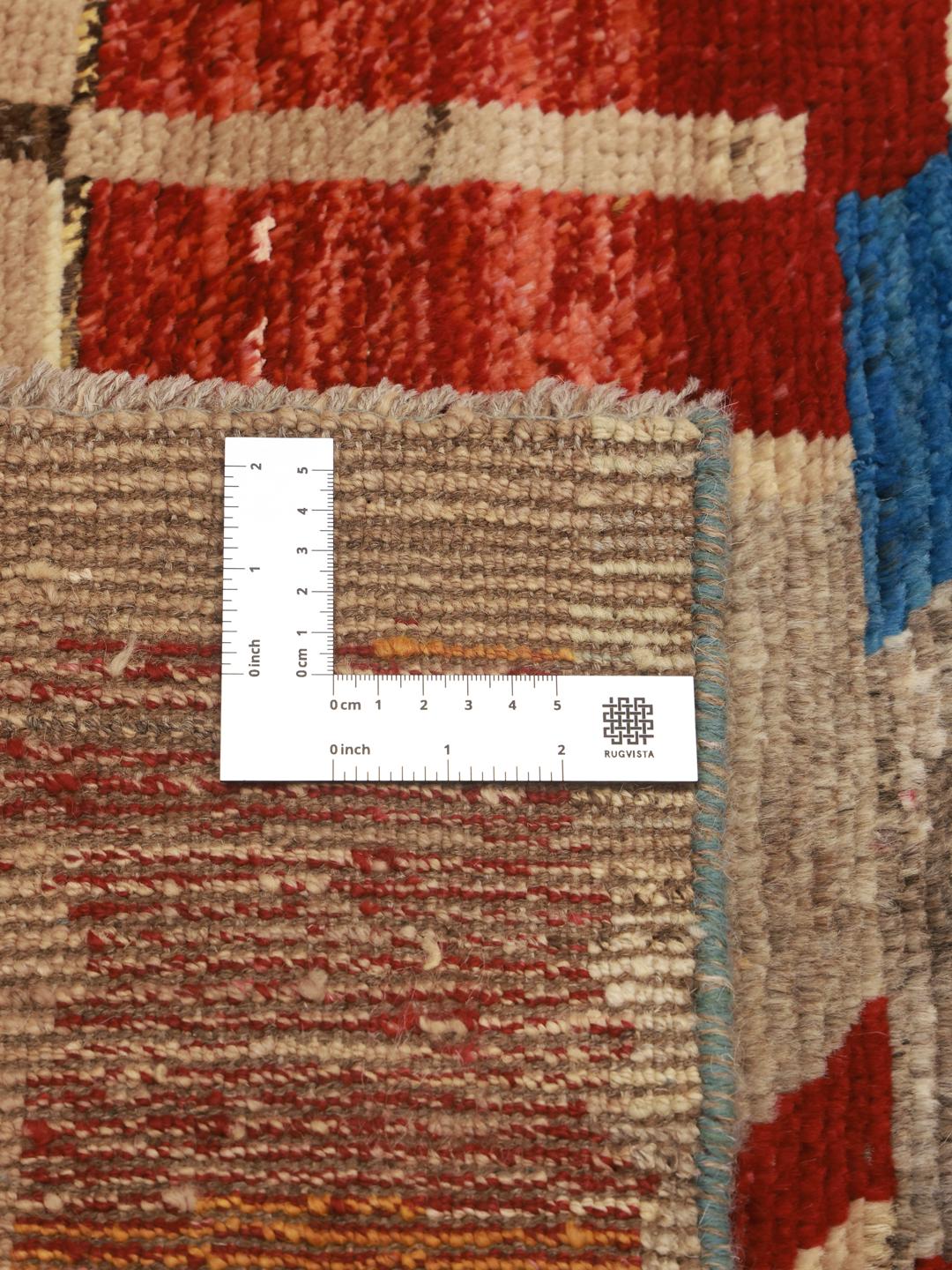
The Berber rug tradition originates from the indigenous people of North Africa, known for their iconic, hand-woven textiles that blend utilitarian function with deep cultural meaning. Over time, these weaving techniques migrated and were adopted by artisans in Afghanistan, where they have been refined and adapted into a distinct style that retains the spirit of the original craft while incorporating the rich Wool-working traditions of the region.
In the context of these rugs, the term Berber refers to a specific aesthetic characterised by its heavy, tactile pile and its emphasis on expressive, often abstract or geometric patterns. These rugs are not just floor coverings but are cultural artefacts, reflecting the environment and the creative vision of the weaver through a visual language that has evolved over centuries of nomadic and settled life.
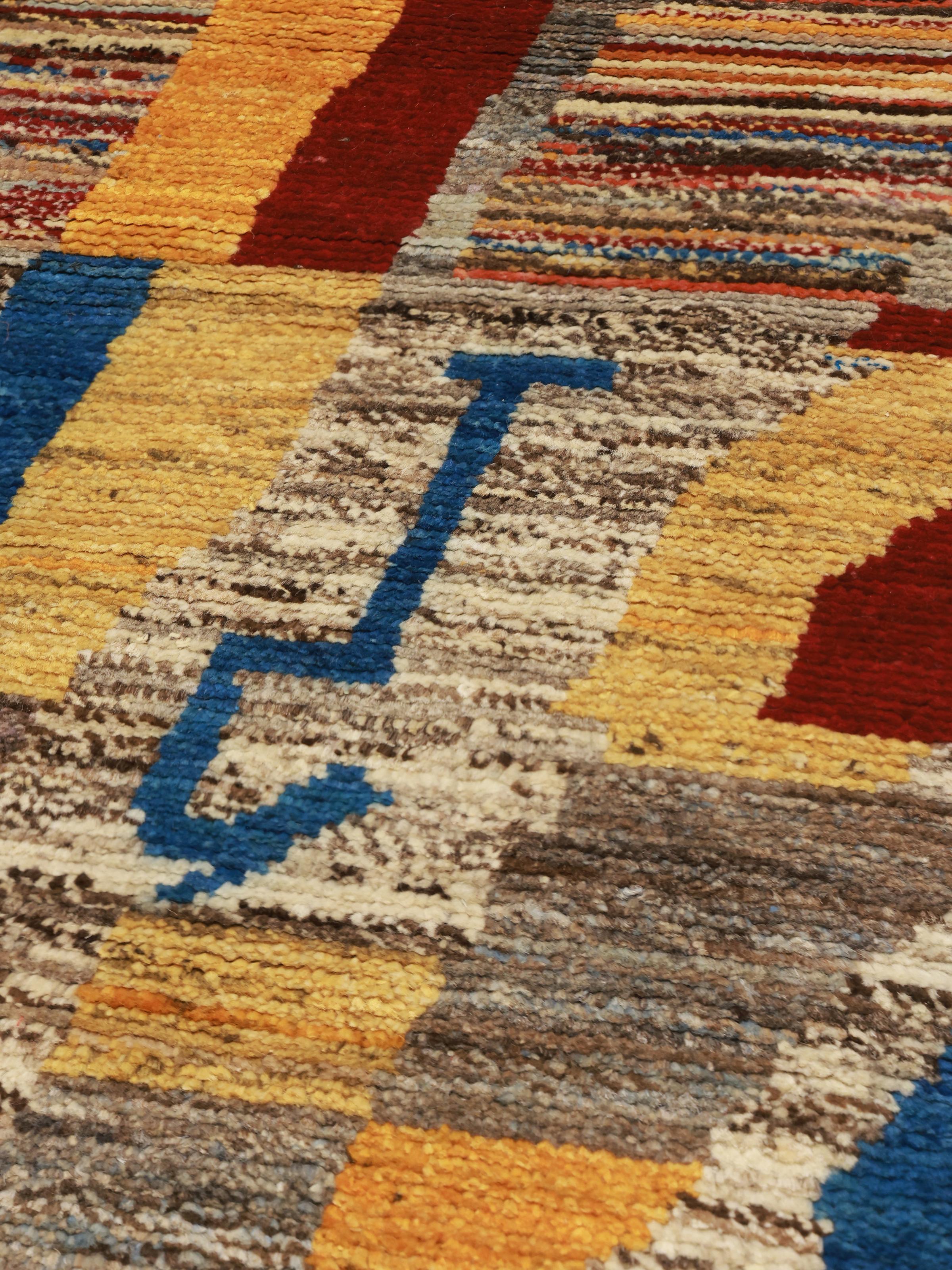
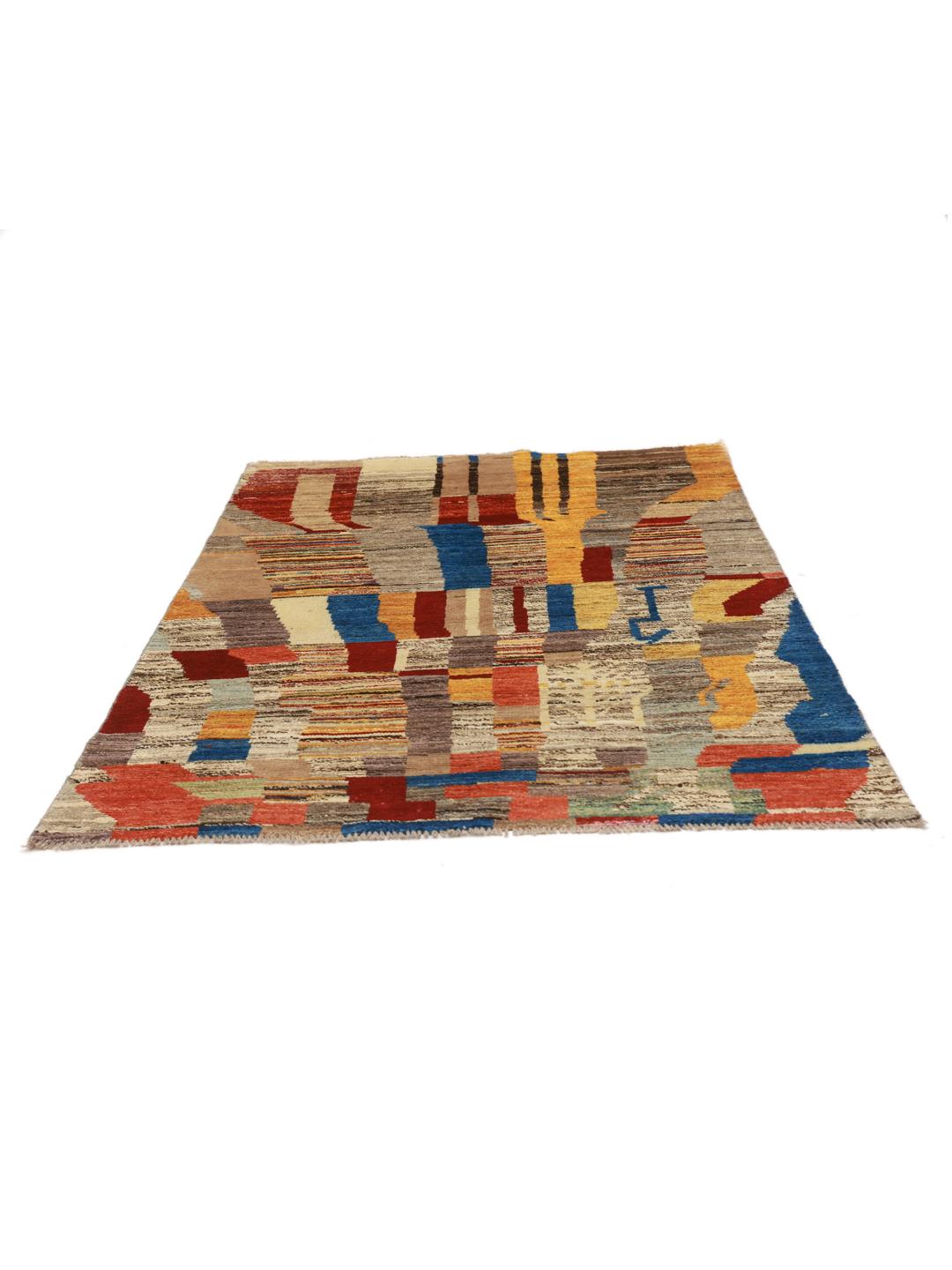
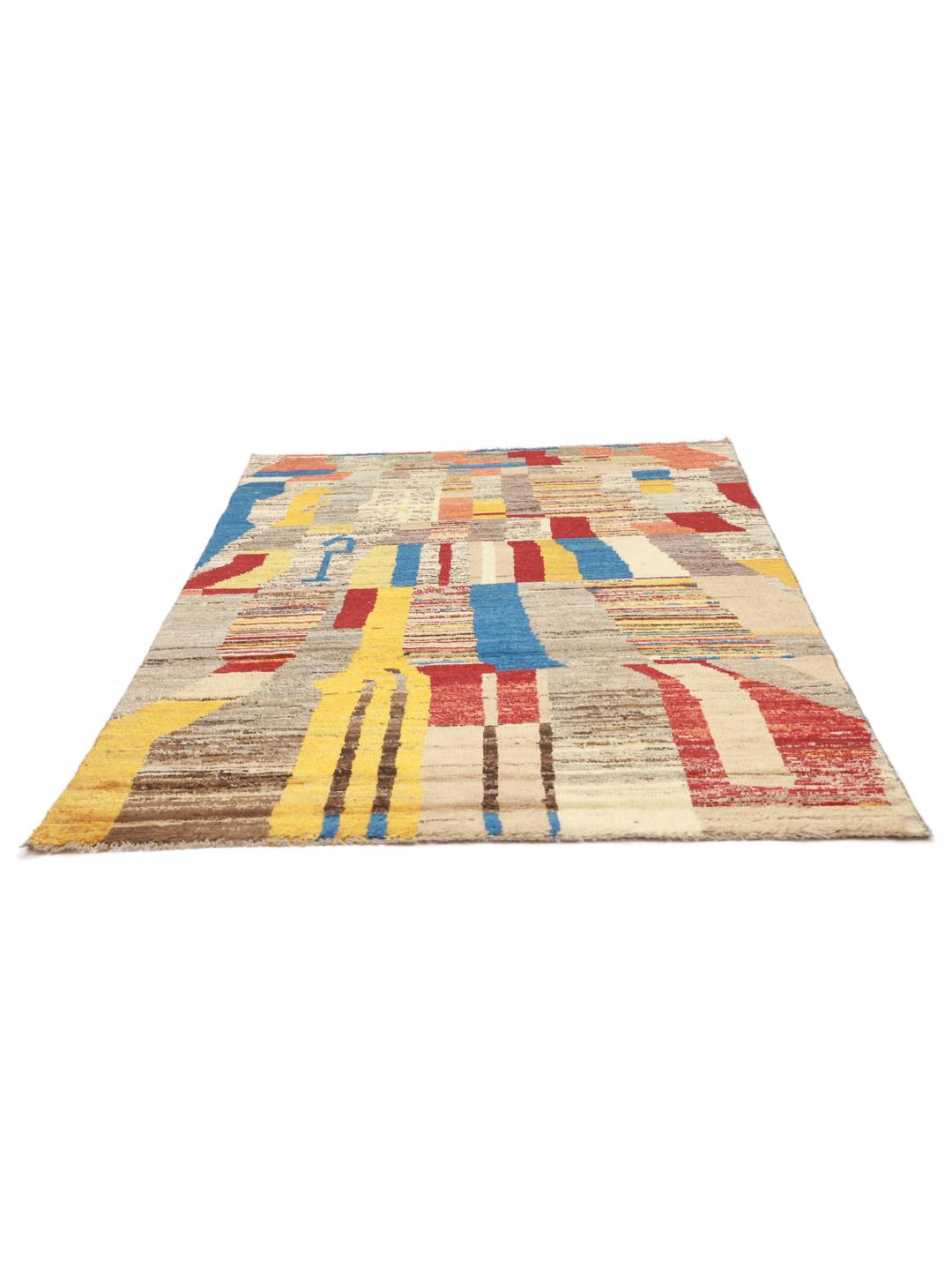
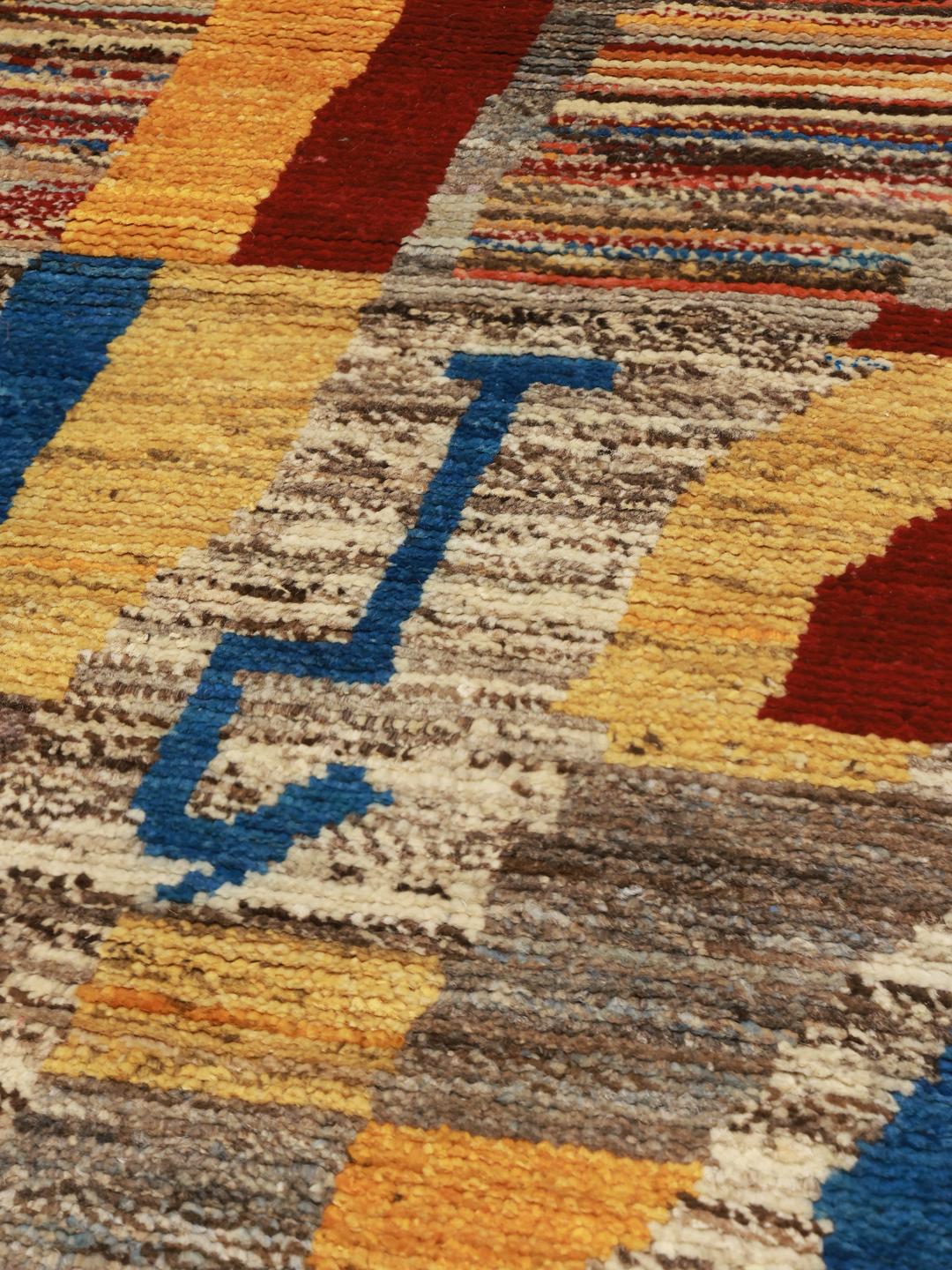
The design of this piece is particularly striking for its use of colour and block-like motifs. While traditional Berber rugs often feature simpler, monochromatic or neutral palettes, this colourful variation demonstrates the creative freedom of contemporary Afghan weaving. The rhythmic arrangement of colours and shapes creates a sense of movement, turning the floor into a canvas that feels both grounded and incredibly lively.
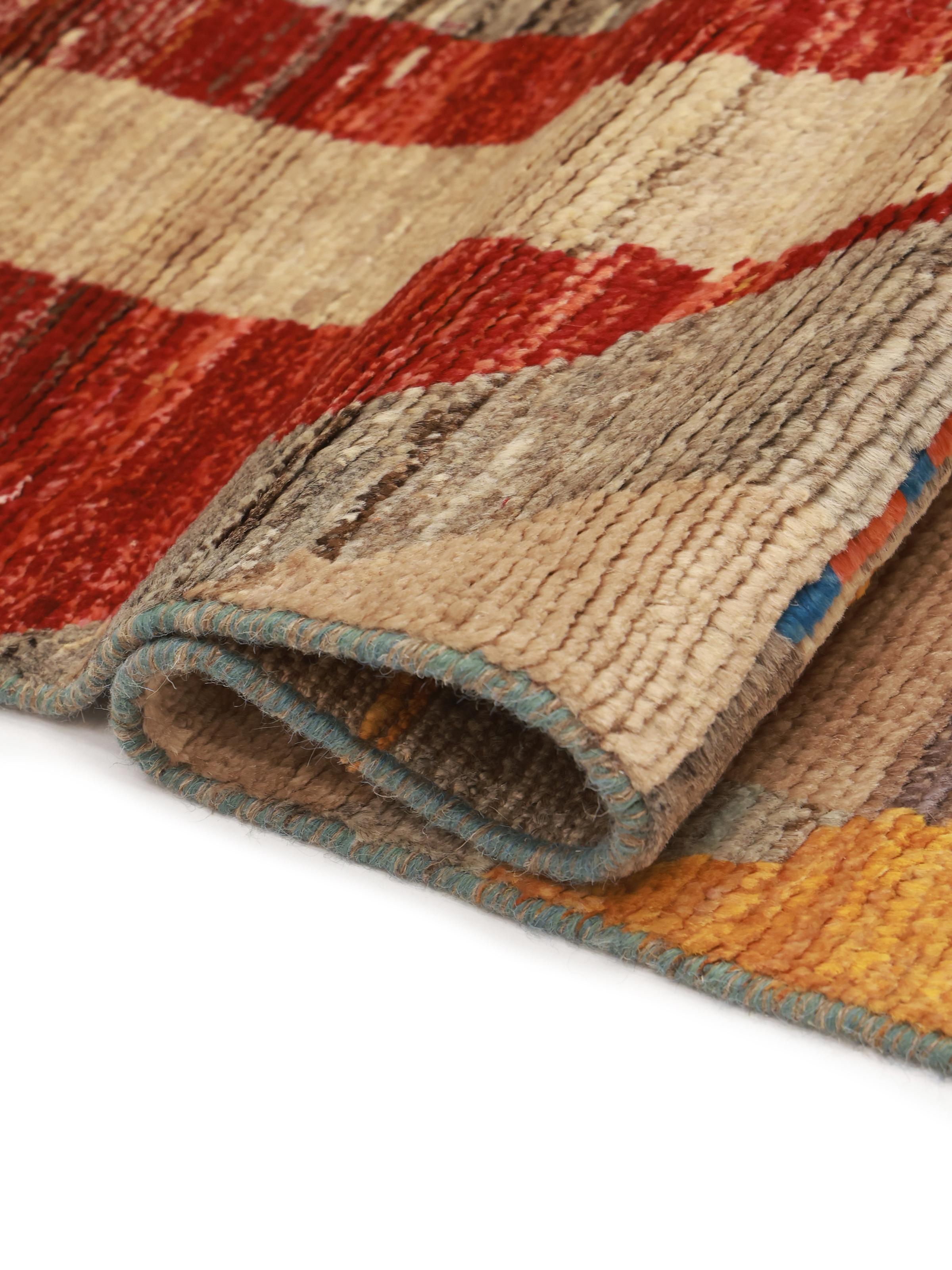
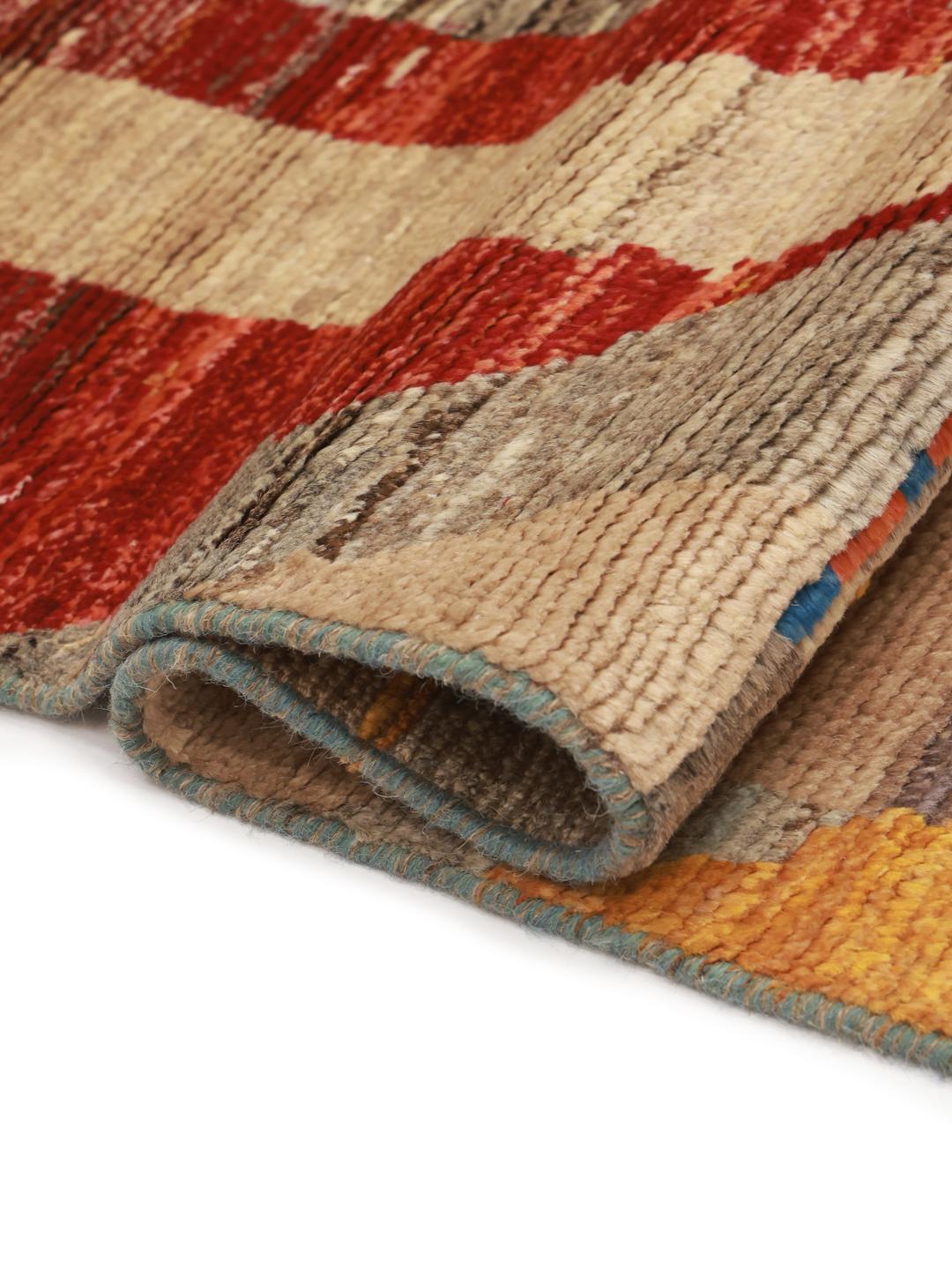
Collecting a rug from this tradition is an investment in human skill and cultural heritage. By choosing a piece that is hand-knotted, you are supporting a craft that has survived the shift to mass production, preserving a way of working that treats every rug as a unique expression of the creator's identity. It is a way to bring a piece of history and genuine artistry into your own home.