Berber rugs are deeply rooted in the nomadic traditions of North Africa, yet their influence has spread across the globe, inspiring weavers in regions as far as Afghanistan. While the style originated with tribes who crafted these rugs for warmth and utility in harsh climates, the aesthetic has evolved into a beloved global design language defined by its raw, earthy appeal and bold geometric motifs.
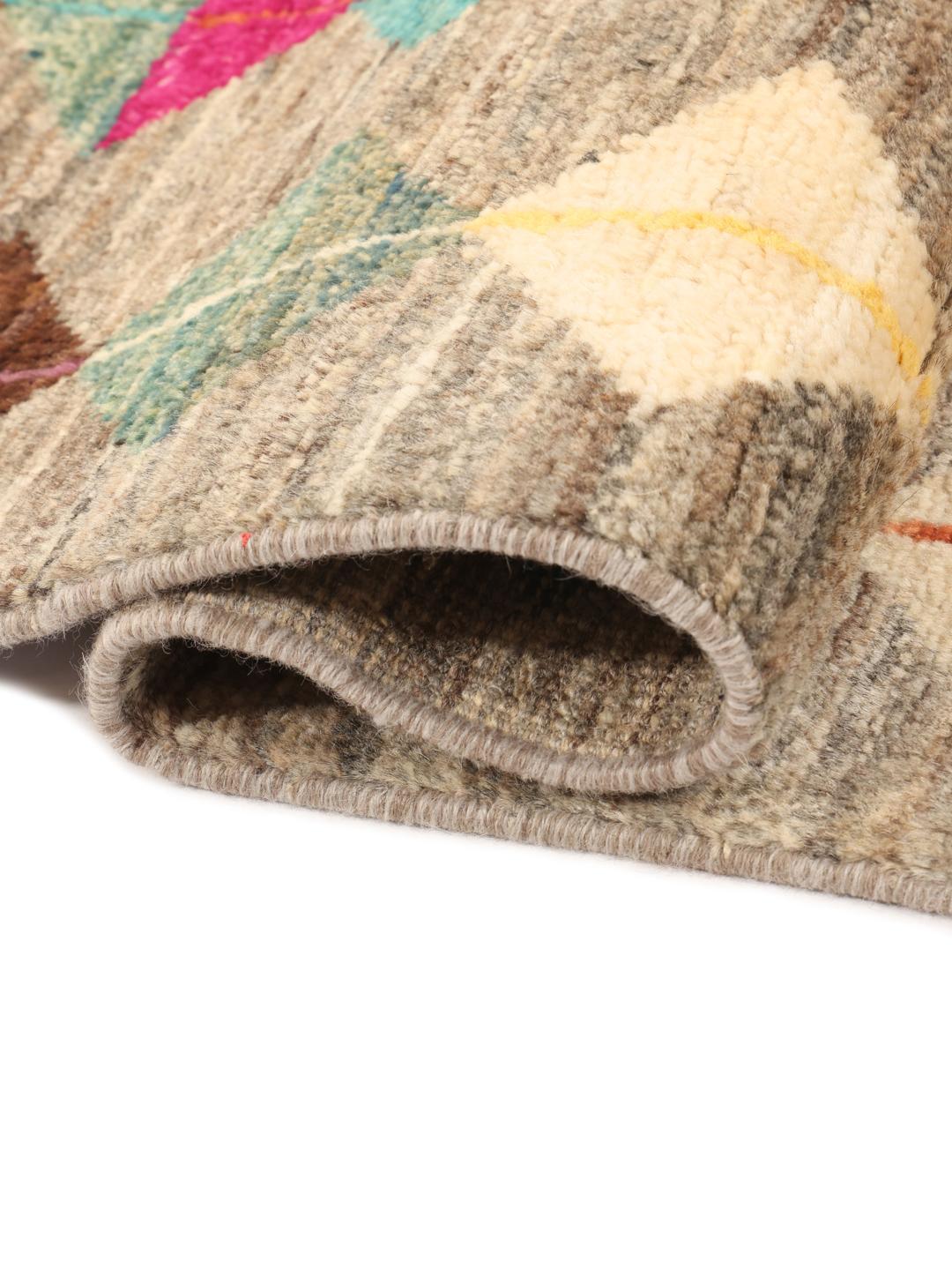
The term 'Berber' refers to the indigenous peoples of North Africa, whose weaving techniques focus on the use of high-quality wool to create thick, durable foundations. In the context of Afghan production, these techniques have been adapted to incorporate regional influences, resulting in a unique fusion of traditional tribal patterns and sophisticated colour palettes.
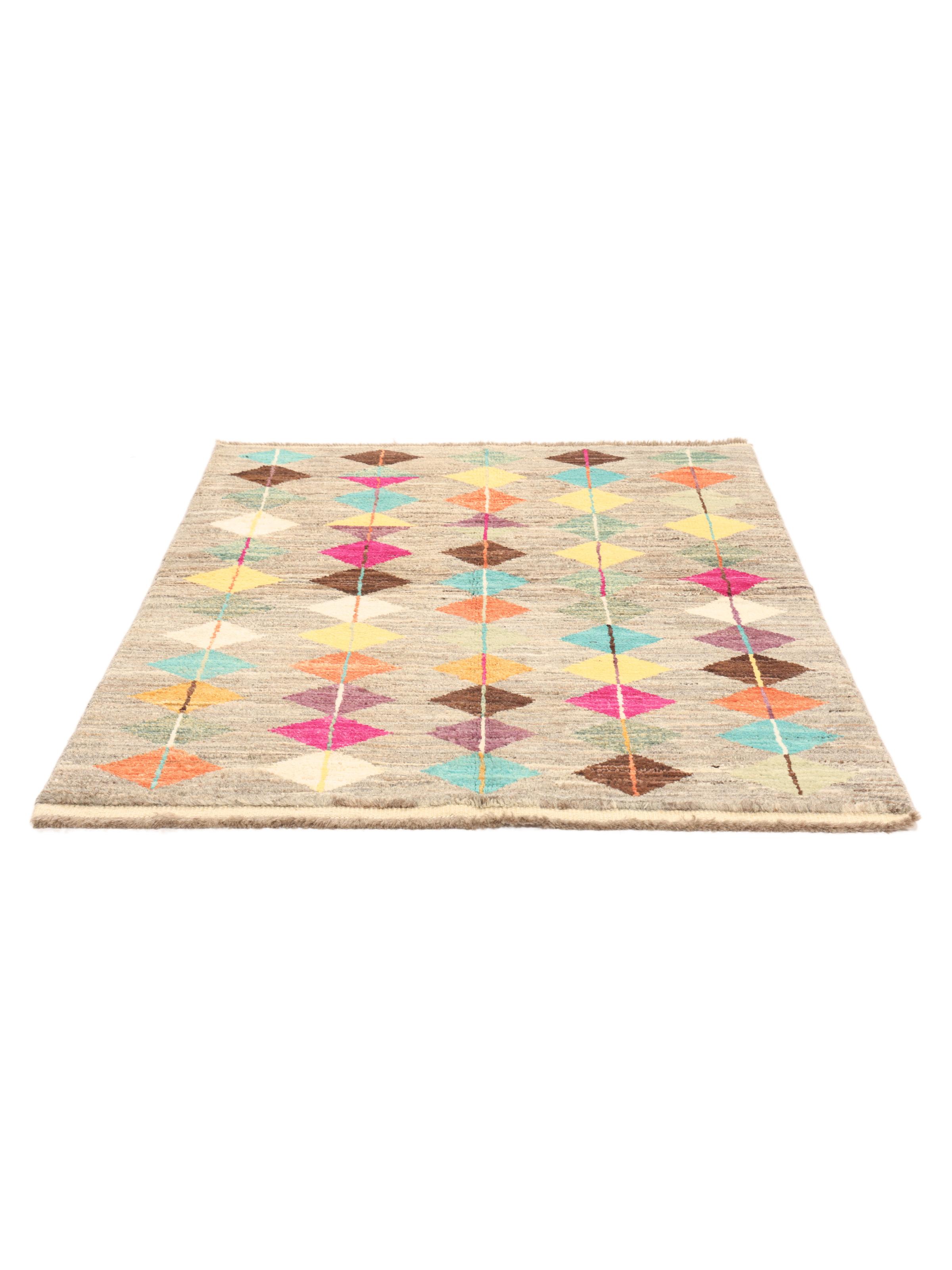
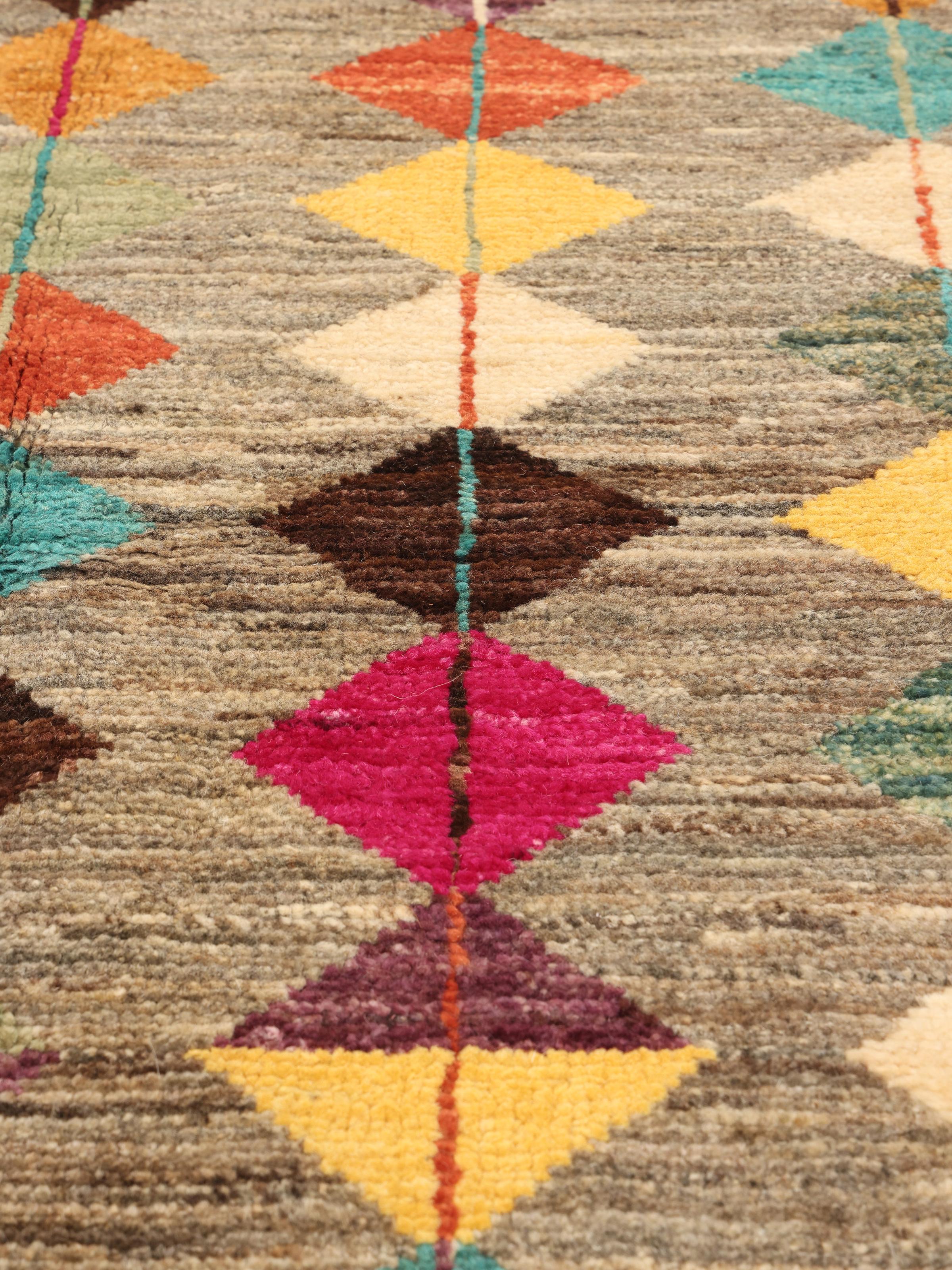
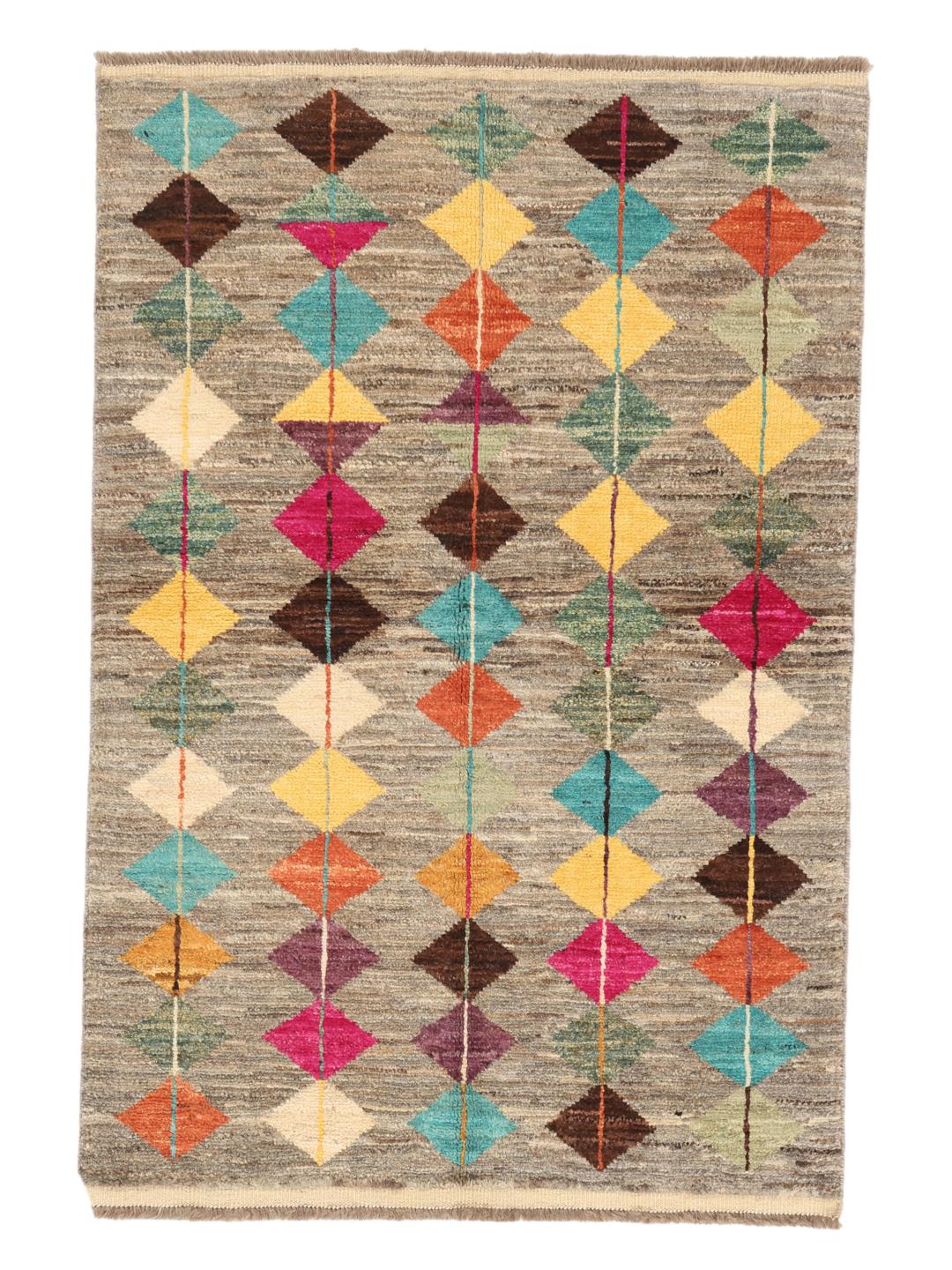
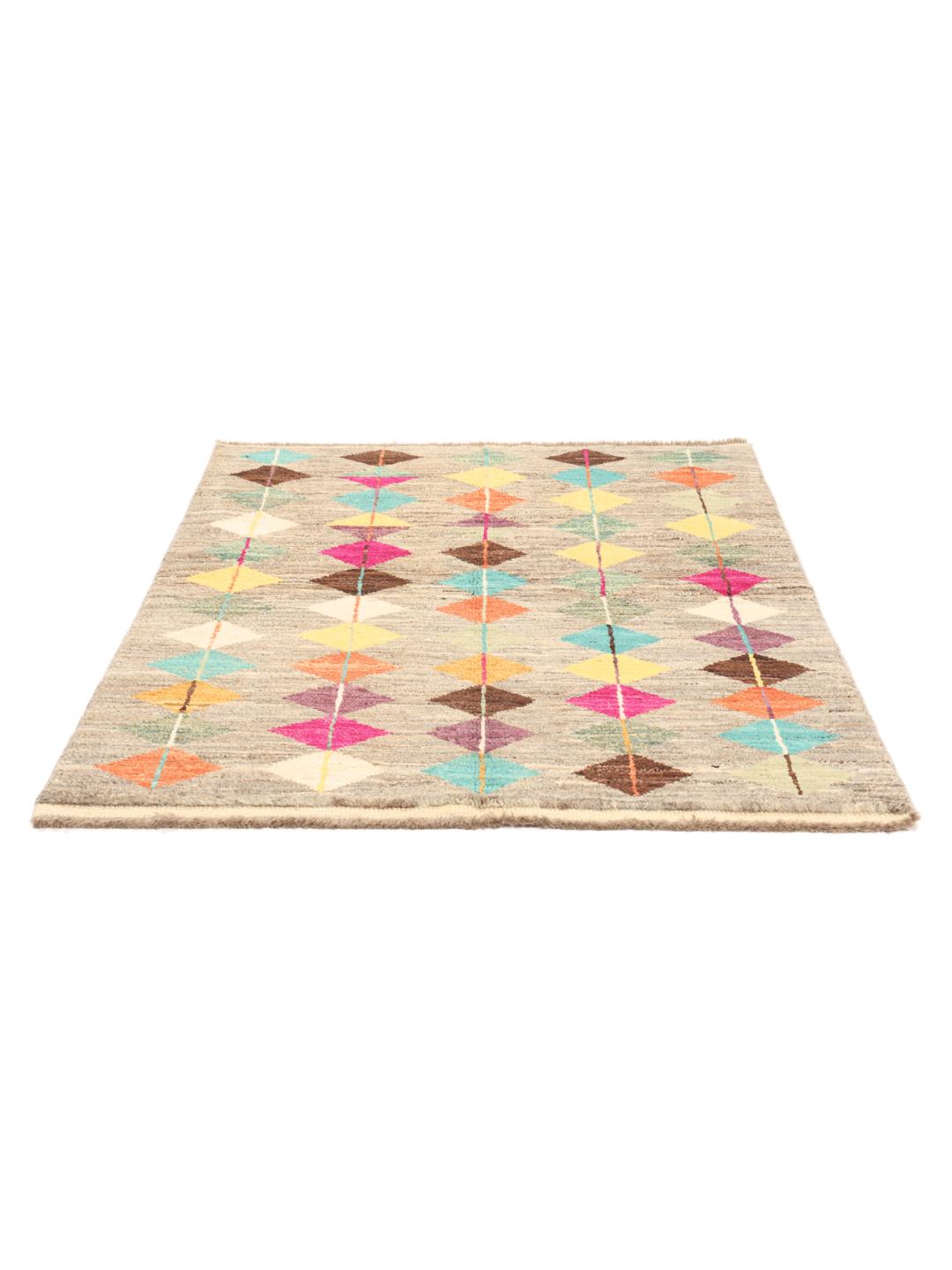
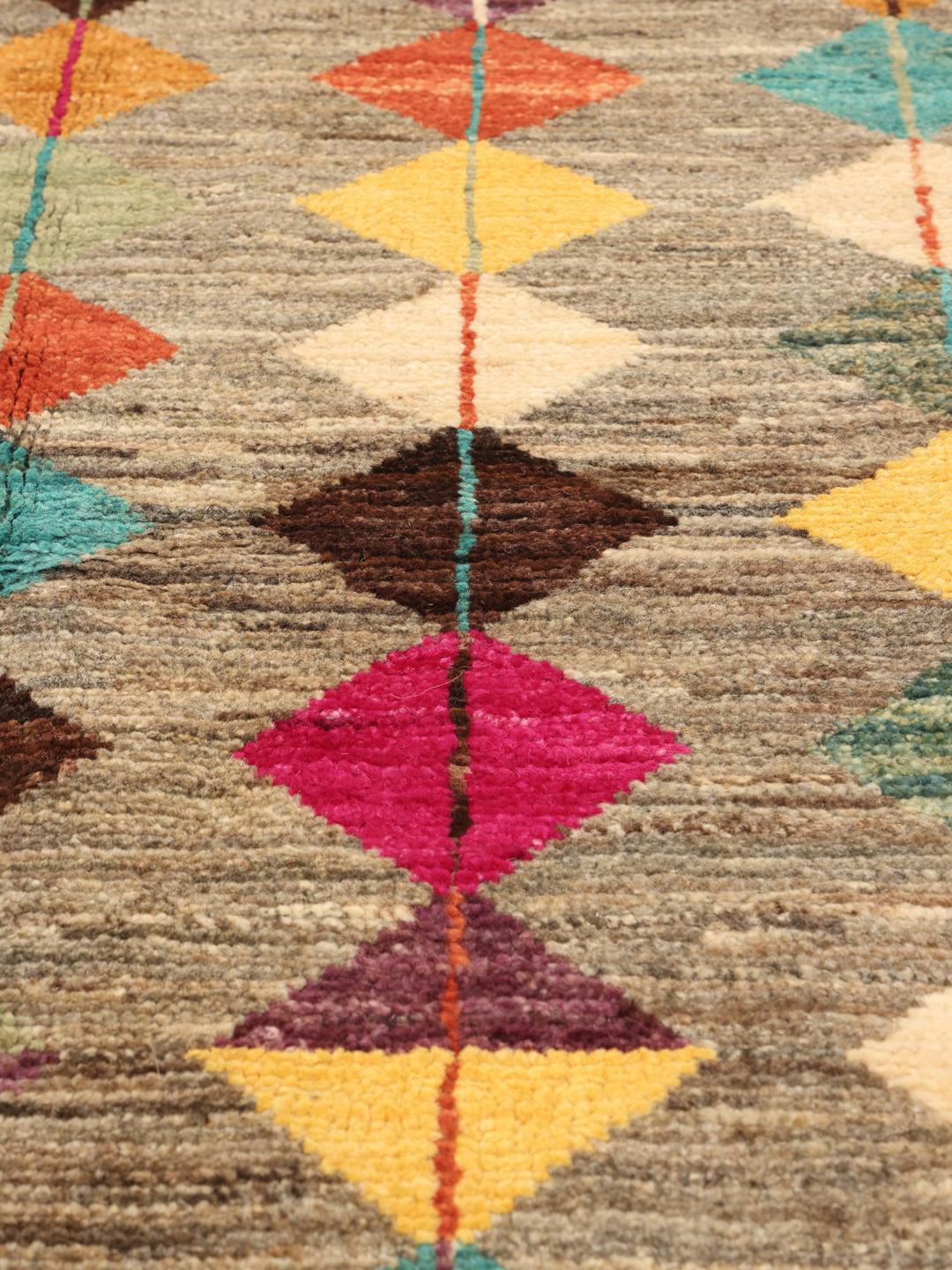
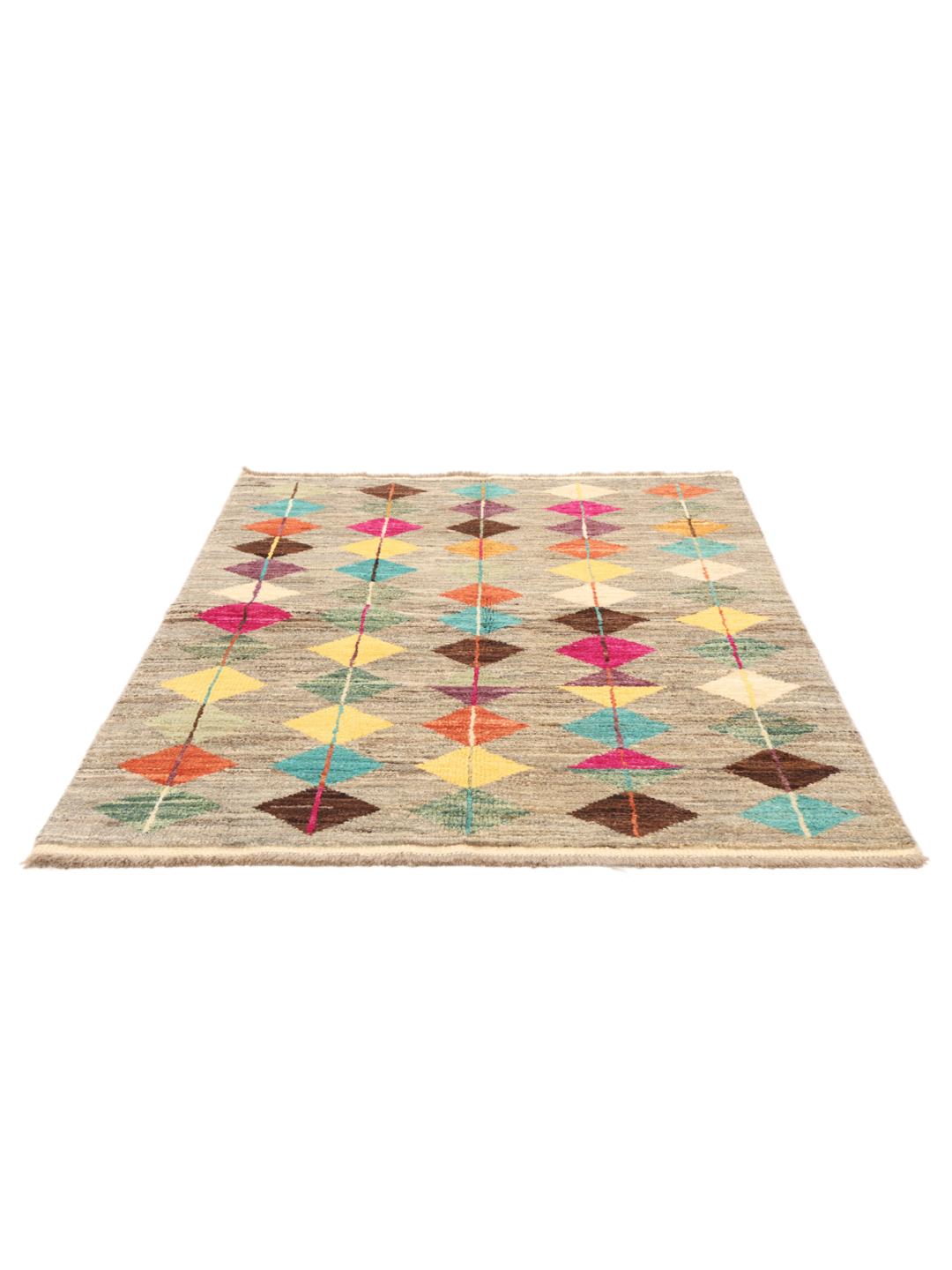
The hallmark of this tradition is the use of symbolic geometric shapes, often arranged in repeating patterns that tell a story of the weaver's surroundings. The diamond, seen here in such vibrant hues, is a classic motif that represents protection and fertility, serving as a central element that ties the entire visual composition of the rug together.
Owning a hand-knotted rug from this tradition is an invitation to connect with a long-standing history of craft. These rugs are highly valued by collectors not only for their aesthetic versatility but also for the human story embedded in every fibre, representing a bridge between ancient techniques and contemporary living spaces.