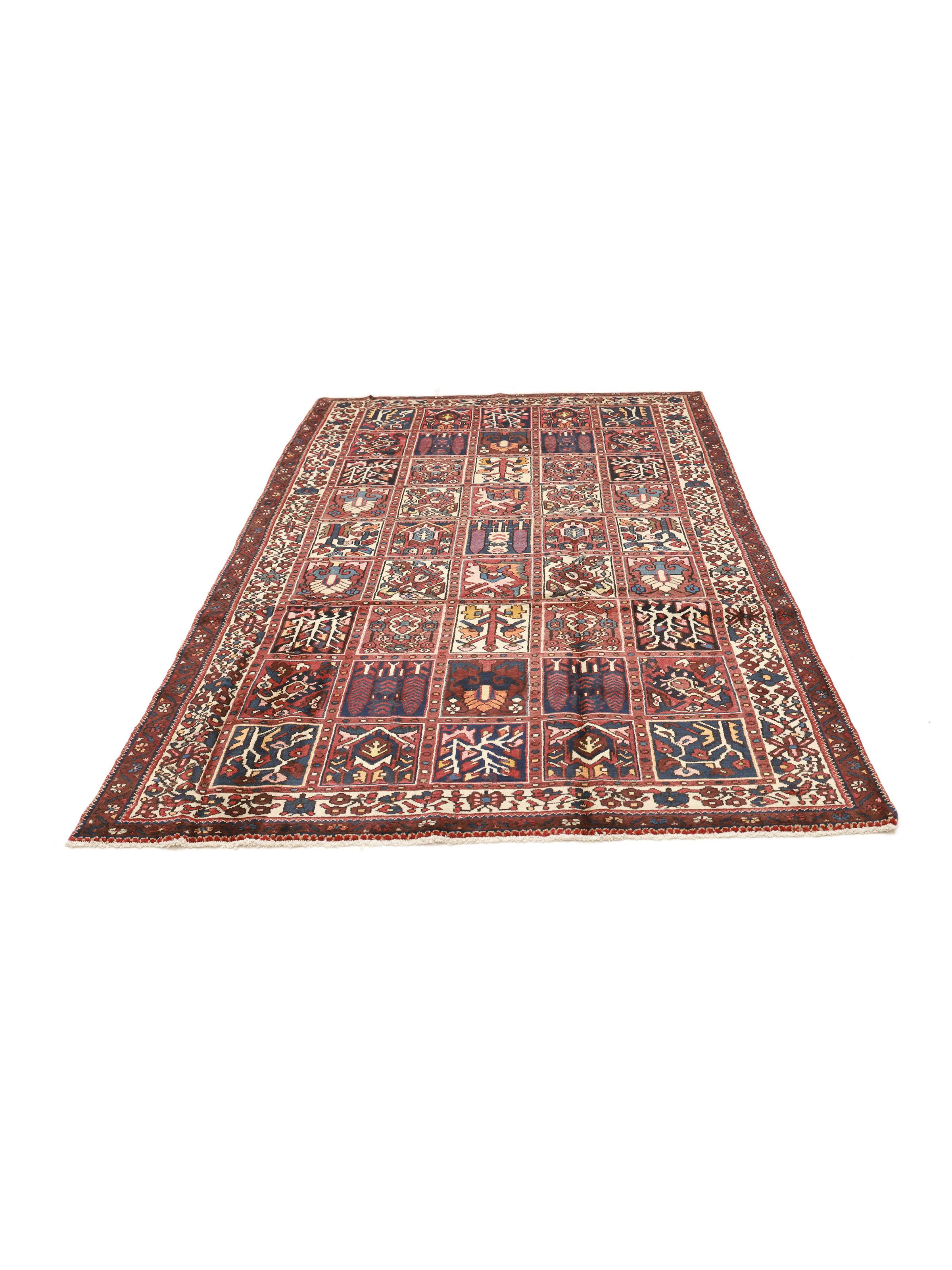
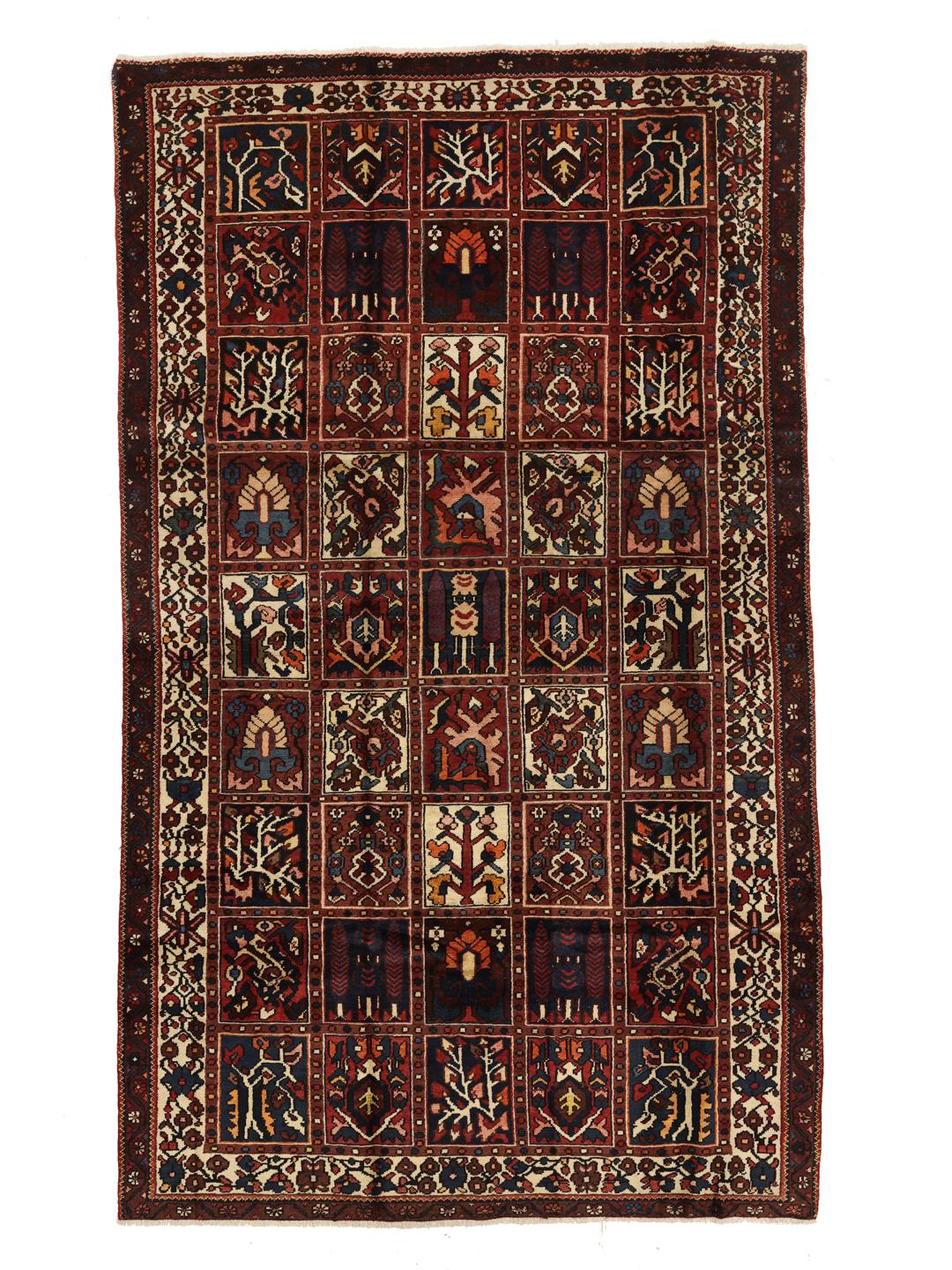
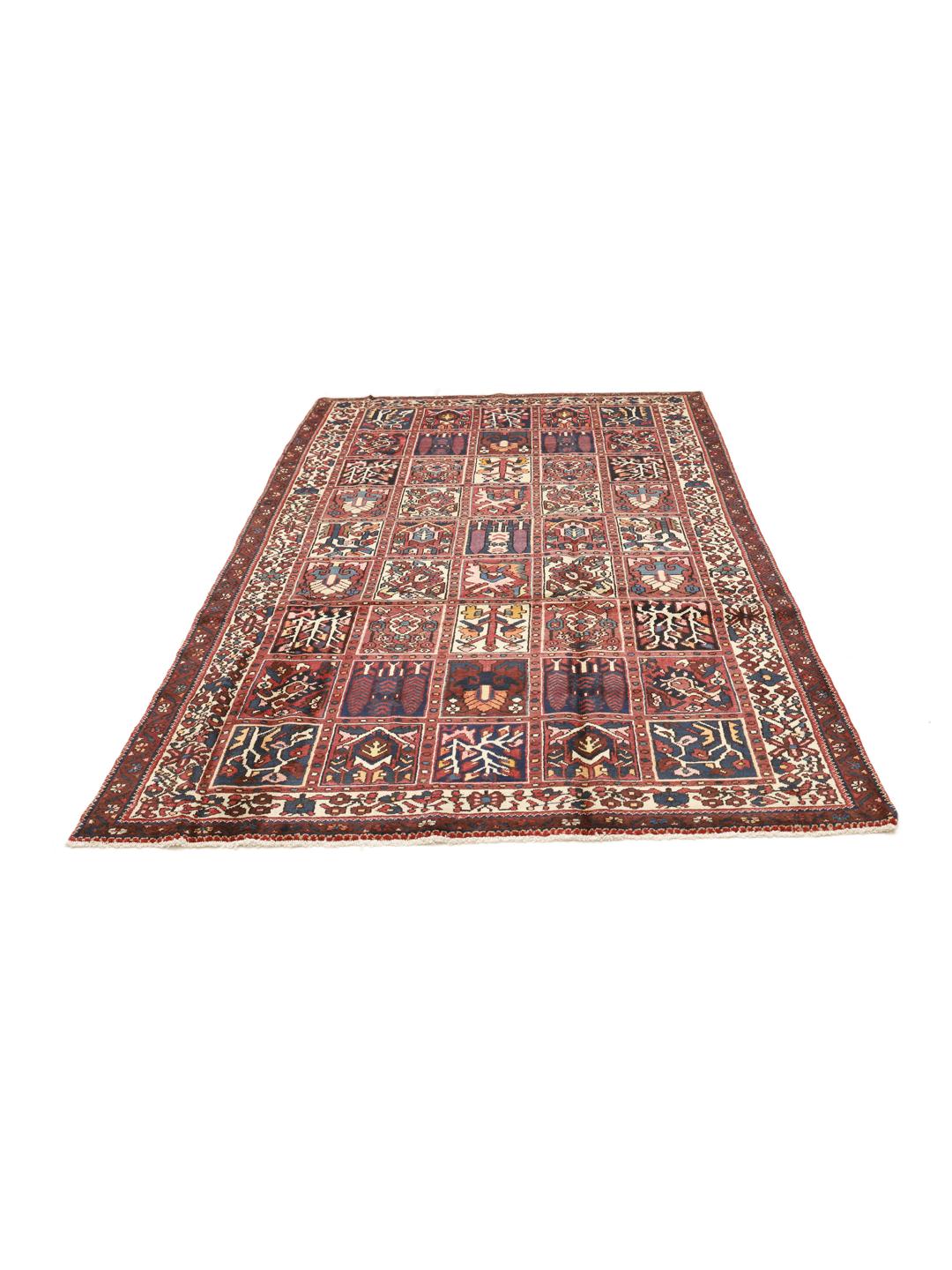
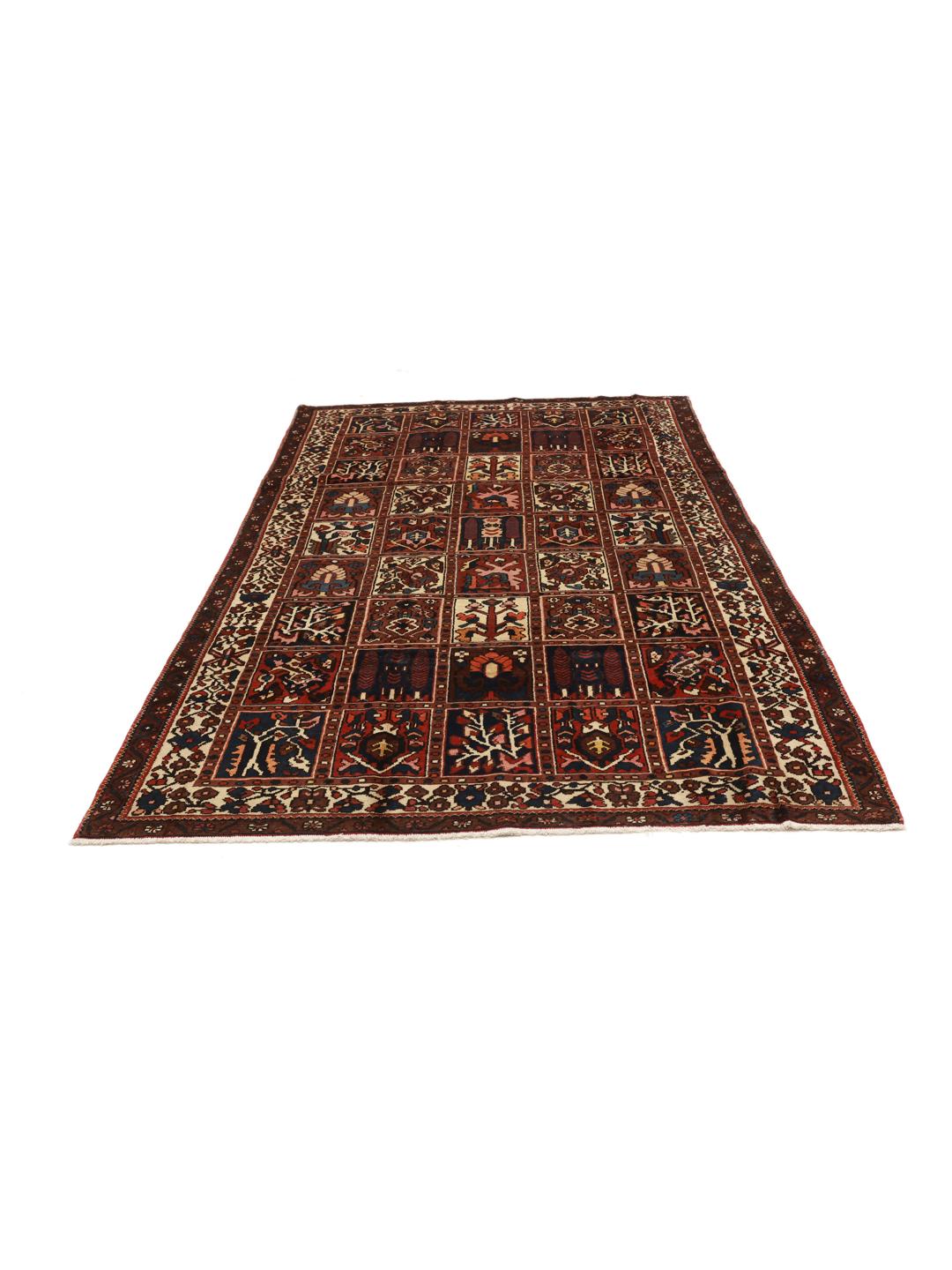
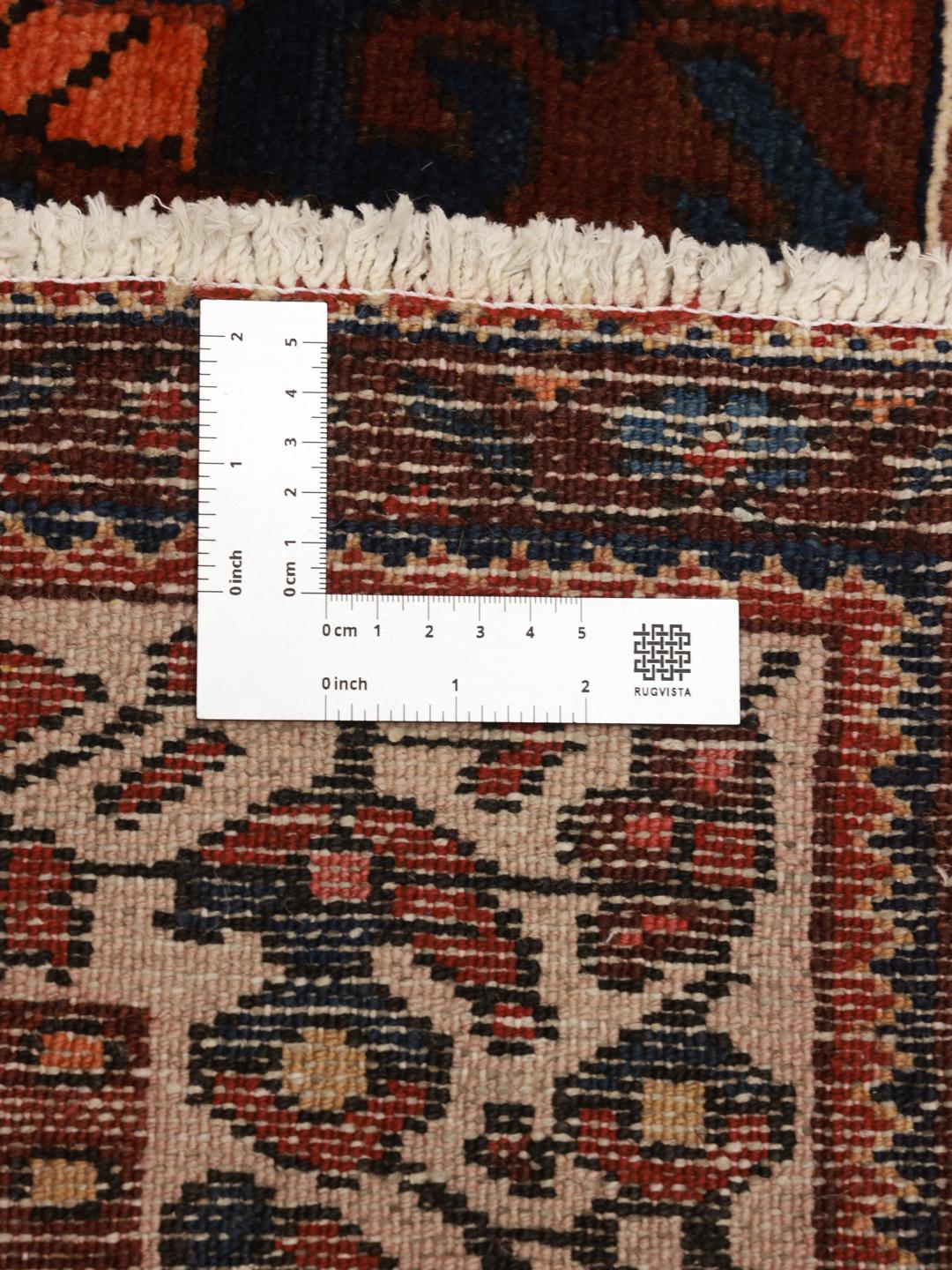
The Bakhtiari rugs take their name from the Bakhtiari tribe, a group of nomadic and semi-nomadic people living in the mountainous regions of the Middle East. These tribes have a long history of weaving, deeply influenced by the rugged landscapes and the cultural traditions of the Zagros Mountains. Their rugs are celebrated for their strength, rich colour palettes, and distinctively bold designs.
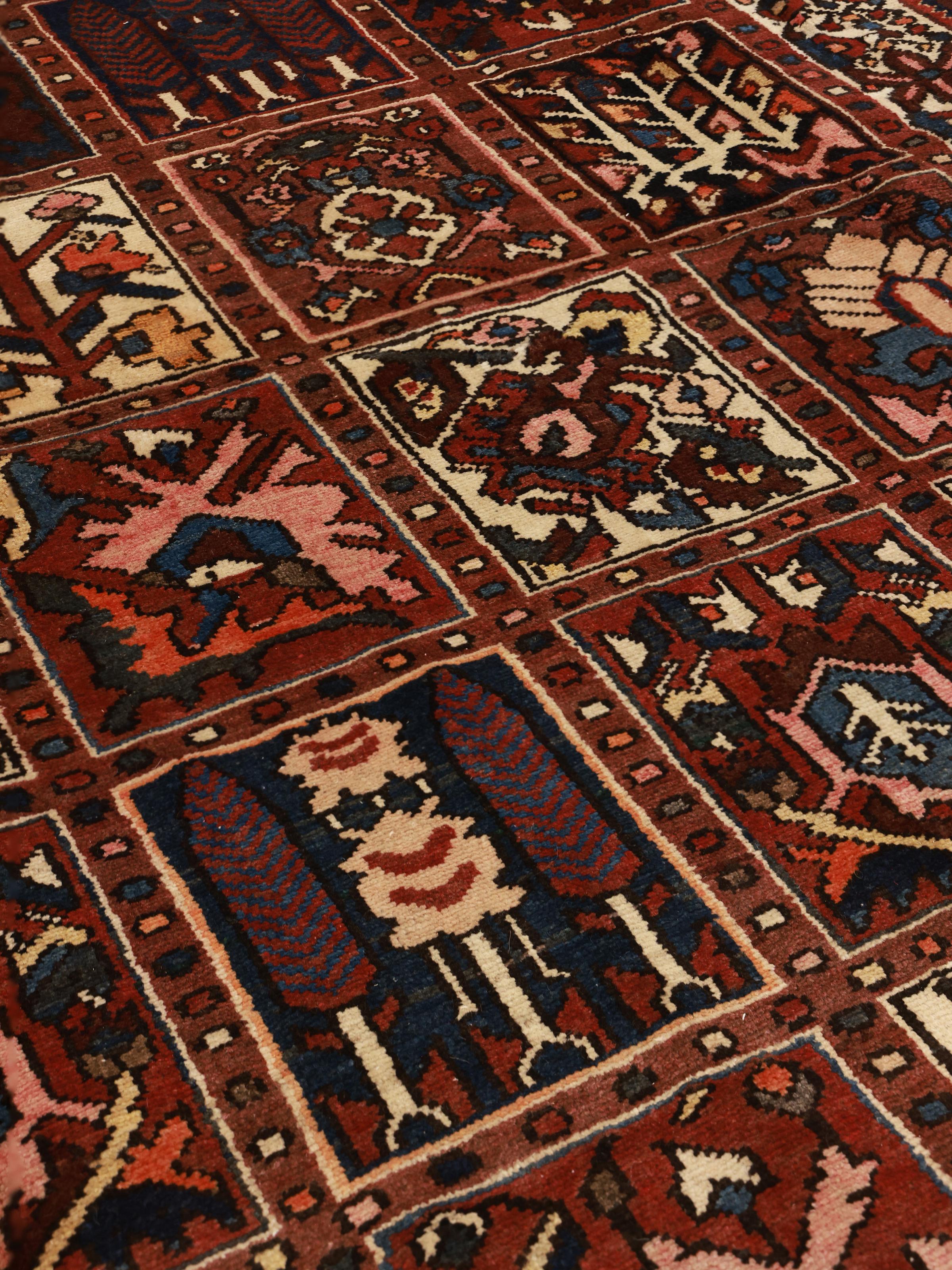
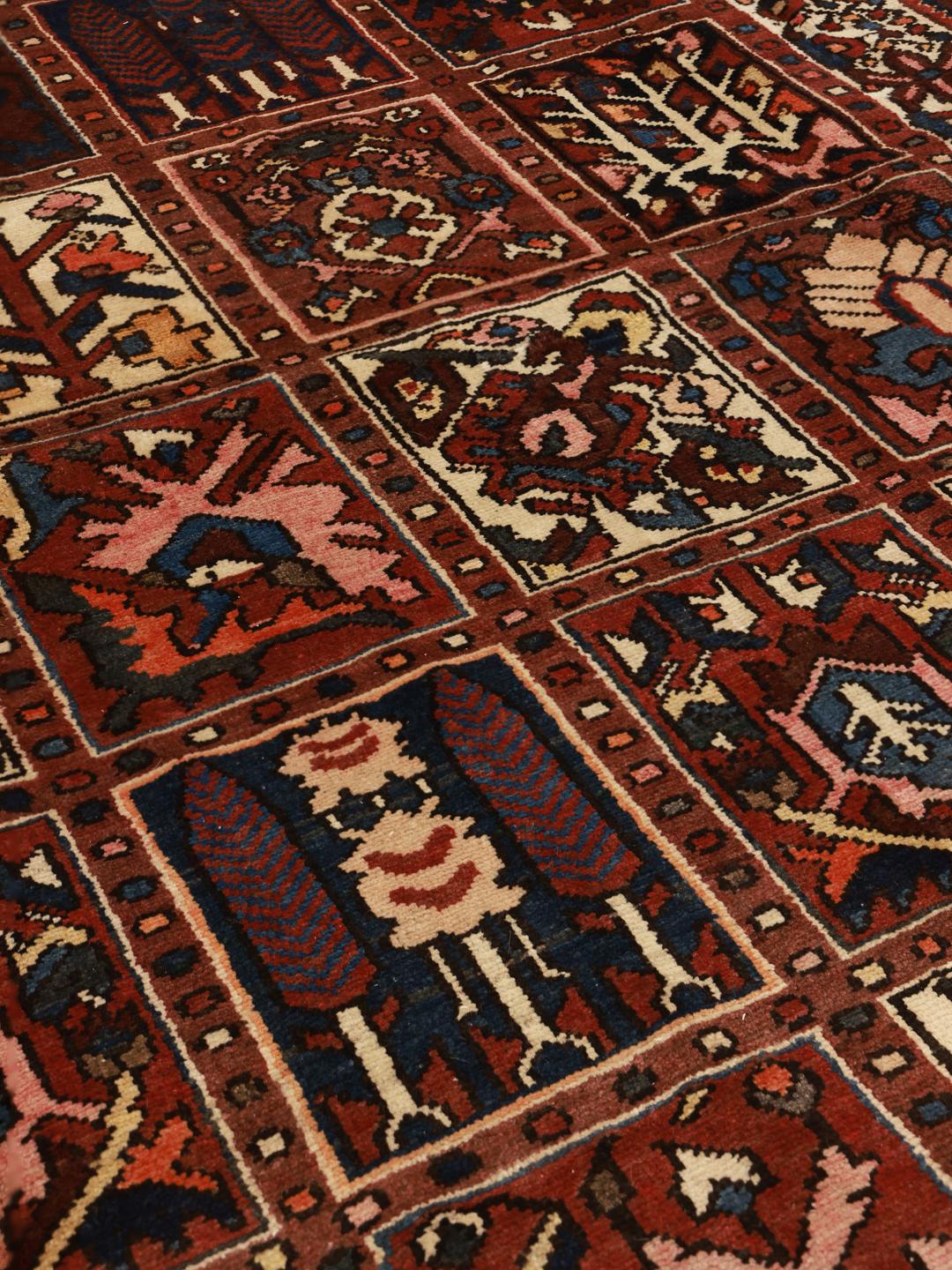
A hallmark of these rugs is the 'khesti' or garden panel design seen here. This layout divides the rug into a grid of separate compartments, each filled with stylized plants, trees, or flowers. This pattern is not merely decorative; it is a symbolic representation of the garden, a concept that has held profound cultural importance as a sanctuary and an oasis of life for centuries.
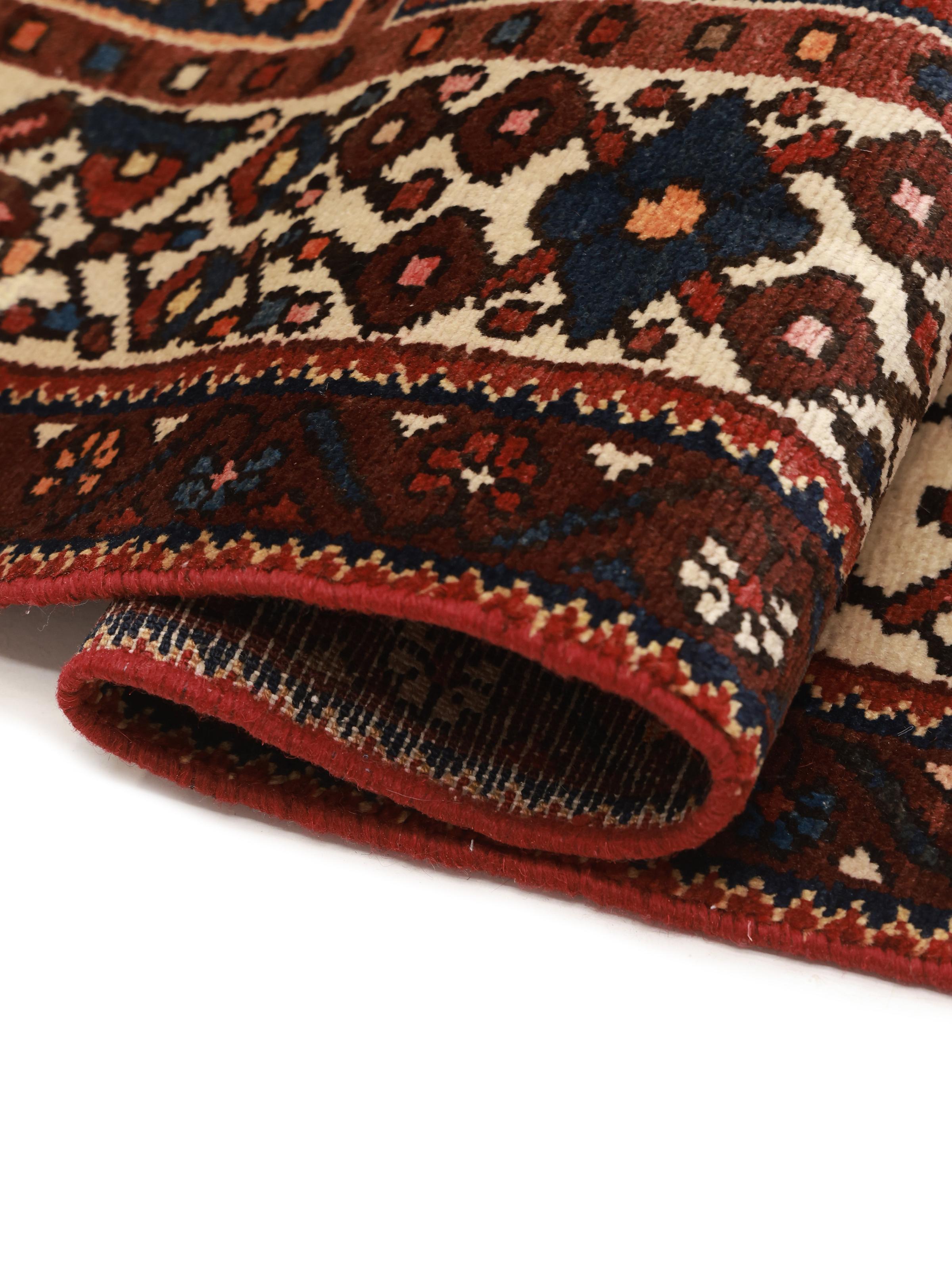
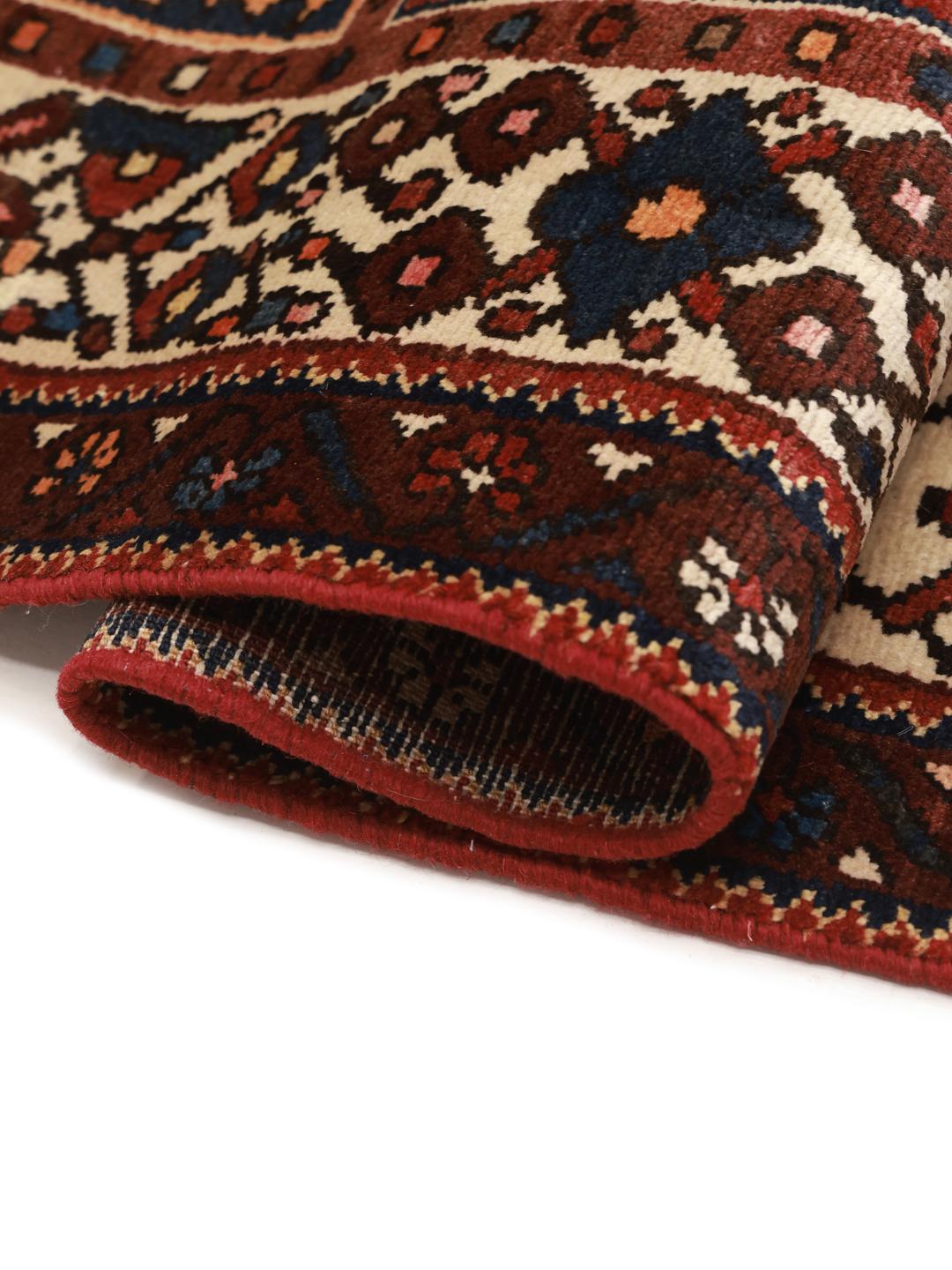
The construction of these rugs is inherently linked to the nomadic lifestyle, which demanded pieces that were both portable and incredibly durable. The use of high-quality Wool, sourced from mountain sheep, results in a lustrous, resilient pile that is known to improve with age. The weaving process is a deeply ingrained social activity, often passed down through generations within the tribe.
Collectors value these rugs for their authenticity and the unique narrative each piece tells through its motifs. Owning a Bakhtiari rug is an opportunity to connect with a centuries-old craft tradition. These pieces are not just functional floor coverings but are considered expressions of tribal identity and artistic mastery.