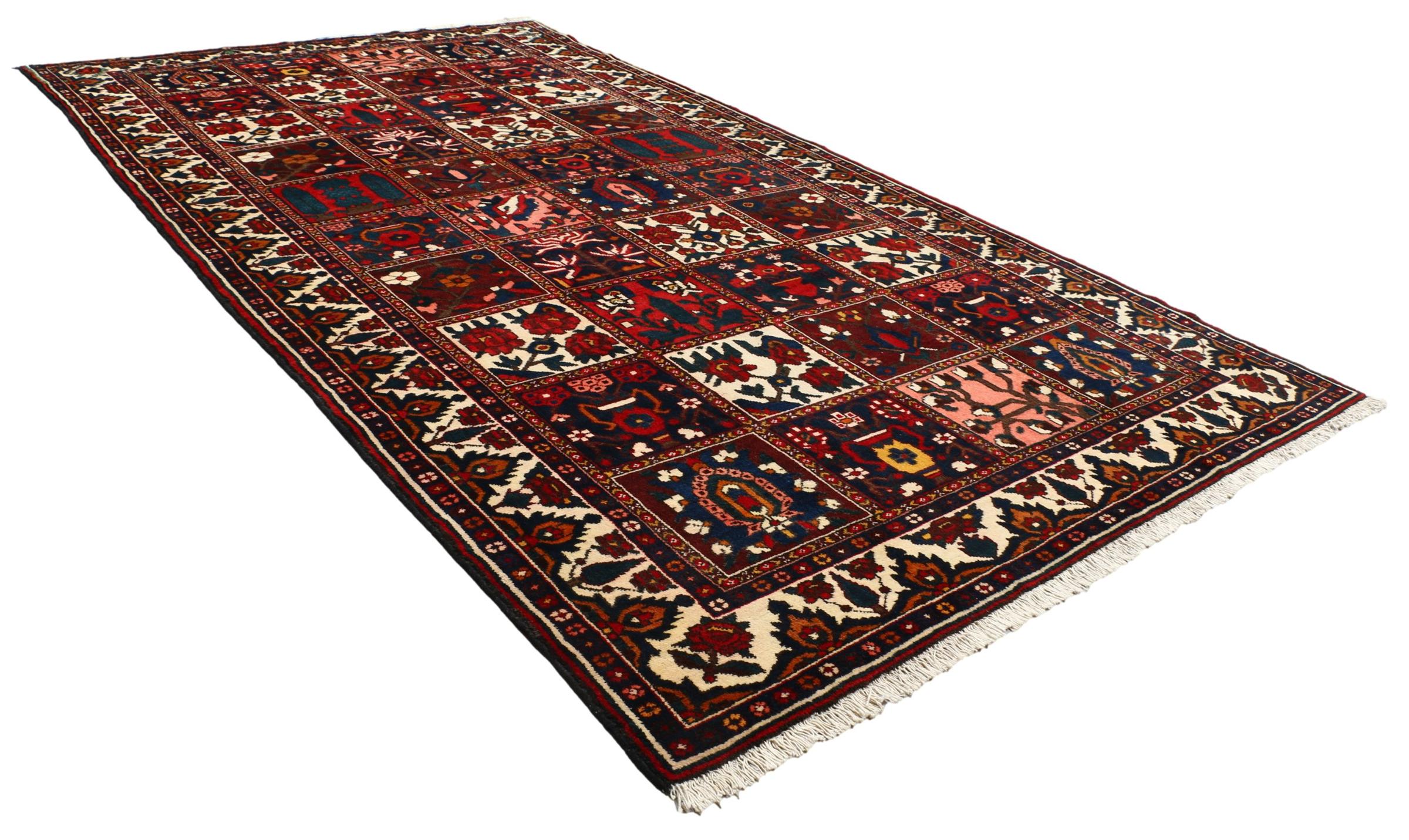
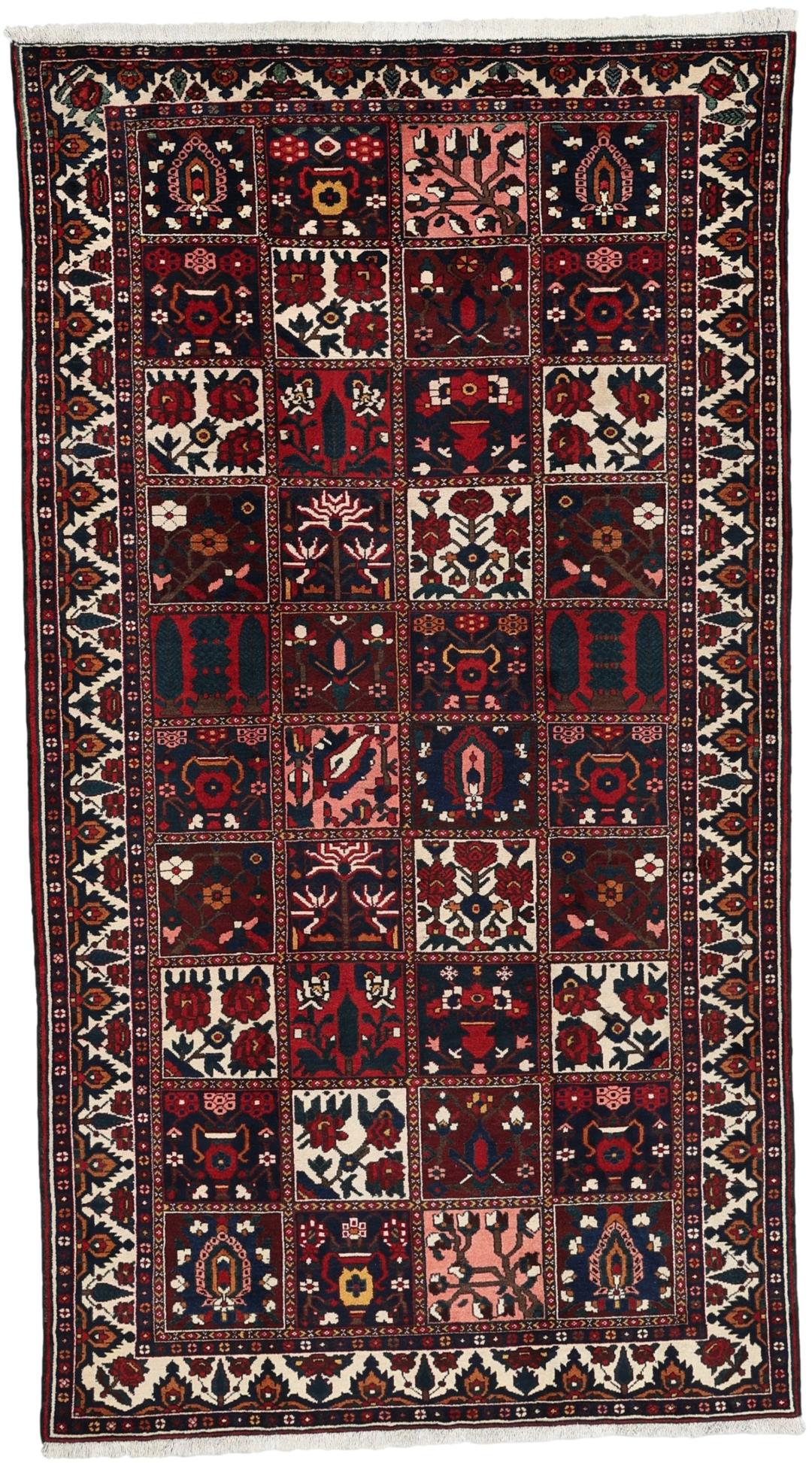
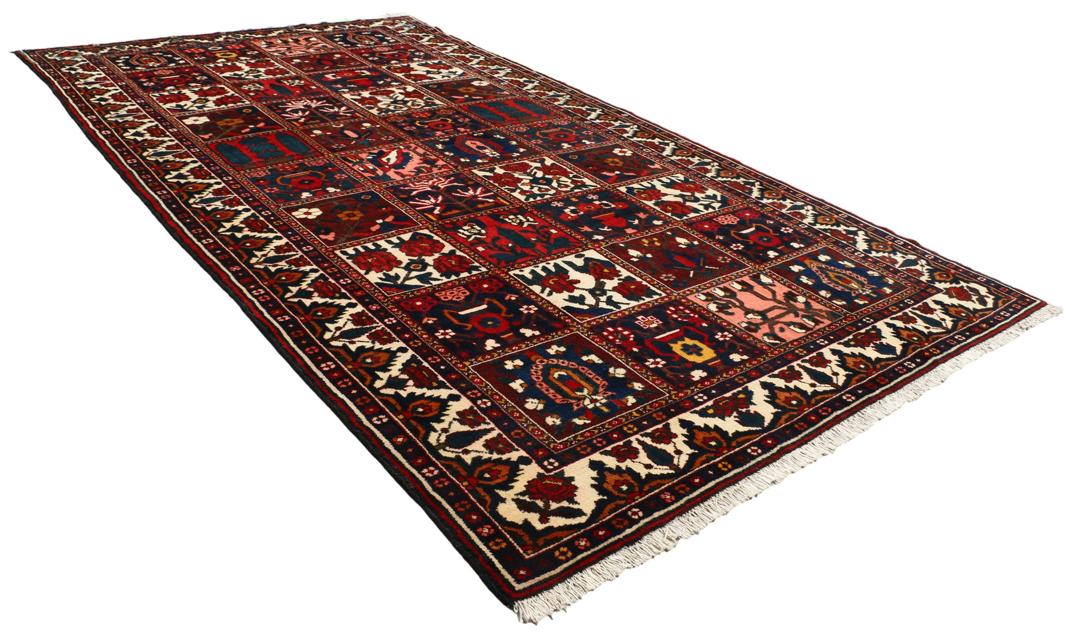
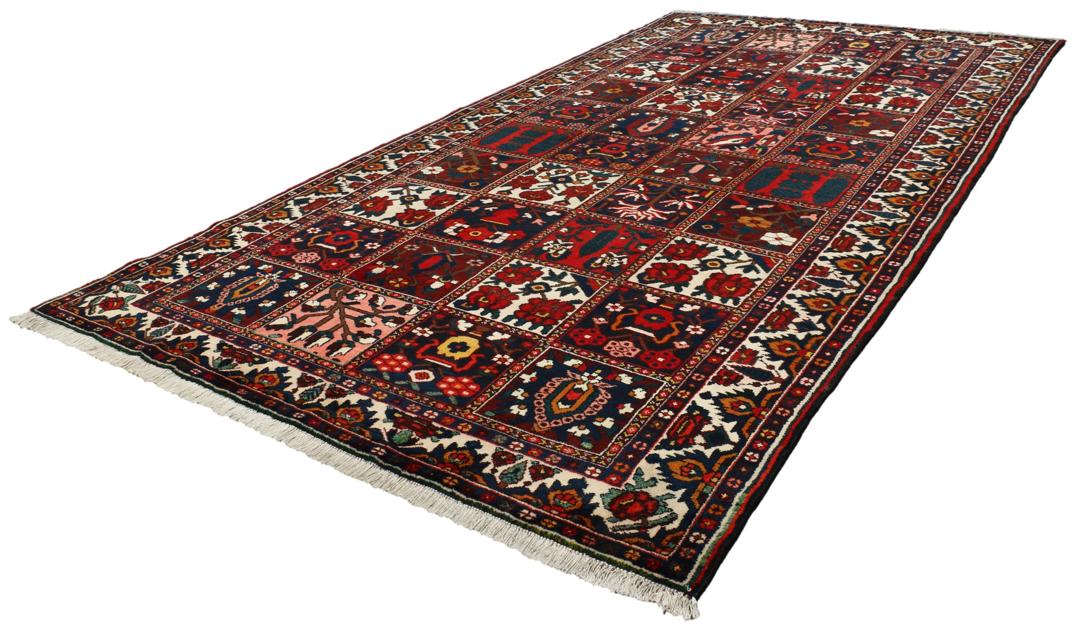
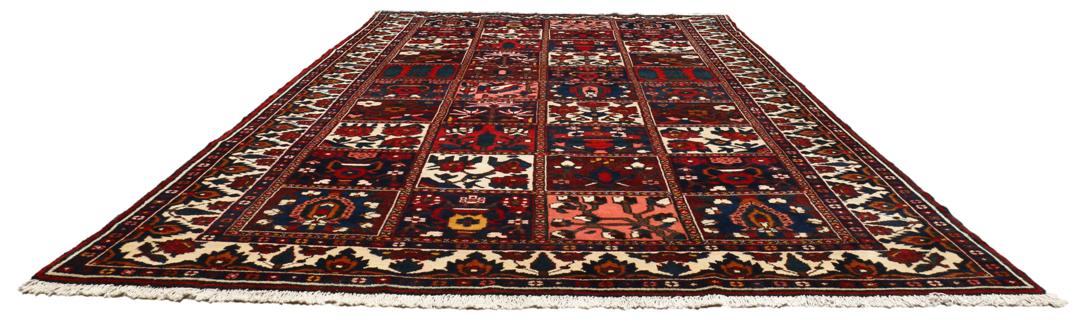
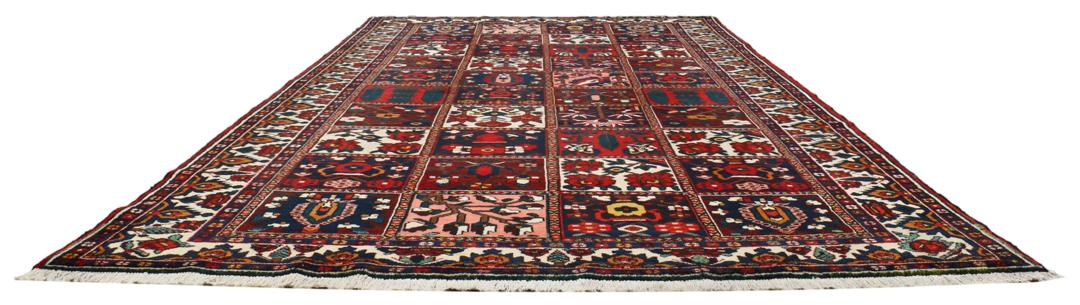
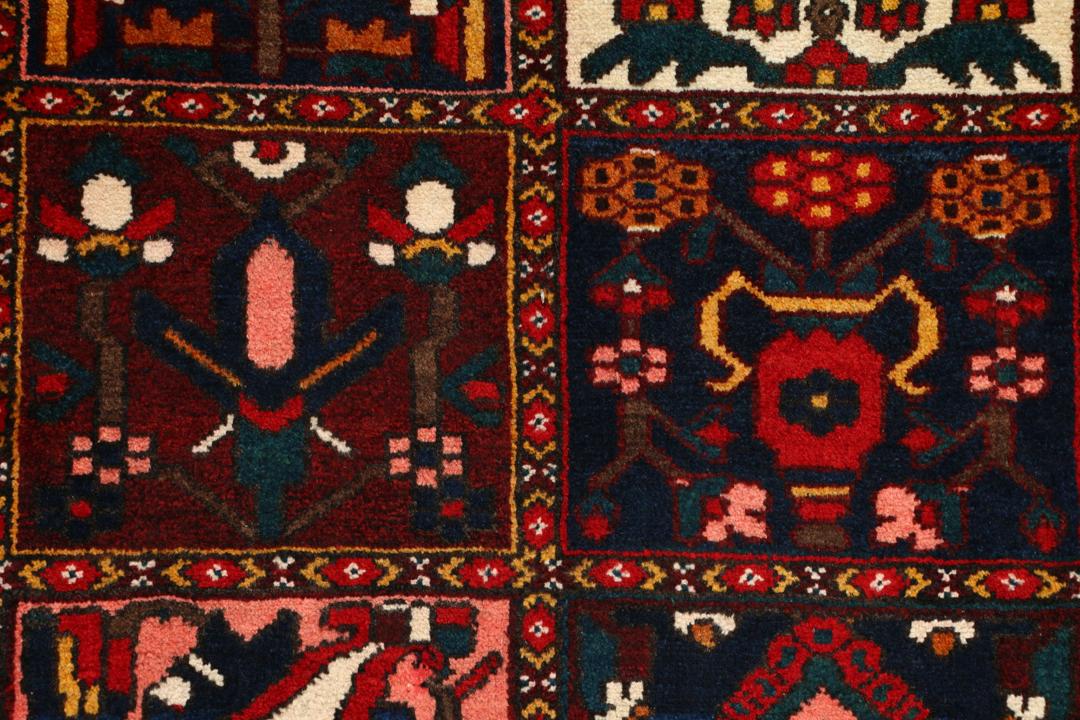
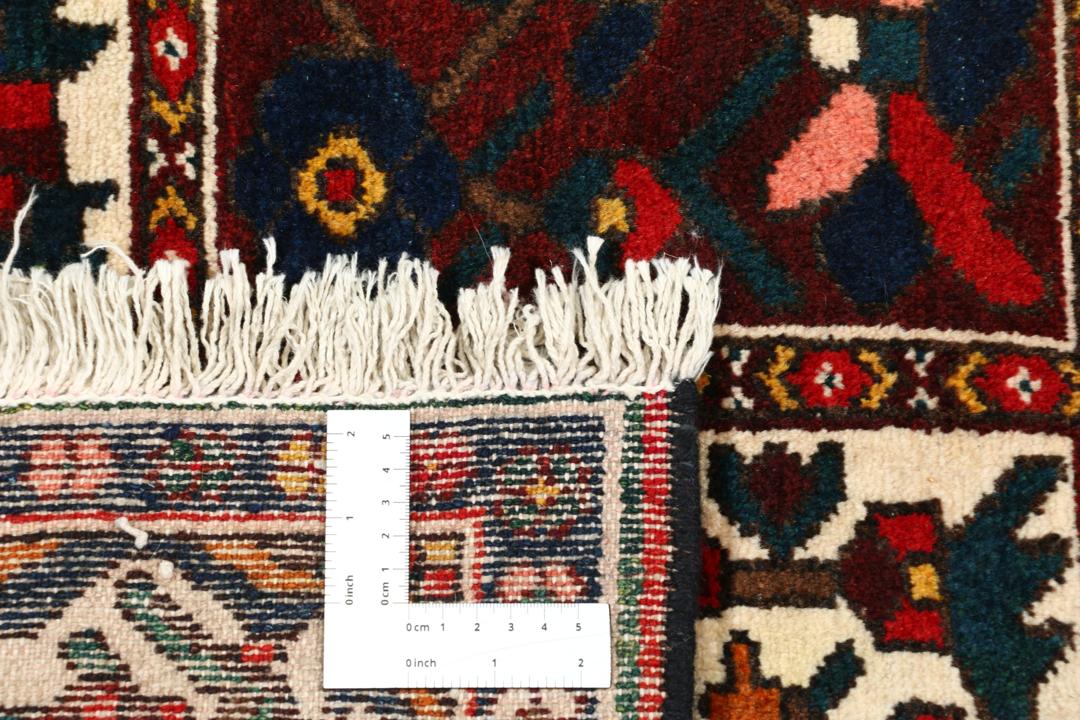
The Bakhtiari rug tradition originates from the mountainous Chaharmahal and Bakhtiari province in the Middle East. These rugs are famously inspired by the lush, formal gardens of the region, translating the organised beauty of nature into a complex, repeated grid structure known as the Khesti pattern.
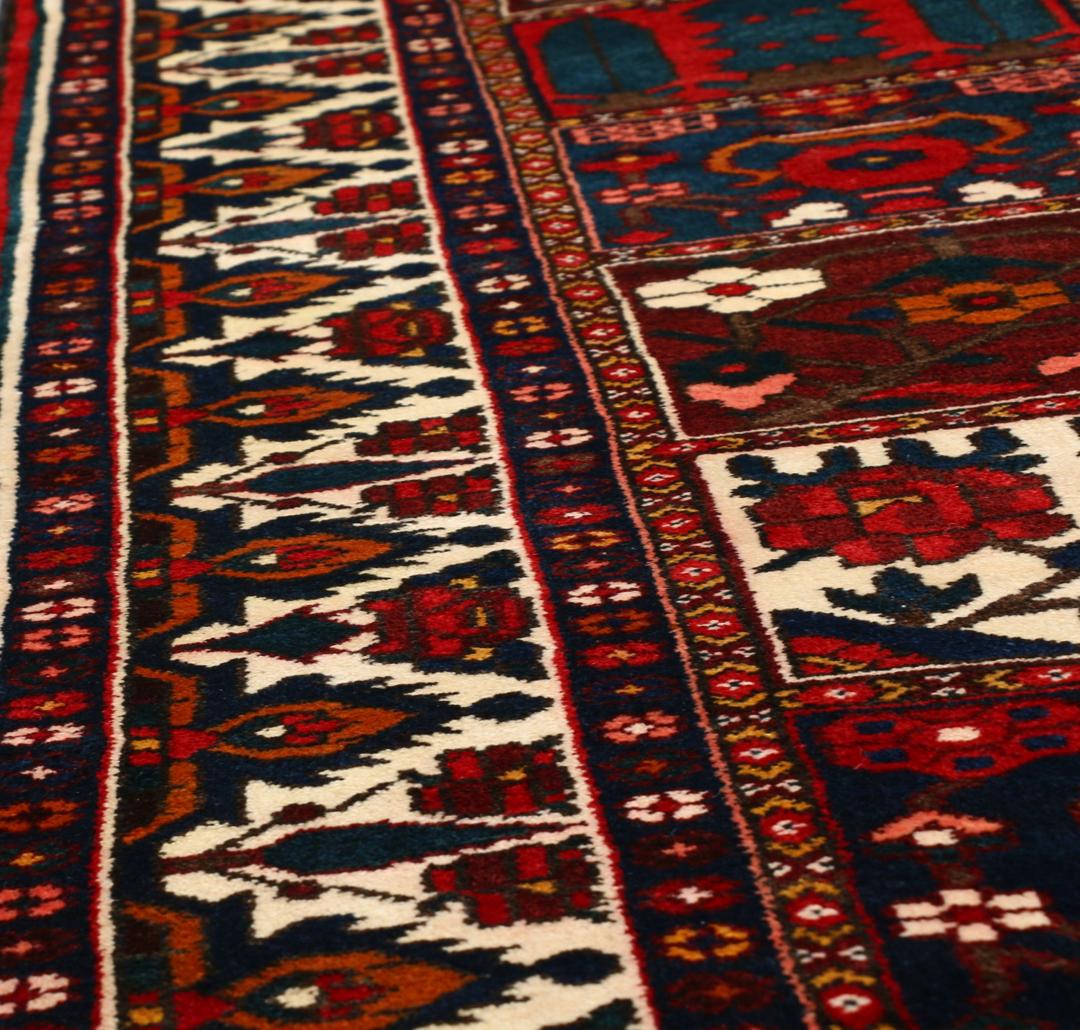
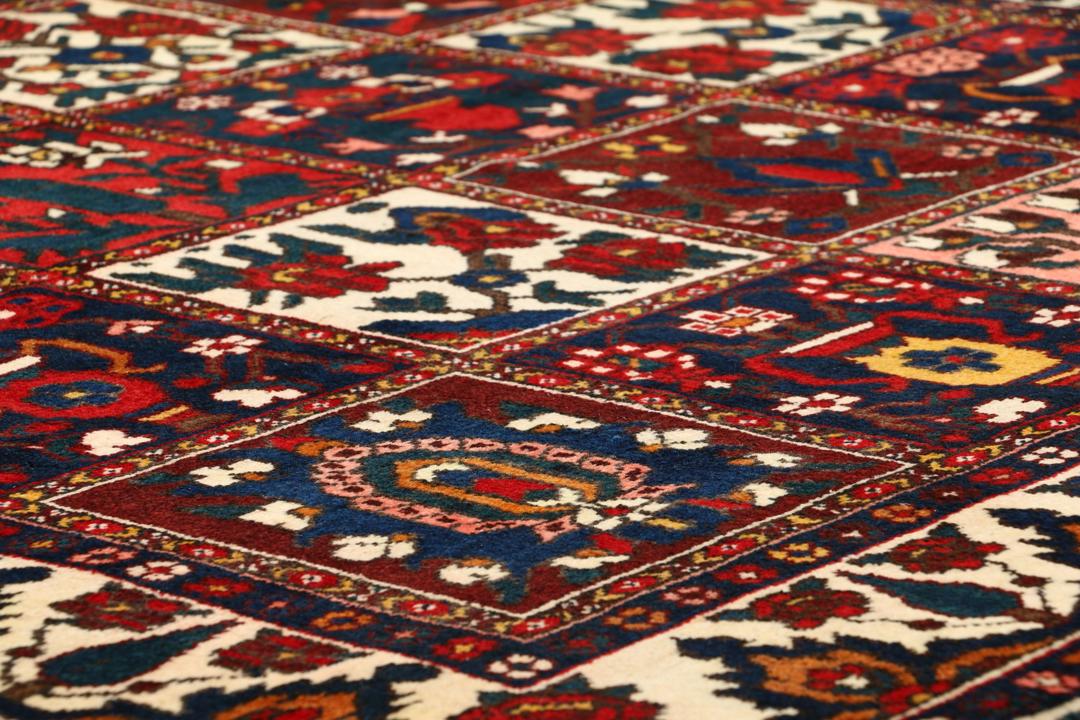
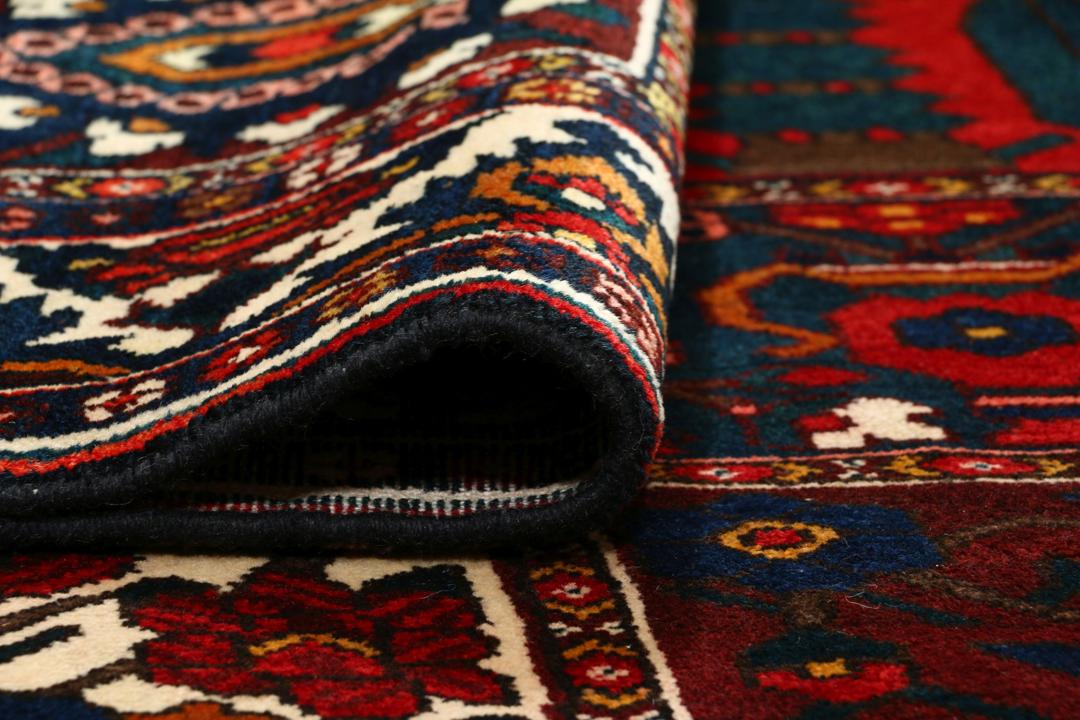
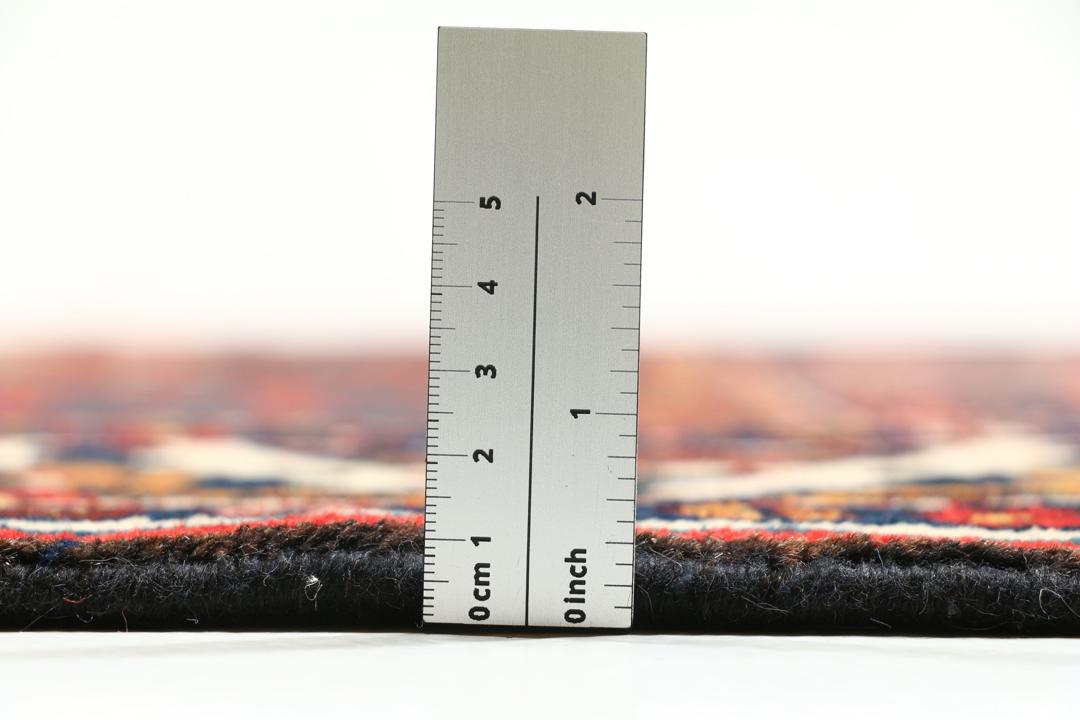
The term hand-knotted refers to the technique where individual strands of wool are tied by hand onto the foundation. This method is the hallmark of quality in the region, creating a pile that is not only deeply lustrous but also incredibly durable. The density achieved through this method is what allows these rugs to maintain their vibrancy for decades.
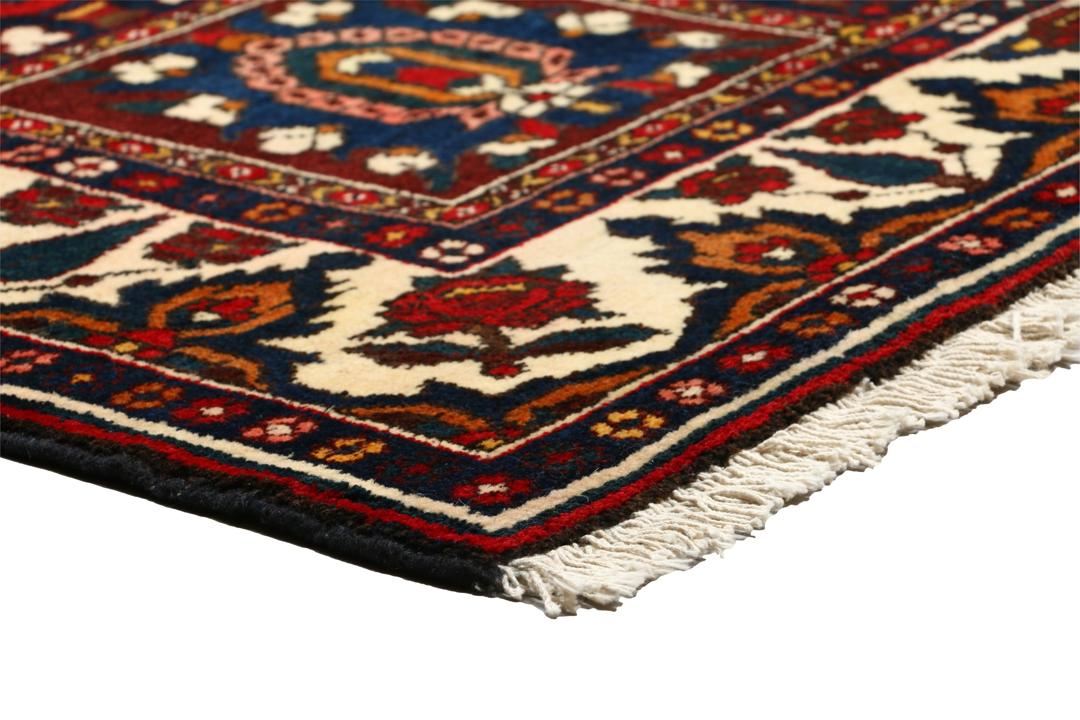
Visually, these rugs are defined by their compartmentalised design, where each square often contains a different motif, such as stylised trees, flowers, or geometric symbols. The borders are typically as elaborate as the field, often featuring repeating patterns that frame the garden squares, creating a sense of balance and harmony characteristic of this tradition.
Bakhtiari rugs are highly sought after by collectors for their narrative quality and the significant human effort required to complete each piece. Owning a rug from this tradition is a way to connect with a long-standing heritage of weaving, where every detail reflects the pride and expertise of the artisan who made it.