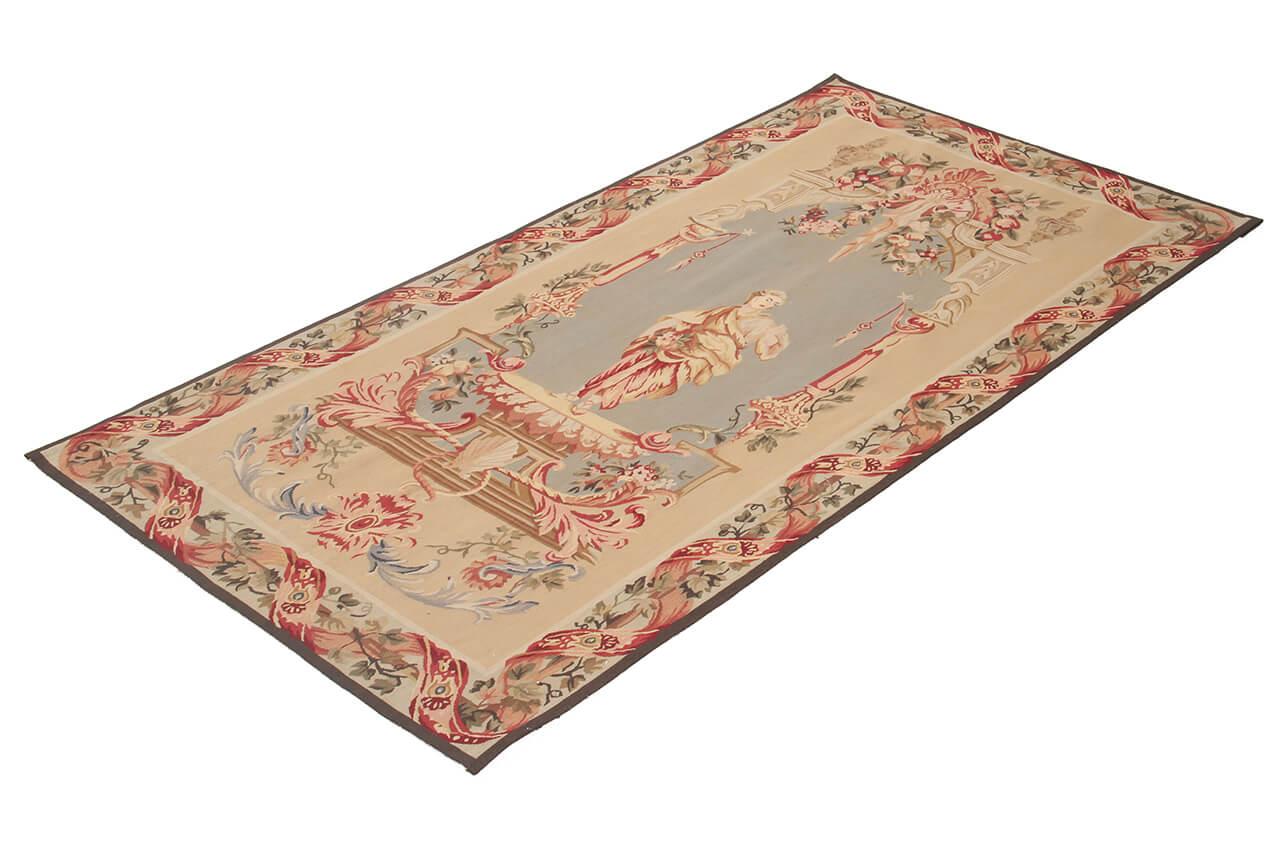
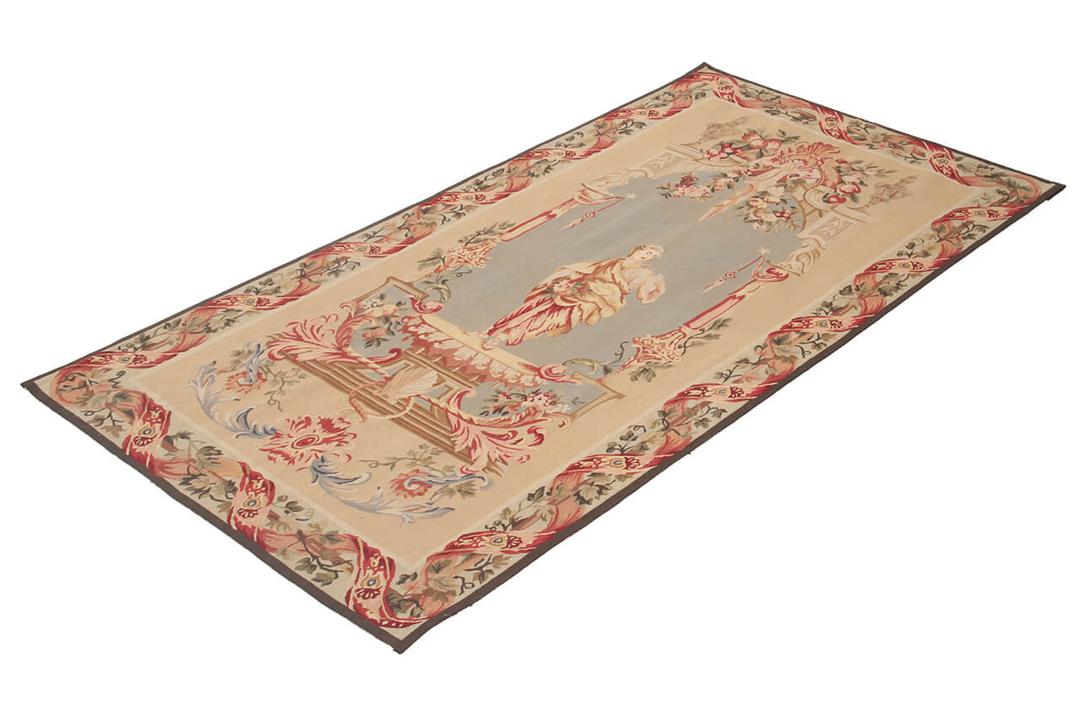
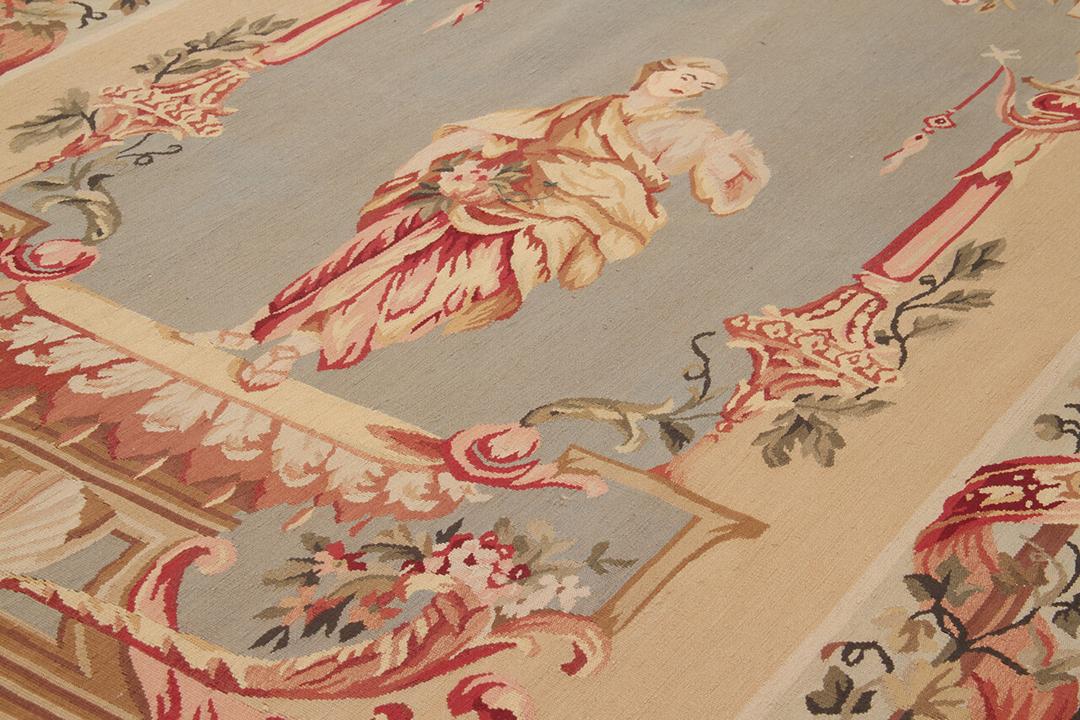
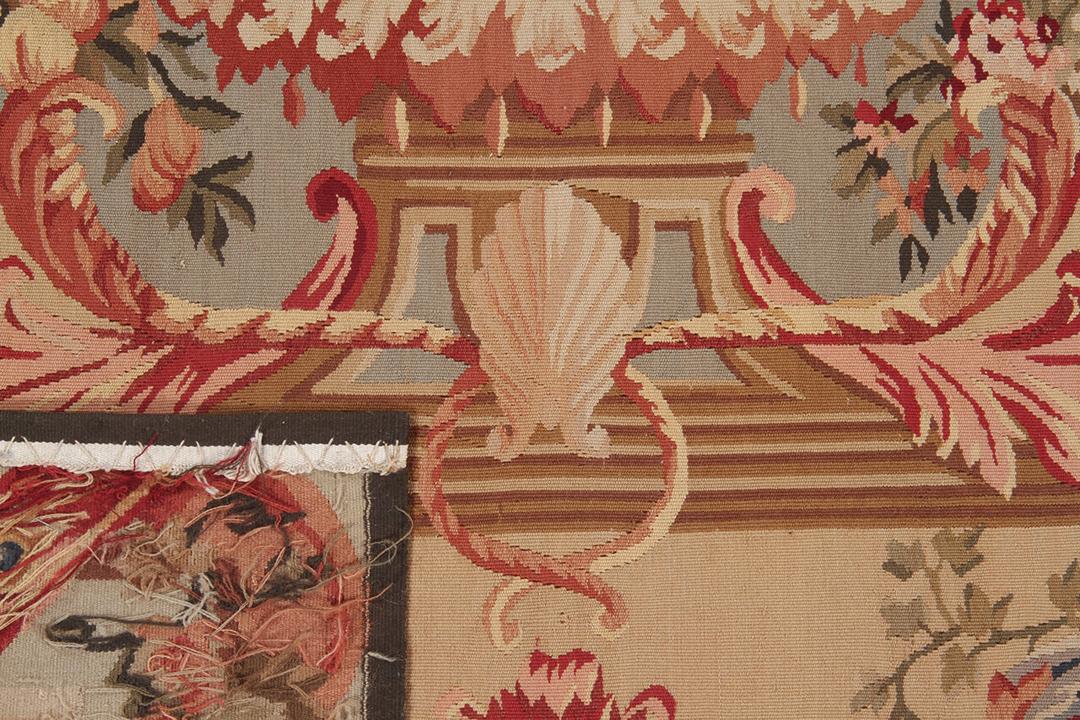
The Aubusson tradition takes its name from the historic French town of the same name, which became world-renowned for its tapestry-weaving heritage starting in the 17th century. While these rugs were originally crafted in France to adorn the floors and walls of grand chateaus, the style has since become a global language of elegance, with skilled artisans in various regions adapting the aesthetic to honour this storied European legacy.
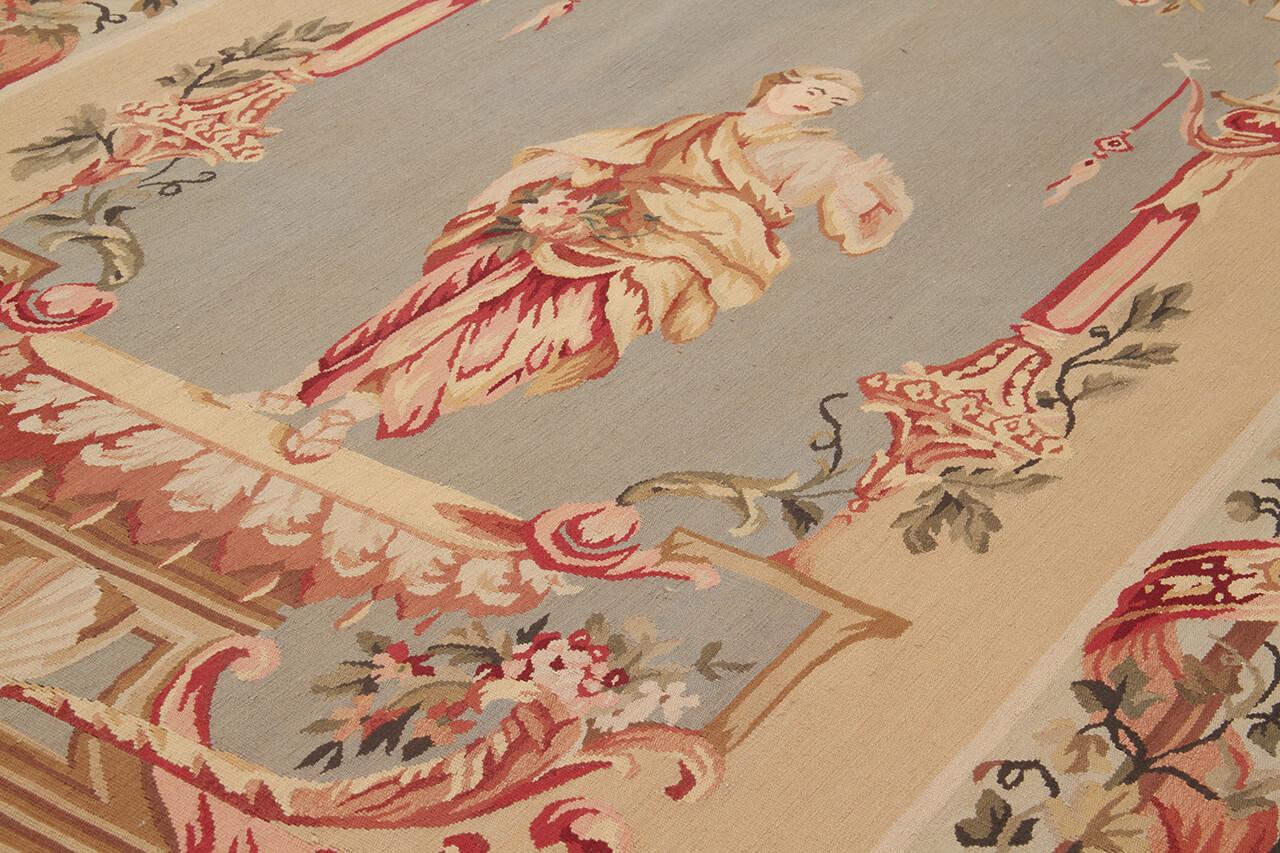
Aubusson rugs are distinct from pile rugs because they are essentially flat-woven tapestries. This technique involves weaving the design directly into the foundation, which requires a high degree of technical mastery to ensure the patterns remain sharp and the borders straight. This method results in a thinner, lighter rug that is highly valued for its ability to drape beautifully and showcase intricate, painterly designs.
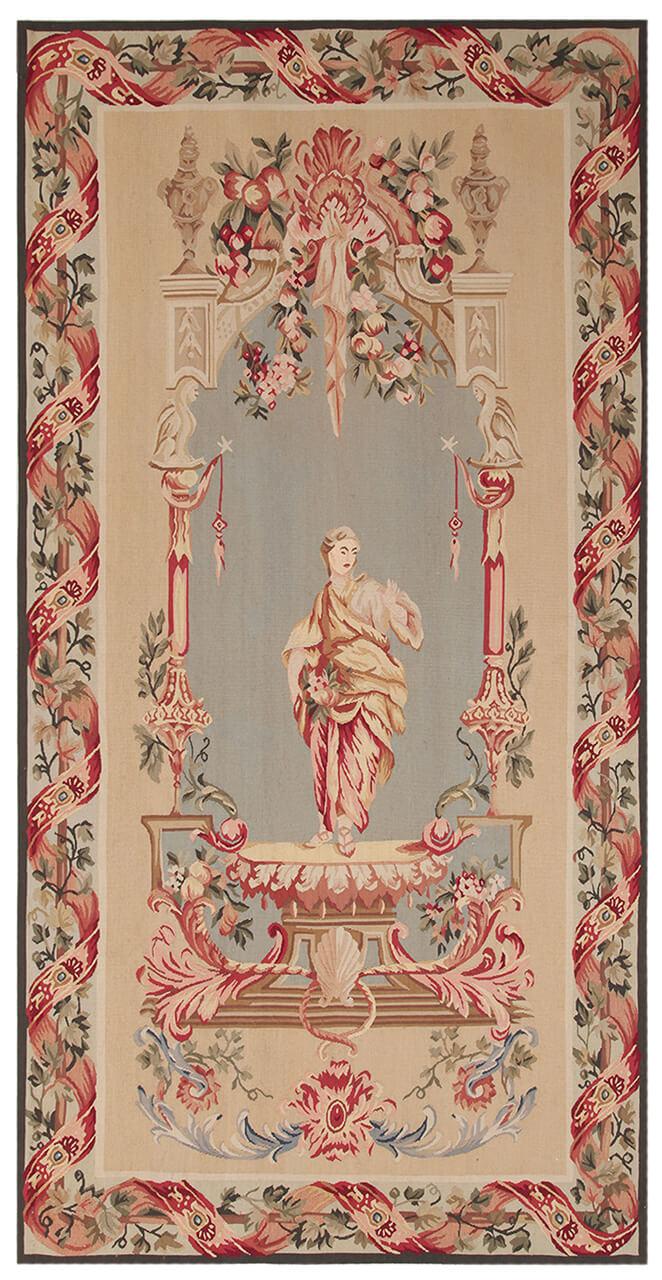
The design language of this tradition is rooted in the neoclassical and baroque periods, typically featuring central medallions, floral garlands, and architectural scrolls. The use of a central figure or an ornate urn is a classic hallmark of this style, often framed by a decorative border that acts as a frame for the central scene. These motifs are designed to create a sense of symmetry and balance, which was highly prized in traditional interior design.
Collecting an Aubusson-style rug is an investment in cultural heritage and skilled artistry. These pieces are revered for their ability to bring a sense of history and sophistication to a home. By choosing a piece in this tradition, you are continuing a long lineage of appreciation for fine textiles that prioritise visual narrative, artistic composition, and the enduring beauty of hand-woven craft.