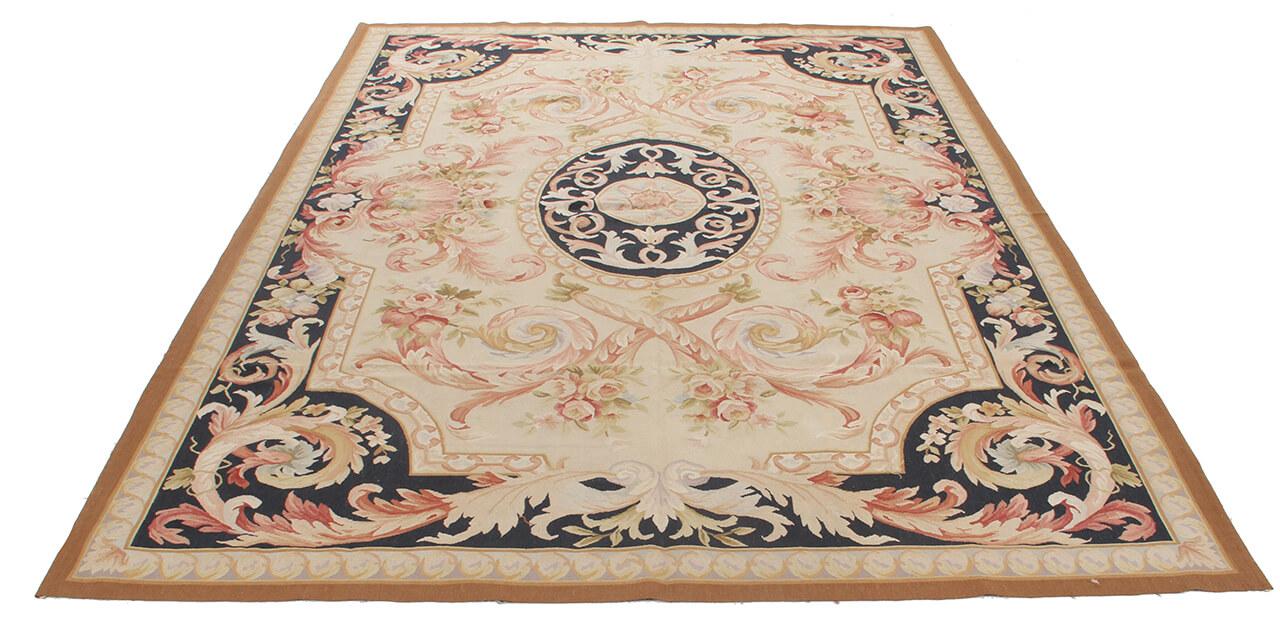
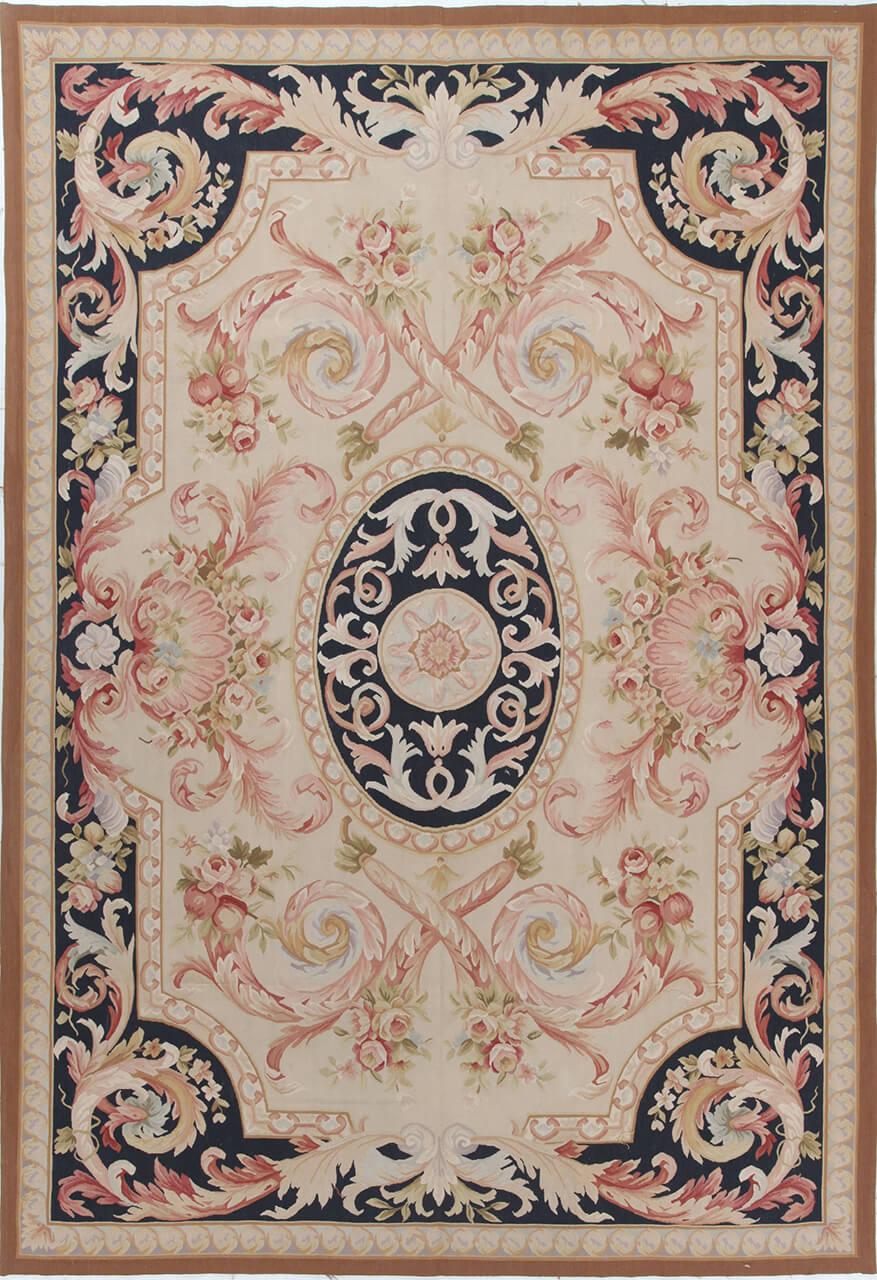
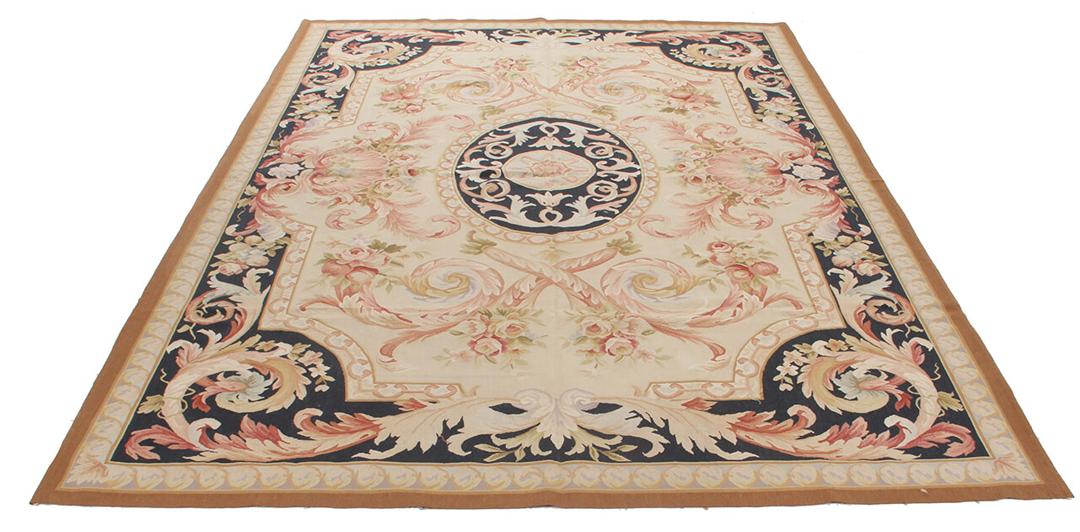
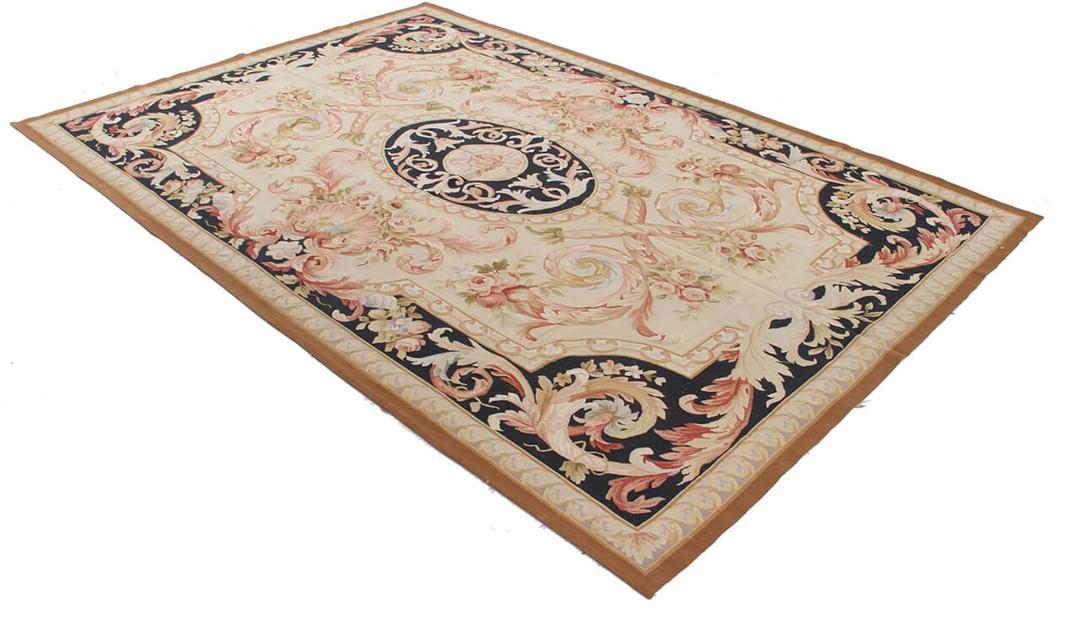
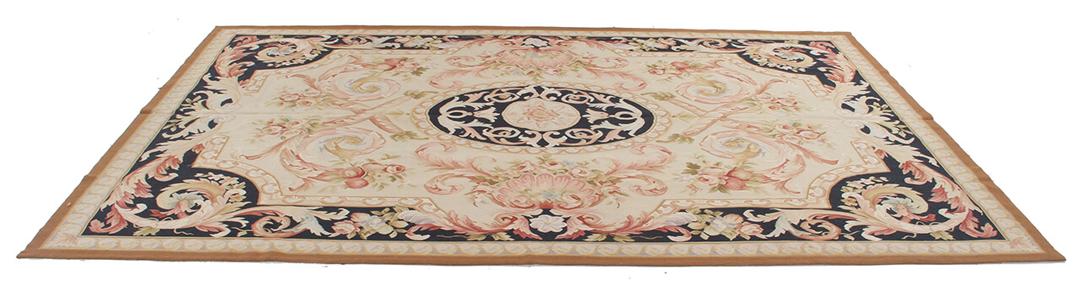
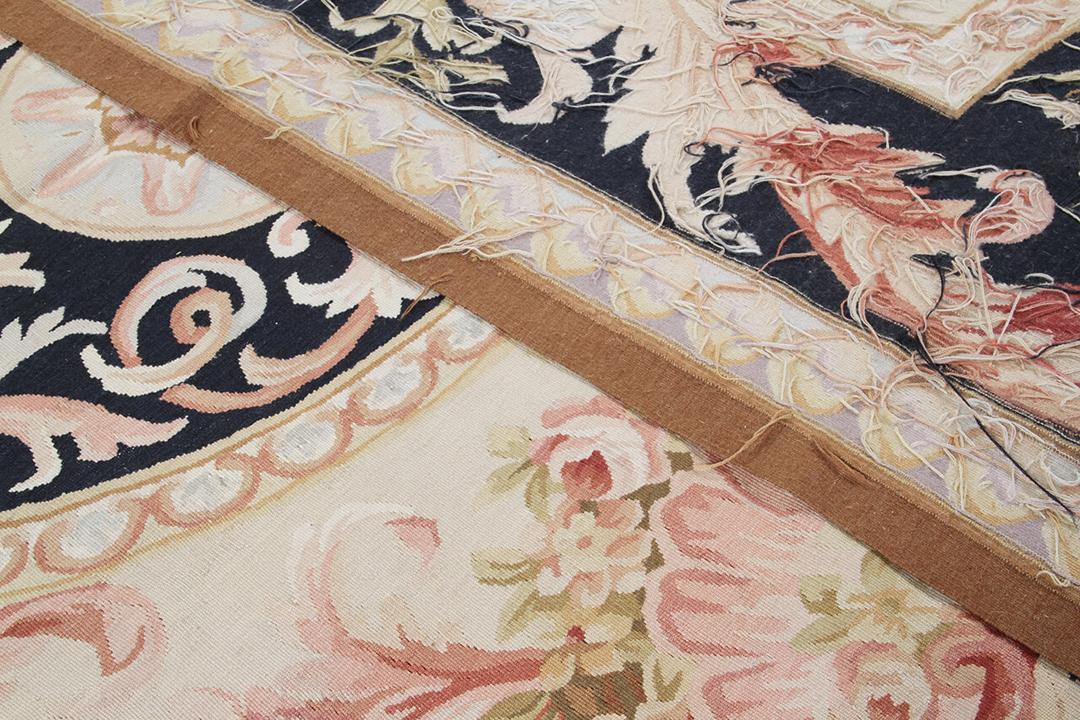
The Aubusson tradition traces its origins to the picturesque town of Aubusson in central France, where the craft of weaving tapestries and flat-weave rugs flourished for centuries. These rugs are renowned for their elegant, classical designs, often inspired by French royal interiors and the ornate beauty of historical gardens and floral arrangements.
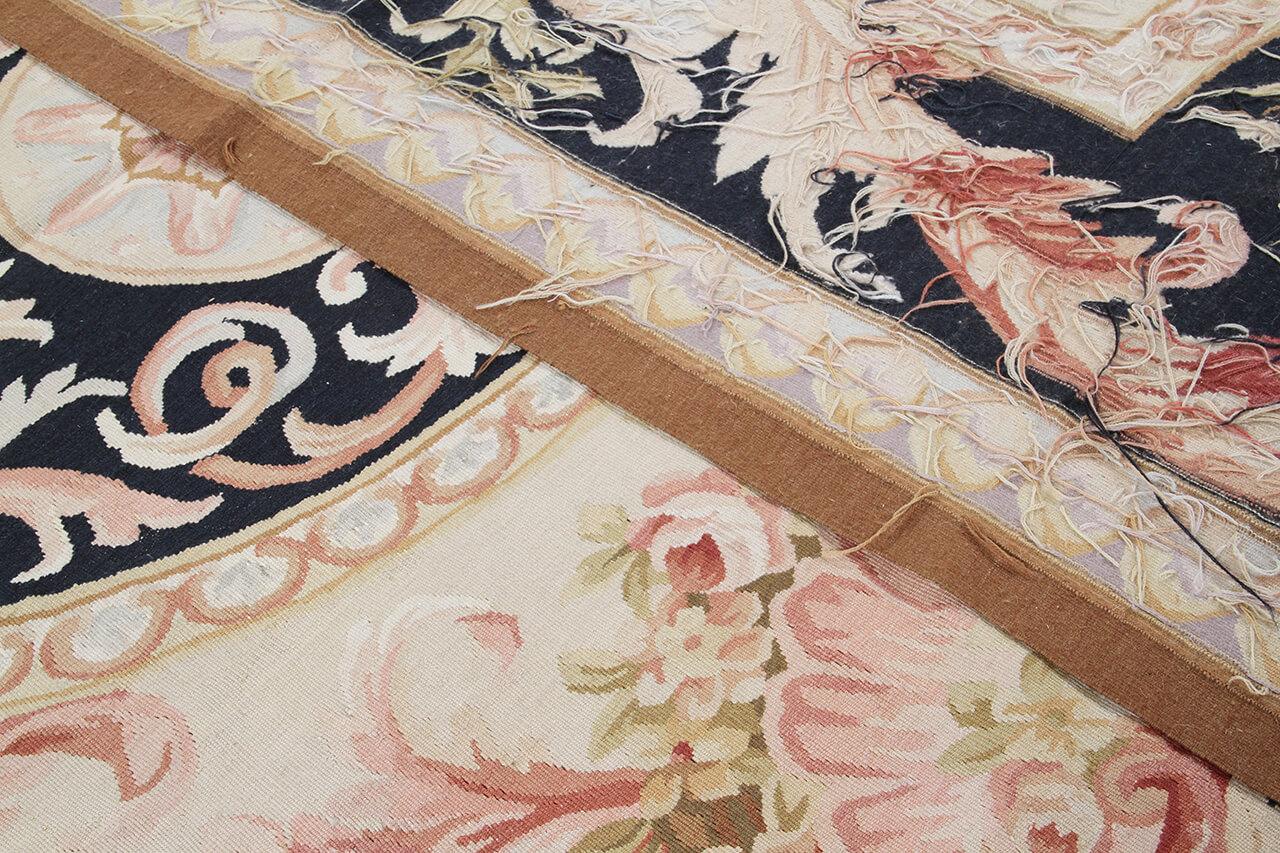
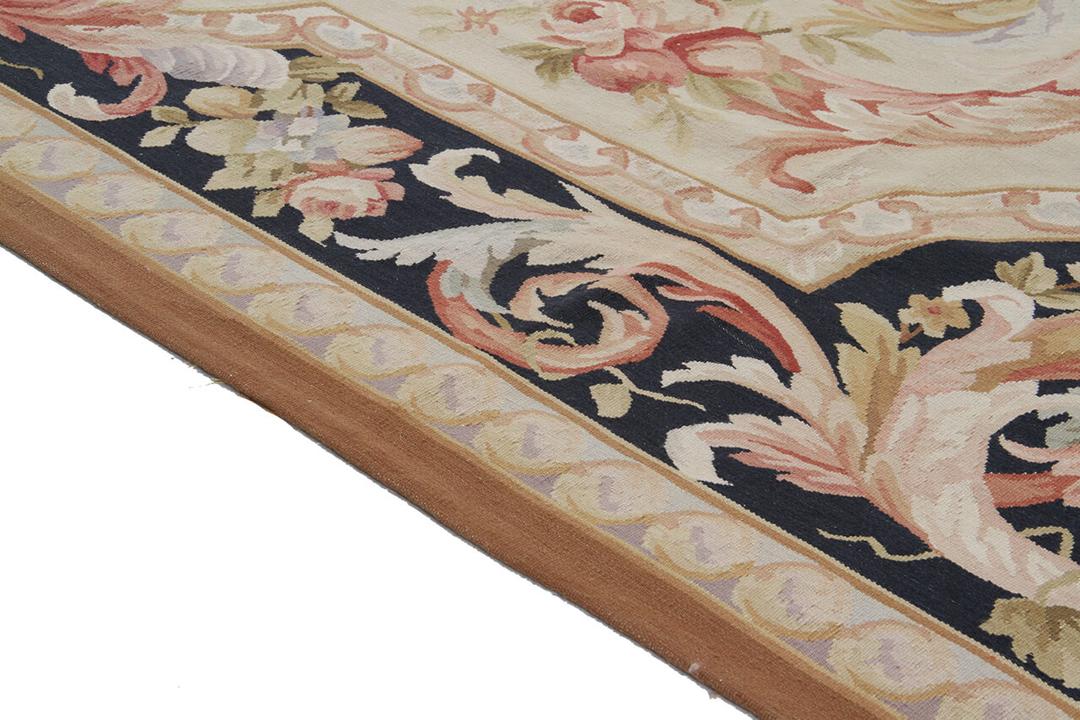
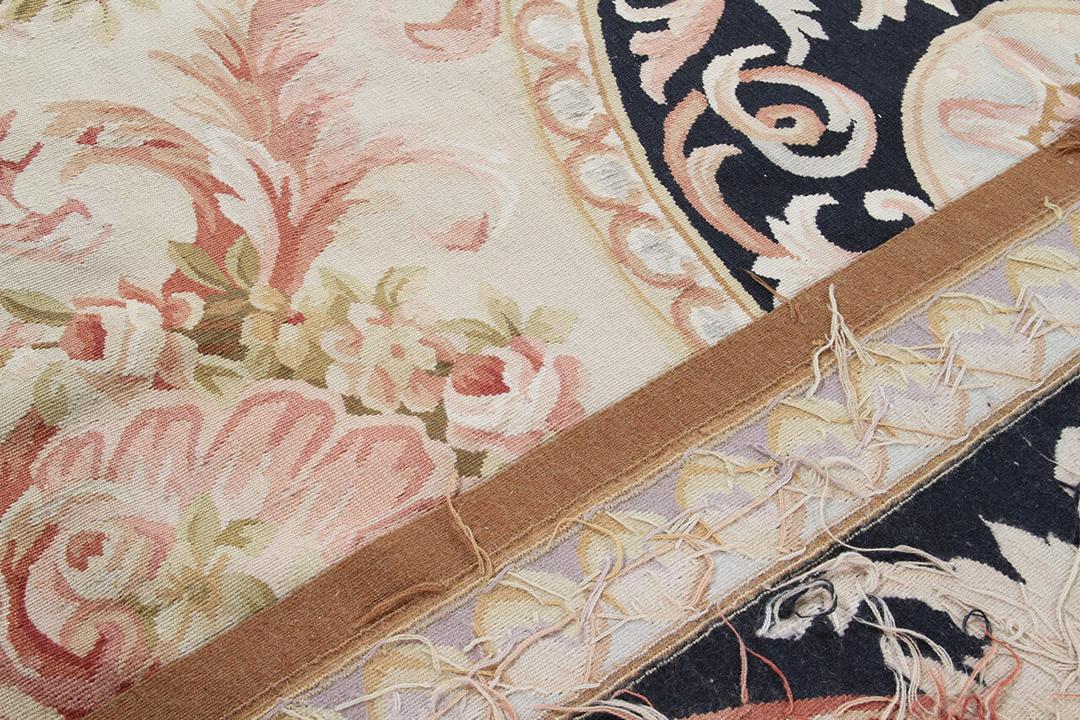
Technically, an Aubusson rug is defined by its flat-weave construction, which distinguishes it from piled rugs. This method involves interlacing warp and weft threads to create a smooth, tapestry-like surface. This technique is highly valued because it allows for an incredibly high level of detail in the design, enabling the weaver to depict delicate flowers, scrolls, and medallions with remarkable precision.
The visual language of this style is characterised by a central medallion, often surrounded by expansive floral borders and intricate corner flourishes. While traditional palettes often featured soft pastels, many modern iterations from master weavers in regions like China have introduced bold, high-contrast colours, such as deep blue, to highlight the classic motifs and provide a fresh, contemporary perspective on the heritage design.
Owning an Aubusson-style rug is an investment in a storied craft tradition. These pieces are collected not just for their functional use as floor coverings, but as expressions of historical design and artistic skill. They bridge the gap between textile art and interior decor, offering a piece of legacy that elevates the atmosphere of any room it occupies.