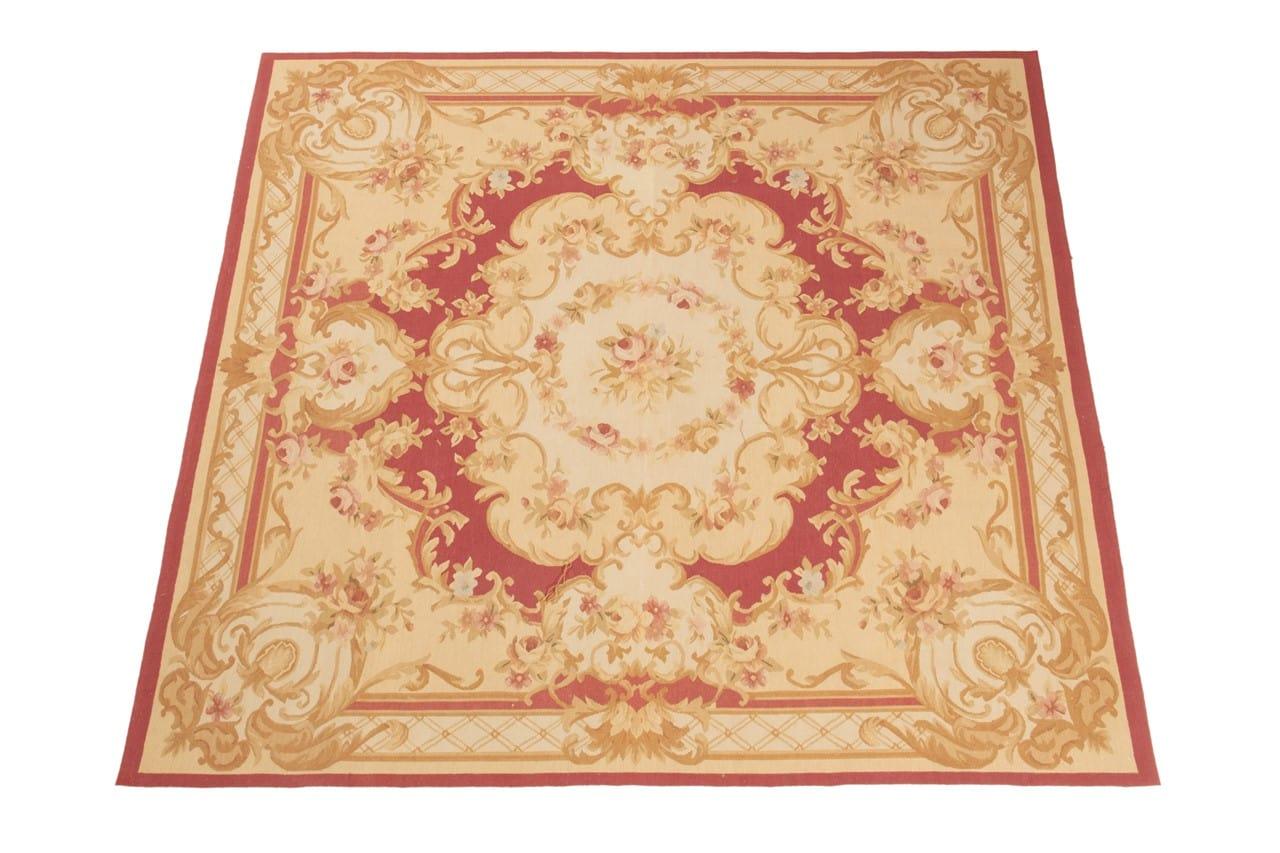
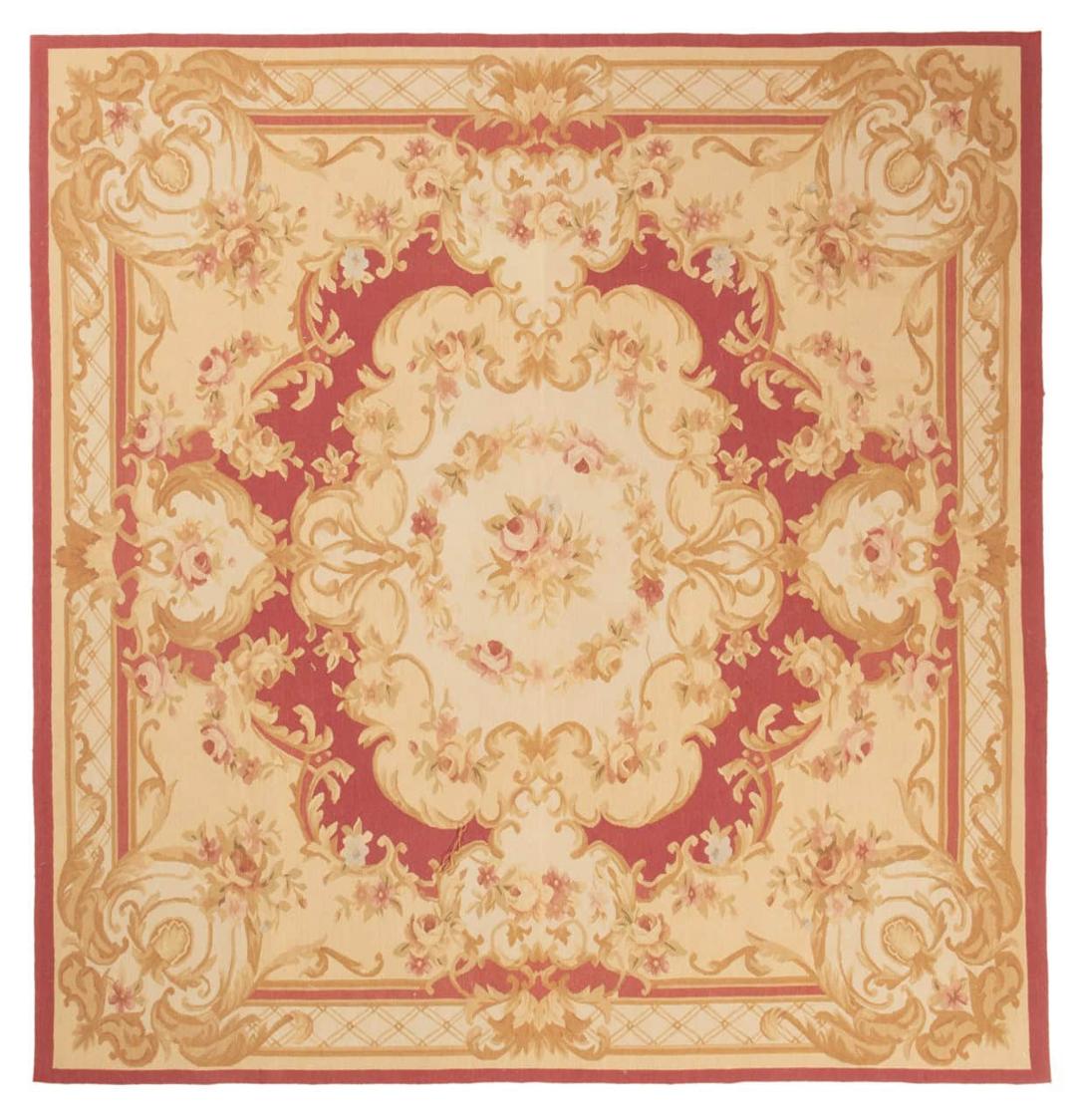
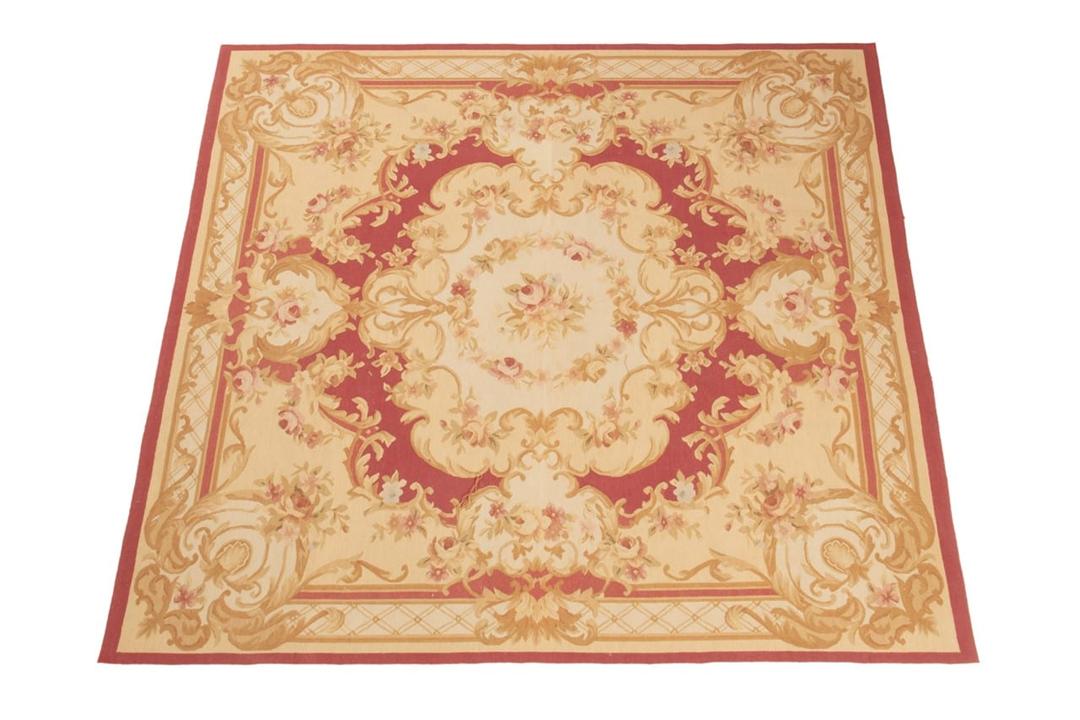
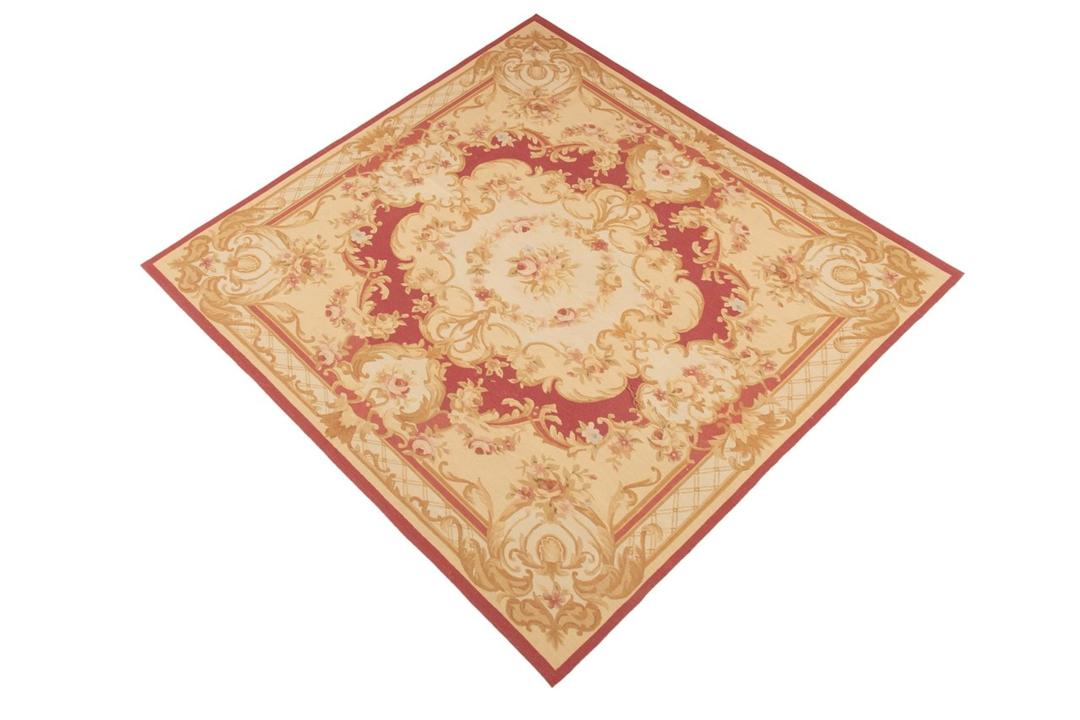
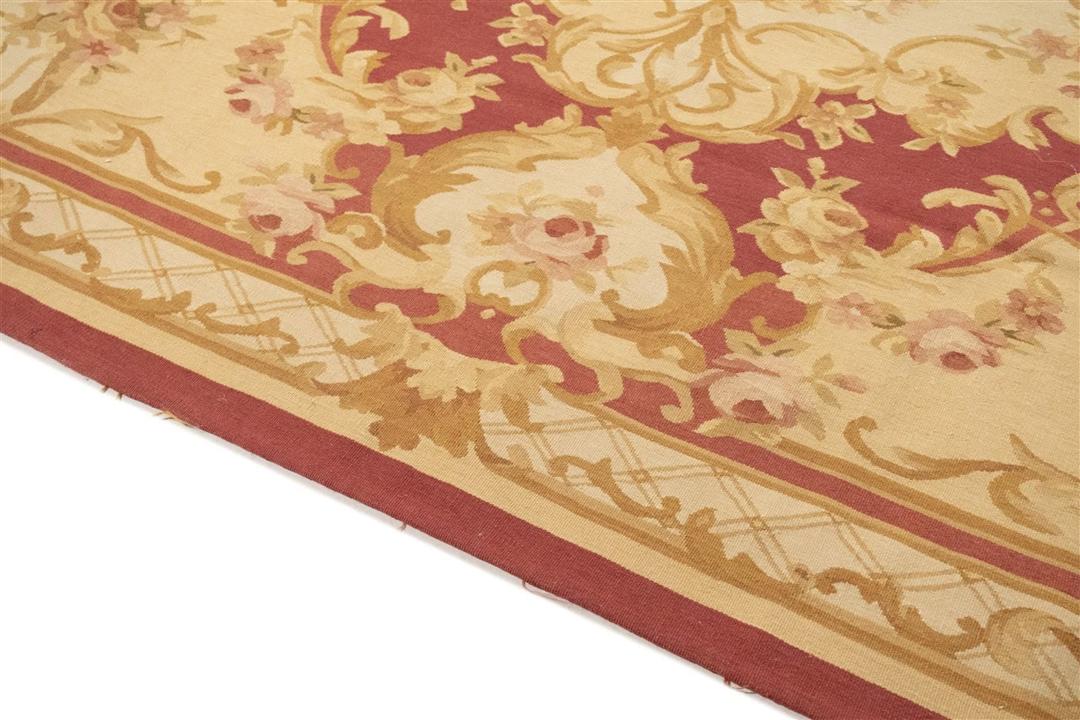
The Aubusson rug tradition takes its name from the French town of Aubusson, where the weaving of tapestries and rugs flourished for centuries. Historically, these pieces were commissioned for royal residences and grand châteaux, serving as symbols of status and refined taste. The style is characterised by its focus on architectural borders and delicate, naturalistic floral motifs, which mimic the elegance of neoclassical art.
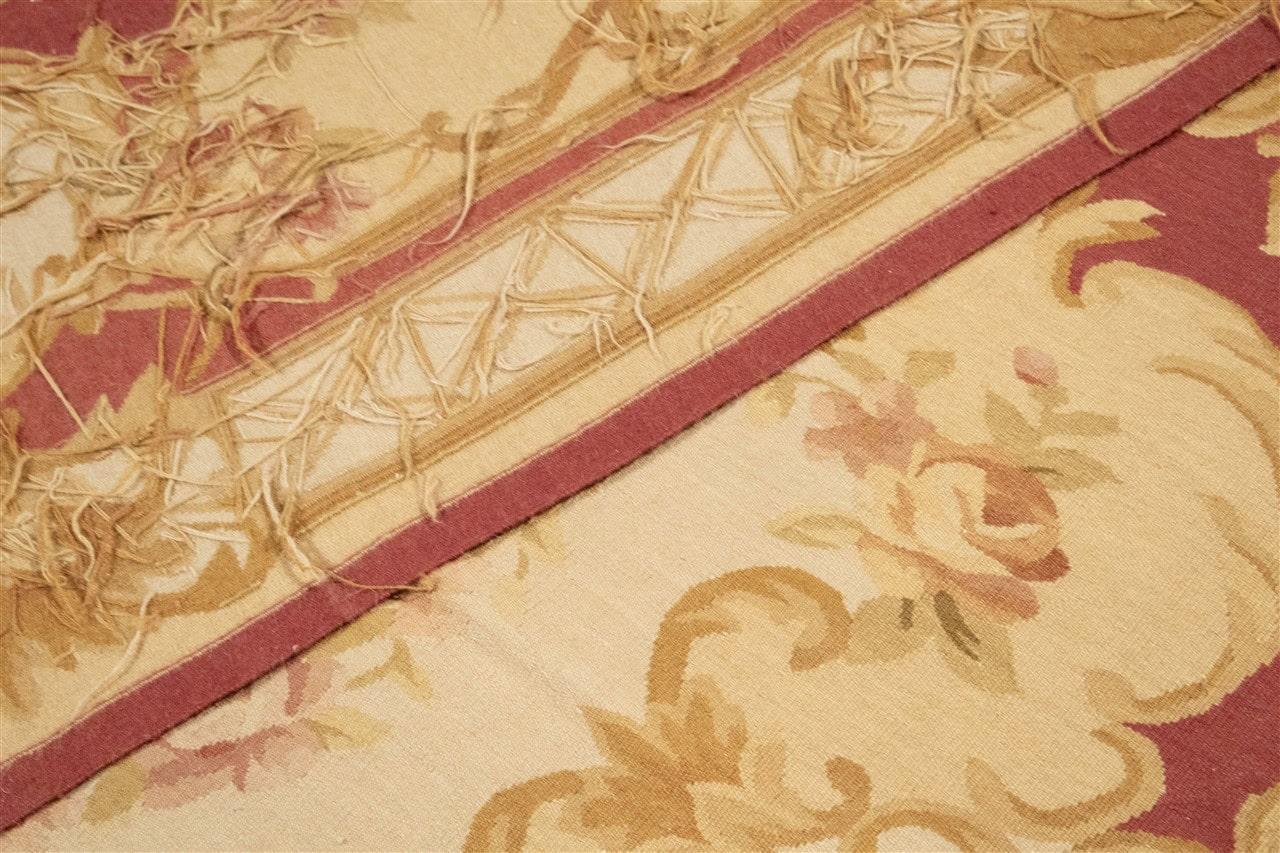
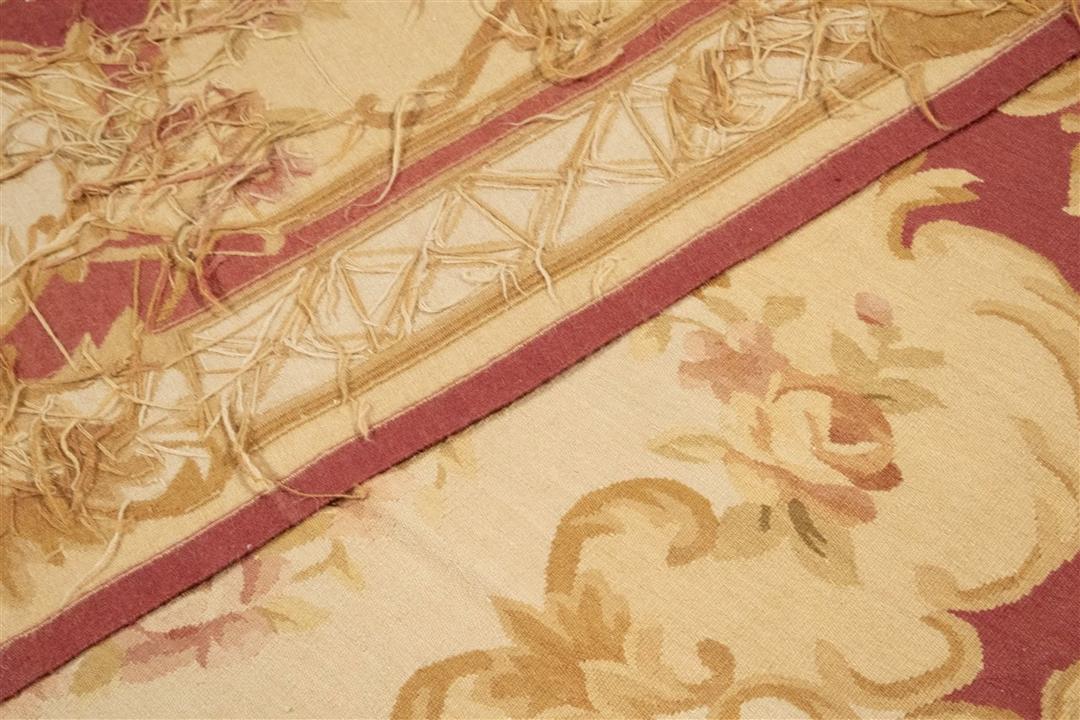
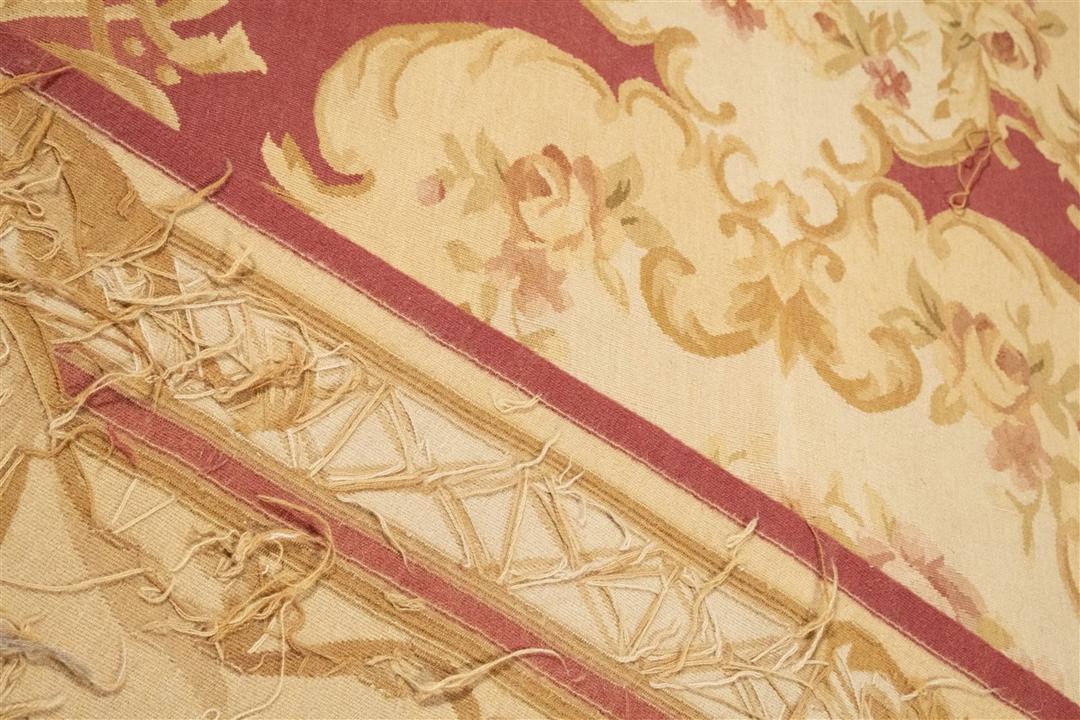
While the tradition originated in France, the name now often refers to a specific category of flat-woven rugs that capture this historical 'tapestry' aesthetic. These rugs are distinct from pile-knotted rugs because they are woven without a pile, creating a surface that is thin, durable, and highly detailed. This flat-woven technique allows for a level of design precision that is ideal for replicating intricate floral garlands and central medallions.
The visual language of this tradition is rooted in the decorative arts of the 17th and 18th centuries. You will often see repeating floral patterns, swirling acanthus leaves, and ribbon motifs that create a sense of movement across the surface. The use of a central medallion, as seen in this piece, is a hallmark of the style, designed to draw the eye inward and create a sense of balance within the room's layout.
Today, these rugs are highly sought after by collectors who value the intersection of historical design and artisanal skill. Owning an Aubusson-style rug is a nod to a long-standing heritage of European decorative arts. It represents a commitment to maintaining traditions of beauty and craft, offering a timeless aesthetic that brings a sense of cultural weight and grace to any contemporary home.