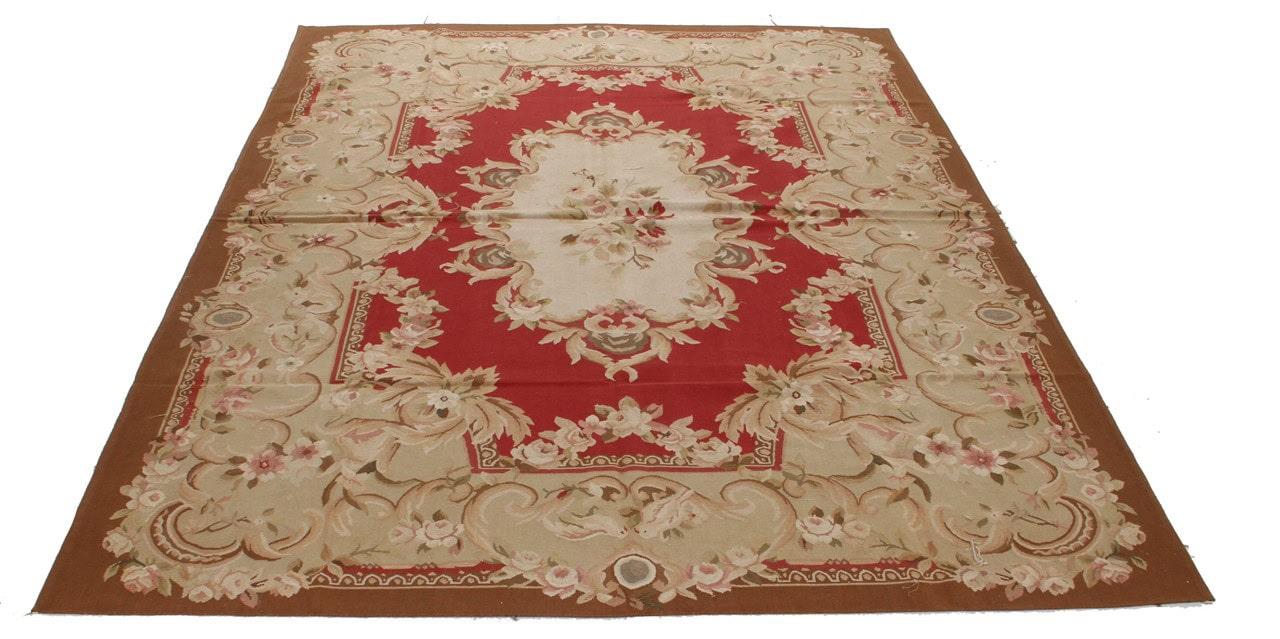
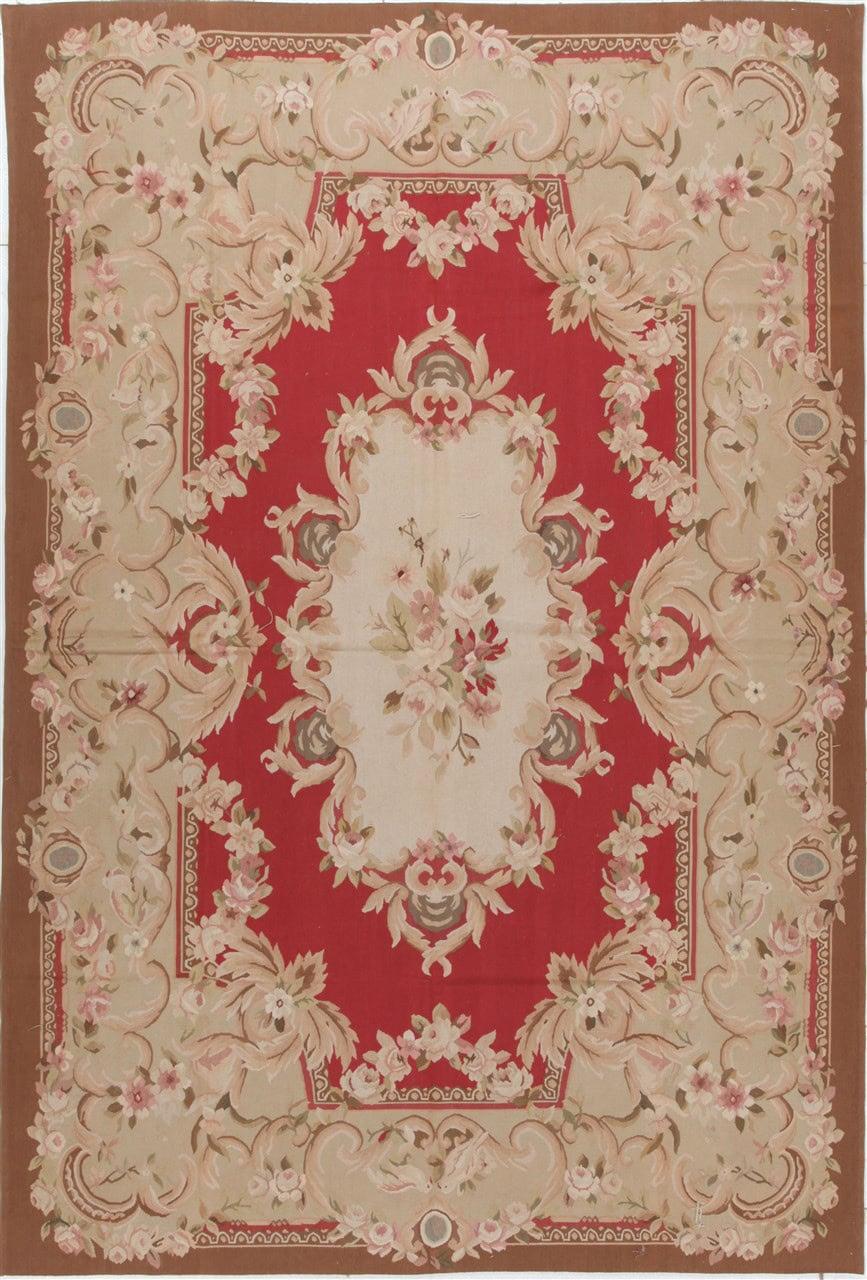
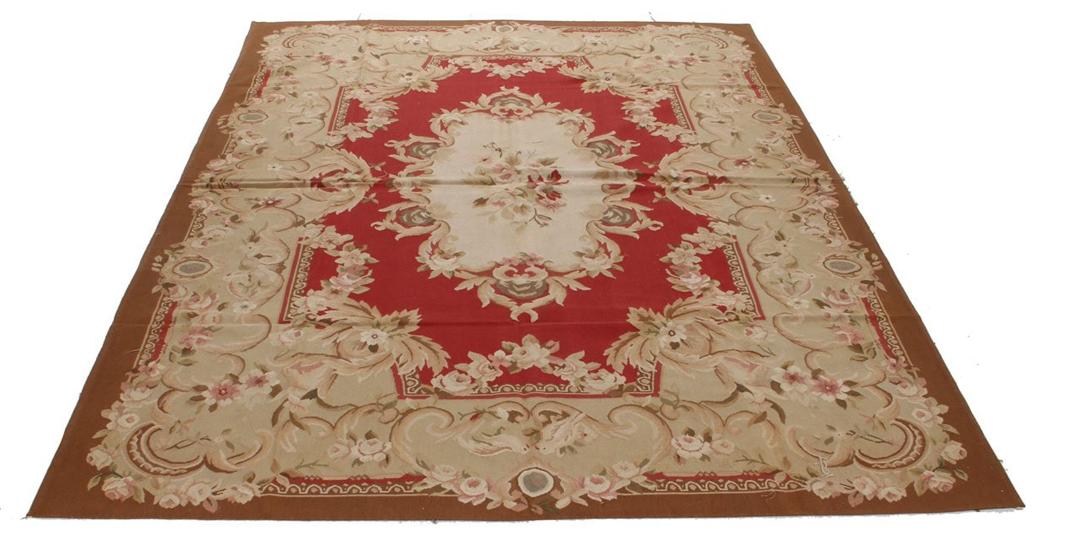
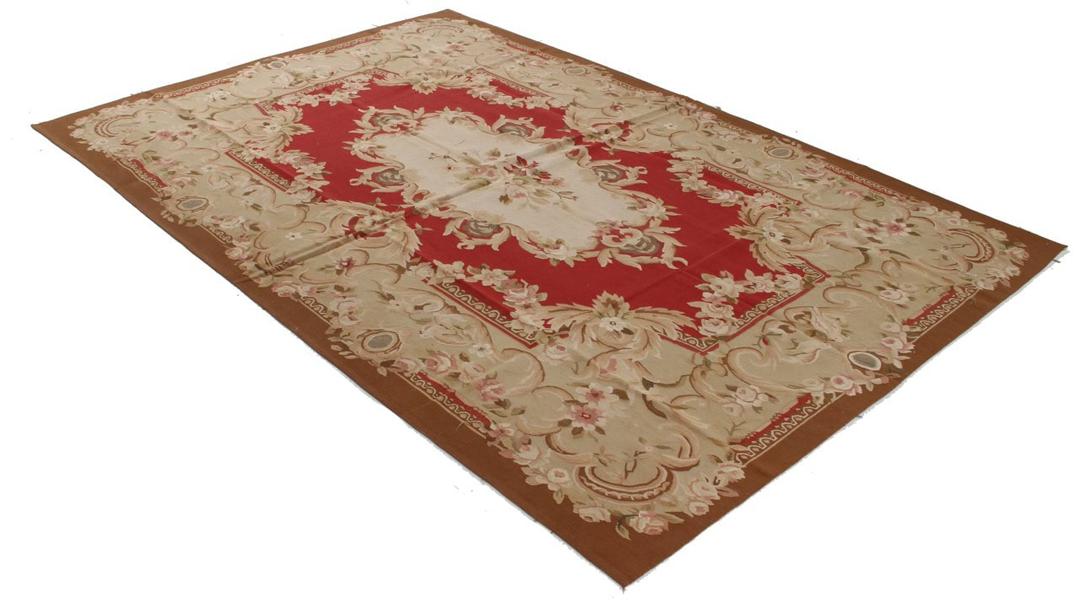
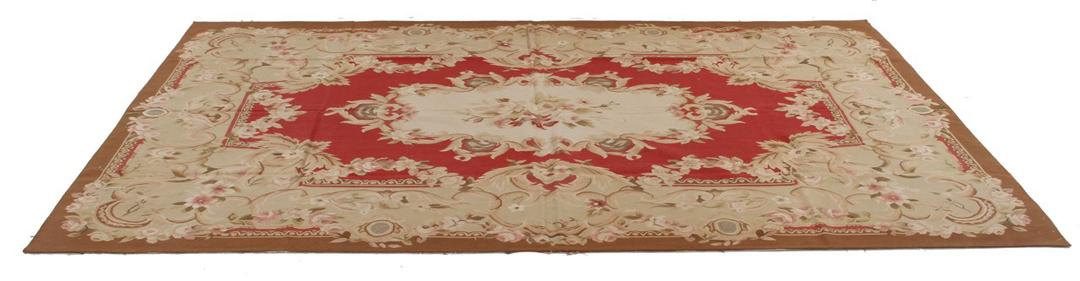
The Aubusson style originates from the town of Aubusson in central France, where the weaving of flat-weave tapestries and rugs became a renowned tradition in the 17th and 18th centuries. While the original pieces were created for the French aristocracy, these designs have inspired weavers across the globe, leading to the sophisticated interpretations we see today.
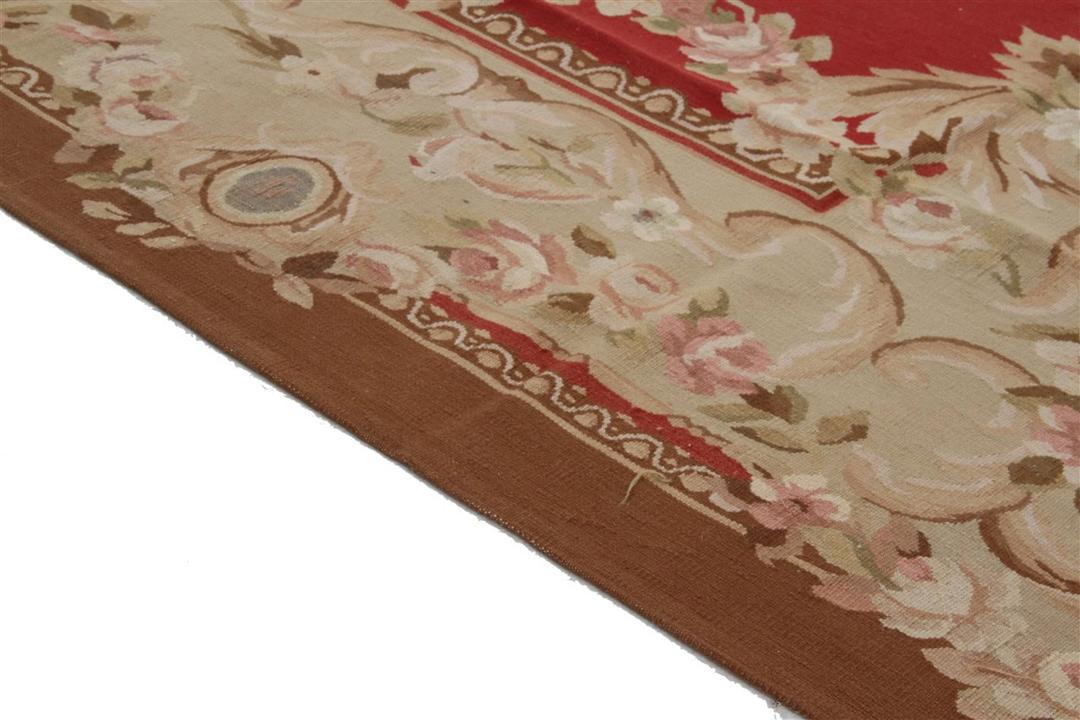
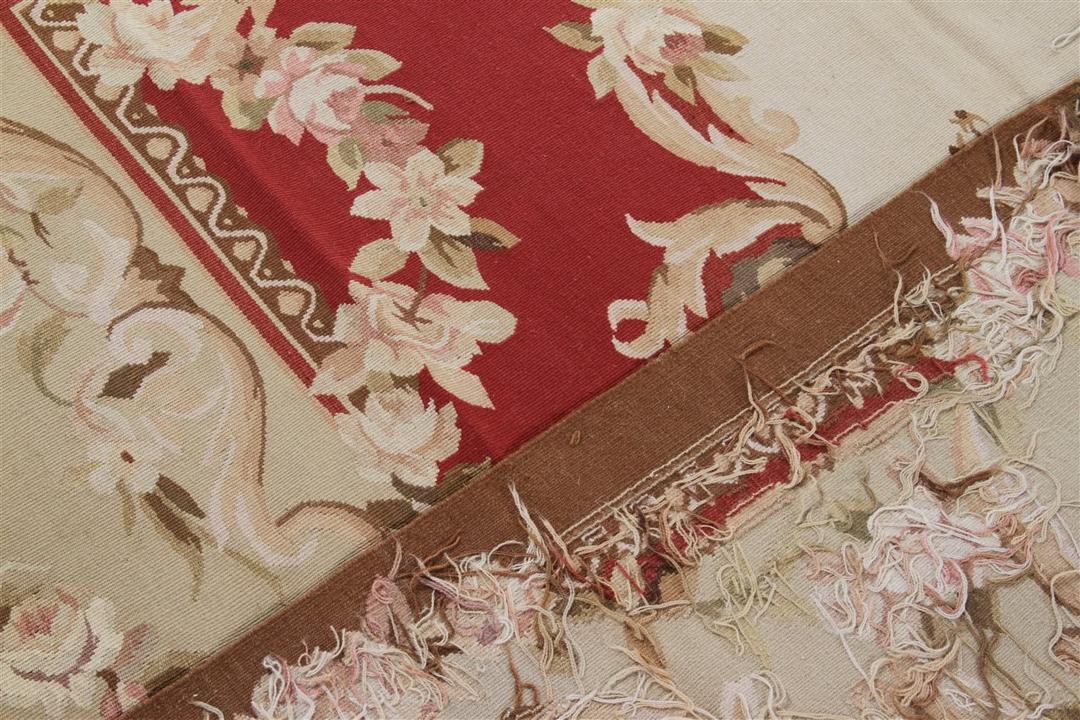
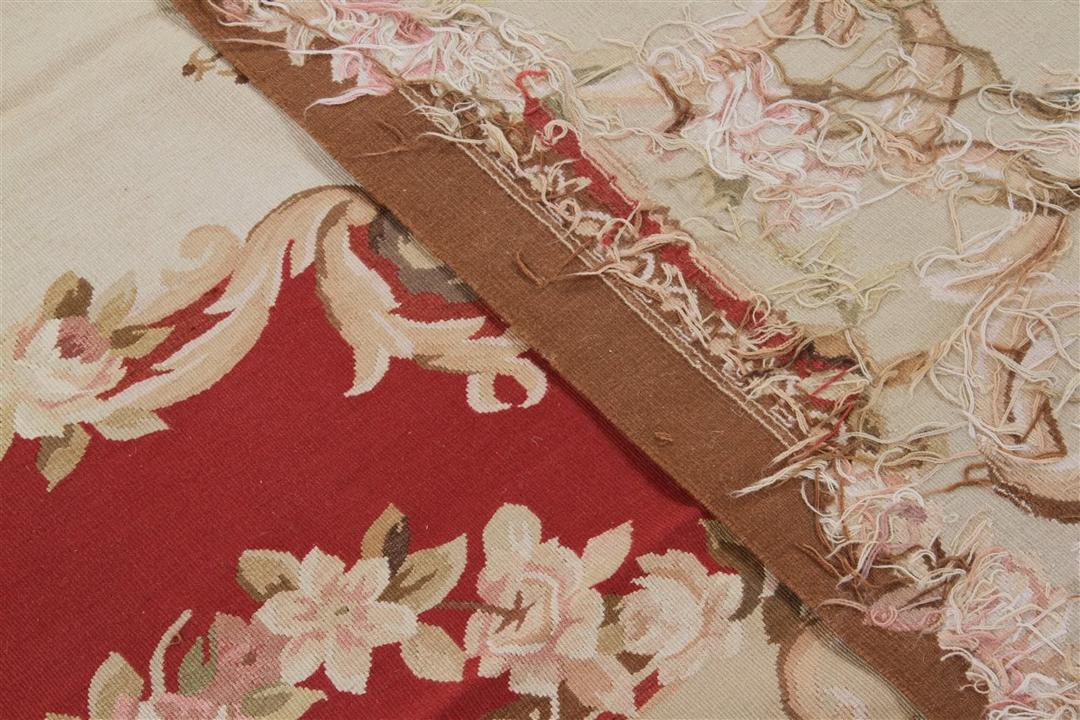
The term 'kilim' refers to a flat-weaving technique where no pile is created, resulting in a thin, versatile rug that is highly prized for its portability and clean lines. By combining the flat-weave structure of a kilim with the ornate, floral aesthetic of traditional French tapestries, this rug bridges two distinct craft worlds, offering a unique visual experience.
Signature design elements of this tradition include elaborate floral swags, bouquets, and central medallions set against contrasting fields. These patterns are meant to mimic the grandeur of neoclassical architecture and interior design, often using a palette of rich, grounded colours to highlight the delicate details of the woven flowers.
Today, these rugs are collected for their ability to bring a sense of historical narrative to a home. Owning a piece that draws from such a storied design tradition connects the modern interior to centuries of artistic development, making it a valued addition for those who appreciate the intersection of heritage and craft.