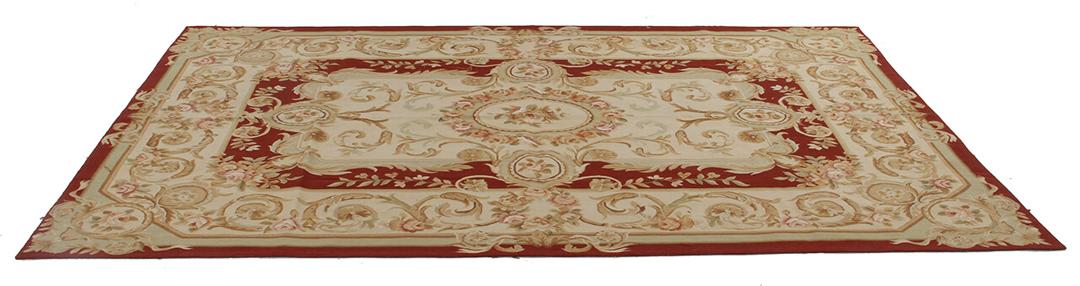
The Aubusson style finds its roots in the town of Aubusson in central France, where tapestry-weaving traditions flourished as early as the 15th century. Originally, these were wall hangings intended for palaces and manors, often depicting grand pastoral scenes or elegant botanical motifs.
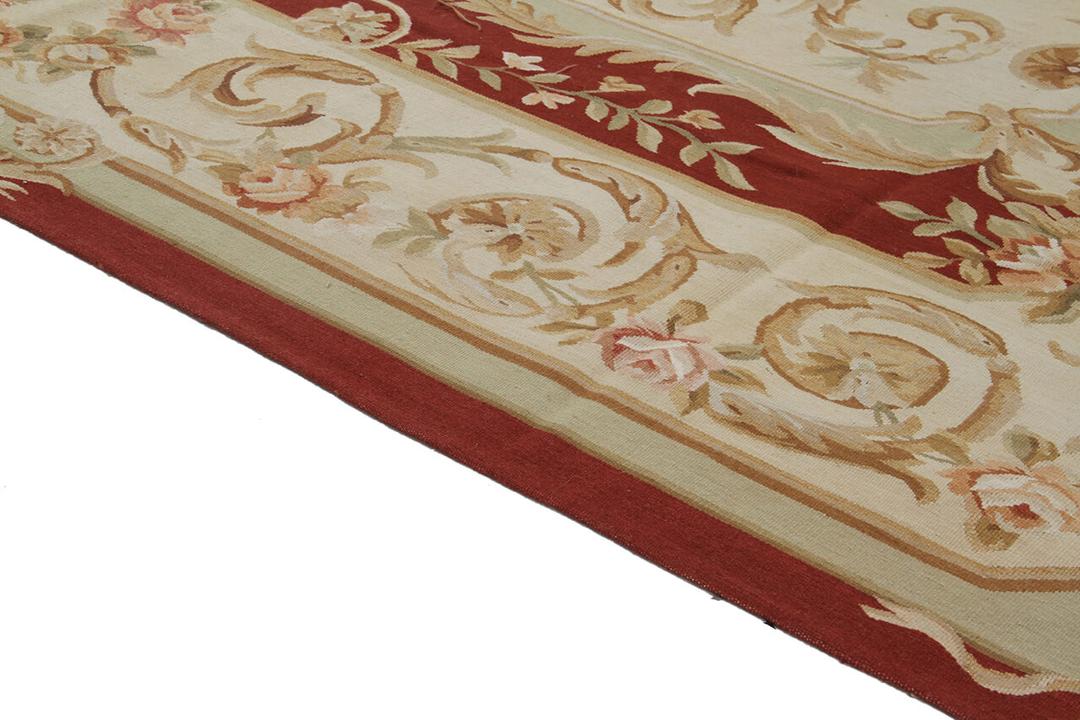
Over the centuries, the aesthetic evolved from wall-bound art into flat-weave floor coverings. These rugs are distinct because they are not knotted; instead, they are woven on a loom by interlacing horizontal weft threads through vertical warp threads. This technique allows for the creation of incredibly detailed, painterly designs that mimic the look of fine tapestries.
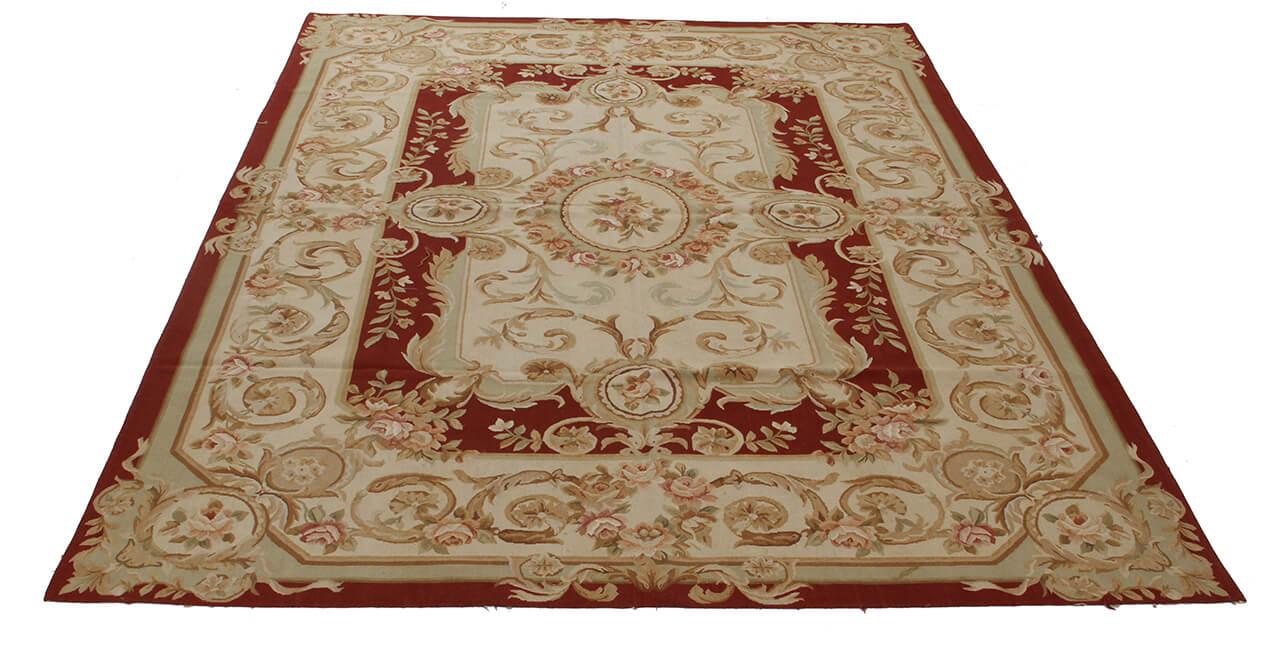
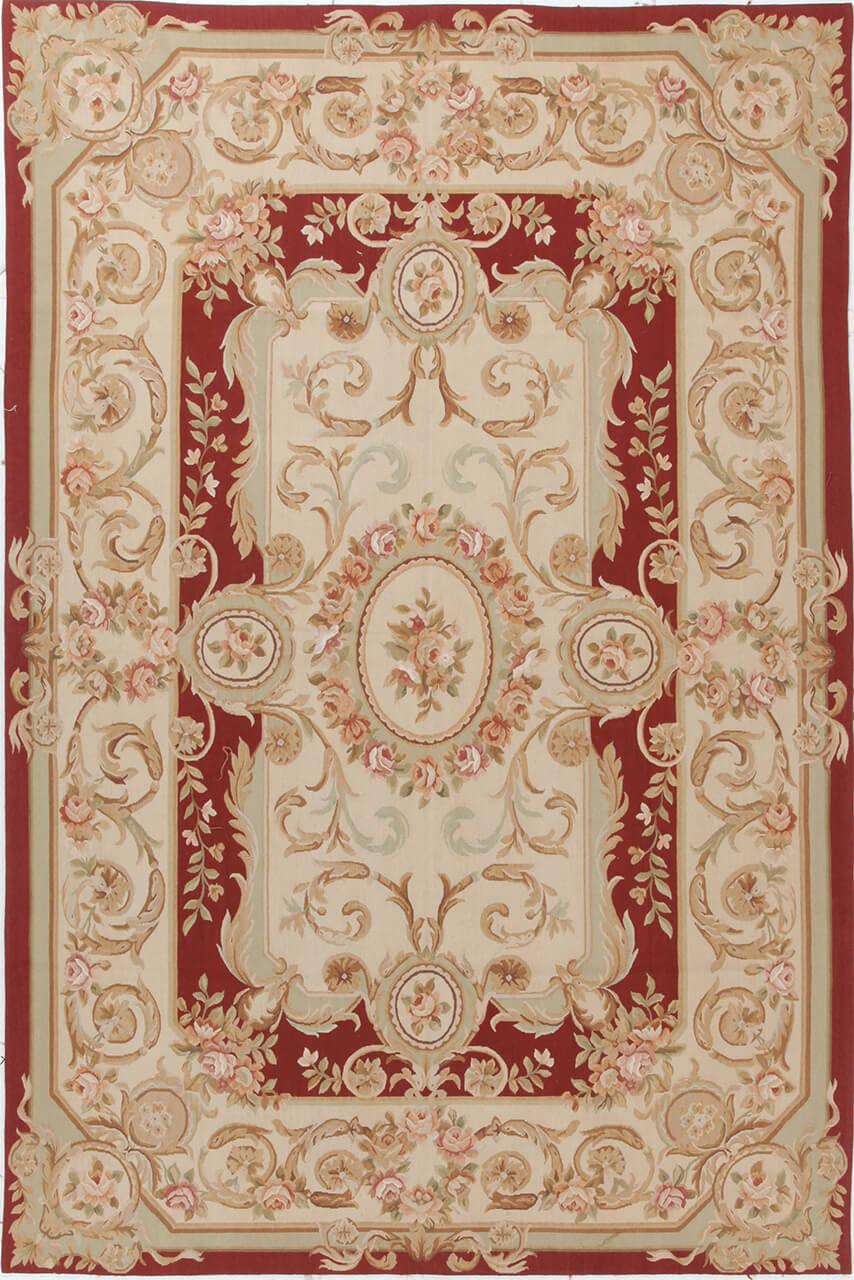
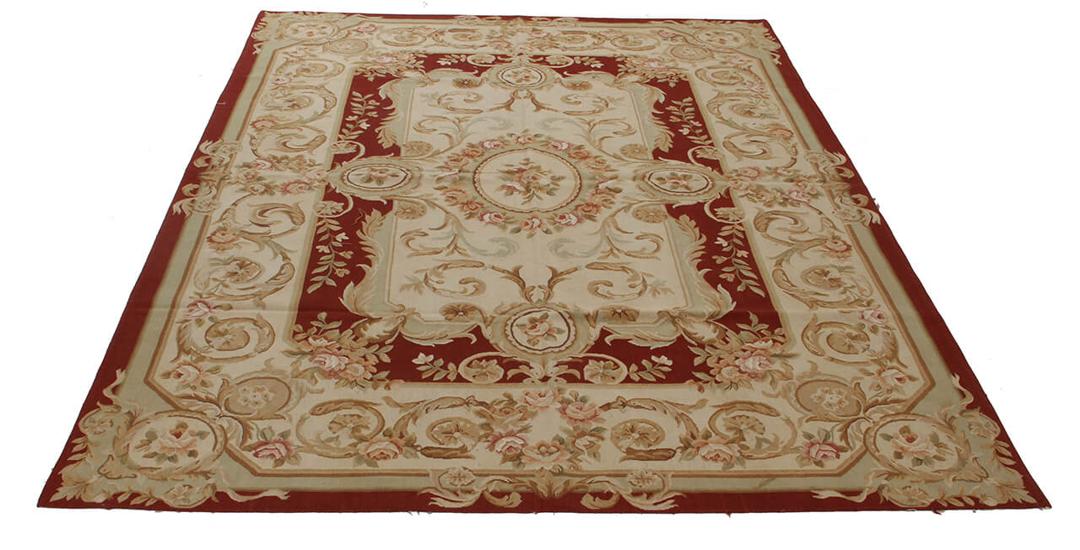
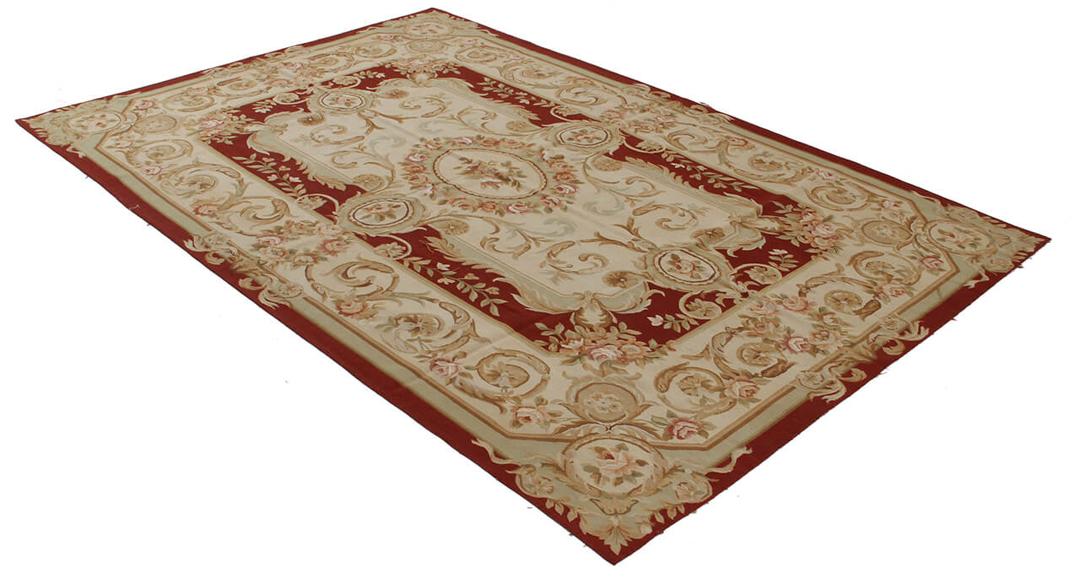
The signature design elements of the Aubusson tradition include a central medallion, often surrounded by scrolling acanthus leaves, garlands of roses, and formal borders. The colour palettes typically favour soft, natural shades, though the inclusion of deep red fields—as seen in this piece—adds a striking sense of drama and contrast that was highly prized in traditional European interiors.
Today, these designs are celebrated globally for their ability to bring a sense of historical gravitas to contemporary spaces. Collecting an Aubusson-style rug is an appreciation of the enduring appeal of classical French design, representing a bridge between the artistic traditions of the past and the functional needs of the modern home.