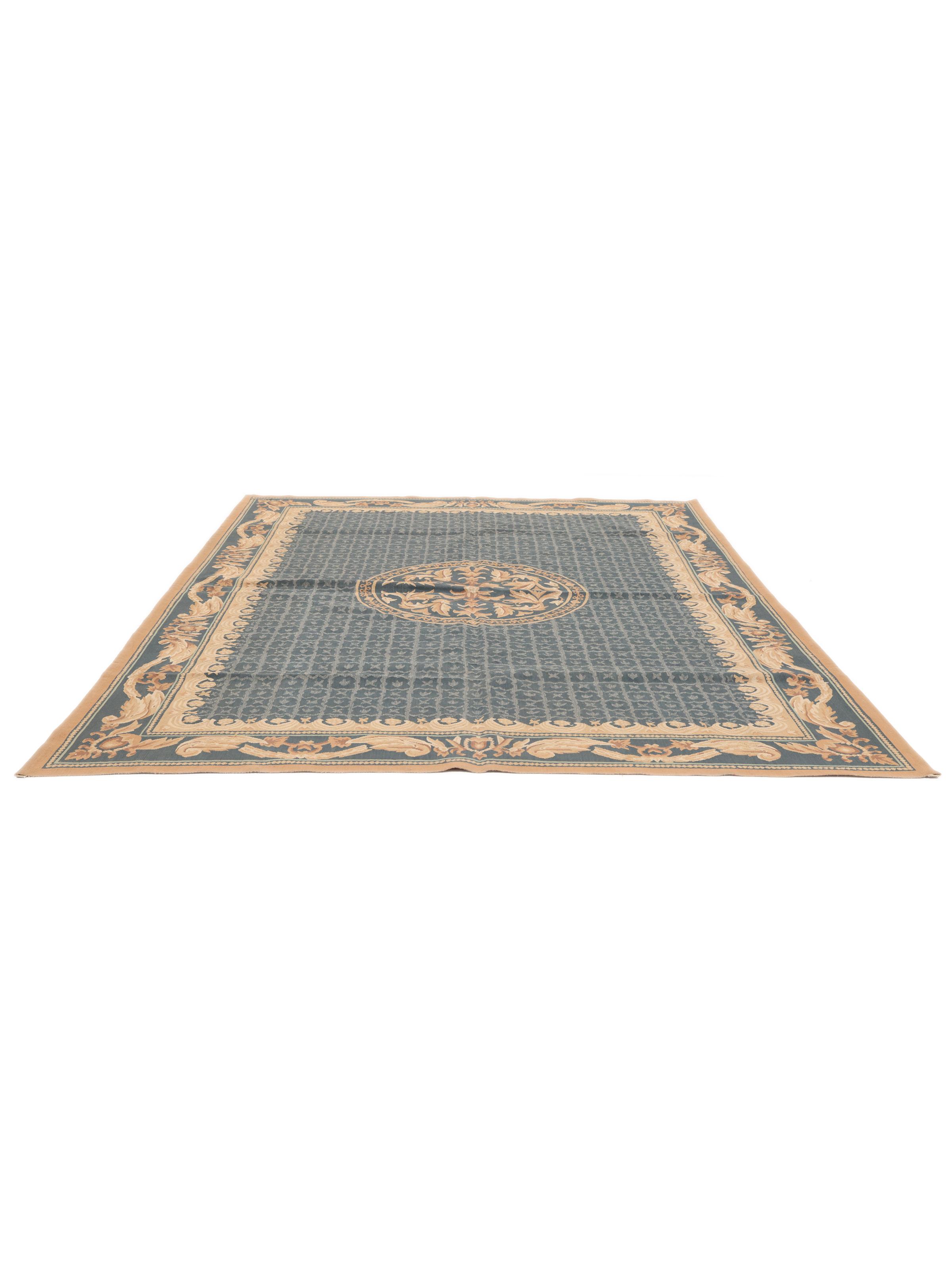
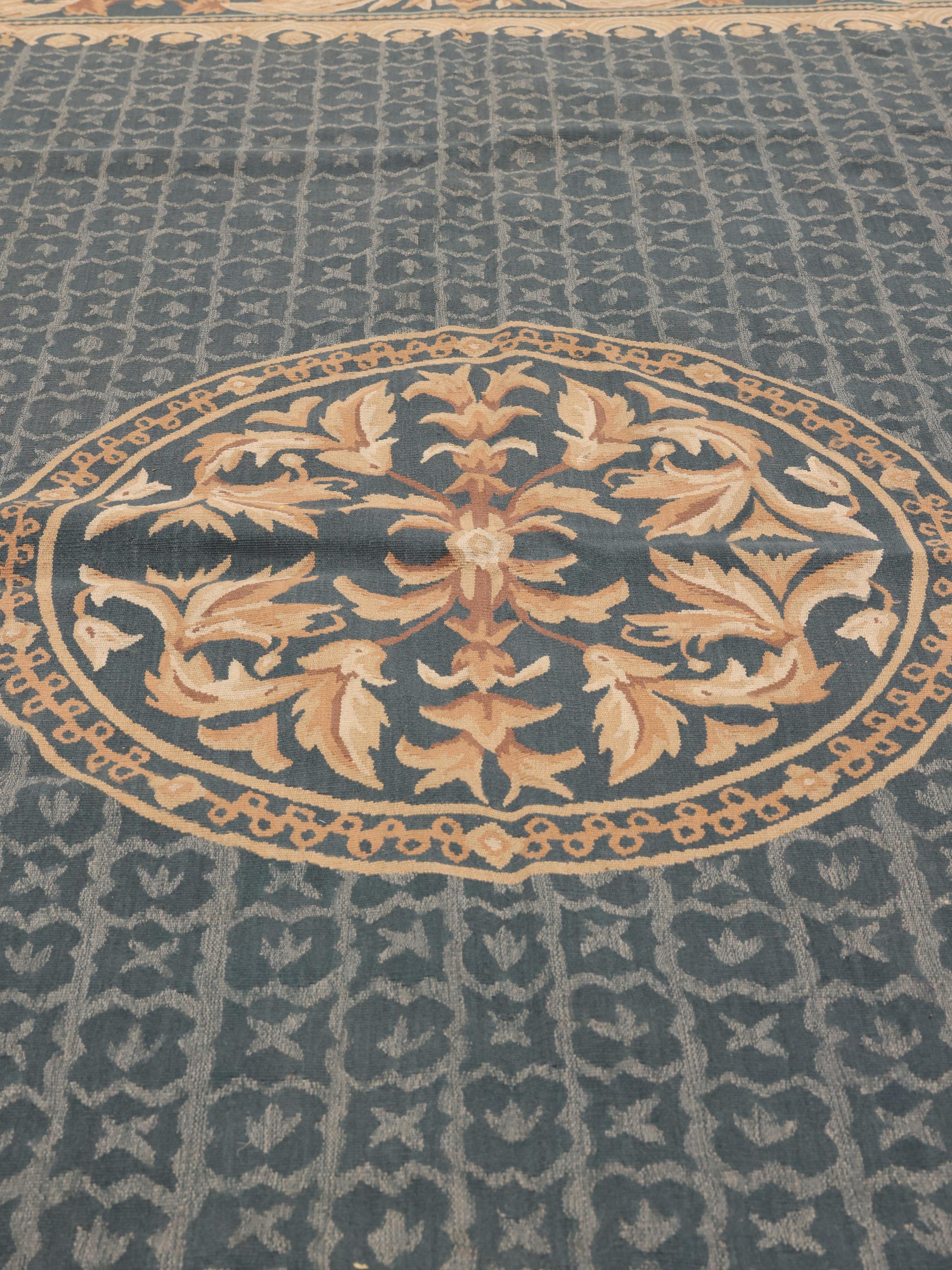
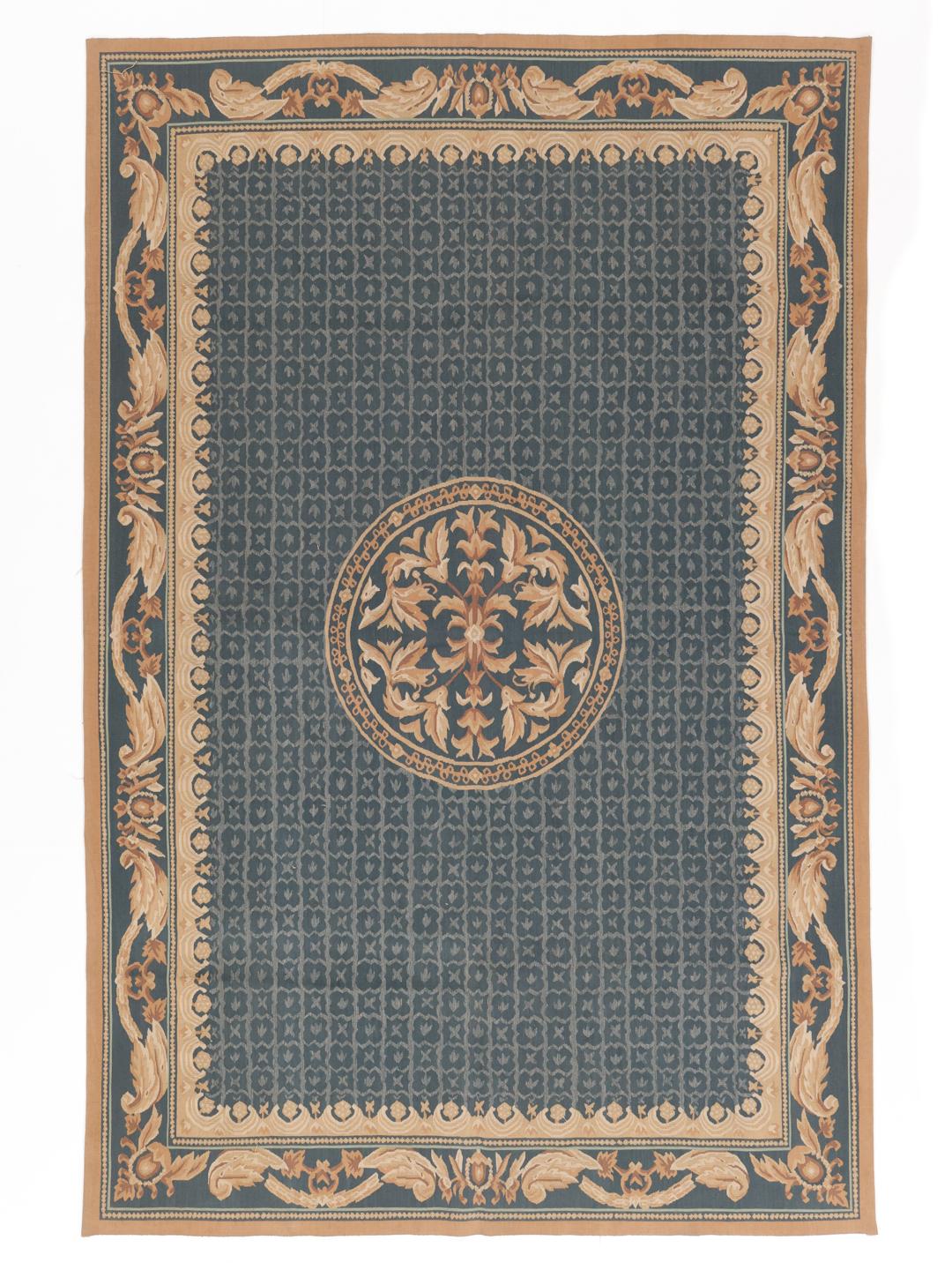
The Aubusson style traces its origins back to the 17th century in the French town of Aubusson, where artisans began creating flat-woven rugs and tapestries that were highly prized by European royalty and nobility. These pieces were celebrated for their ability to mimic the appearance of intricate paintings, featuring floral patterns, architectural elements, and grand medallions.
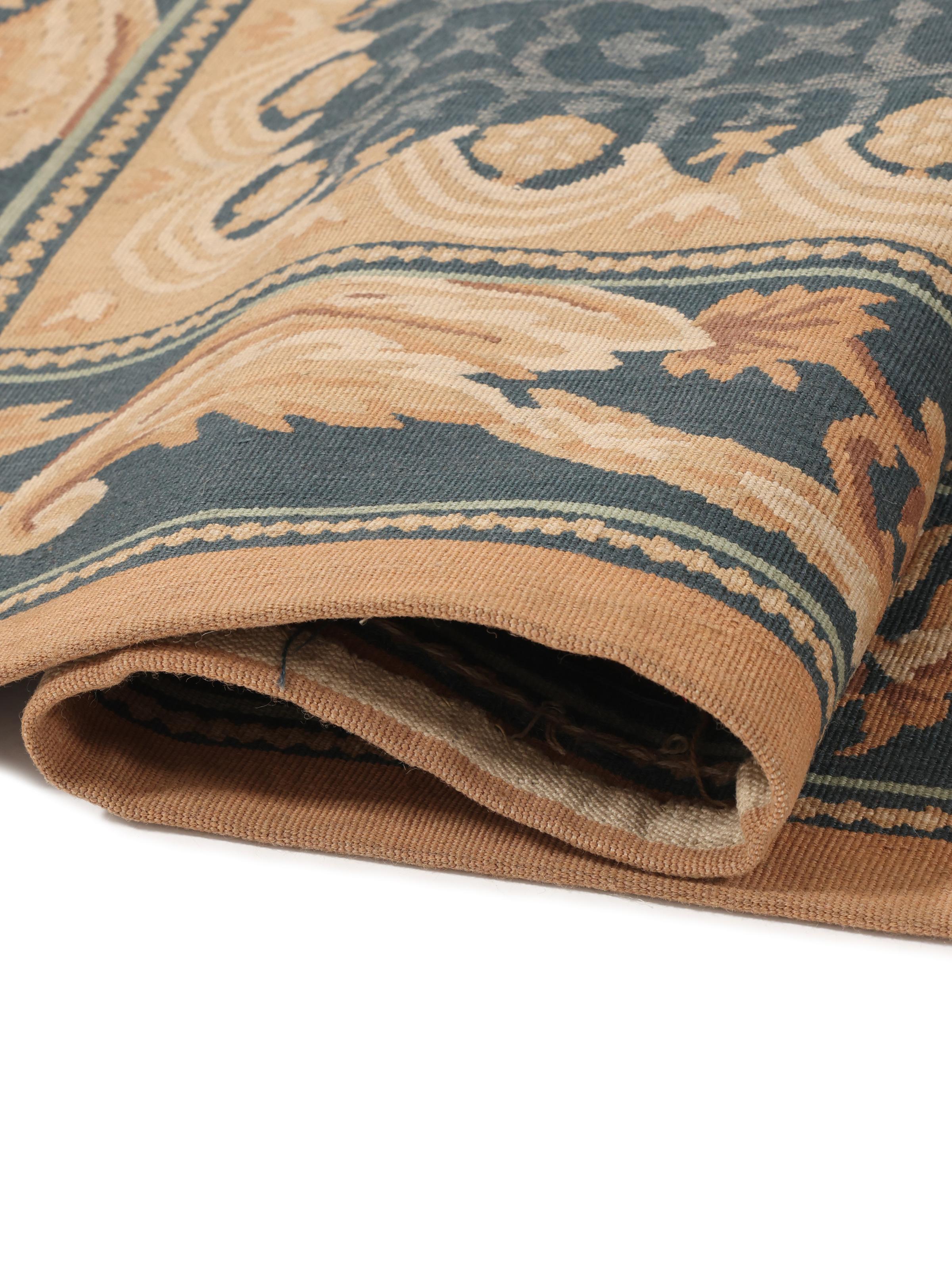
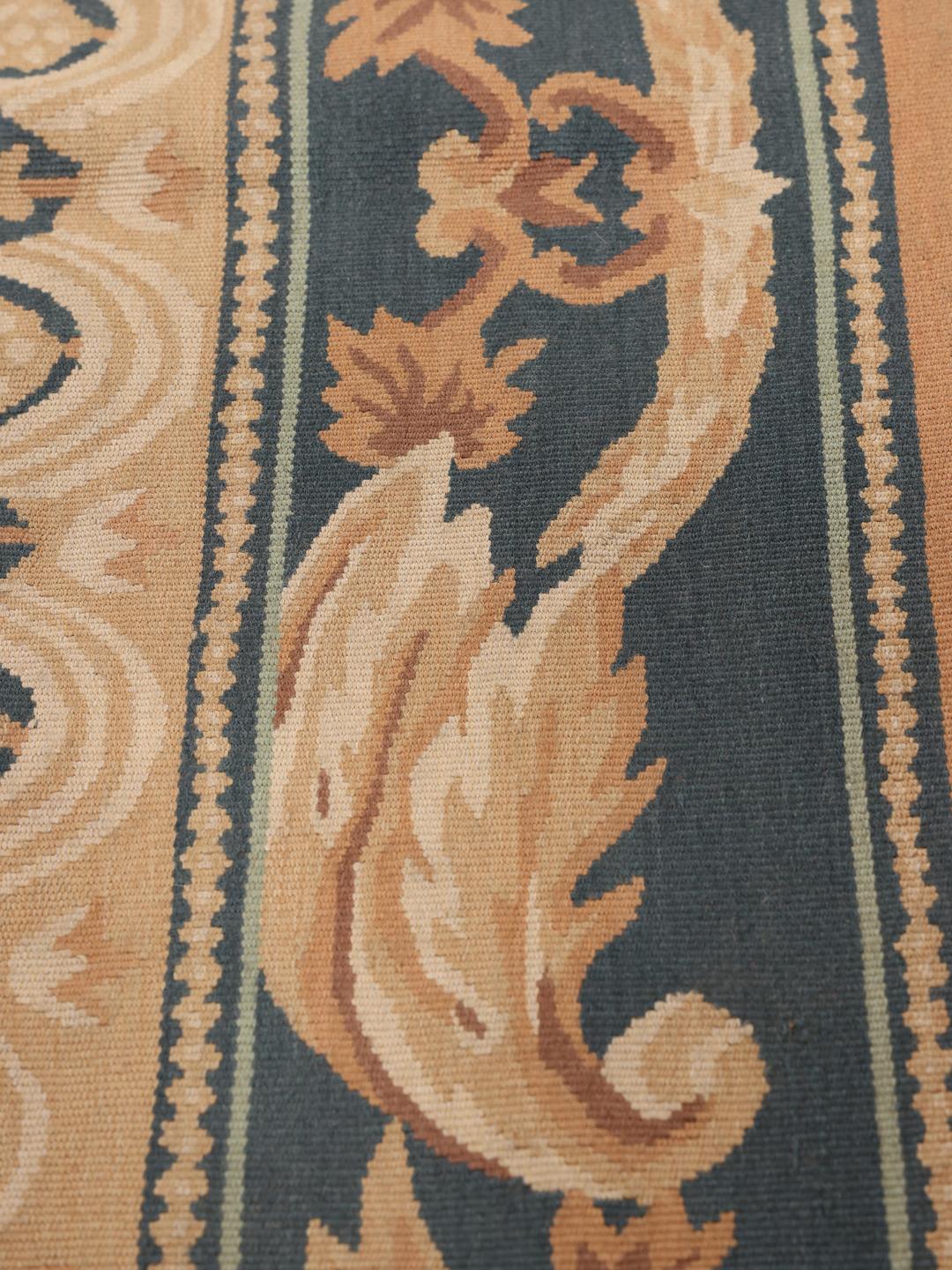
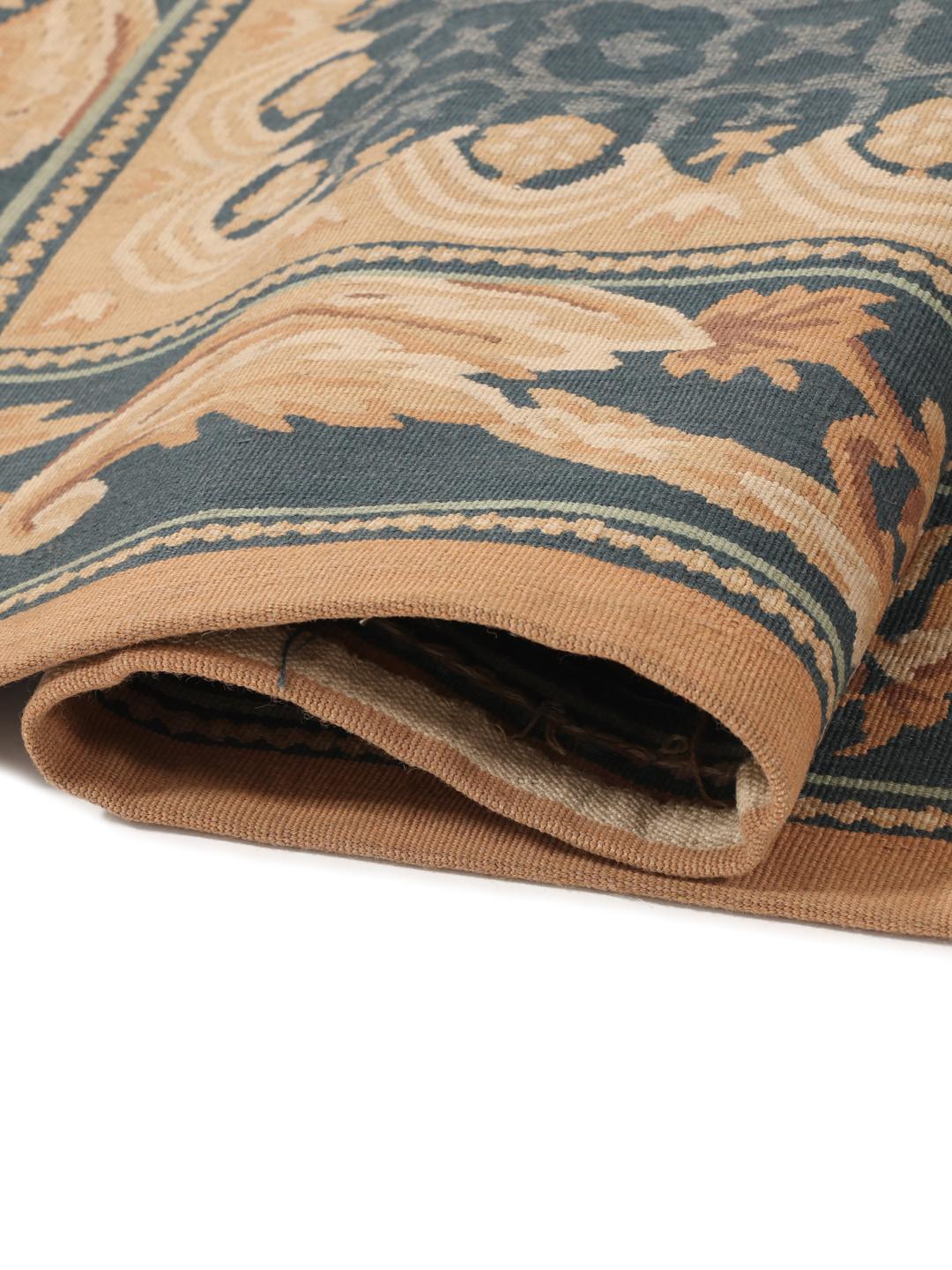
While the style originated in France, it has since been interpreted by master weavers in other regions, including China, who have adopted these classical motifs and adapted them to modern weaving traditions. The term 'Tappissere' refers to the tapestry-like quality of the weave, which produces a flat, durable surface that is distinct from traditional piled rugs, offering a different but equally sophisticated texture.
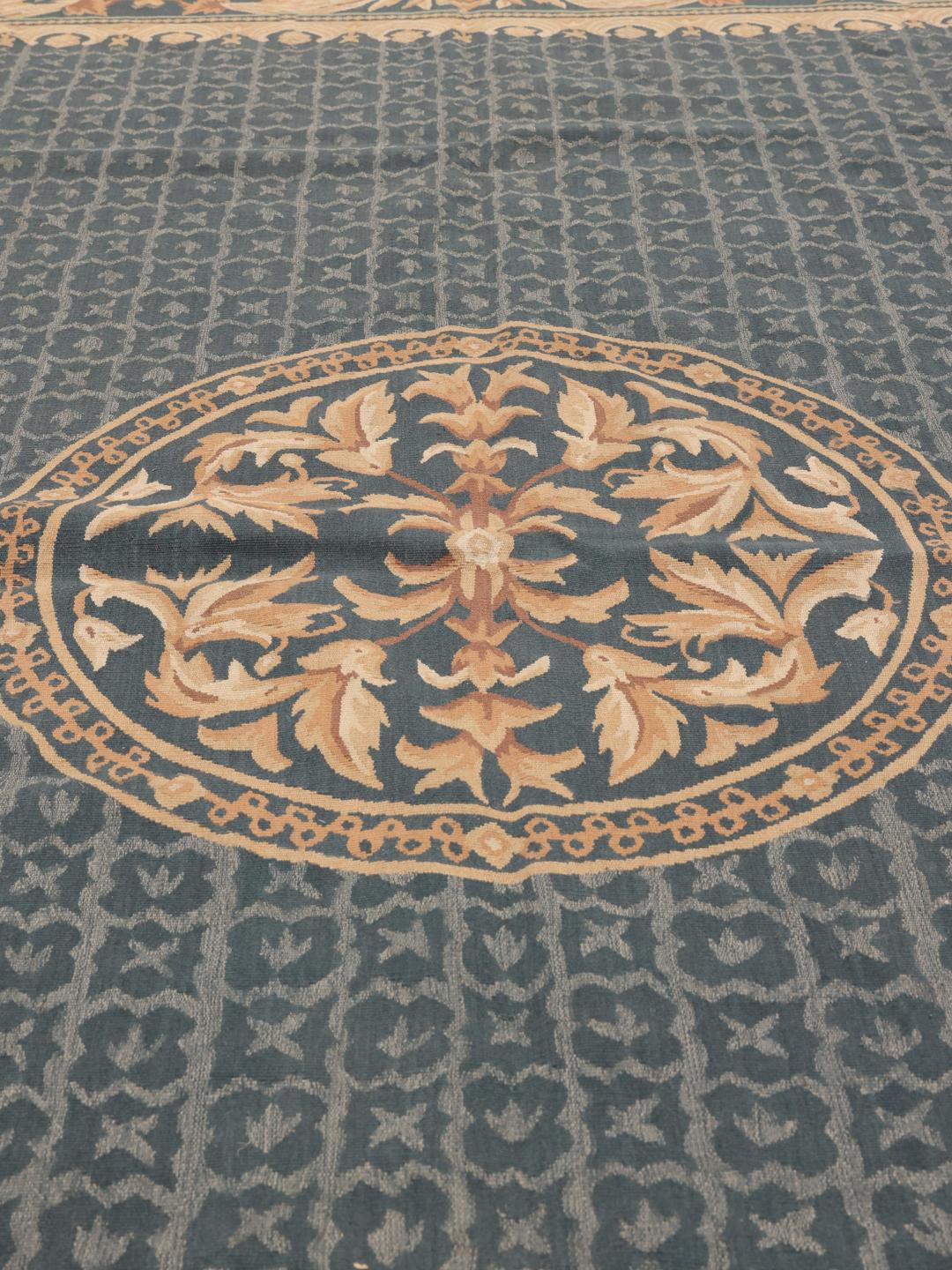
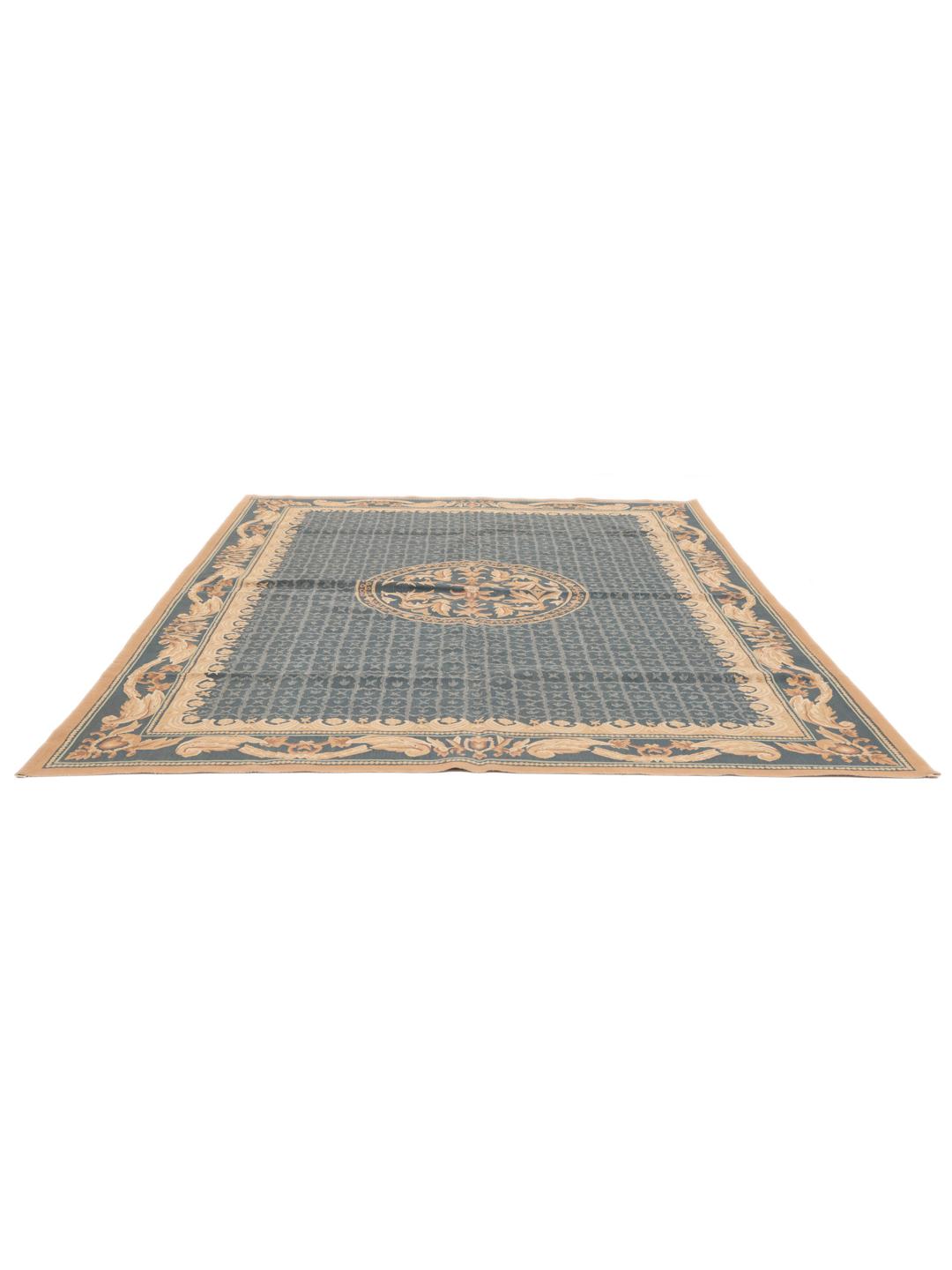
The design of this rug is deeply rooted in this historical aesthetic, characterised by a central medallion framed by flowing, organic foliate borders. These patterns were designed to provide a sense of order and symmetry, reflecting the formal garden layouts and interior design trends of the historical periods that popularised this style.
Owning an Aubusson style piece is more than just a decorative choice; it is an appreciation of a long-standing tradition of craft. Collectors value these rugs for their historical significance and the skill required to produce such detailed, narrative-driven designs, making them a centrepiece that connects your home to a rich, global design heritage.