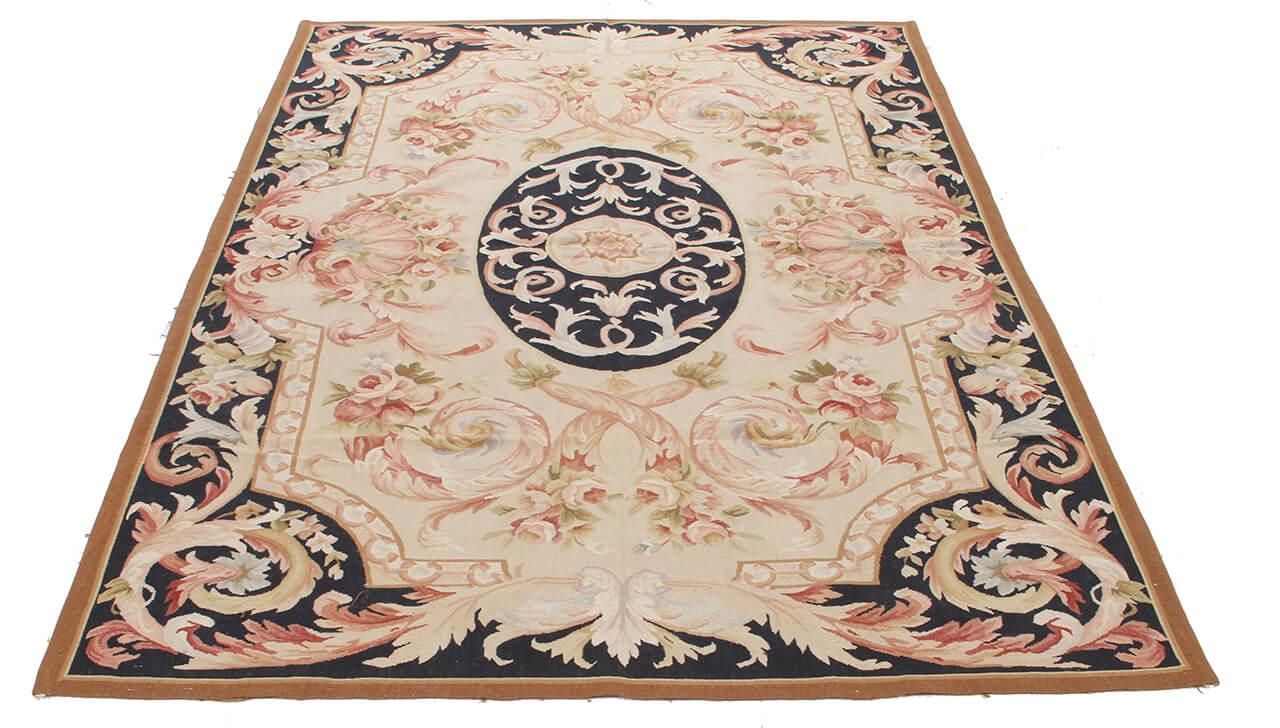
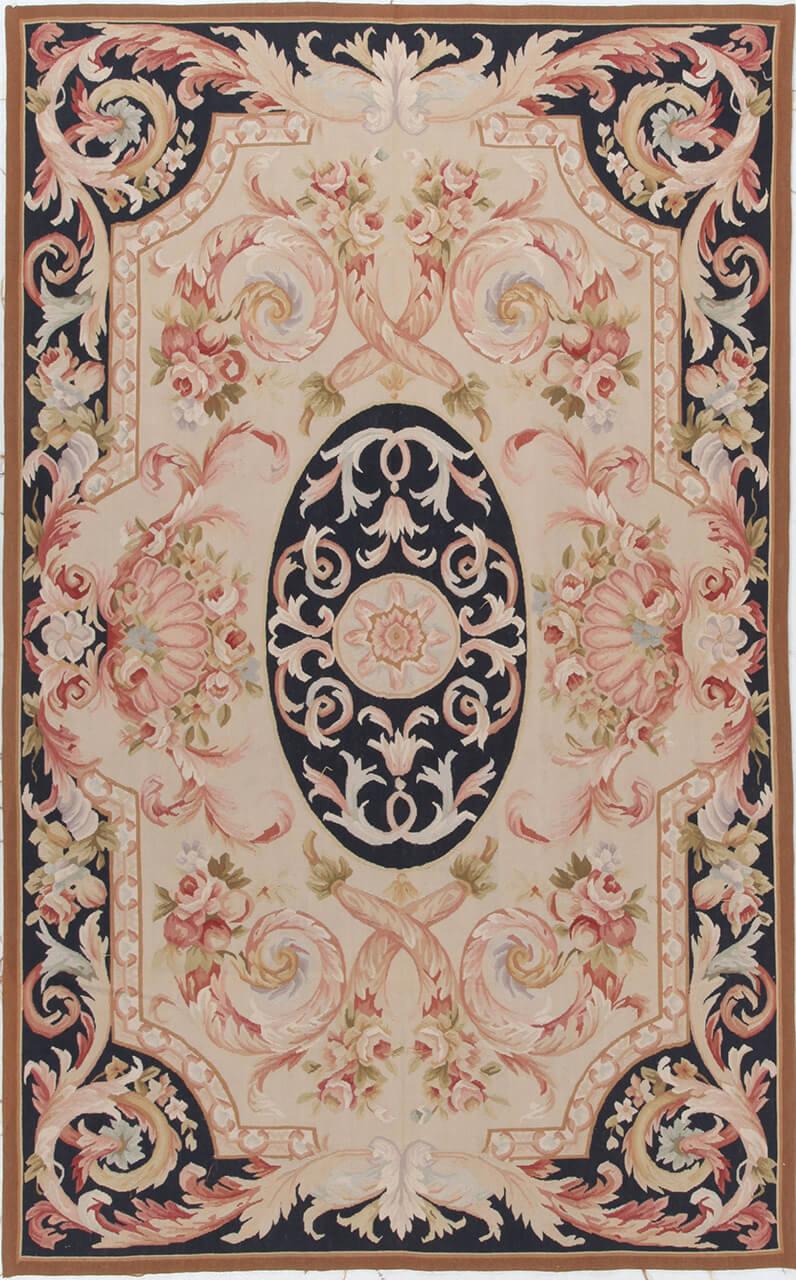
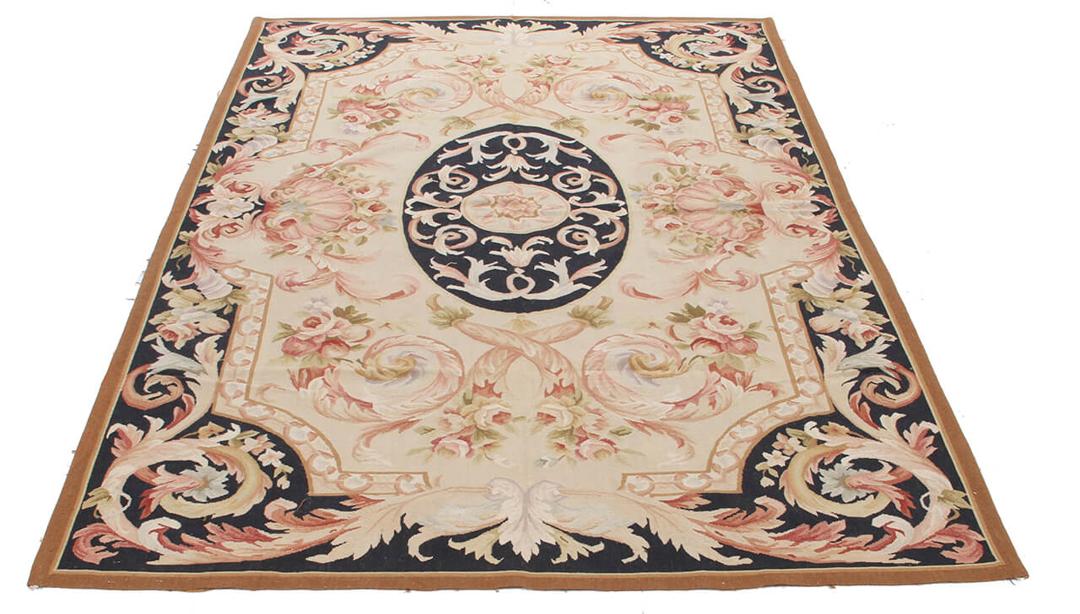
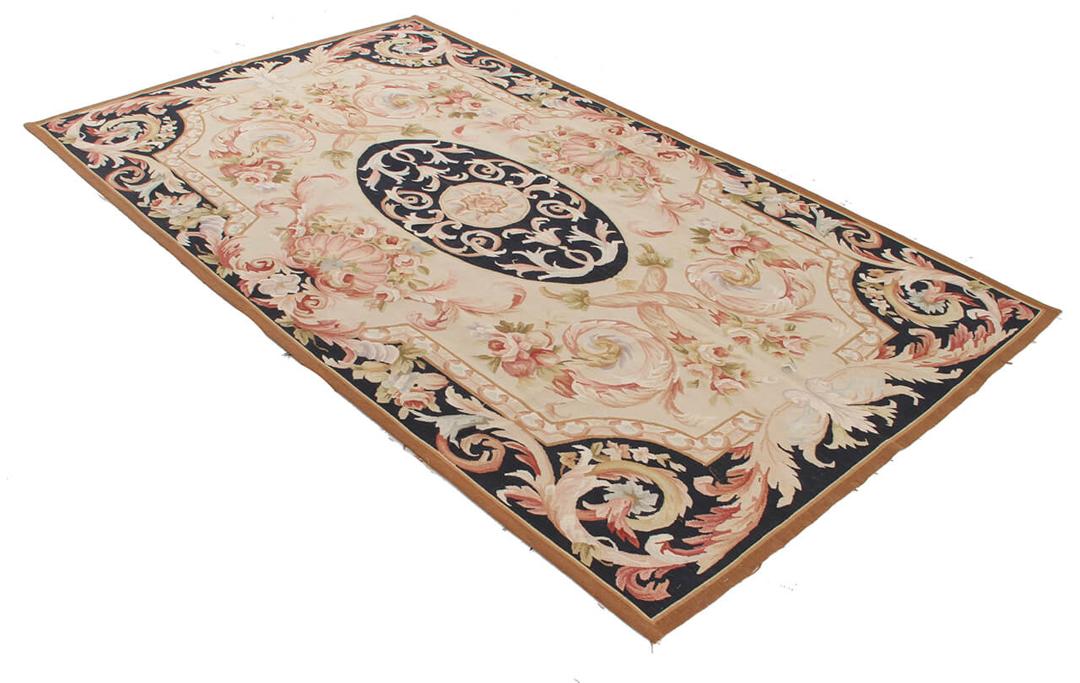
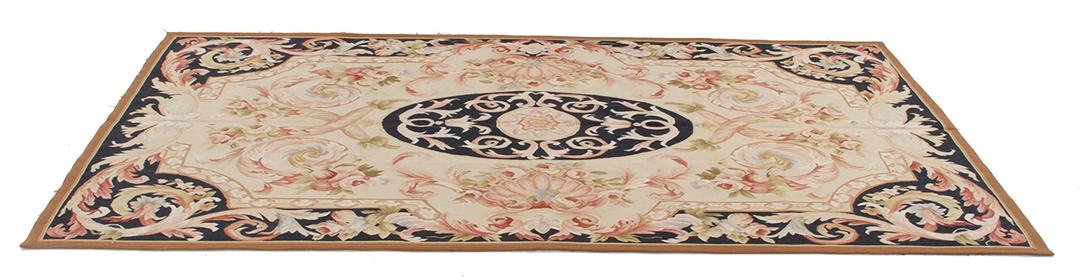
The style known as Aubusson originates from the famous town of Aubusson in central France, where weaving traditions have thrived since the 15th century. Originally renowned for producing high-quality tapestries for the French aristocracy, the local craft evolved over centuries to include flat-woven rugs that mirrored the ornate, floral, and architectural motifs of the period. Today, this tradition is celebrated globally, with skilled weavers in various regions continuing to honour these classic aesthetic roots.
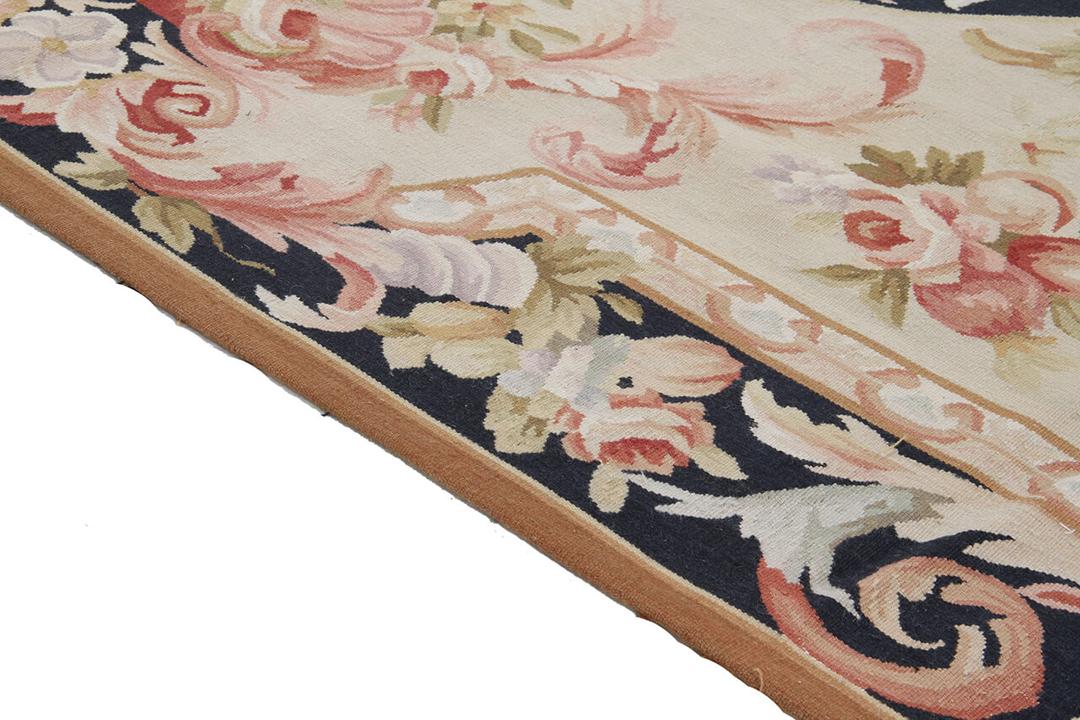
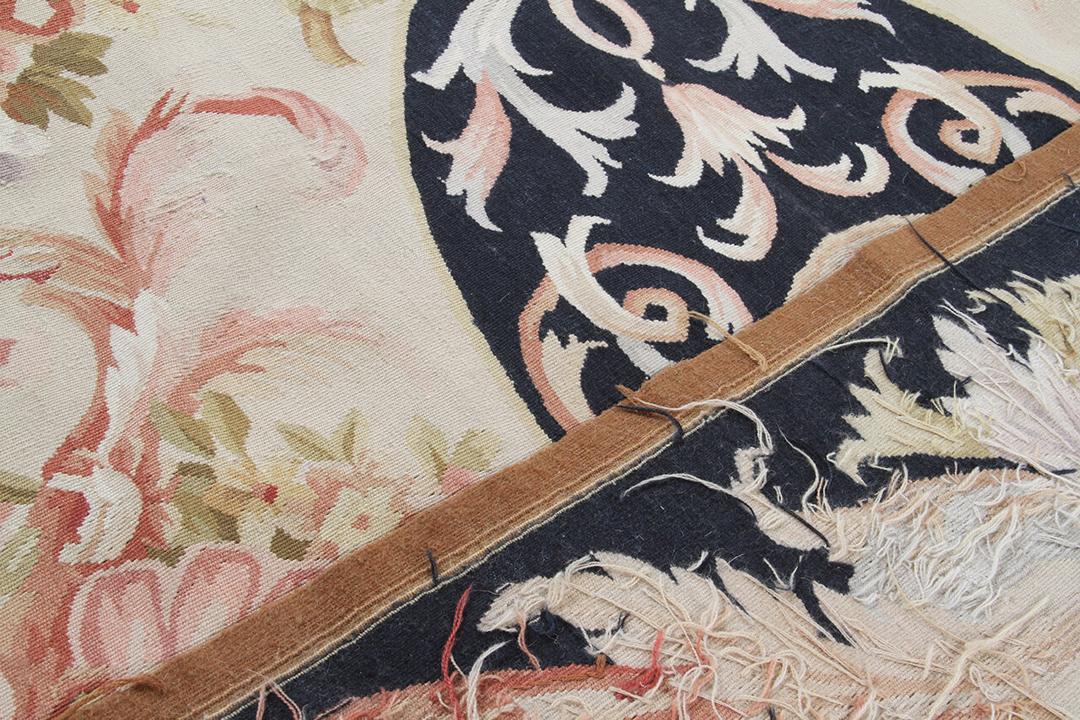
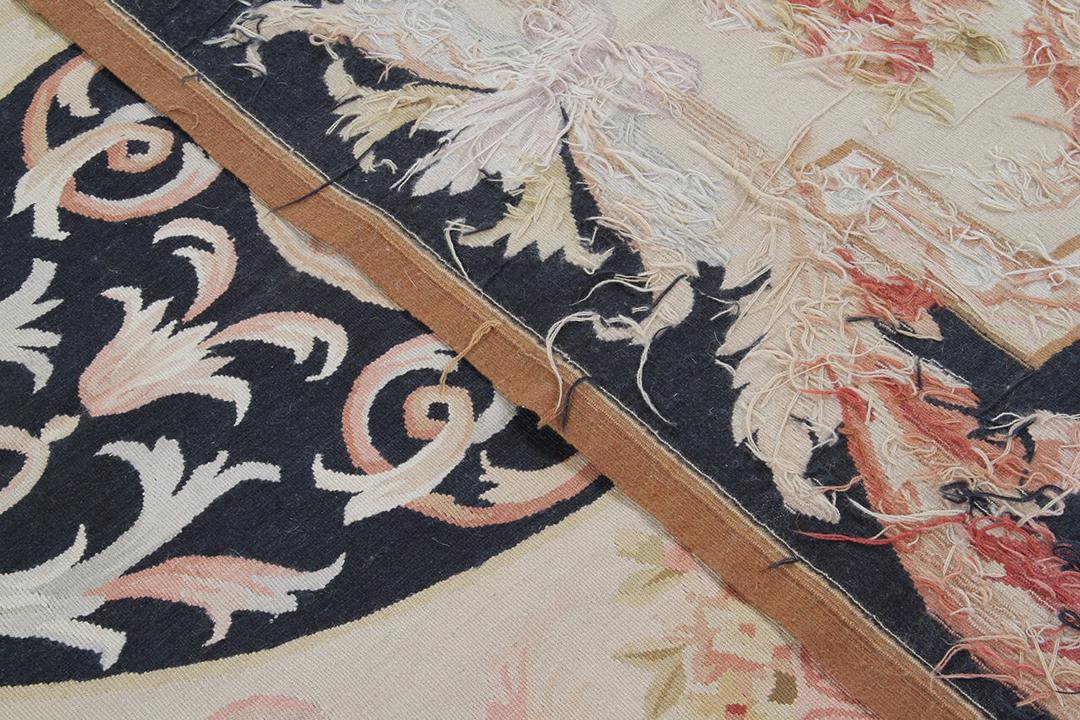
In the context of rug terminology, hand-woven pieces like this one represent a significant departure from knotted construction. Instead of vertical pile knots, the design is created through the interweaving of warp and weft threads, resulting in a thin, tapestry-like finish that is exceptionally smooth and detailed. This historical technique was perfected to create complex, painterly designs that feel as much like wall art as they do functional floor coverings.
The signature design elements of the Aubusson tradition include elaborate floral sprays, scrolling acanthus leaves, and central medallions enclosed within formal, structured borders. The balance of negative space and dense, ornate motifs is a hallmark of the style, designed to complement the grand interiors of classical homes. By incorporating such historic patterns, this rug connects your modern living space to a long lineage of decorative art and design.
Collecting rugs from this lineage is a way to appreciate the evolution of textile art. These pieces are valued for their ability to blend seamlessly into sophisticated decor while acting as a bridge to the past. Owning such a rug is a mark of appreciation for the skill and patience required to maintain these traditional techniques, ensuring that the legacy of French-inspired artistry continues to be enjoyed in contemporary homes.