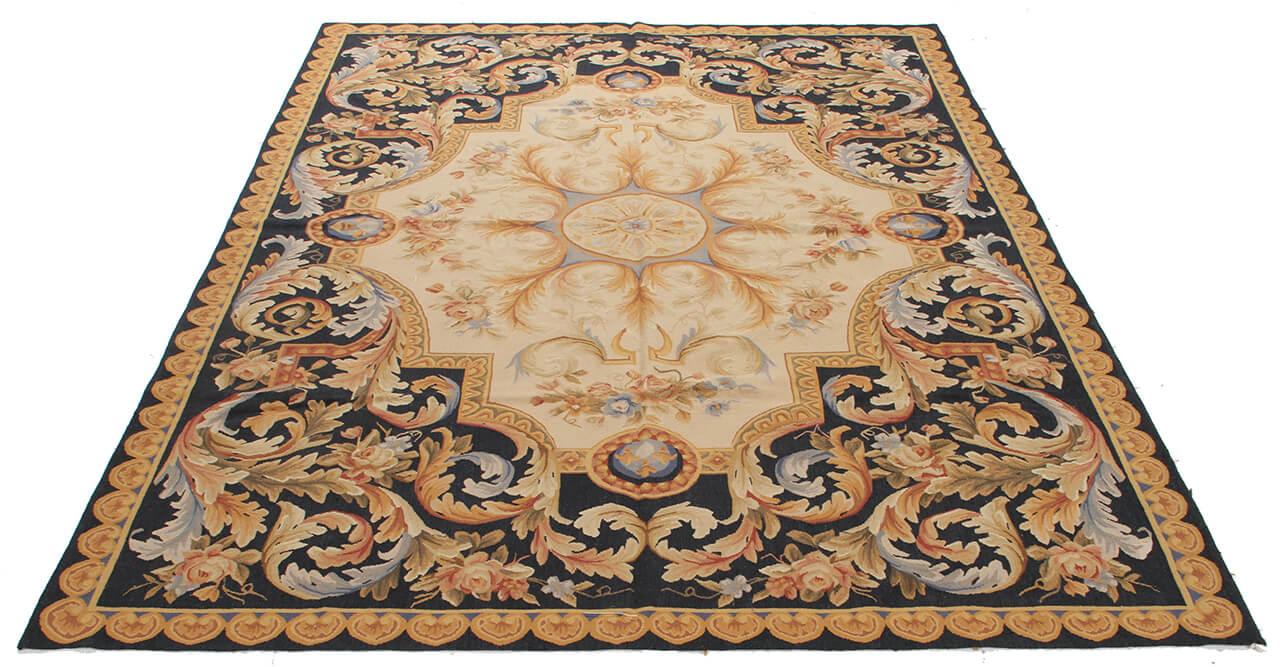
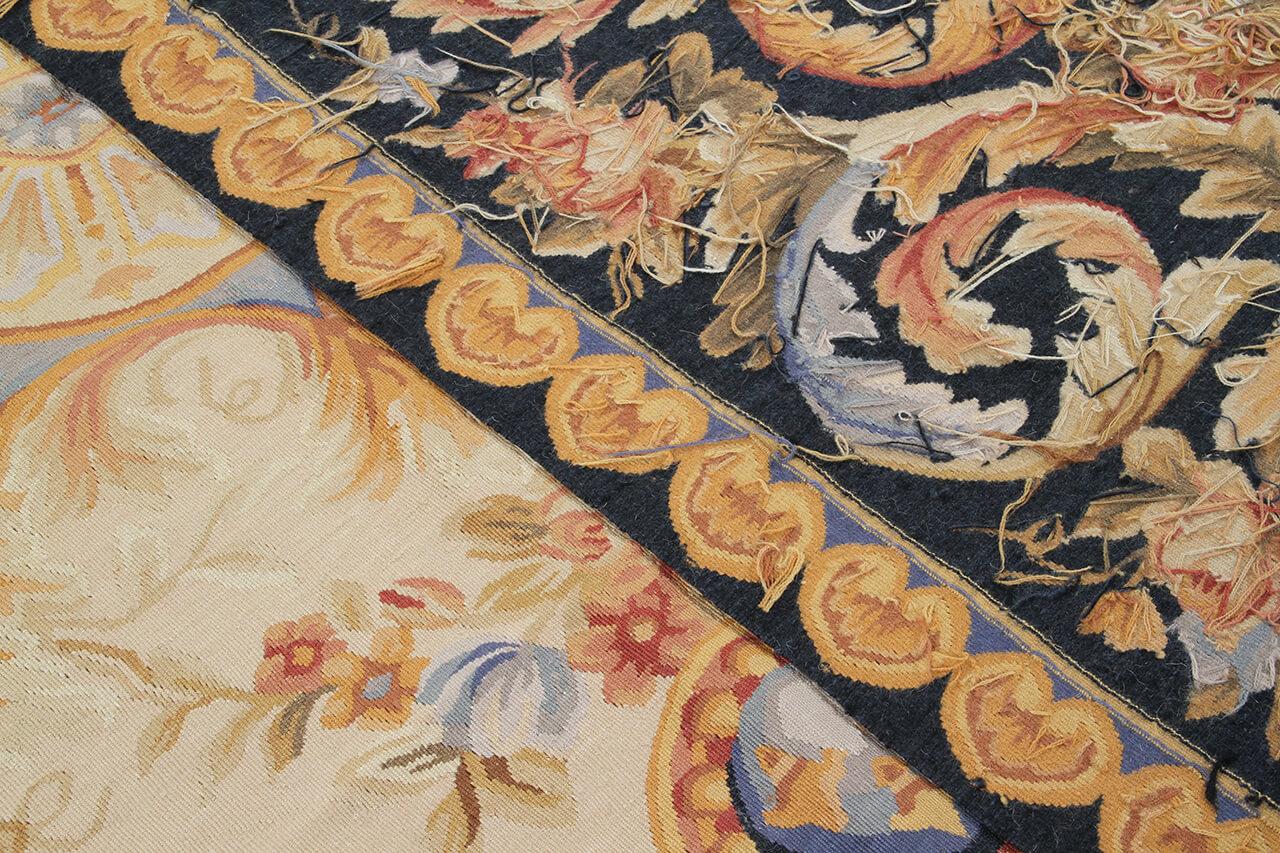
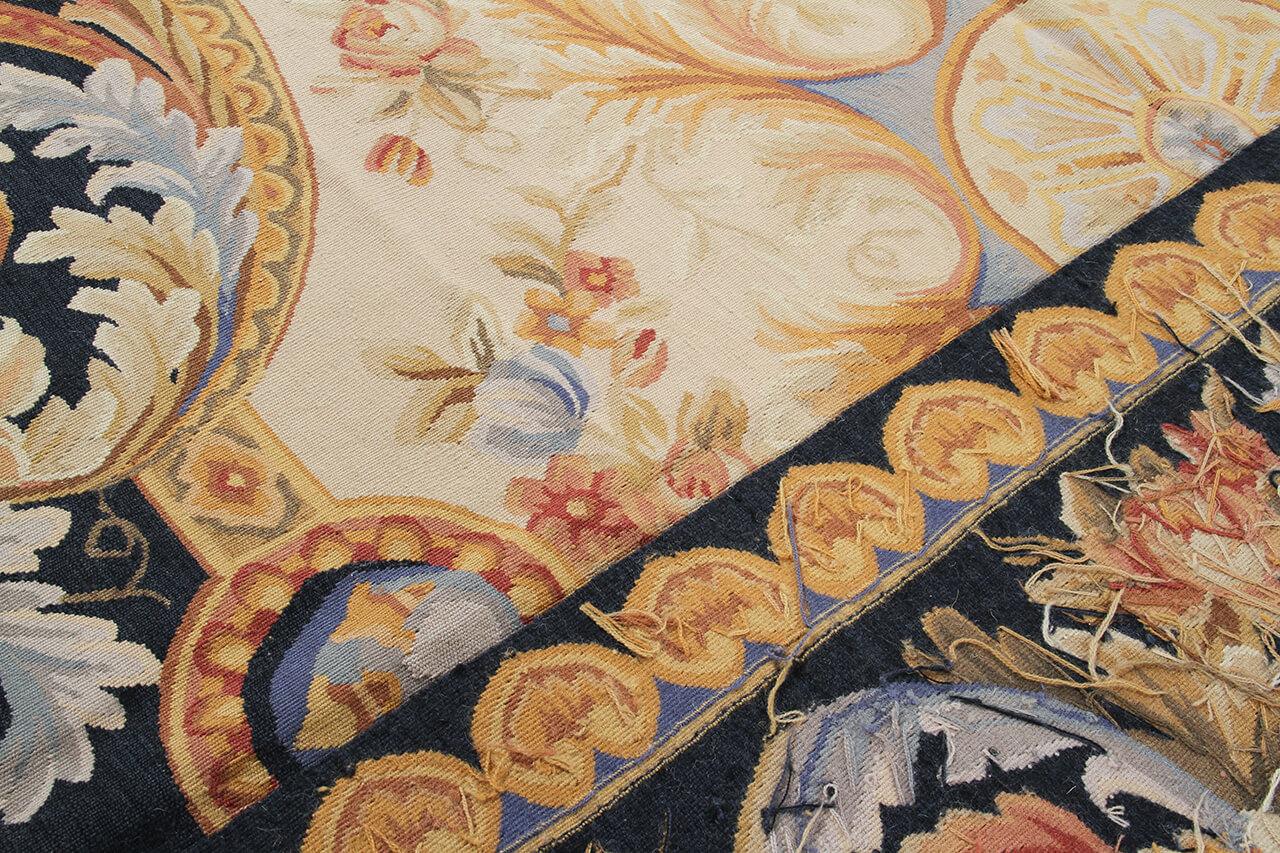
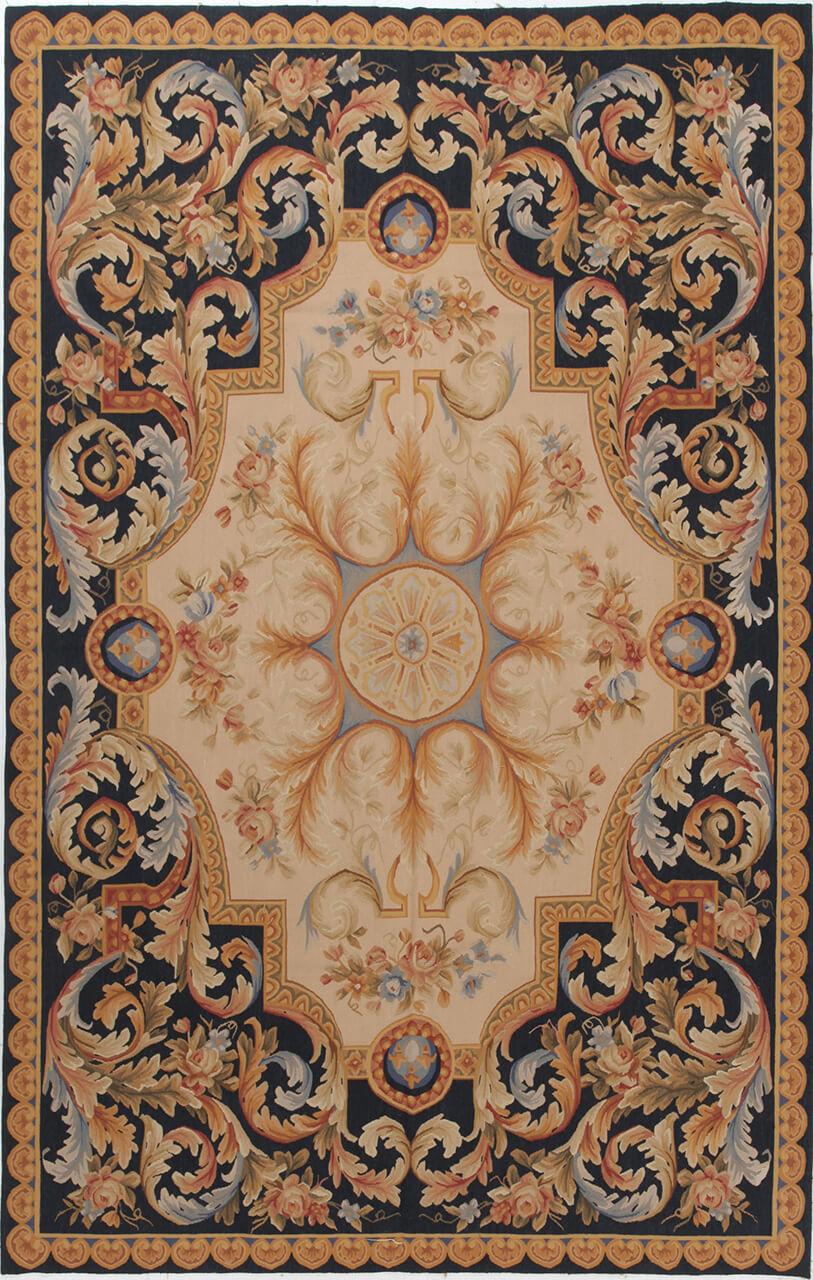
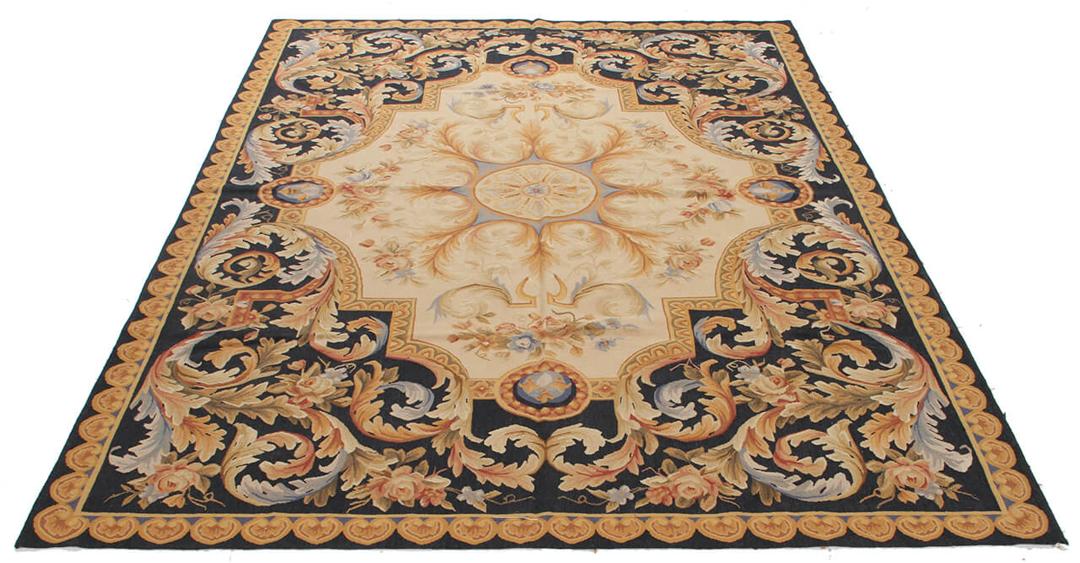
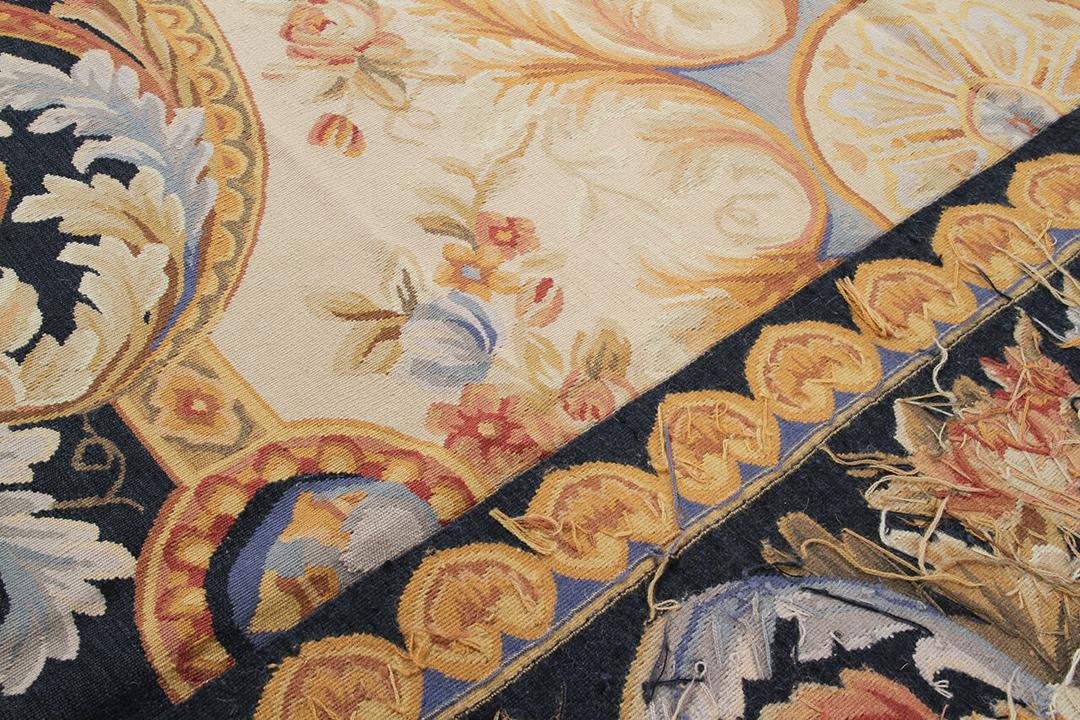
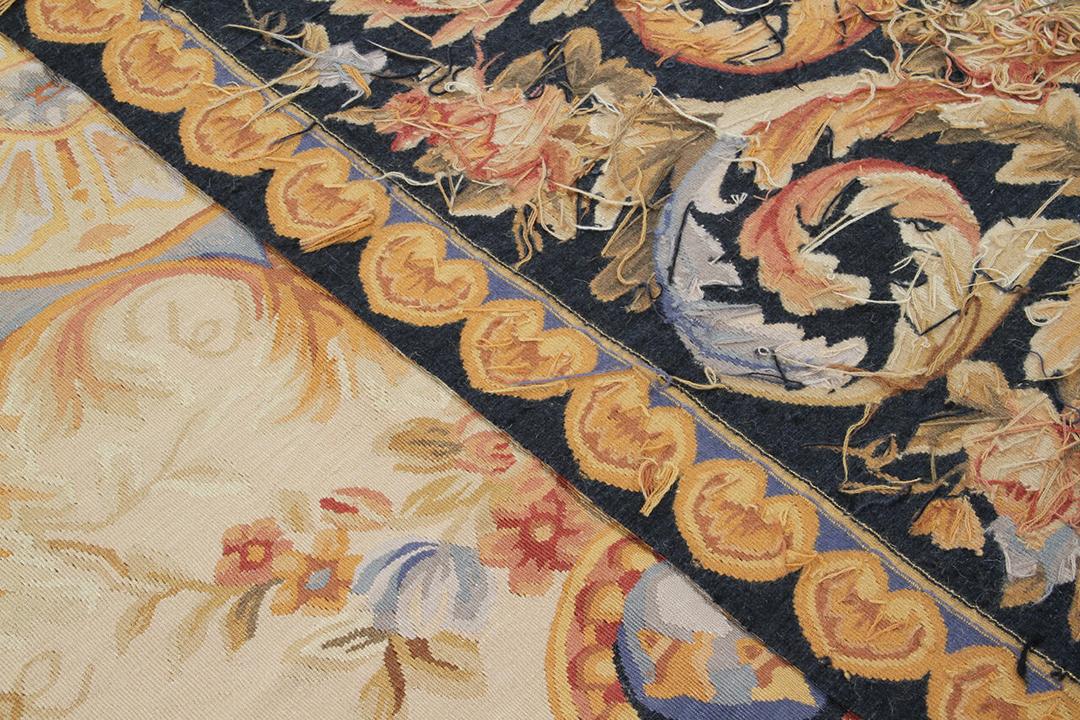
The Aubusson tradition originated in the small French town of the same name, which became the centre of a prestigious carpet and tapestry industry during the reign of Louis XIV. These designs were originally created to adorn the grand palaces and chateaus of the French nobility, characterised by their flat-woven construction and intricate, painterly designs that mimicked the look of fine woven artworks.
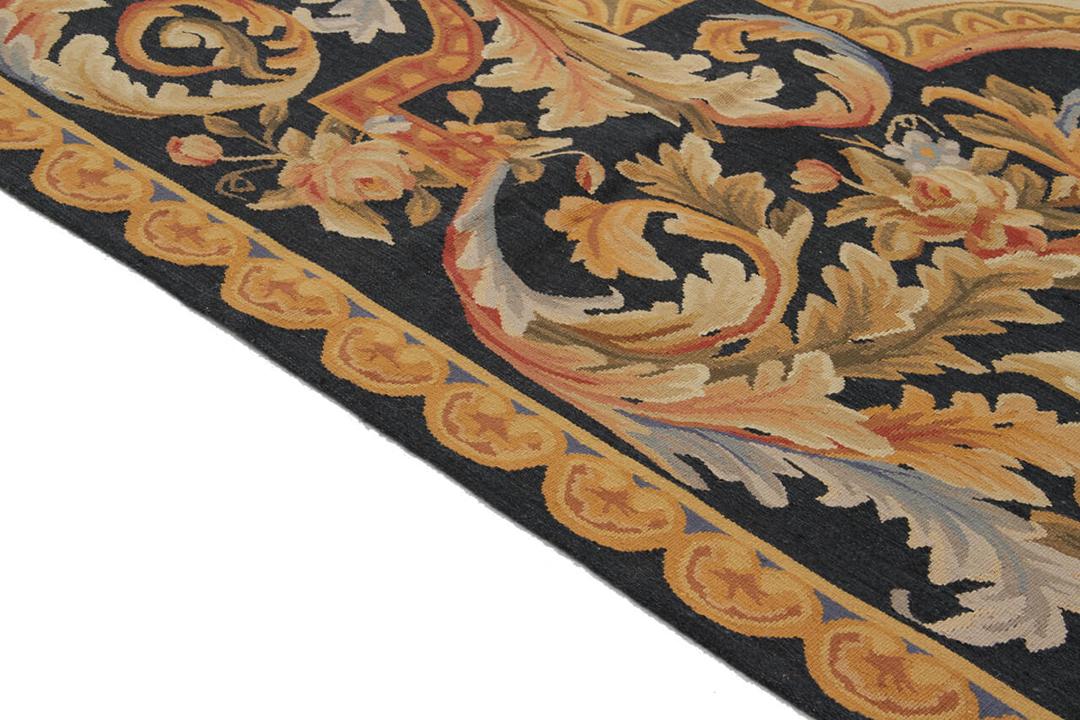
While the tradition began in France, it has evolved into a global craft, with highly skilled weavers in regions like China now interpreting these iconic designs with remarkable fidelity. The term 'tappissere' refers to this tapestry-like quality, where the weave is tight and deliberate, allowing for the complex floral and scrolling patterns that define the style.
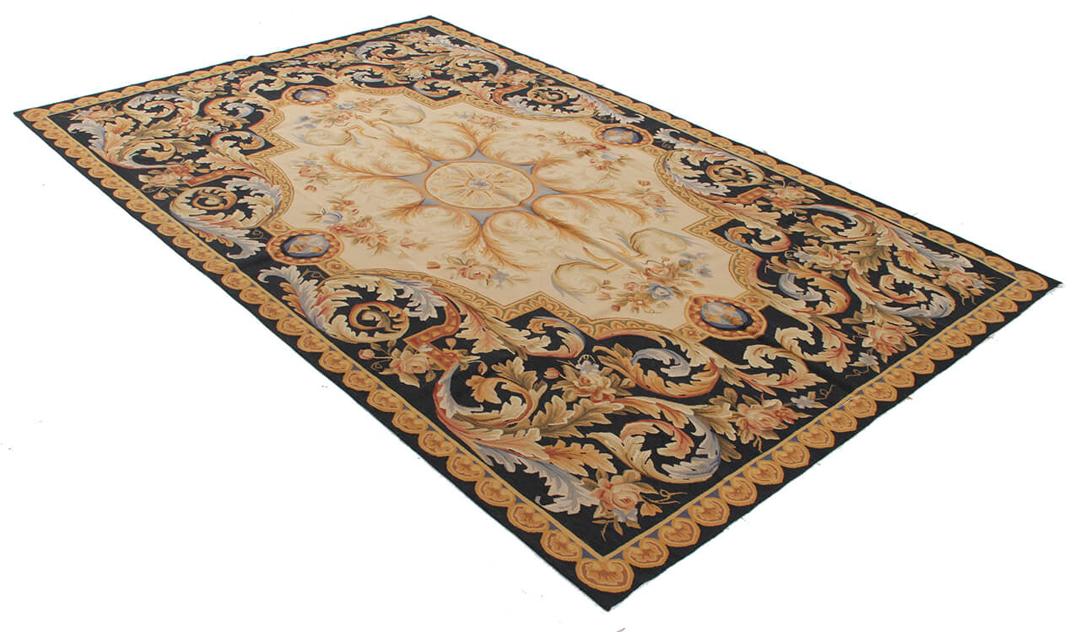
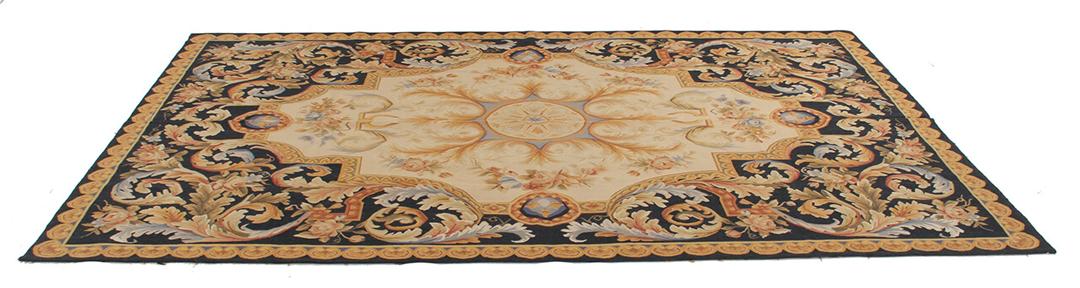
The design language of this tradition is rooted in the Baroque and Rococo movements. You will typically find a central medallion surrounded by elaborate foliate scrolls, acanthus leaves, and floral bouquets, all enclosed within a structured, often dark-toned border. This specific piece honours that heritage by maintaining the balanced, formal composition that made the original French workshops famous.
Today, these rugs are highly sought after by collectors who value the marriage of historical design and artisanal skill. Owning an Aubusson-style piece is a way to bridge the gap between historical grandeur and contemporary home comfort, providing a sense of heritage and enduring artistry that is rare in modern home decor.