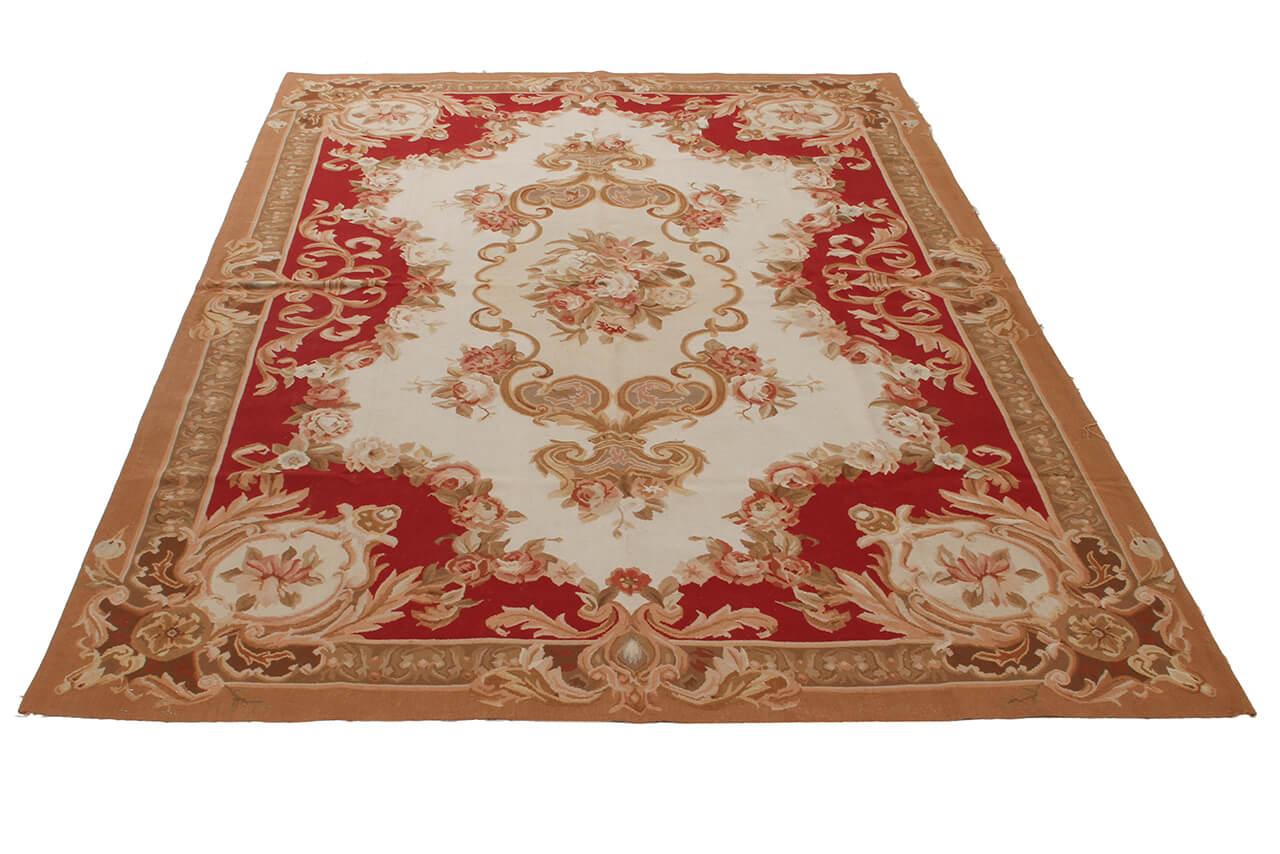
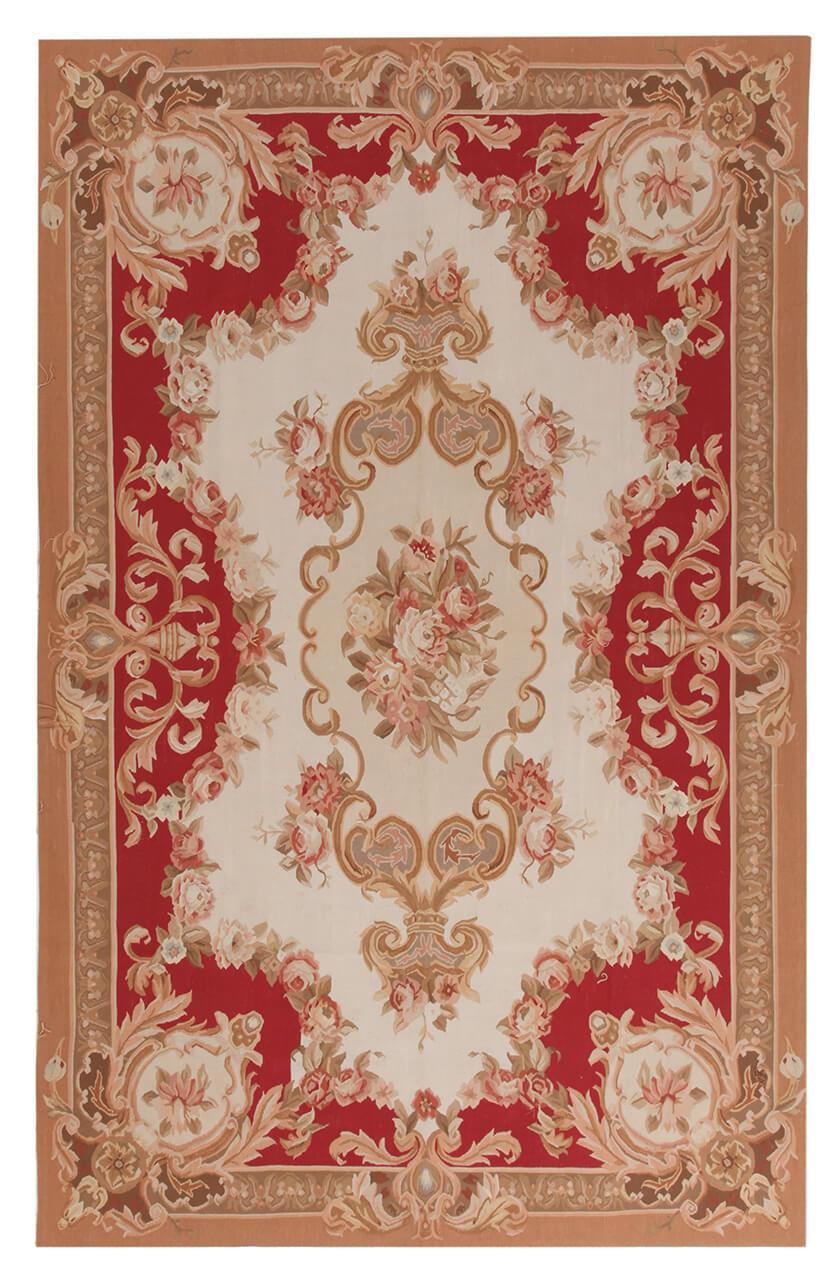
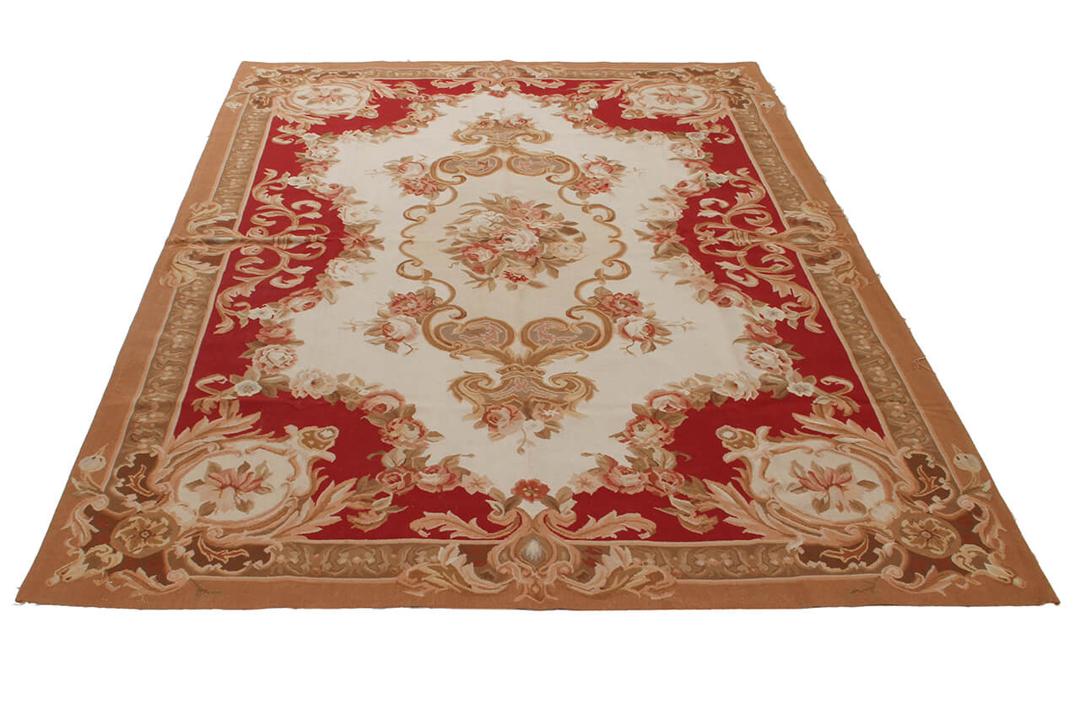
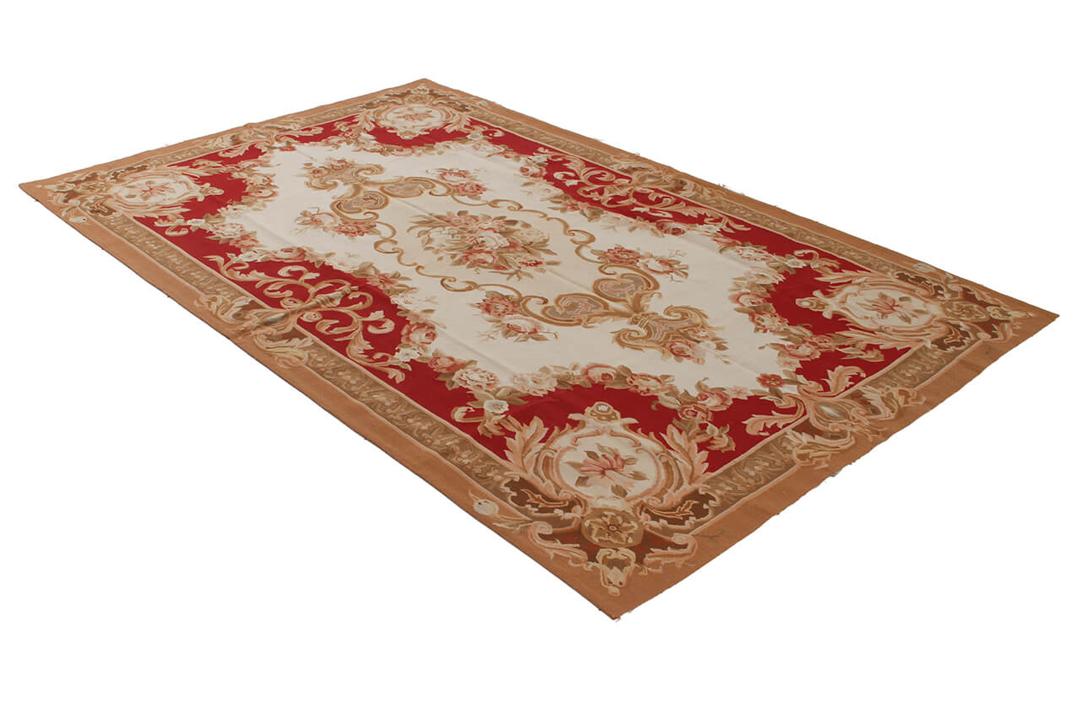
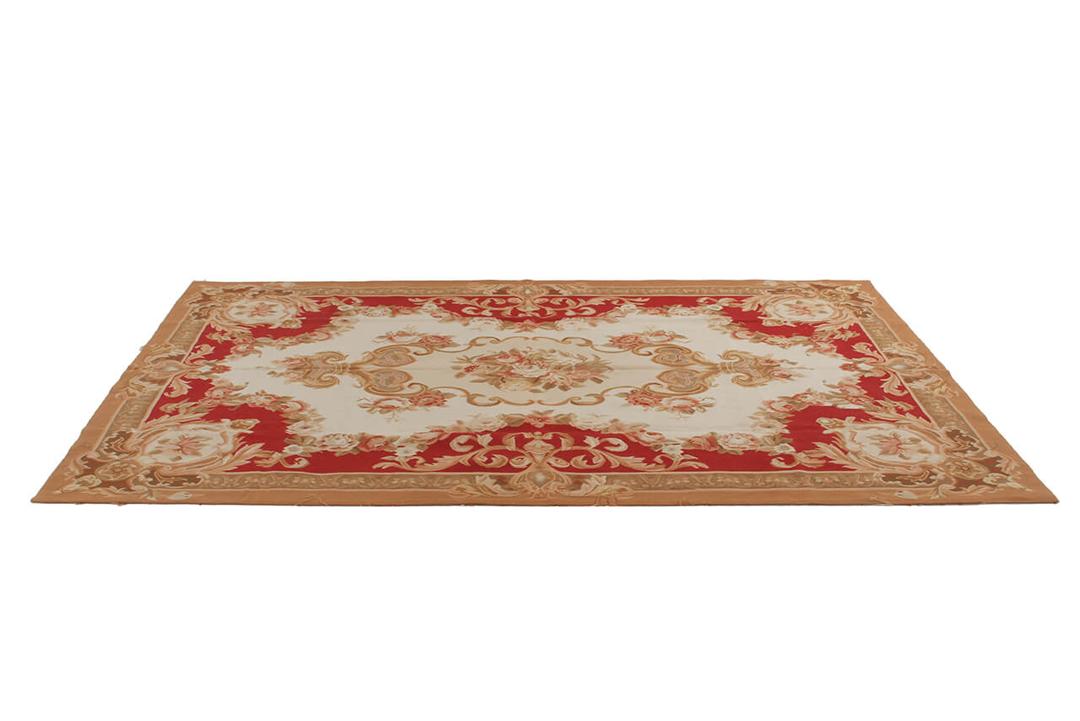
The Aubusson tradition traces its origins to the small French town of the same name, where tapestry weaving became a celebrated art form as early as the 15th century. Originally designed as wall hangings for royal and aristocratic homes, these tapestries eventually evolved into the flat-woven rugs that we recognise today for their elegance and formal beauty.
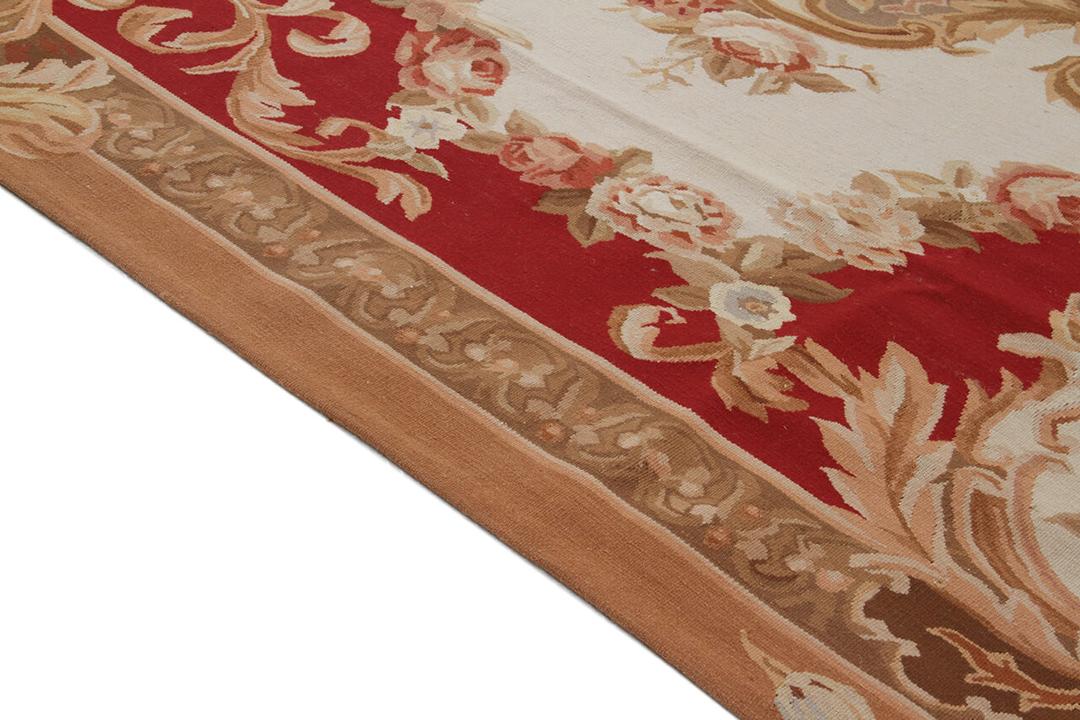
The term Aubusson refers to a specific style of flat-woven, tapestry-like construction. Unlike pile rugs, these pieces are created by interlacing coloured threads directly into the foundation, which allows for a remarkably high level of detail and a smooth, refined surface. This technique is highly prized for its ability to mimic the fluid, painterly quality of classical floral arrangements.
Visually, these rugs are defined by their sophisticated design language, which typically includes central medallions, elaborate scrollwork, and lush, romantic floral sprays. The borders are often formal and decorative, framing the central field to create a sense of balance and grandeur that is characteristic of the European decorative arts.
Today, the tradition has expanded globally, with master weavers in China interpreting these classic French designs with exceptional skill. Owning an Aubusson-style rug is about more than just floor decor; it is about connecting with a centuries-old lineage of artistic craft and bringing a piece of that rich, historical narrative into the modern home.