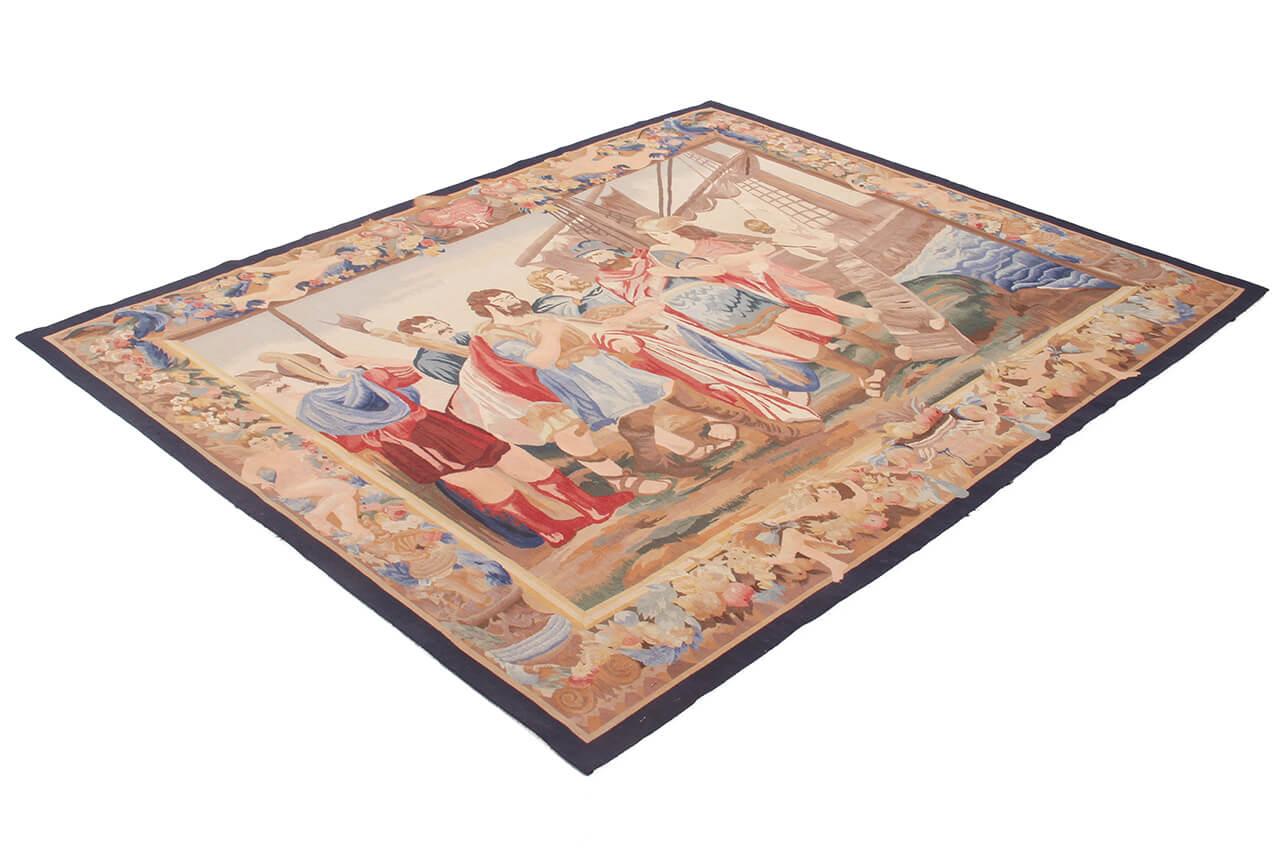
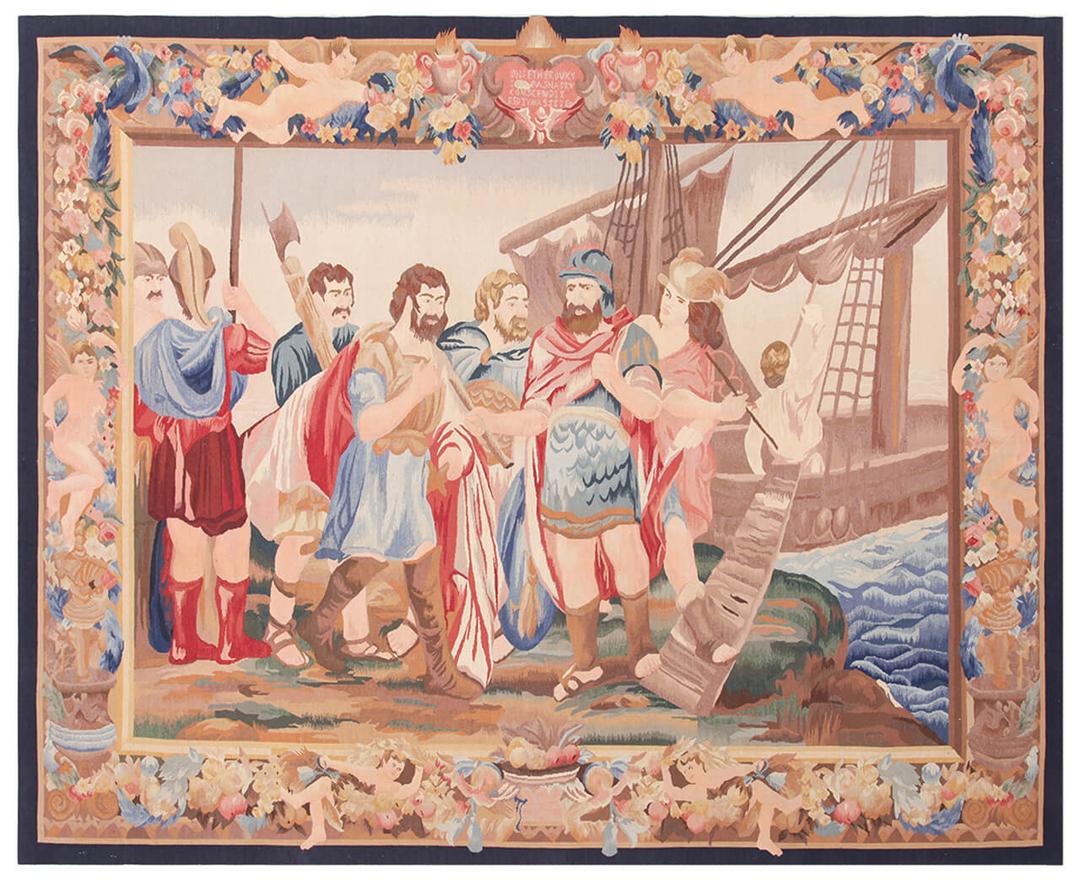
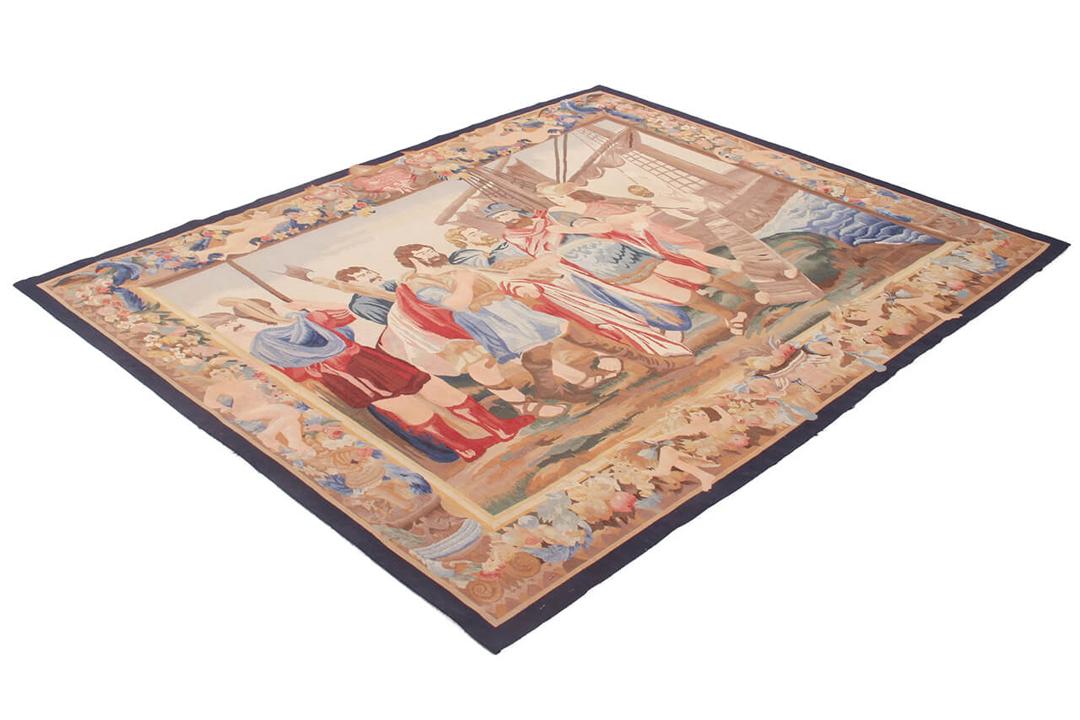
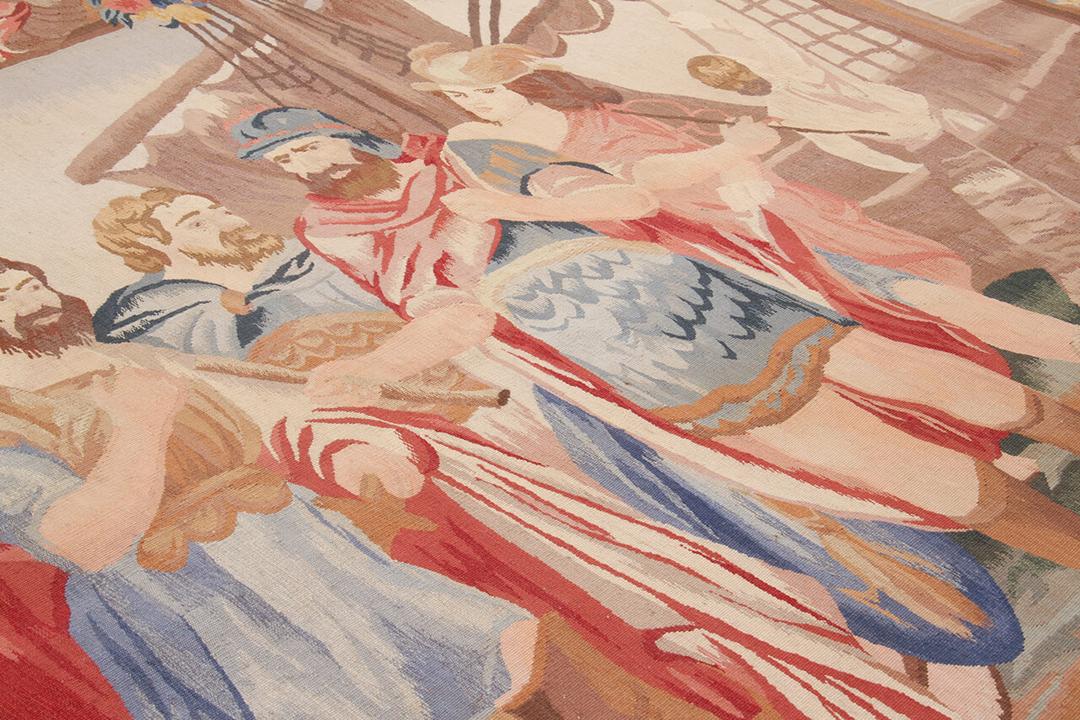
The Aubusson style originates from the town of Aubusson in central France, a region that became world-renowned for its tapestry production as early as the 15th century. These tapestries were originally designed to decorate the walls of grand European chateaus and palaces, depicting mythological, historical, or pastoral scenes with incredible fidelity. Today, the tradition has evolved, with skilled weavers in various regions continuing to honour these complex, narrative-driven designs.
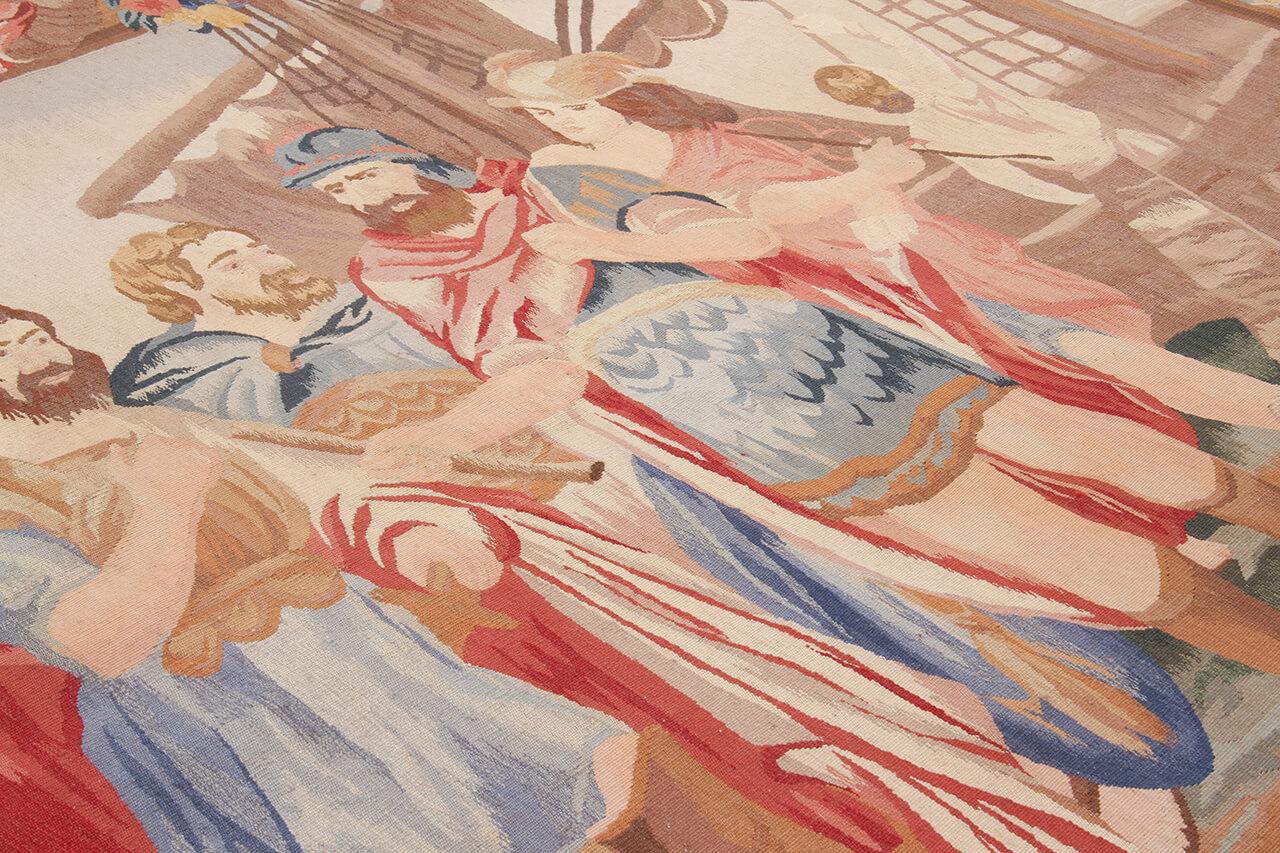
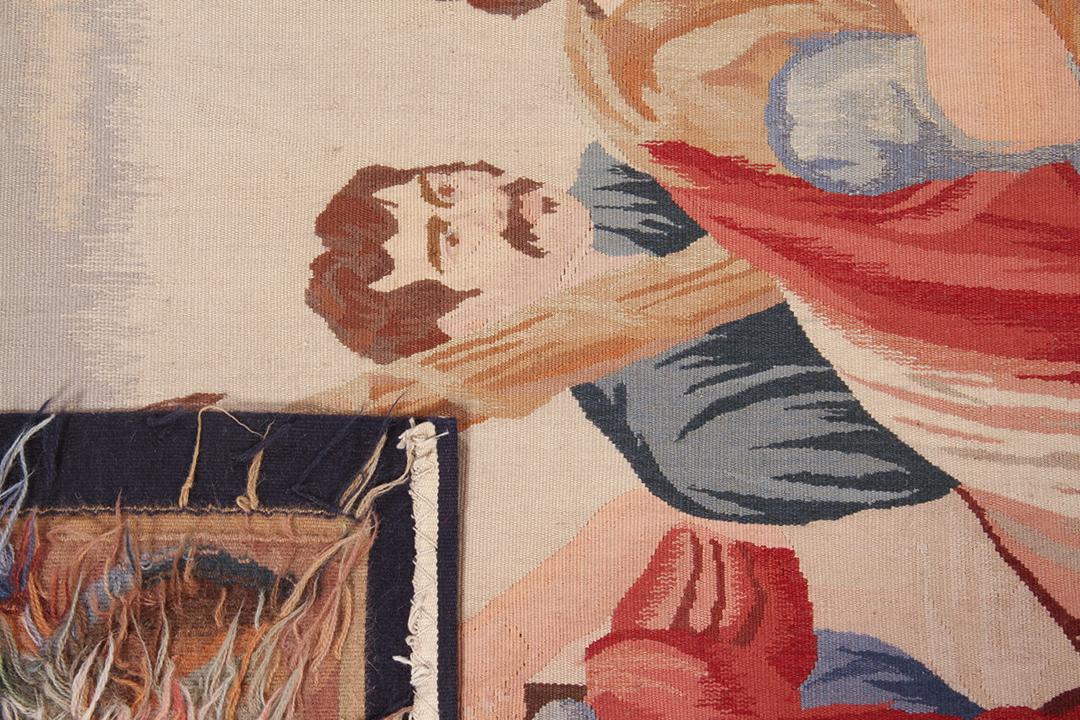
Technically, an Aubusson-style tapestry is defined by its flat-woven construction, which allows for the fluid, painterly appearance of the motifs. Unlike pile rugs, this technique treats the surface as a canvas, where different coloured threads are woven to create shading, perspective, and fine detail. This requirement for precision is why these pieces are so highly regarded, as they demand a level of control over the tension and colour blending that is quite rare.
The signature design elements of this tradition include elaborate central scenes framed by ornate, floral-laden borders. These borders often incorporate swags, ribbons, and architectural flourishes that provide a sense of depth and formal structure. The narrative focus is central to the style, often drawing from classical literature or historical events, which adds a layer of intellectual intrigue to the aesthetic beauty of the piece.
Collector value for these pieces lies in the rarity of their subject matter and the immense skill required to execute such a complex design. Owning an Aubusson-style tapestry is a commitment to preserving a specific type of textile heritage that values art as much as functionality. These pieces are cherished not just for their visual splendour, but for the history they carry, serving as a bridge between the grand traditions of the past and the contemporary home.