The Aubusson tradition traces its roots back to the 15th century in the Creuse valley of France, where tapestry weaving became a celebrated art form. These textiles were originally designed to adorn the walls and floors of European nobility, known for their ability to depict complex pastoral scenes and mythological narratives with the delicacy of a painting.
While the style originated in France, the artistry has travelled across the globe, inspiring master weavers in regions like China to adopt these sophisticated techniques. This cross-cultural evolution allows for the continuation of a storied craft, where the traditional flat-woven, tapestry-style construction remains the defining feature of the Aubusson aesthetic.
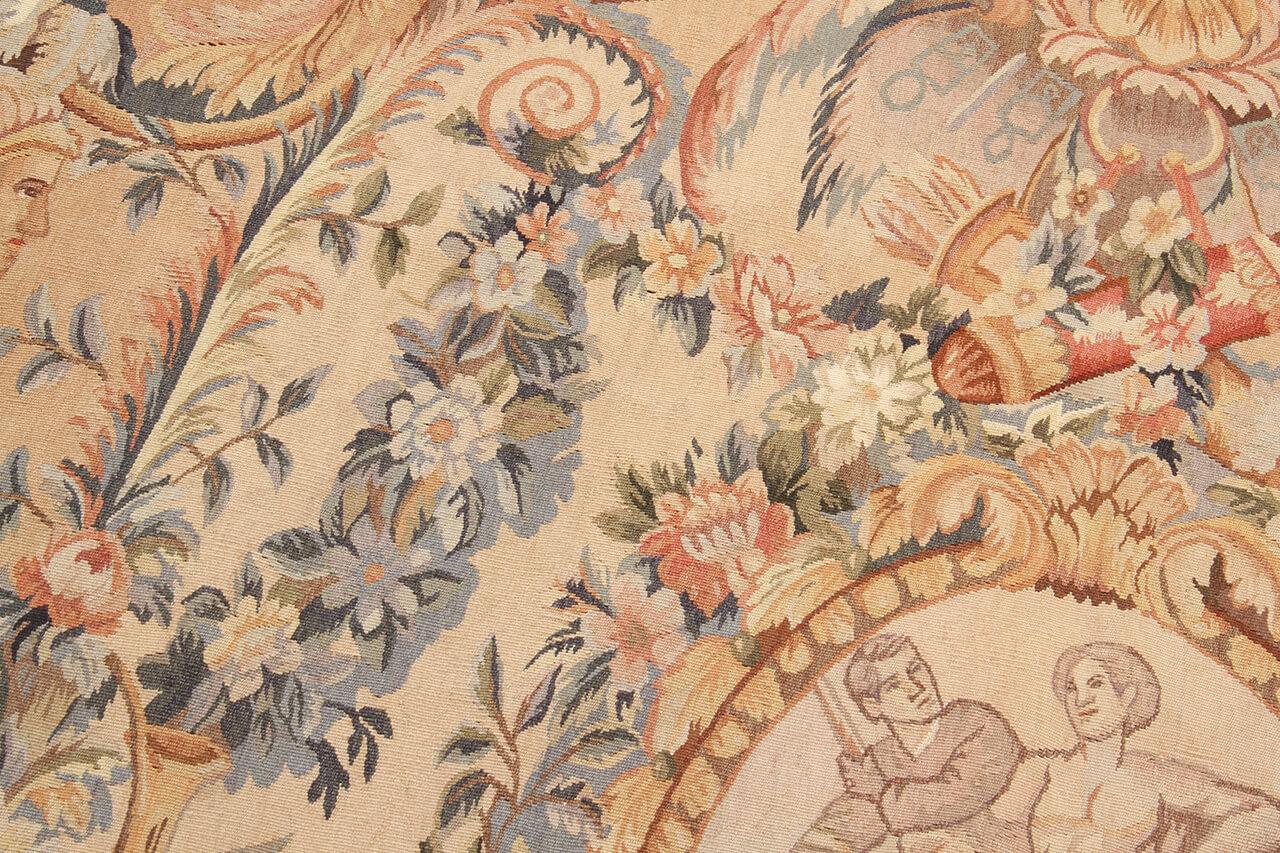
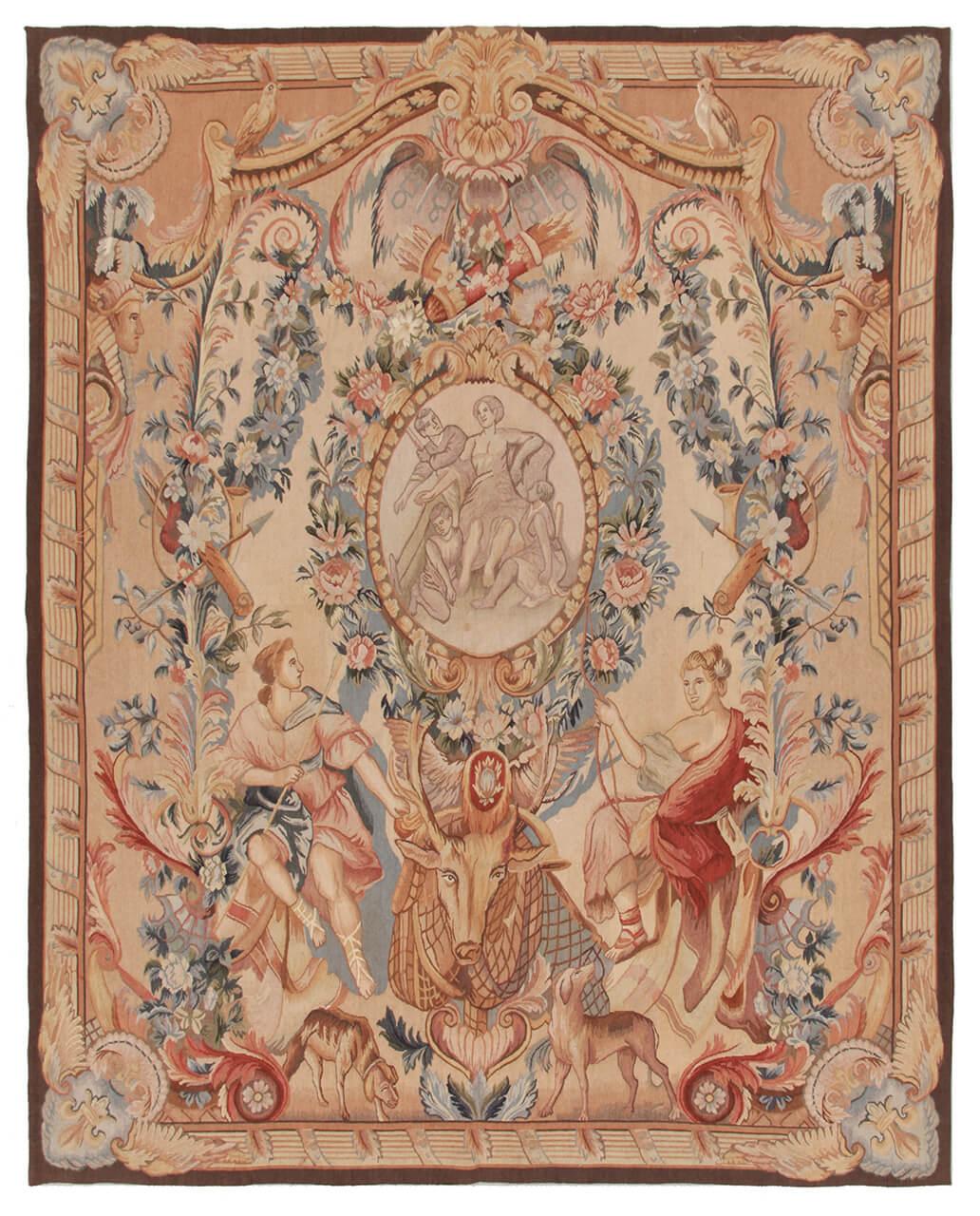
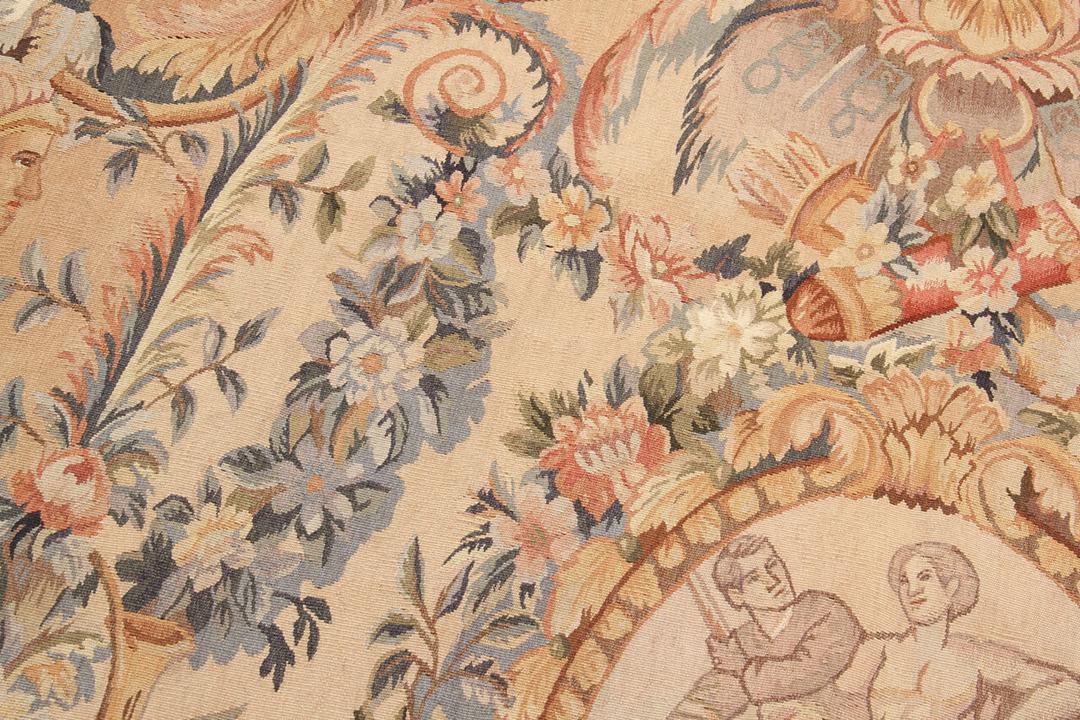
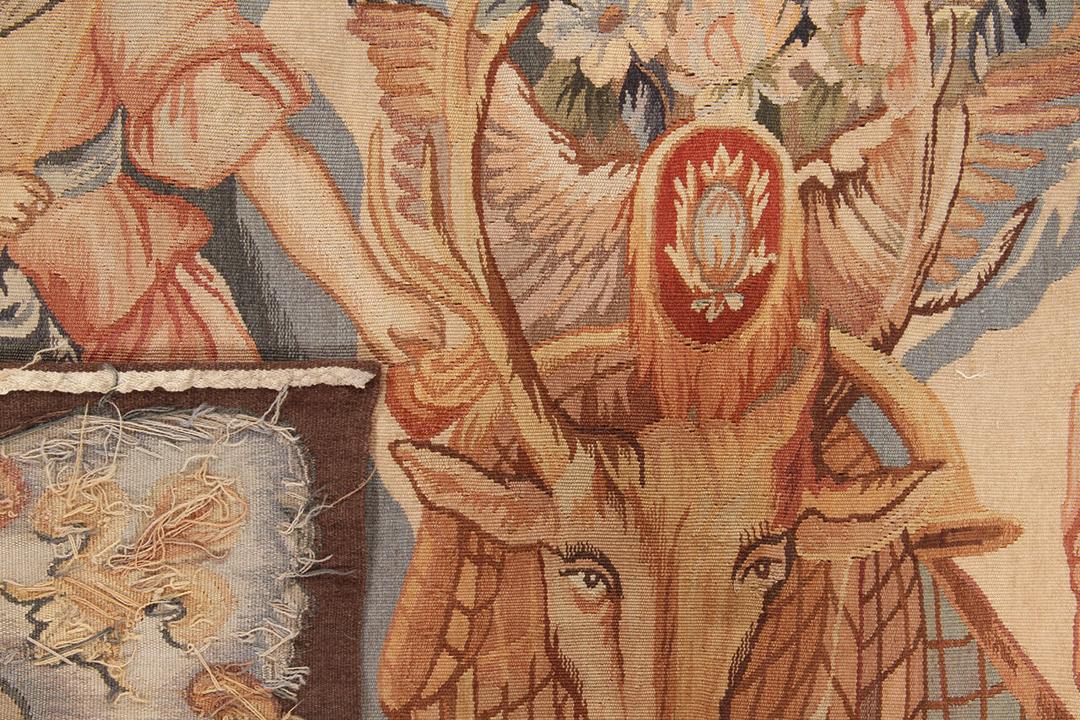
The visual language of these rugs is unmistakable, characterised by a central medallion often surrounded by floral garlands, acanthus leaves, and scrolls. The borders are typically formal and architectural, providing a frame that emphasises the depth of the central composition. This specific piece reflects that heritage, utilising a rich, traditional colour palette that highlights its intricate, decorative border and central figures.
Collecting a piece of this nature is an investment in cultural heritage and skilled artistry. These rugs are valued not just for their aesthetic beauty, but for their ability to tell a story through textile. Owning one is an opportunity to preserve a centuries-old tradition, bringing a sense of history and permanence to a modern home.