What is a Bokhara rug? History, origin and types
A Bokhara rug is a traditional hand-knotted wool rug known for its repeating geometric “gul” motifs and rich red colour palette. These rugs originate from Turkmen tribes in Central Asia, including the Tekke, Yomut, and Ersari, and were historically traded through the city of Bukhara along the Silk Road.
Authentic Bokhara rugs are valued for their dense knotting, durability, and detailed craftsmanship. Today, they are mainly produced in Pakistan and Afghanistan while preserving traditional designs. Common types of Bokhara rugs include Tekke Bokhara, Afghan Bokhara, and Pakistani Bokhara rugs, each with slight variations in pattern and origin.
History and origin of Bokhara rugs
Bokhara rugs originate from the weaving traditions of Turkmen nomadic tribes in Central Asia, particularly in areas that are now part of Turkmenistan, northern Afghanistan, and Uzbekistan. These tribes, including the Tekke, Yomut, and Ersari, developed distinctive hand-knotting techniques and geometric patterns that define Bokhara rug designs today.
The name “Bokhara” does not refer to a specific place of production but to the historic city of Bukhara in present-day Uzbekistan. This city was a major trading hub along the Silk Road, where Turkmen rugs were collected and sold, leading to the widespread use of the name “Bokhara rugs” in international markets.
Over time, the popularity of these rugs spread beyond their original tribal regions, influencing rug production in neighbouring areas. Today, Bokhara-style rugs are still produced in countries such as Pakistan and Afghanistan, preserving traditional motifs, rich red colour palettes, and dense wool construction that make them one of the most recognisable styles in handmade rug weaving.
Where are Bokhara rugs made today?
Although Bokhara rugs originated with Turkmen tribes in Central Asia, many Bokhara-style rugs are now produced in countries such as Pakistan and Afghanistan, where traditional patterns and weaving techniques are still used.
Turkmen tribes and symbolism
The designs found in traditional Bokhara rugs are closely tied to the Turkmen tribes who originally wove them, with patterns passed down through generations. One of the most distinctive features is the “gul” motif—a repeating geometric pattern that is a defining element of Turkmen carpets.
Each Turkmen tribe, such as the Tekke, Yomut, and Ersari, developed its own variation of the gul, which served as a visual identifier of tribal origin. These motifs allowed experienced weavers and traders to recognise where a rug was made and often carried meanings related to identity, protection, and unity.
The use of rich reds, deep blues, and earthy tones reflects both the cultural heritage and natural surroundings of Central Asia. Together, these symbolic patterns and colours give Bokhara rugs their distinctive character and lasting appeal.
Types of Bokhara rugs
Bokhara rugs come in several types, each associated with specific Turkmen tribes or modern production regions, with variations in pattern, colour, and construction.
Tekke Bokhara rugs
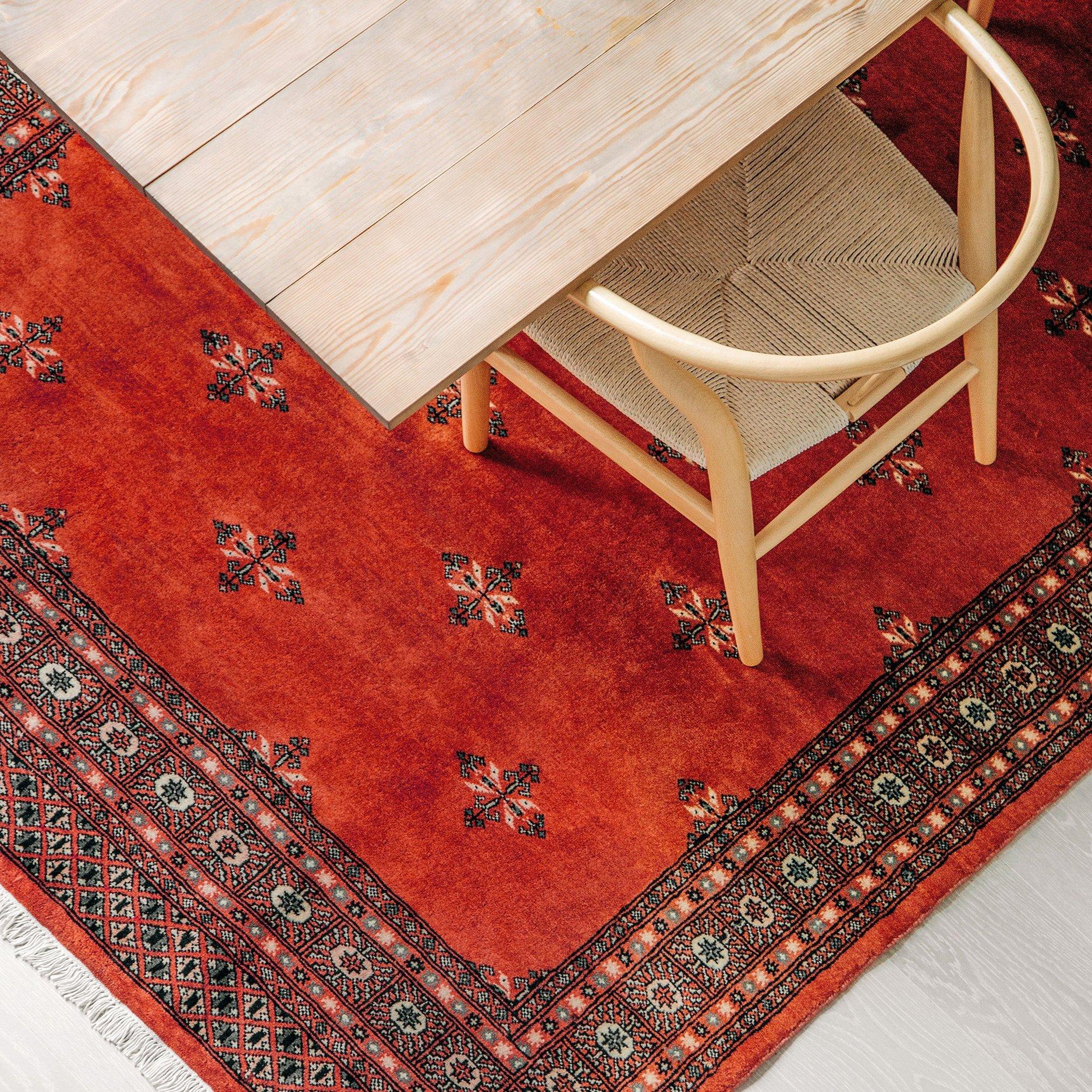
Traditionally associated with the Tekke Turkmen tribe, these rugs feature tightly spaced rows of oval or diamond-shaped gul motifs arranged on deep red backgrounds.
Afghan Bokhara rugs
Woven primarily in northern Afghanistan, these rugs often feature darker red tones and slightly larger gul motifs while maintaining traditional Turkmen-inspired designs.
Pakistani Bokhara rugs
Widely produced in Pakistan today, these rugs preserve classic Bokhara patterns and are often made with 2-ply or 3-ply wool yarns, which affect the rug’s thickness and texture.
Ersari Bokhara rugs
Linked to the Ersari Turkmen tribe, these variations typically feature larger gul motifs and more open pattern spacing compared with Tekke designs.
Designs and colours of Bokhara rugs
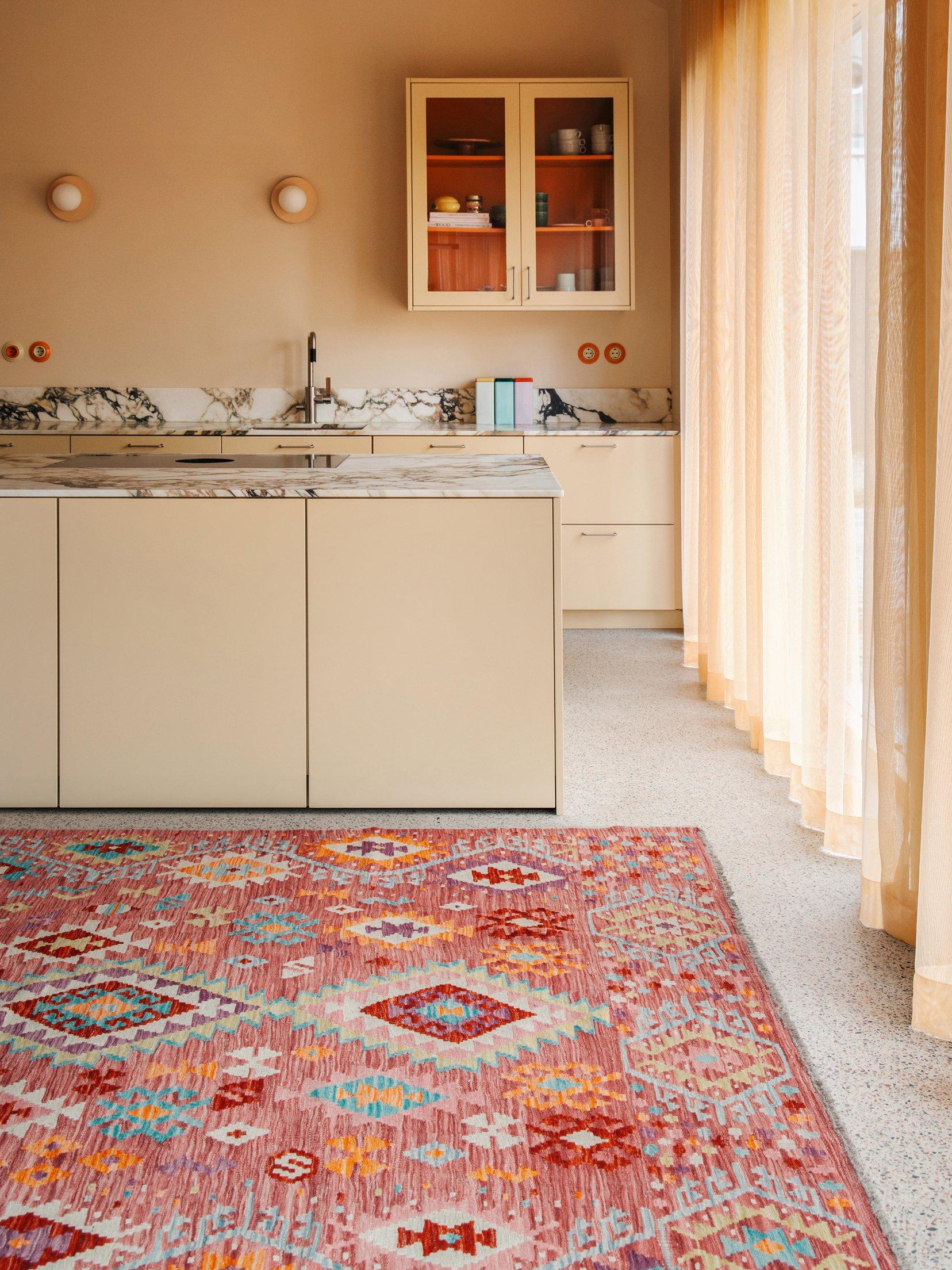
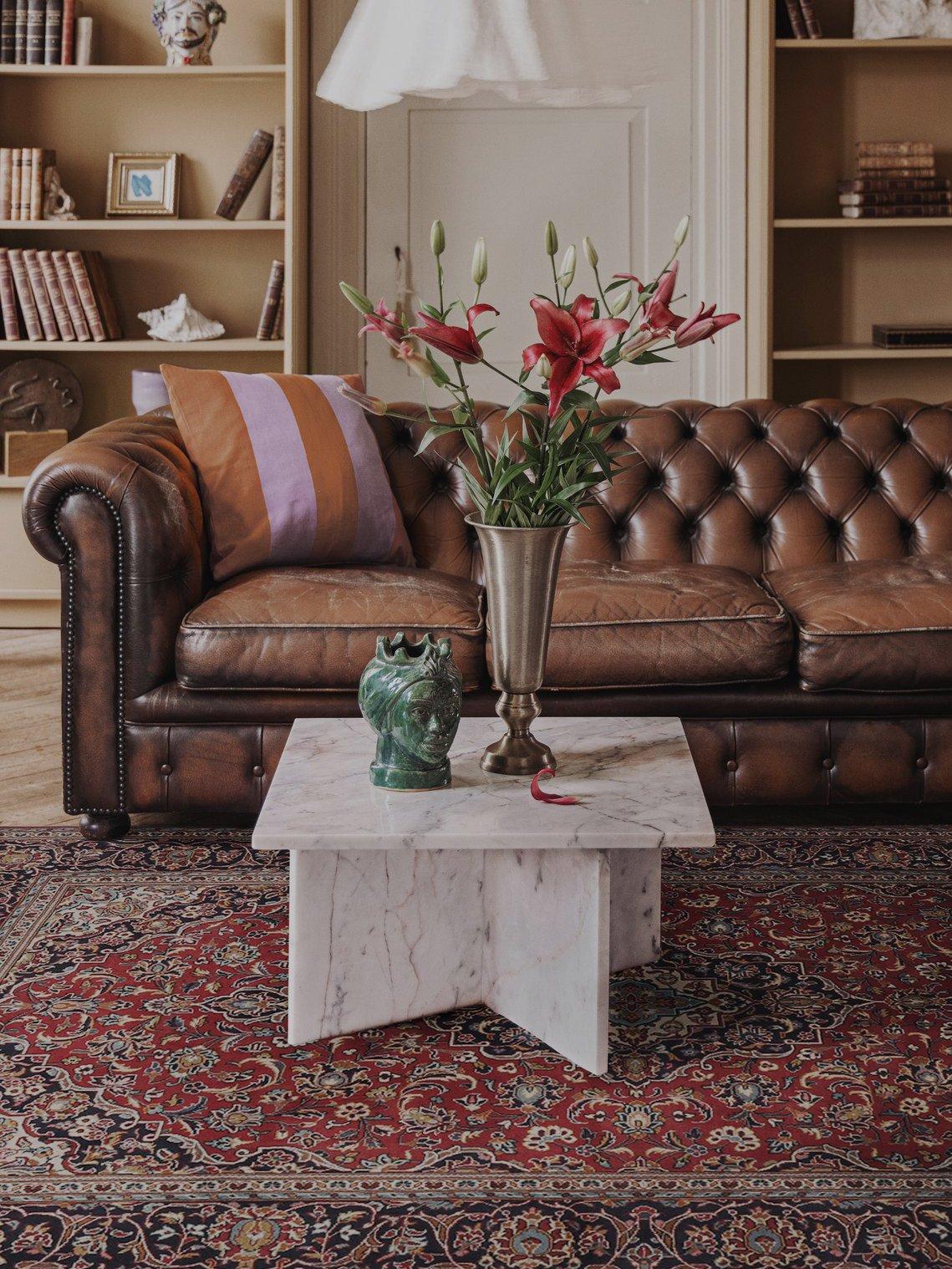
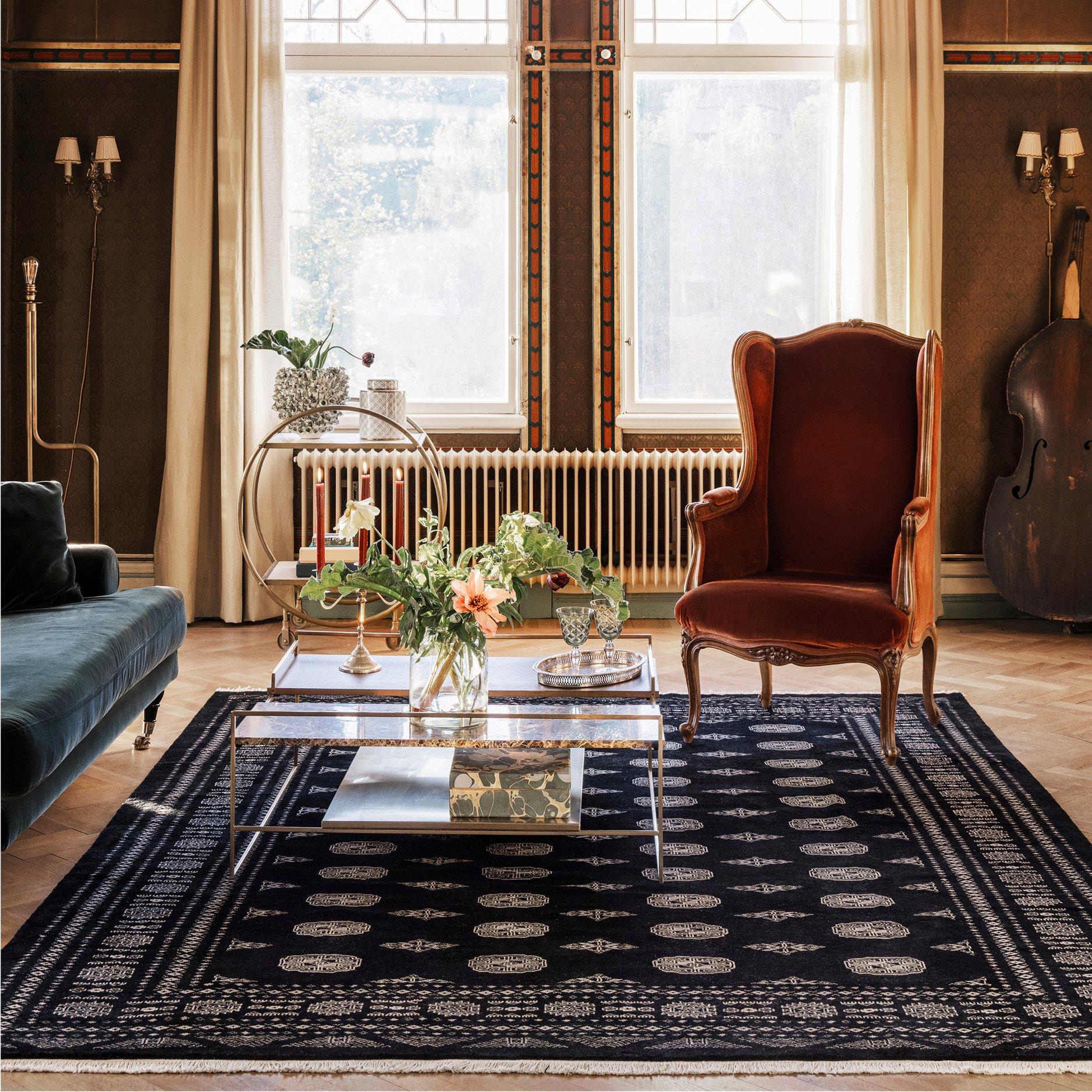
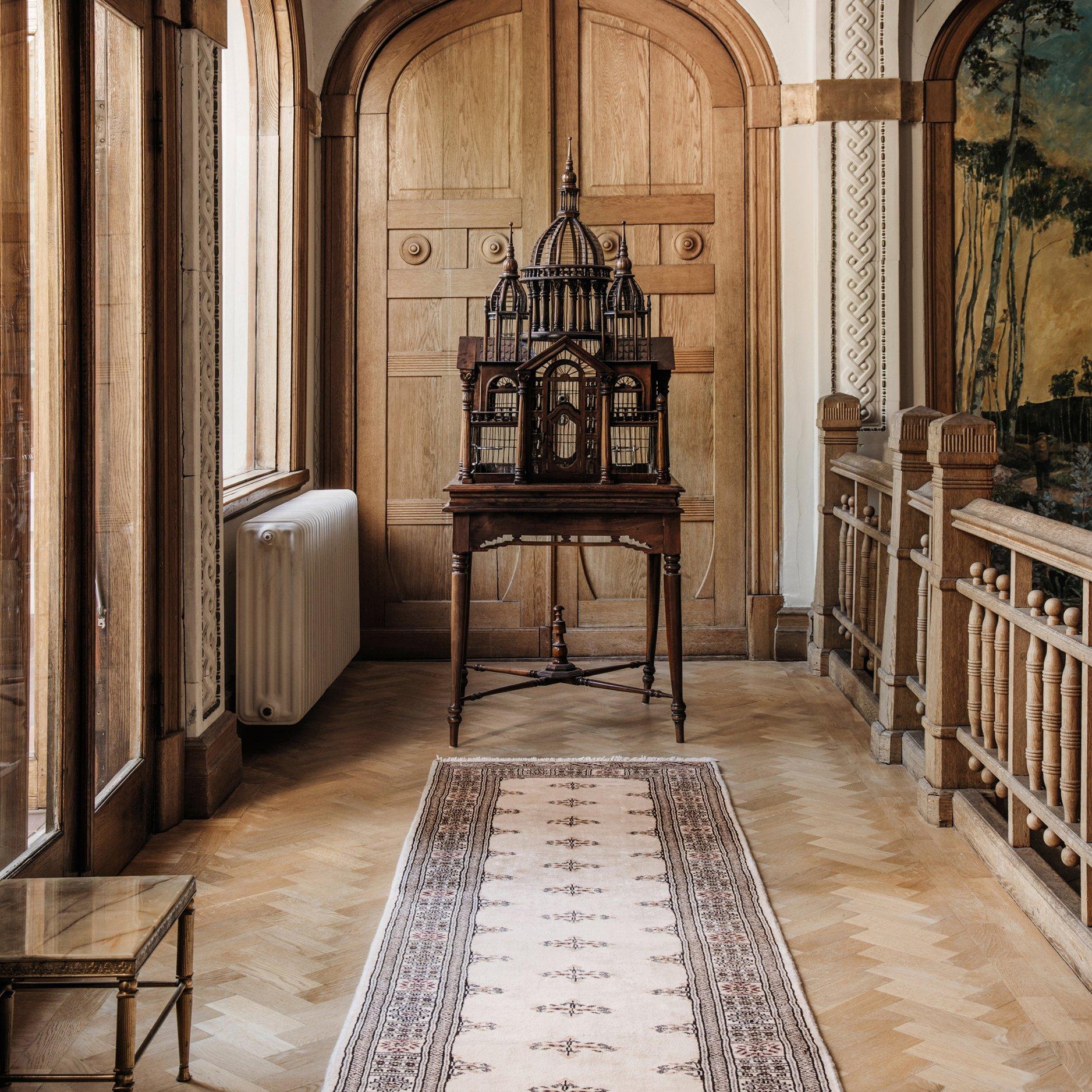
Bokhara rugs are recognised for their repeating geometric patterns, symmetrical layouts, and rich, warm colour palettes. Their structured designs create a balanced and timeless appearance that is easy to identify.
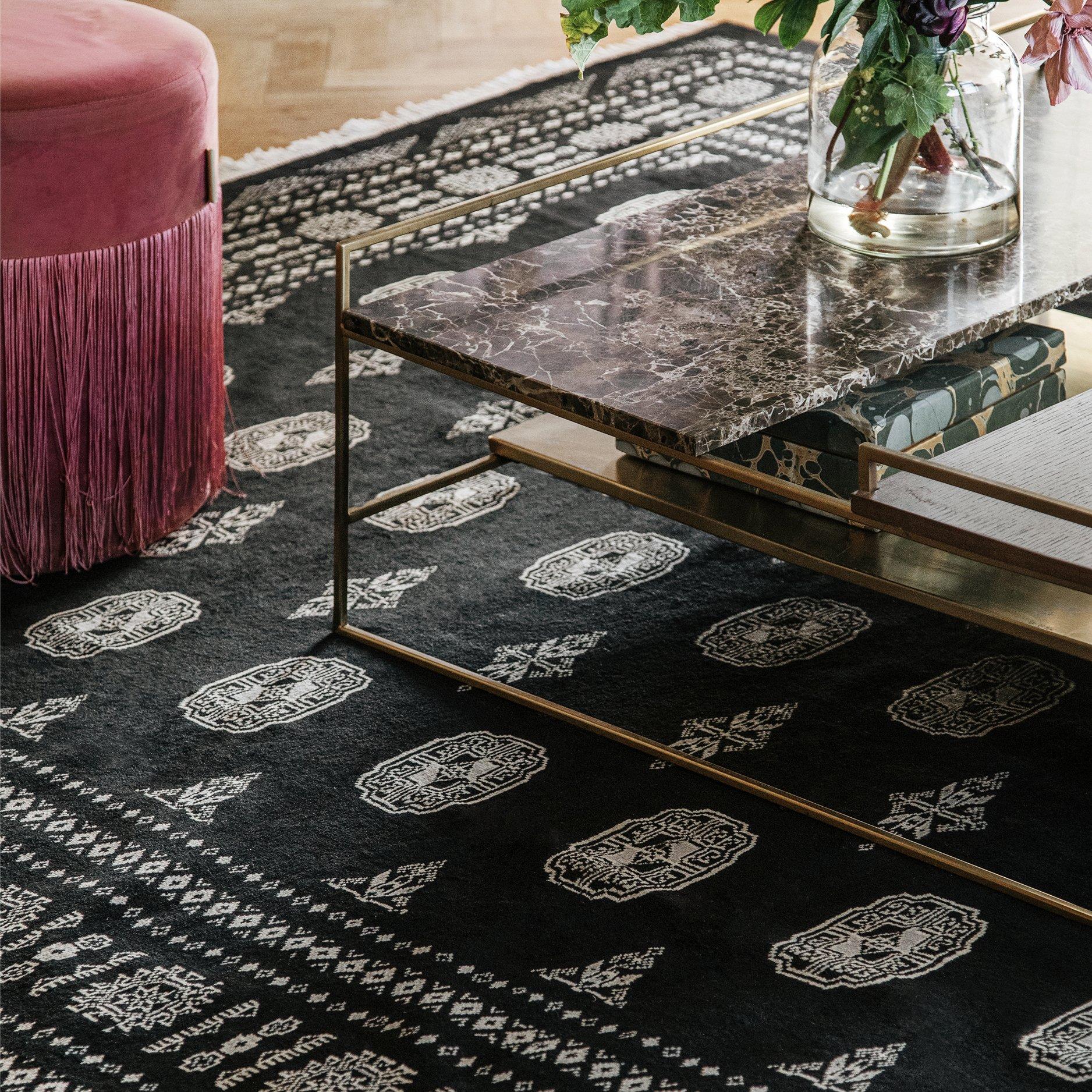
The most distinctive feature is the repeating “gul” motif—typically oval or octagonal—arranged in neat rows across the rug. Borders often include smaller geometric elements that reflect the central pattern, reinforcing the overall symmetry.
Traditional Bokhara rugs are dominated by deep reds, burgundy, and maroon tones, often accented with black, ivory, dark blue, or brown for contrast and definition. While classic designs remain red-based, modern variations may introduce softer neutrals while preserving the characteristic pattern structure.
Combined with a dense knot count and soft wool construction, these design elements make Bokhara rugs both visually distinctive and durable for everyday use.
Materials and craftmanship
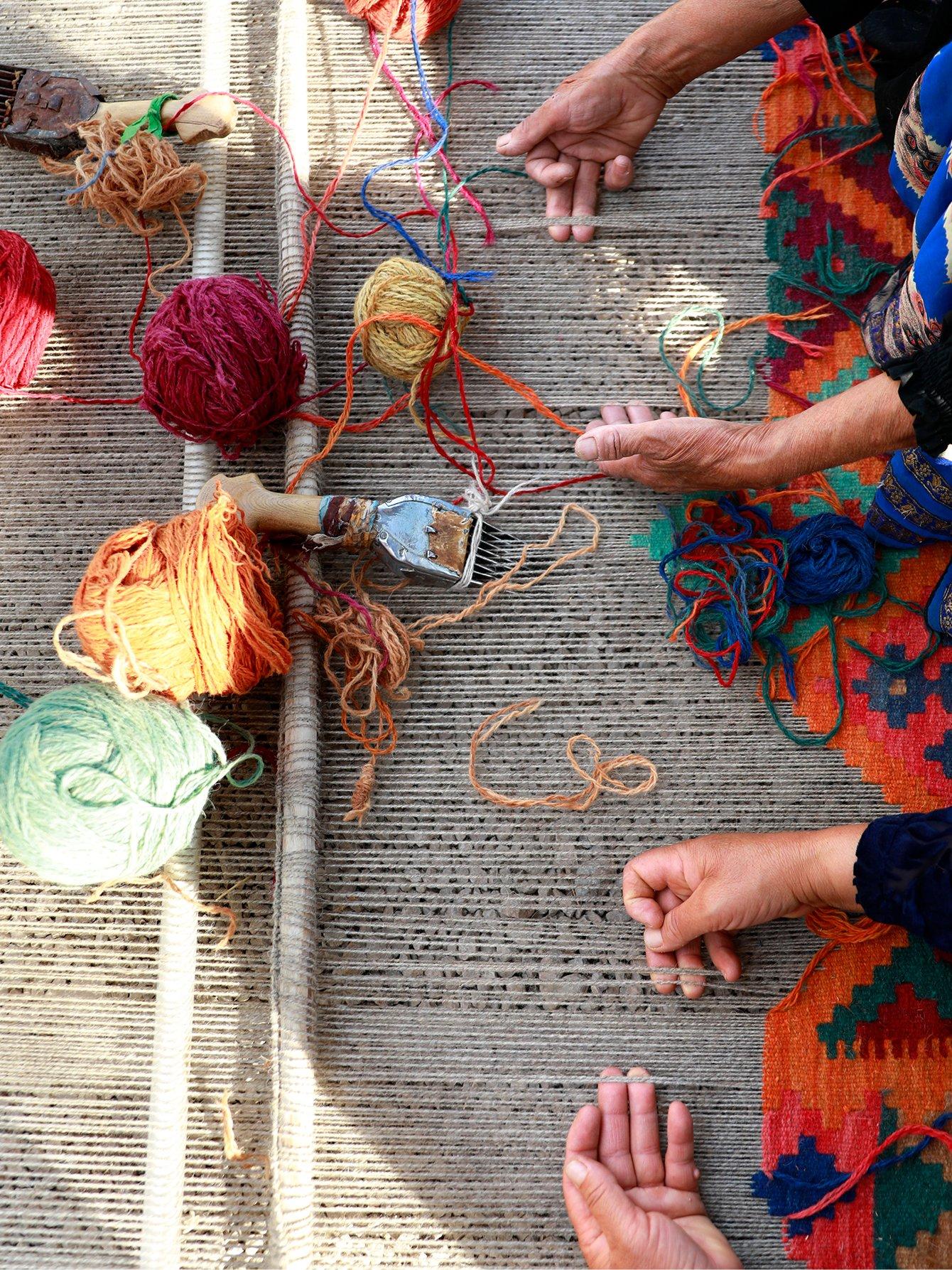
Bokhara rugs are traditionally hand-knotted using high-quality wool, which gives them durability, warmth, and a soft texture underfoot. The wool is often hand-spun and dyed using traditional methods, resulting in subtle colour variations that add depth and character to each rug.
Most Bokhara rugs use the symmetrical Turkish knot, creating a dense and hard-wearing pile. Their typically high knot density enhances both durability and the clarity of the intricate geometric patterns.
This level of craftsmanship reflects generations of weaving expertise, making Bokhara rugs not only long-lasting but also a strong representation of traditional rug-making heritage.
How to care for your Bokhara rug
Because Bokhara rugs are made from natural wool and hand-knotted construction, proper care helps preserve their colour, texture, and structure for many years.
- Vacuum regularly in the direction of the pile using low suction and no beater bar
- Rotate the rug every few months to ensure even wear and colour exposure
- Clean spills immediately by blotting (never rubbing) with a damp cloth
- Avoid prolonged direct sunlight to prevent colour fading
- Use an anti-slip underlay to reduce movement and protect the rug’s foundation
- Keep away from excess moisture to prevent damage to the wool and structure
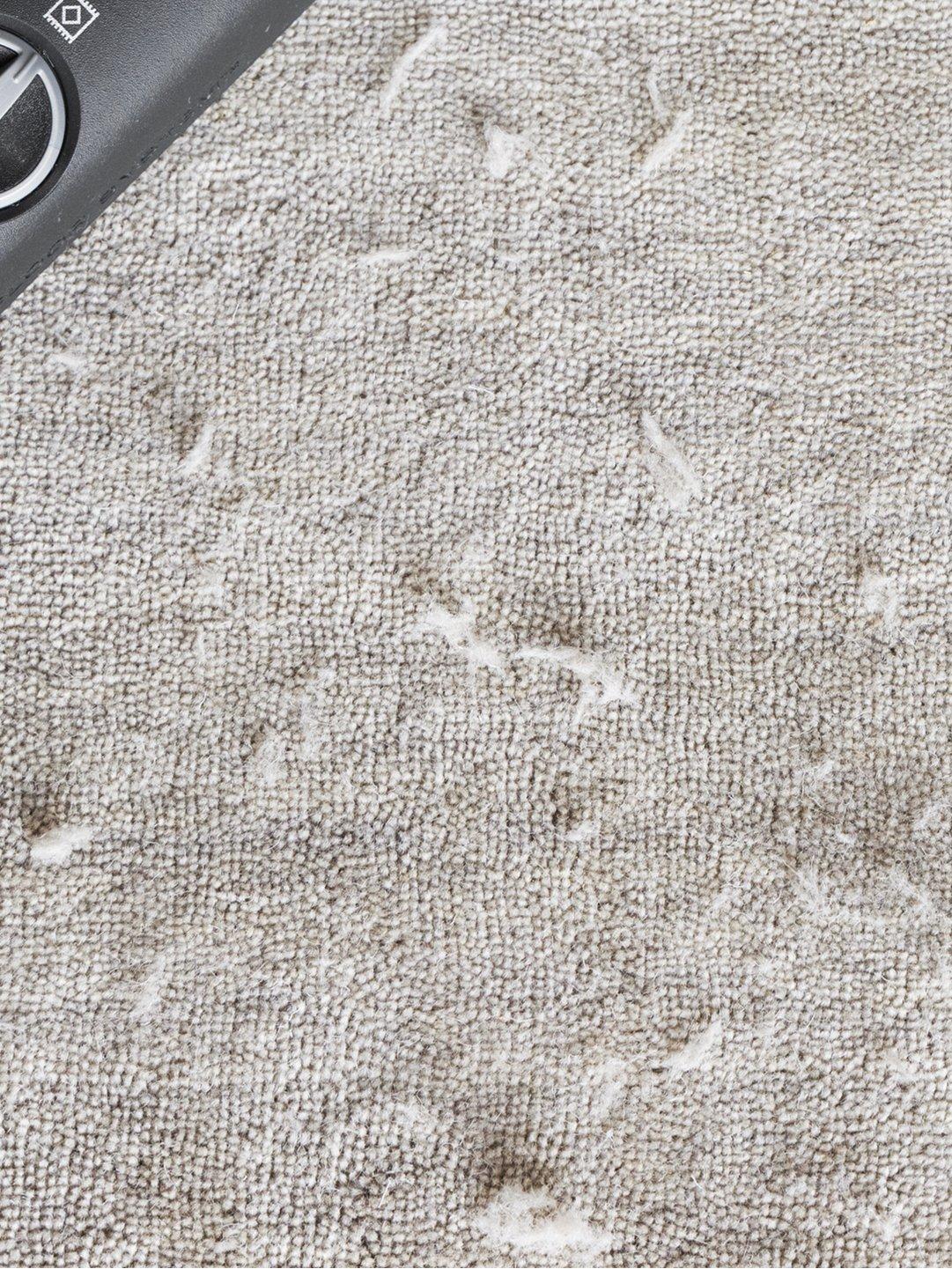
- Trim loose fibres by hand; do not pull them
- Schedule professional cleaning every 1–3 years, depending on foot traffic
If you’re looking to add one to your home, browse our full collection of Bokhara rugs available in a range of sizes and colours.
Bokhara rugs FAQ
Bokhara rugs are usually red because traditional versions were dyed using natural pigments that produced deep red and burgundy tones. Over time, these rich colours became a defining characteristic of Turkmen-inspired Bokhara rug designs.
Traditional Bokhara rugs are hand-knotted by skilled weavers using wool and symmetrical knotting techniques. This process creates a dense, durable pile that can last for generations. While many authentic Bokhara rugs are handmade, some modern Bokhara-style rugs may also be machine-made.
Bokhara rugs are distinguished by their repeating geometric “gul” motifs, symmetrical layouts, and deep red colour palettes. Unlike many other oriental rugs that feature floral or curvilinear patterns, Bokhara designs are more structured, reflecting their Turkmen tribal origins.
Yes, Bokhara rugs are generally considered high quality due to their dense knotting, durable wool construction, and long lifespan. When properly cared for, a well-made Bokhara rug can maintain its colour and structure for many years.