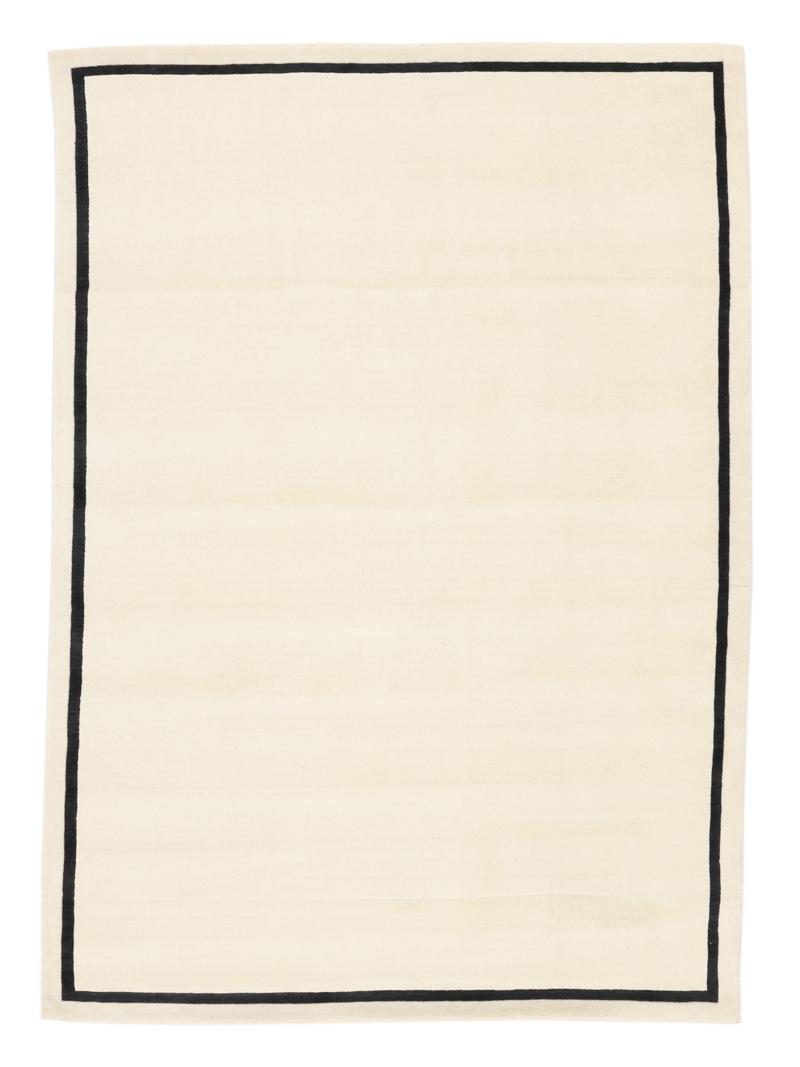
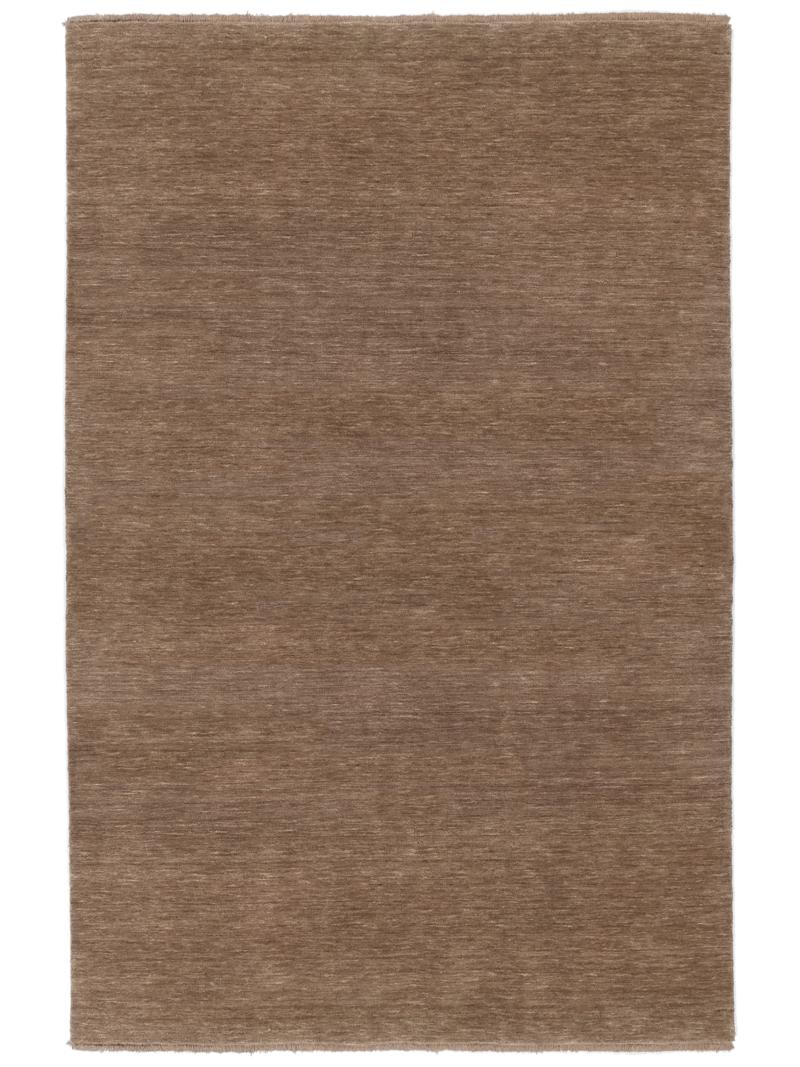
What are handloom rugs? The craftsmanship behind every thread
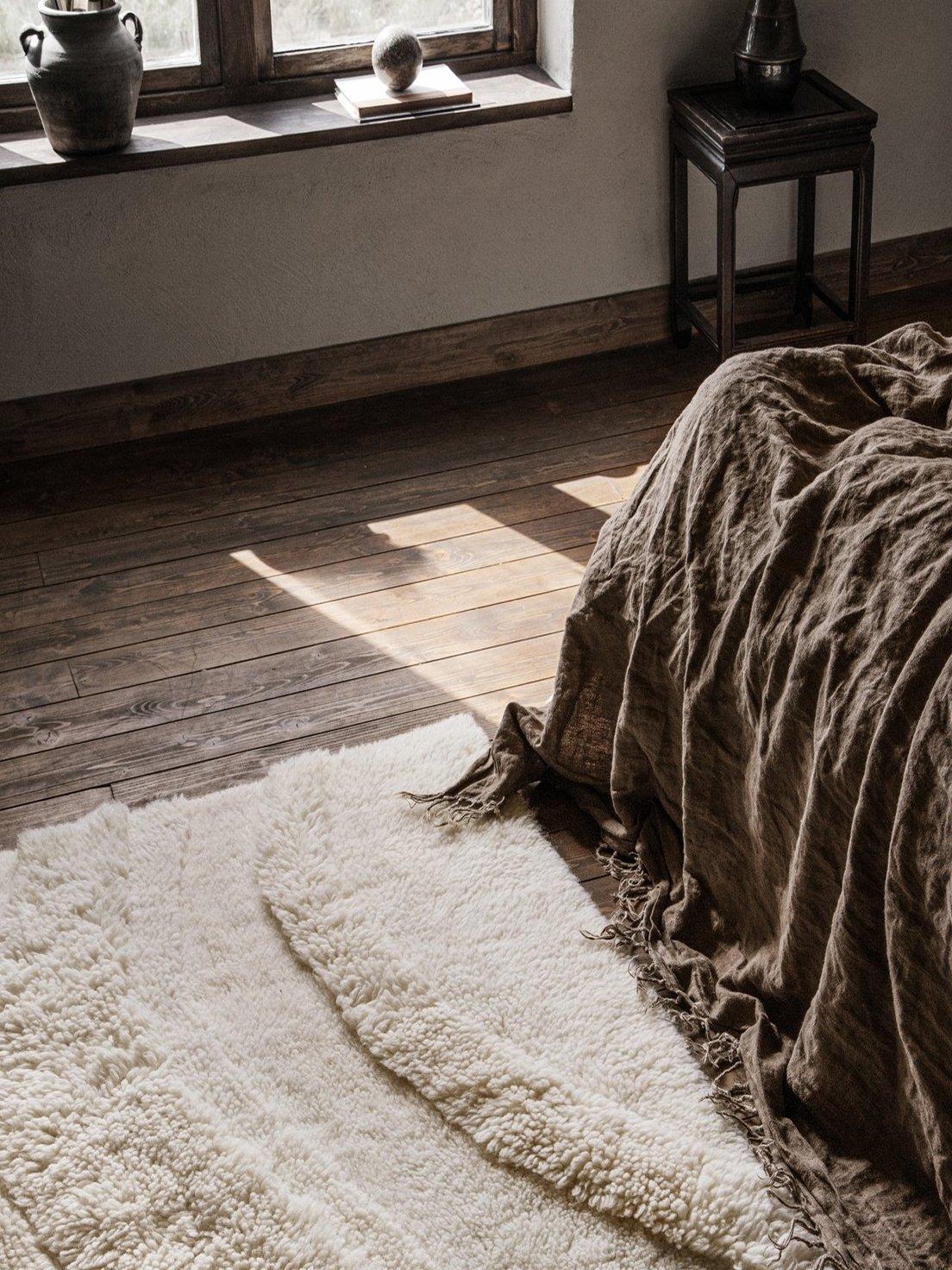
A handloom rug is not simply made; it is built, thread by thread, with skill that takes years to develop. From the spinning of raw yarn to the final shearing of the pile, every stage in handloom weaving is a deliberate act of craft. The result is a rug with genuine character: subtle colour shifts, a living texture, and a presence that is entirely its own.
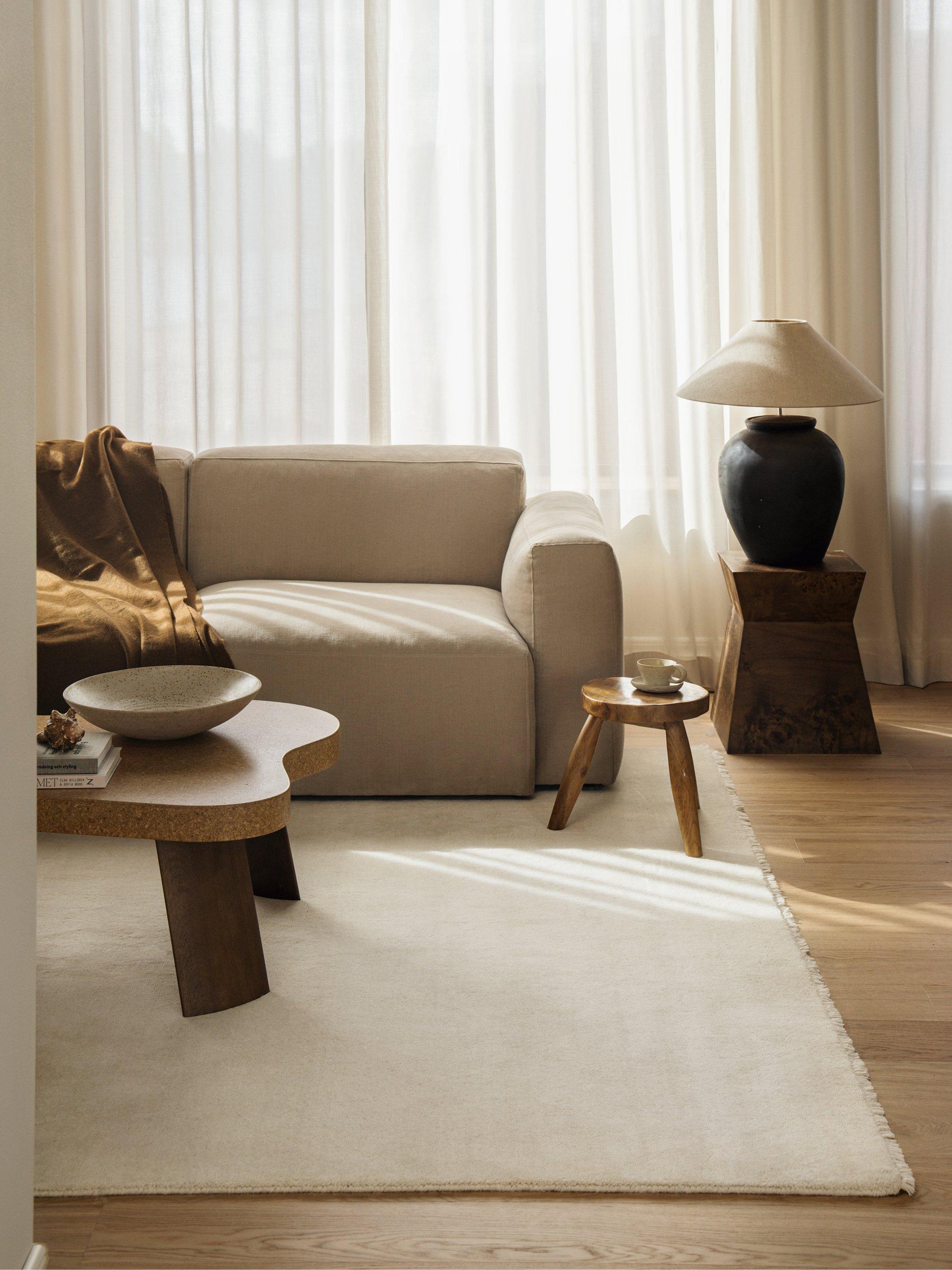
What is a handloom rug?
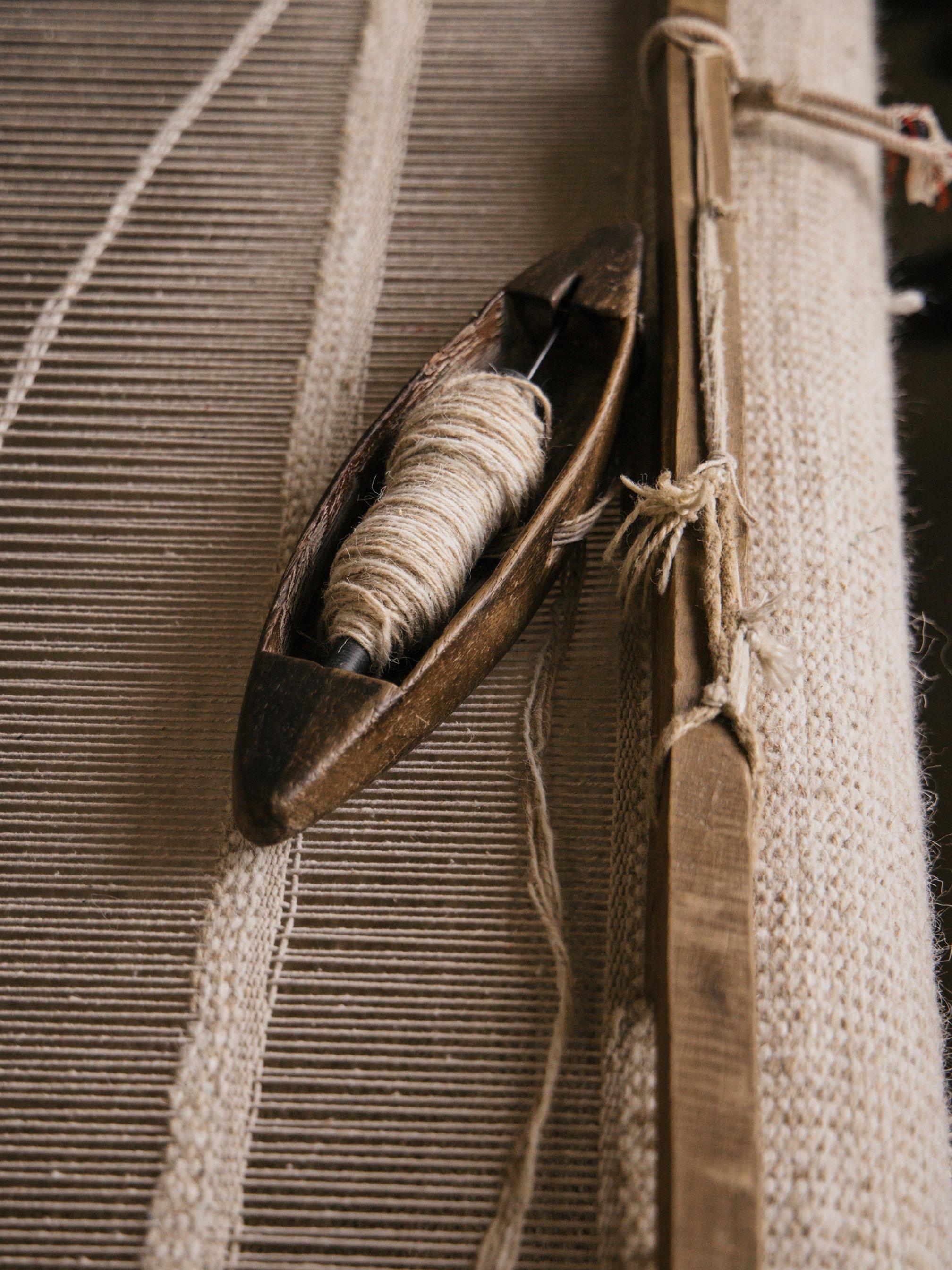
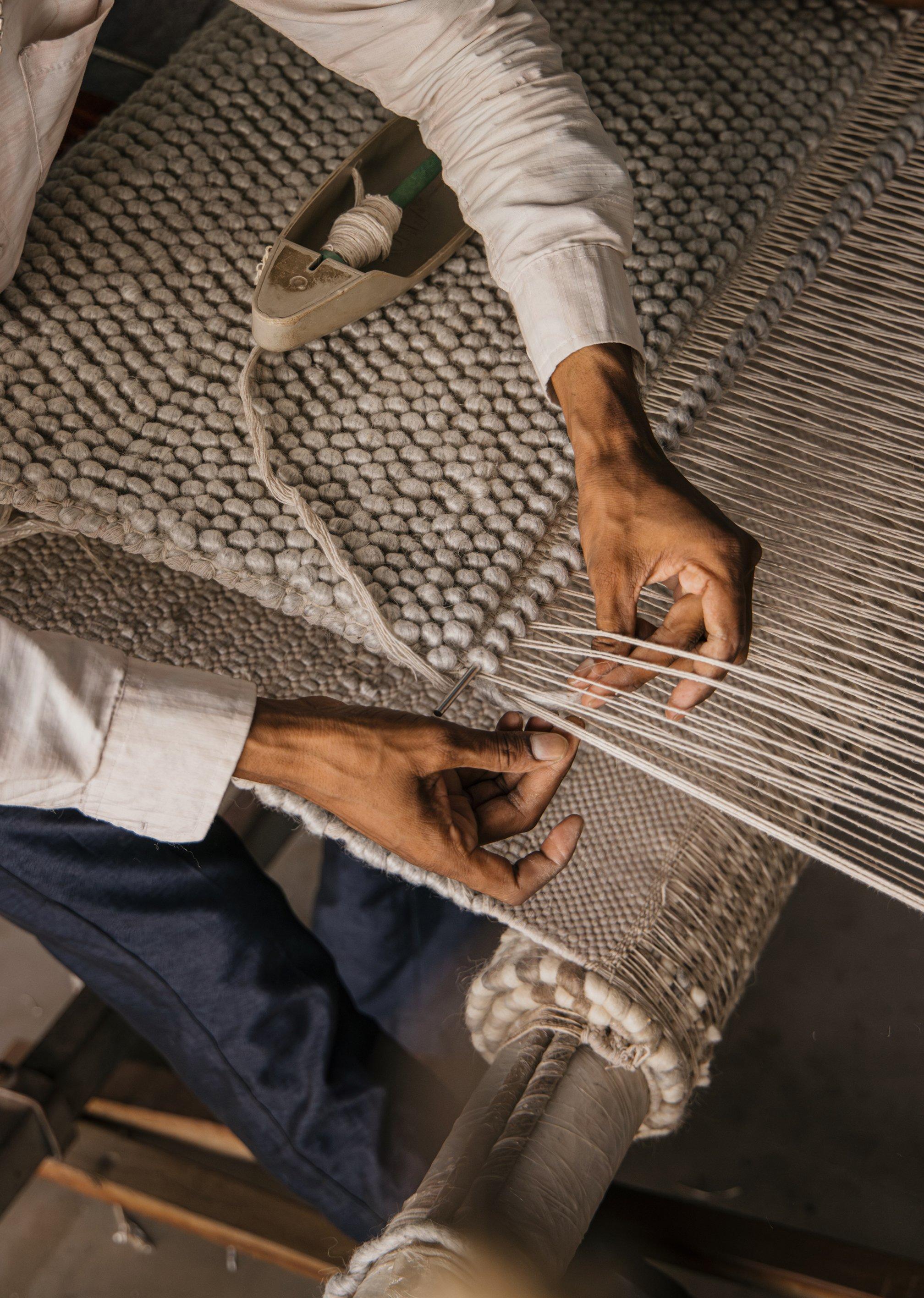
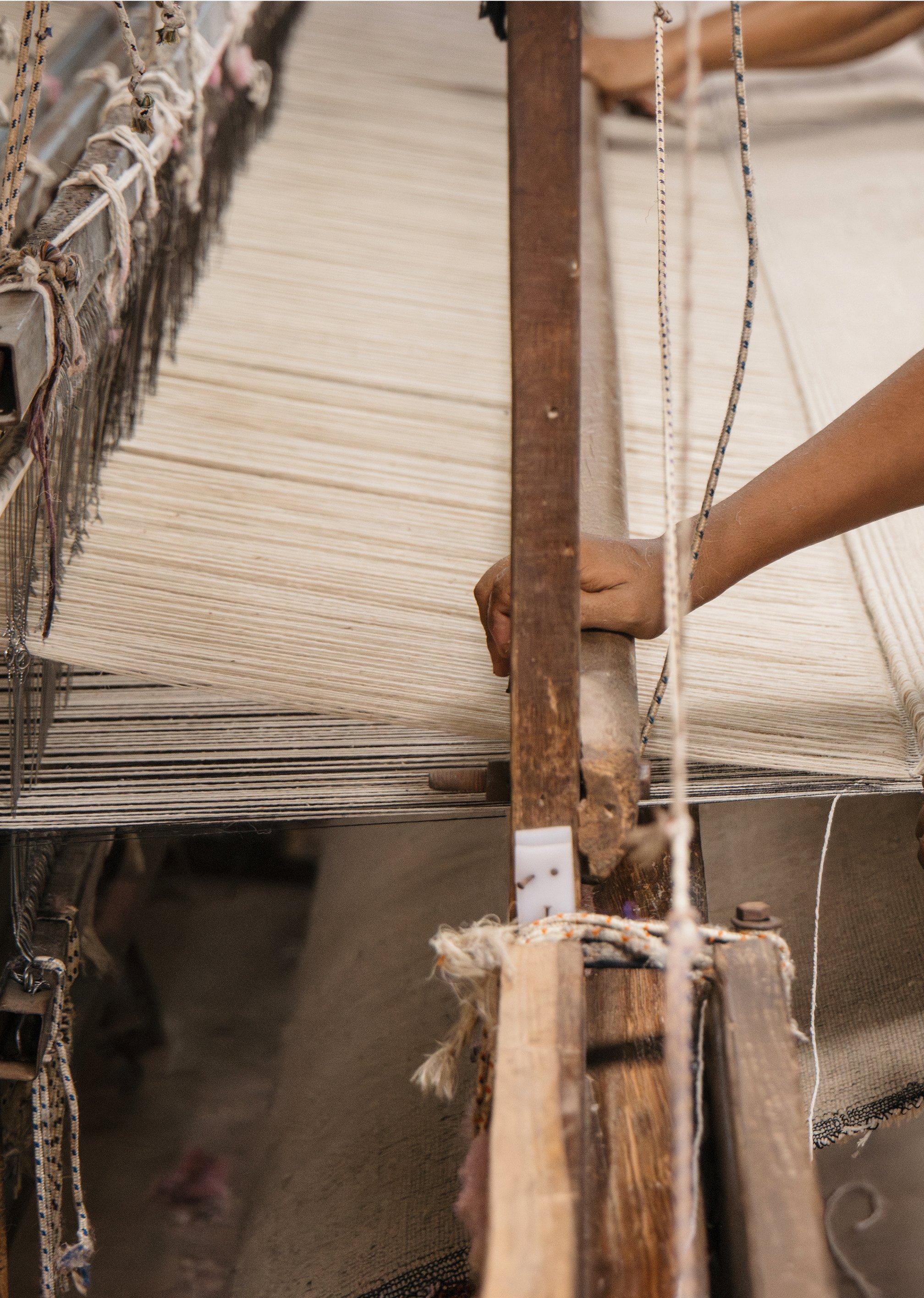
A handloom rug is woven on a manually operated loom, where skilled artisans control every pass of the shuttle and every row of yarn. Handloom weaving depends entirely on human judgement, timing, and touch.
Two things set this method apart from any other:
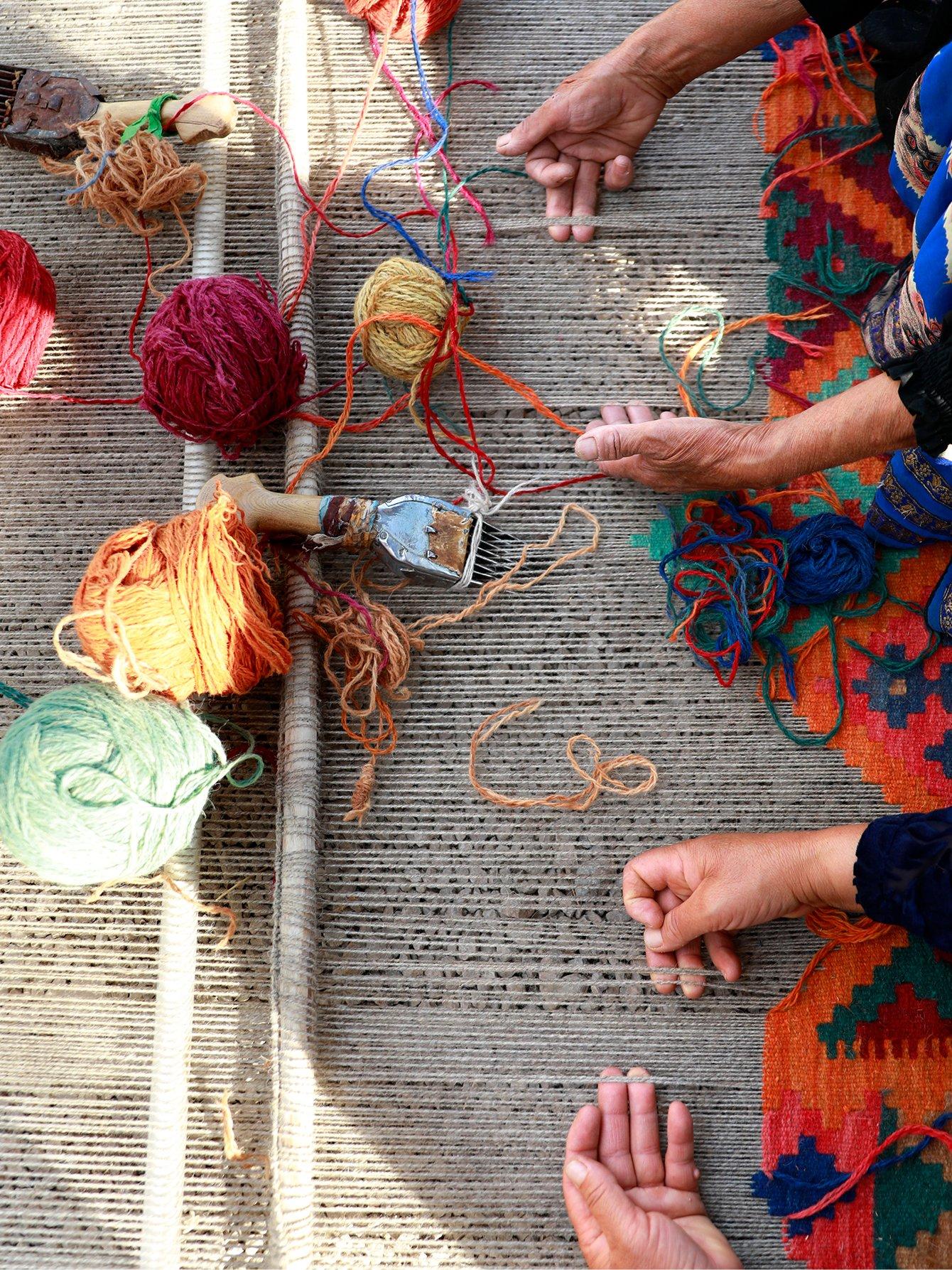
- Handloom fringes and the full woven structure of a rug require several people to manage a single loom, passing bobbins, controlling tension, and weaving in harmony to maintain the consistency of every row.
- No two rugs are identical; the small variations that come from human hands are what give each rug its unique character.
How a handloom rug is made: the full process
Every handloom rug passes through the same sequence of steps. Each one requires skill. None can be rushed.
1. Spinning the yarn
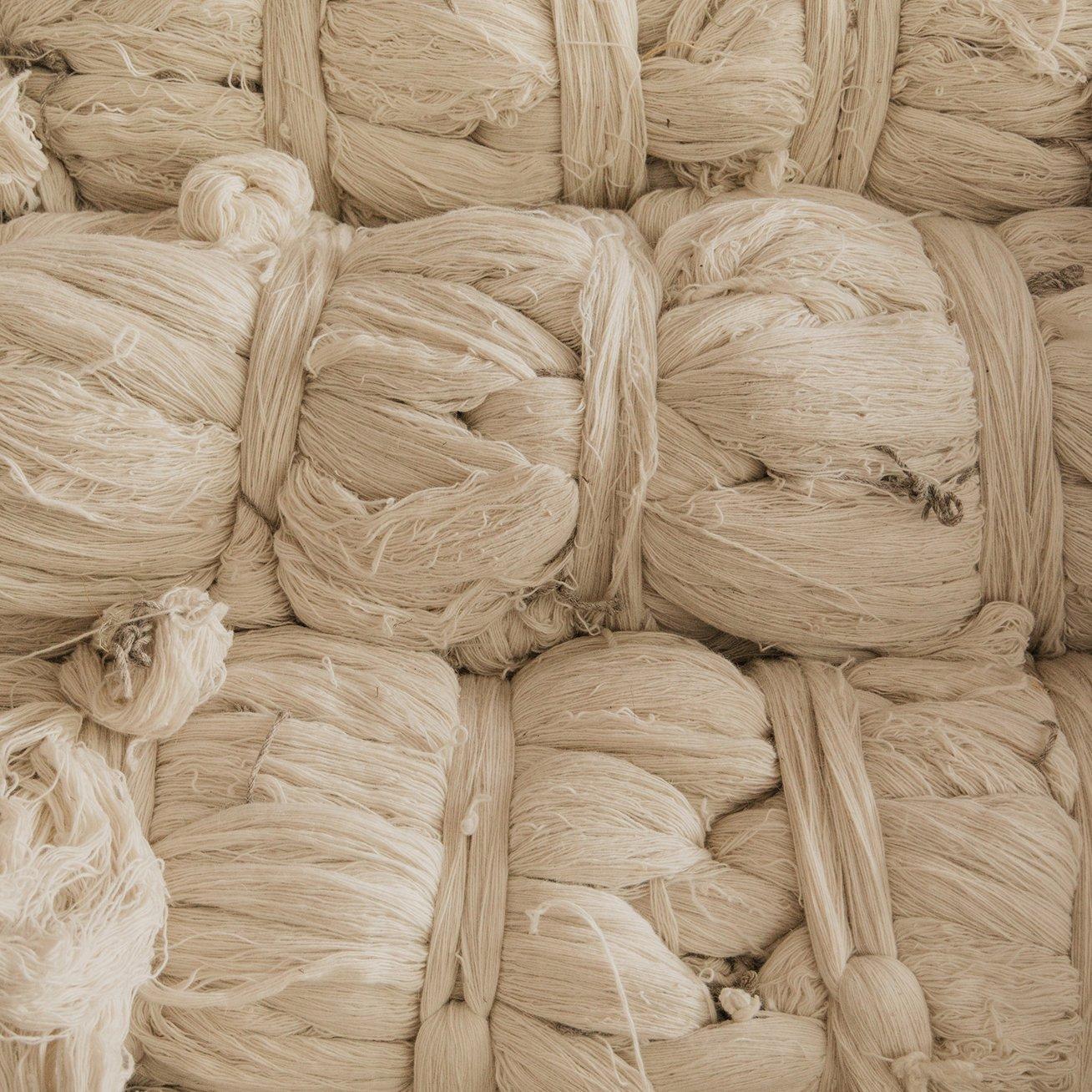
Raw fibre, often used in wool rugs, is cleaned and spun into yarn by hand using traditional spinning techniques. The spinner controls the thickness, twist, and tension of each thread, determining the textural yarn character of everything that follows. This is where artisan yarn craftsmanship begins.
2. Yarn dyeing
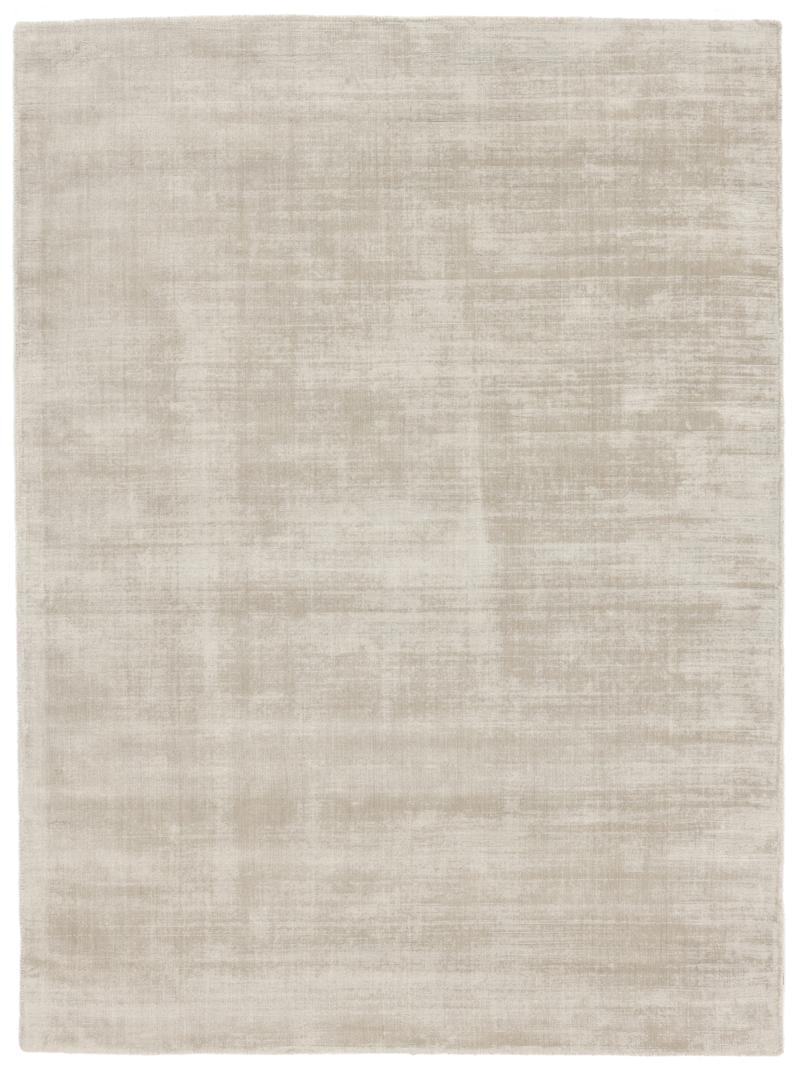
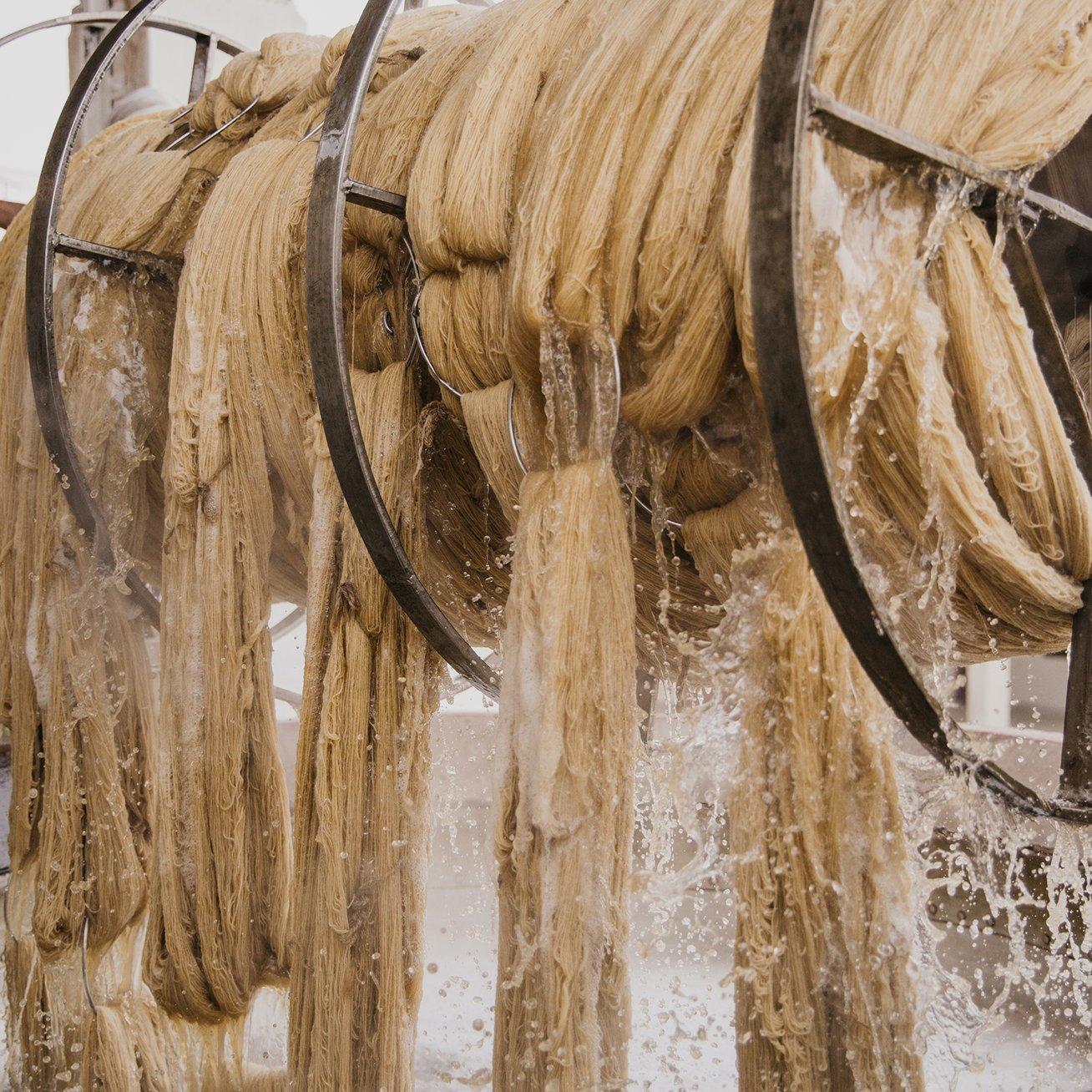
The spun yarn is dyed by hand in batches, submerged and turned in water until the colour is absorbed into the fibres. Because each batch is handled individually, slight tonal differences naturally occur from one coil to the next. This is where the abrash effect begins: those small variations in shade become the organic colour shifts visible across the finished rug.
3. Making yarn coils and preparing bobbins
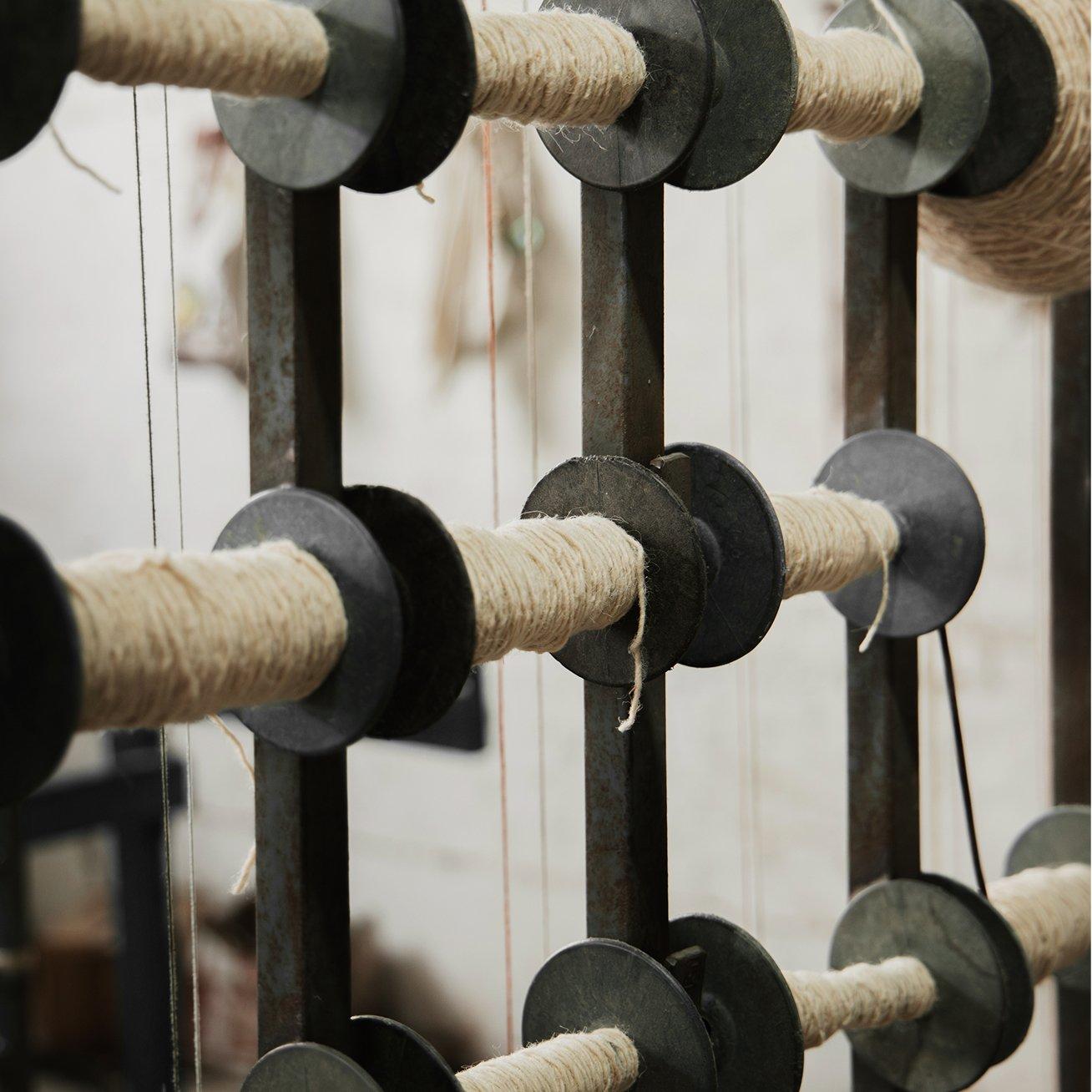
The handspun yarn is wound into yarn coils and loaded onto bobbins, each carefully tensioned before being fitted to the loom. This is also where abrash yarn character begins to emerge: hand dyeing in batches means each coil absorbs dye at a slightly different rate, producing the irregular yarn texture and organic tonal shifts that become the visible melange effect across the finished rug.
4. Loom setup and warp preparation
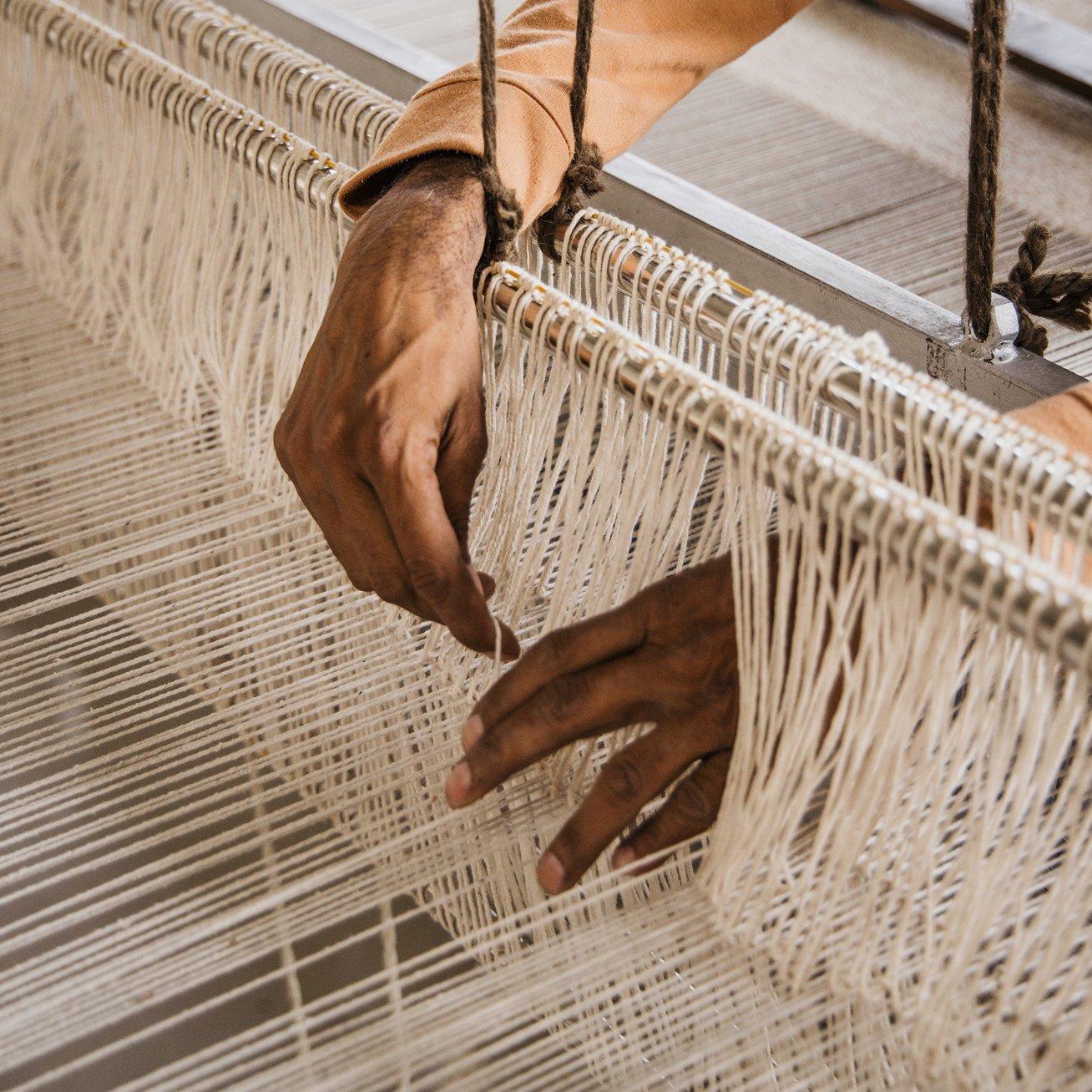
The loom is dressed with warp threads, vertical threads stretched tightly across the frame. Warp preparation sets the foundation for the entire rug: its size, its structure, and how the pattern will develop row by row.
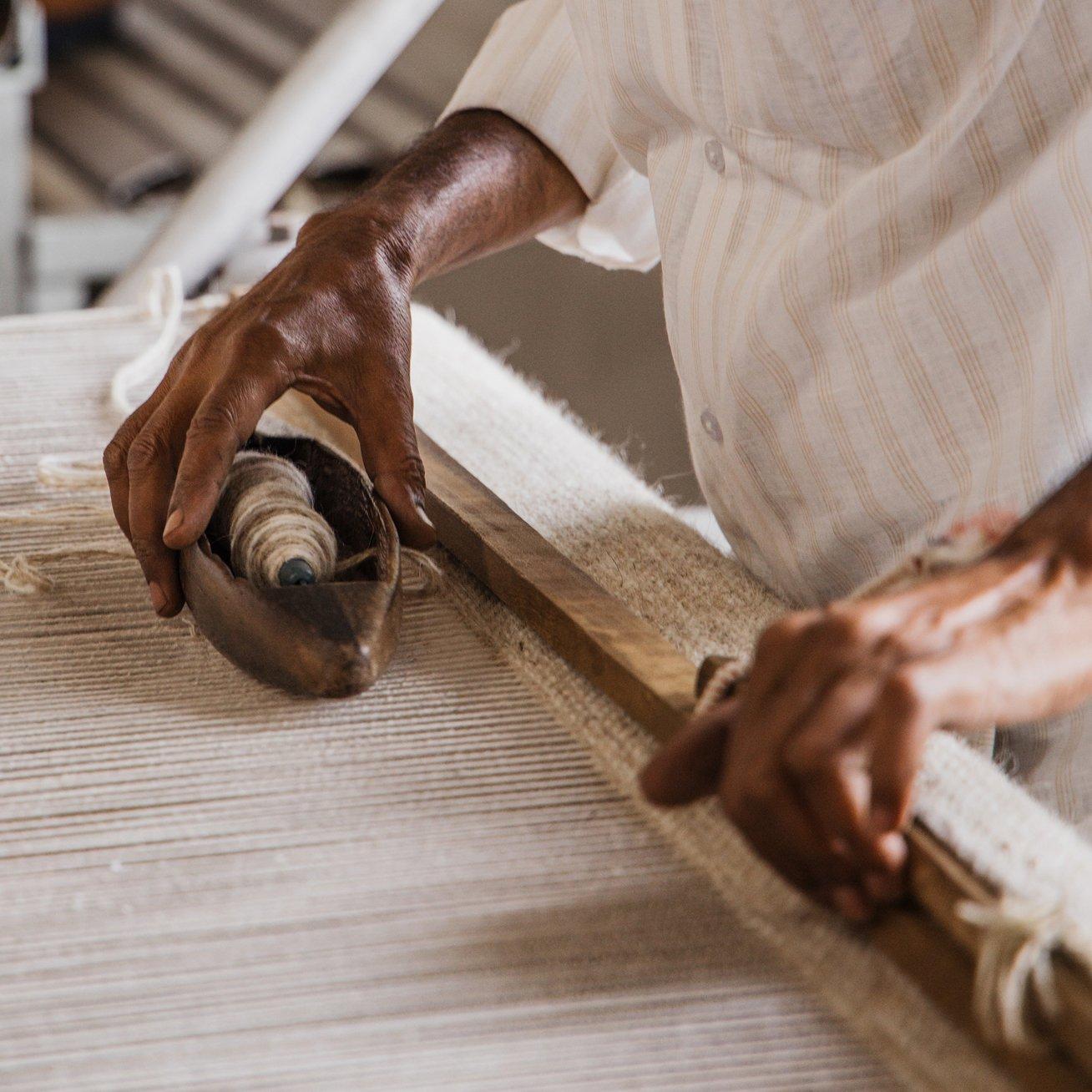
5. Handloom weaving
Weaving begins at the handloom. Using a shuttle weaving tool, skilled weavers pass yarn across the warp threads and beat each row down firmly to build a dense, even structure. This is traditional handloom weaving: slow, rhythmic, and entirely controlled by hand. Two construction methods are used — pile weaving, which builds a soft raised surface, and flatweave construction, which creates a thinner, more durable rug with no pile.
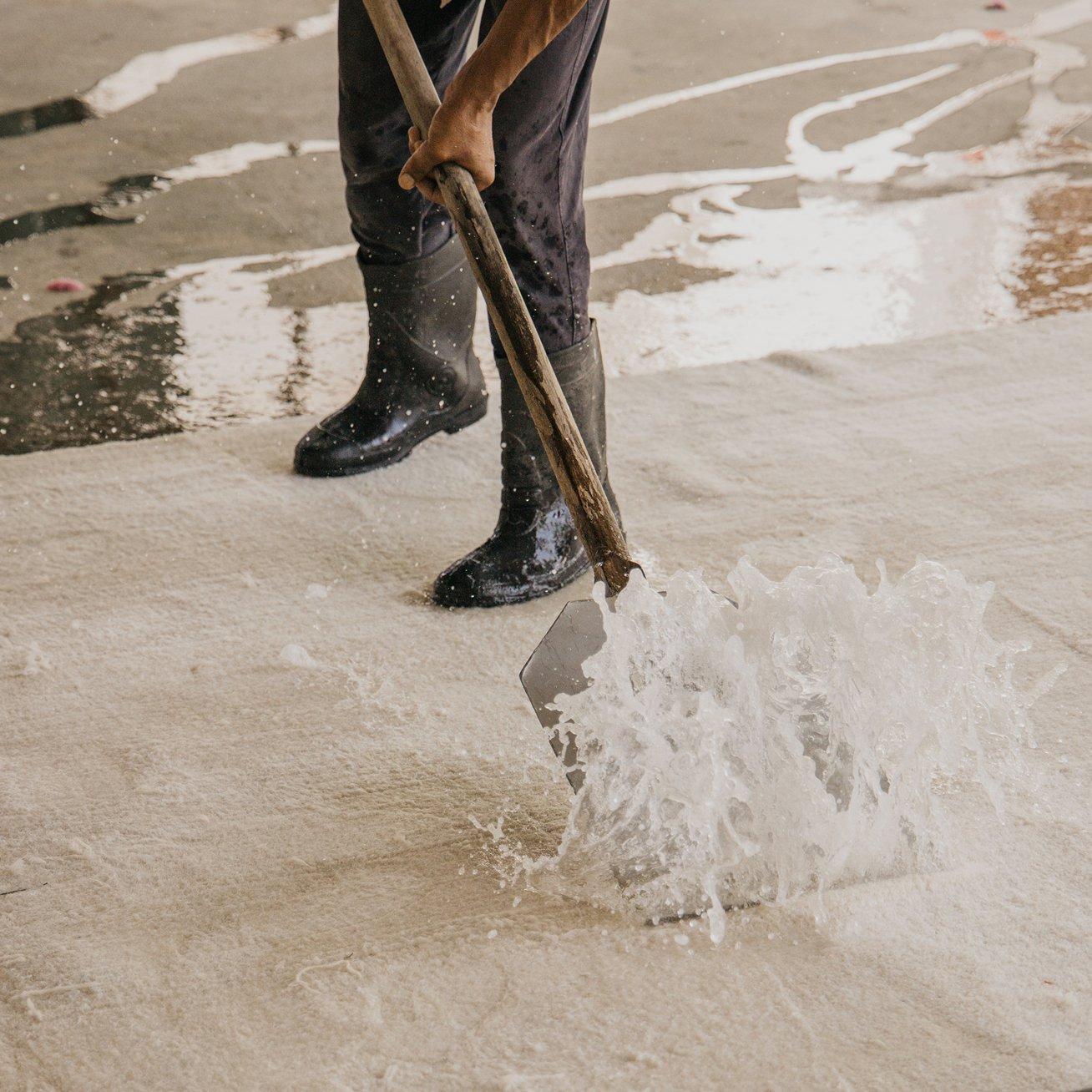
6. Washing and sun drying
Once woven, the rug is thoroughly washed to remove impurities and excess dye — this is the moment the colours truly come to life, vibrant and settled properly into the fibres. It is then laid flat to dry naturally in open air and sunlight, which sets the colours and softens the fibres in ways that mechanical drying simply cannot replicate.
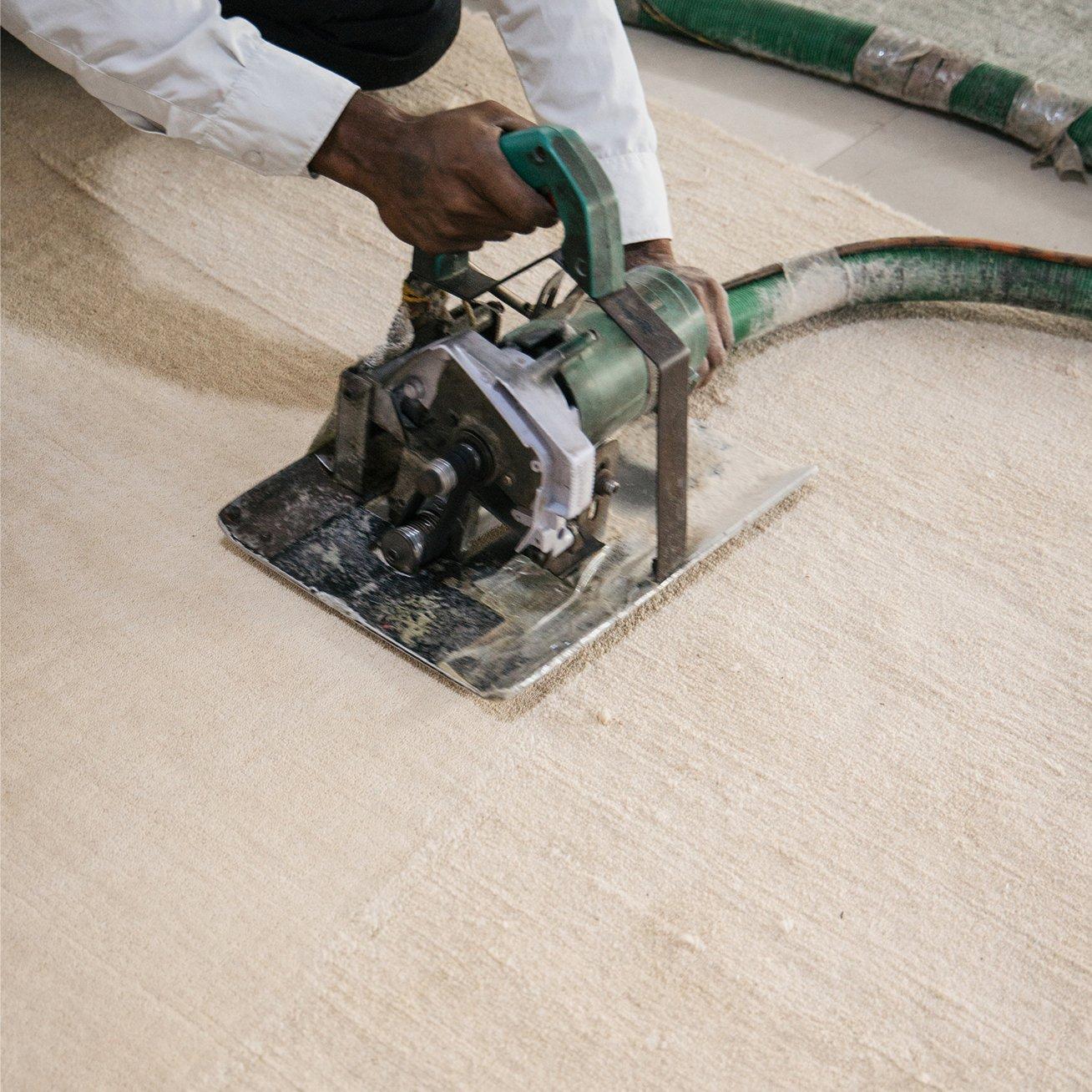
7. Shearing
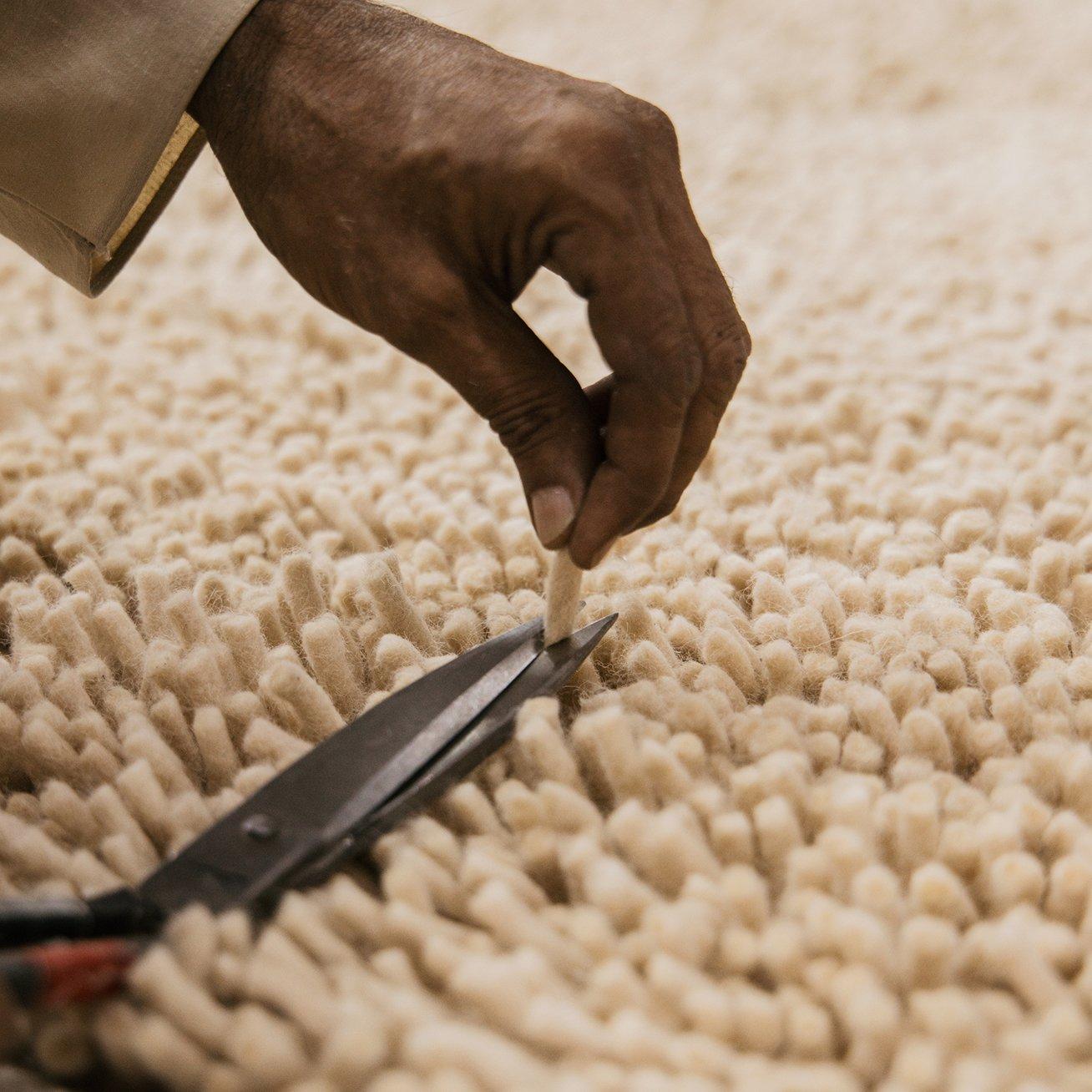
Excess fibres are carefully shaved from the surface to produce a smooth, even pile height. Precise fringe cutting and surface trimming require a steady hand and a trained eye, cut too deep and the pattern is damaged; too shallow and the surface remains uneven.
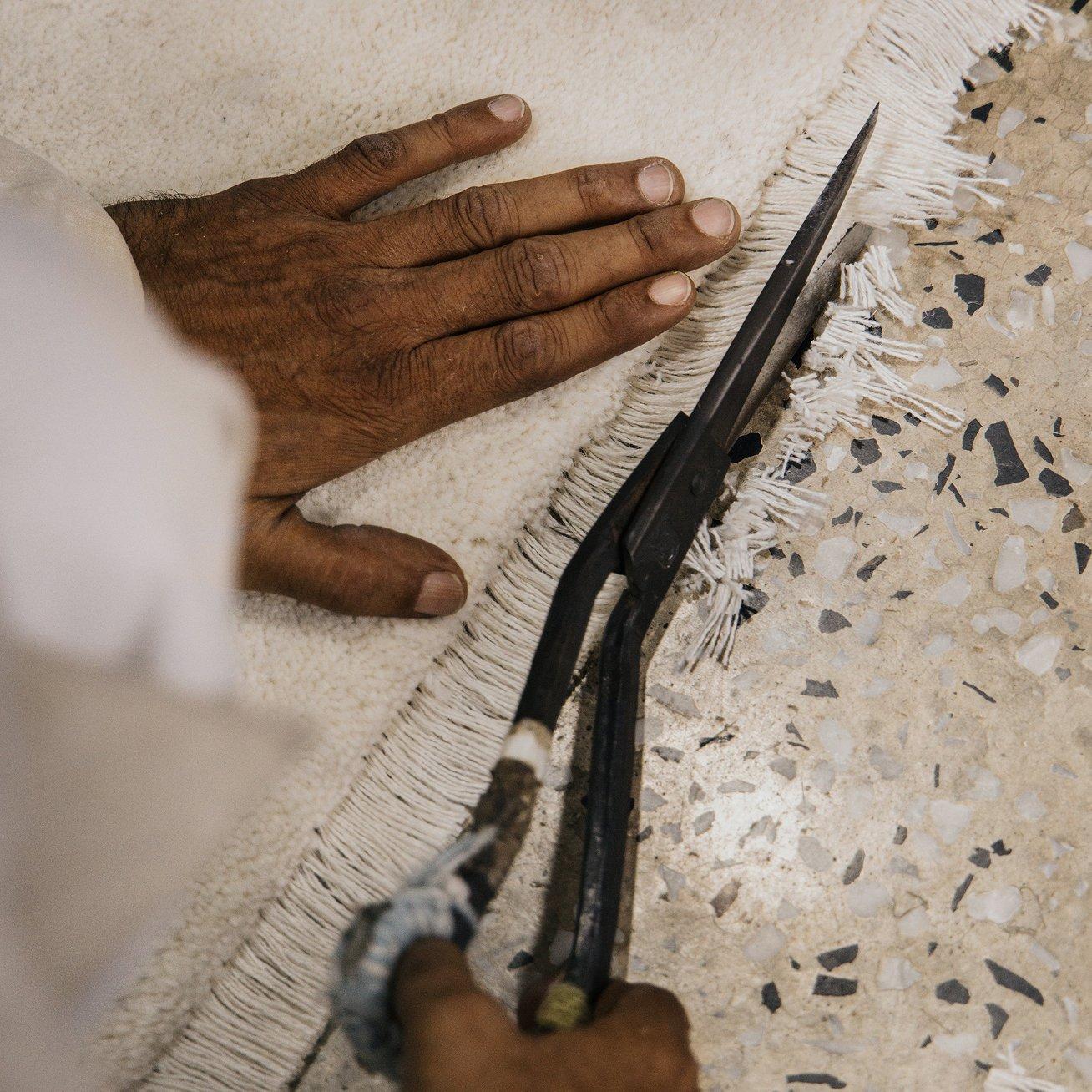
8. Fringe knotting and cutting
Artisans knot the fringes by hand, securing the warp ends to prevent unravelling and creating a traditional finish that is as functional as it is beautiful. Once knotted, the fringes are carefully cut to an even length, a precise final touch that gives the rug its clean, considered edge.
9. Final shaping and finishing
Once weaving is complete, the rug goes through a series of finishing steps. It is stretched on a frame to correct any distortion that developed during weaving, ensuring it lies flat and holds its shape. Finally, edges and grip points are finished by hand, giving the rug clean lines and a secure feel underfoot.
What makes a handloom rug unique in your home
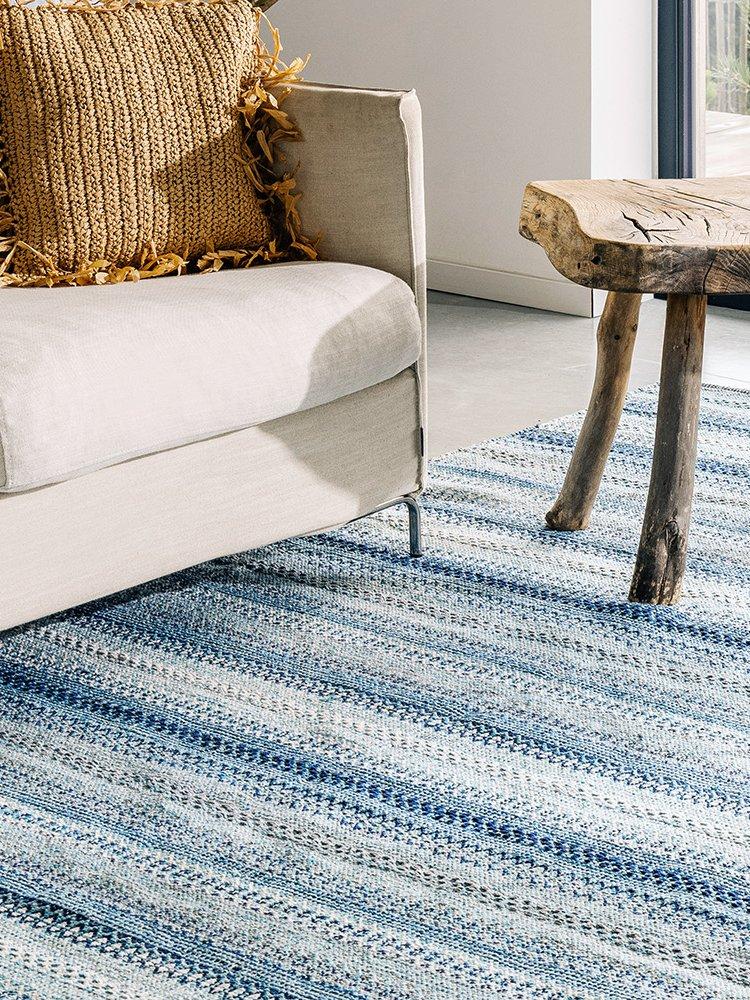
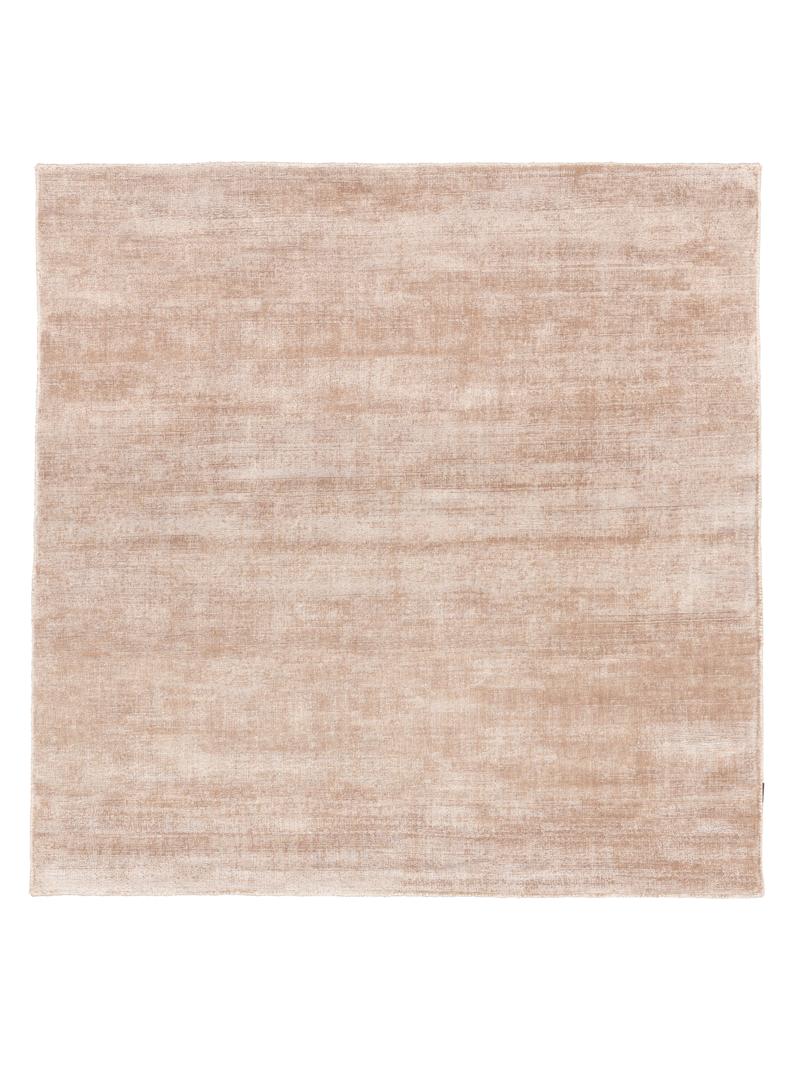
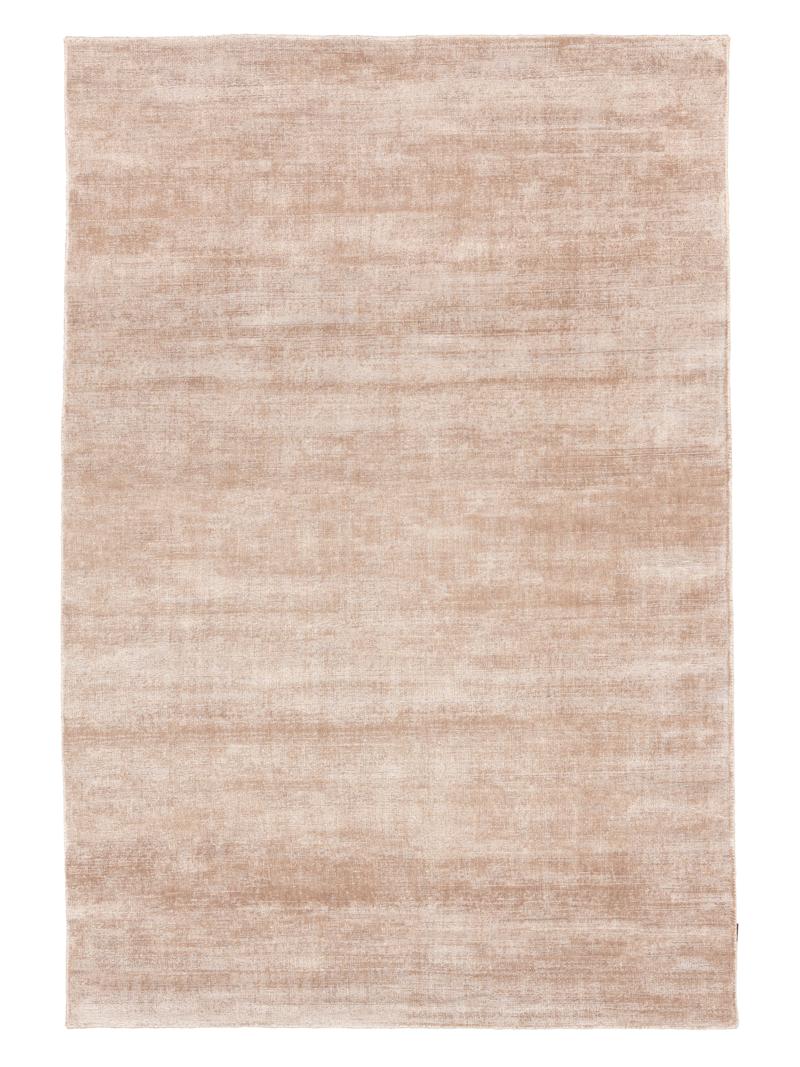
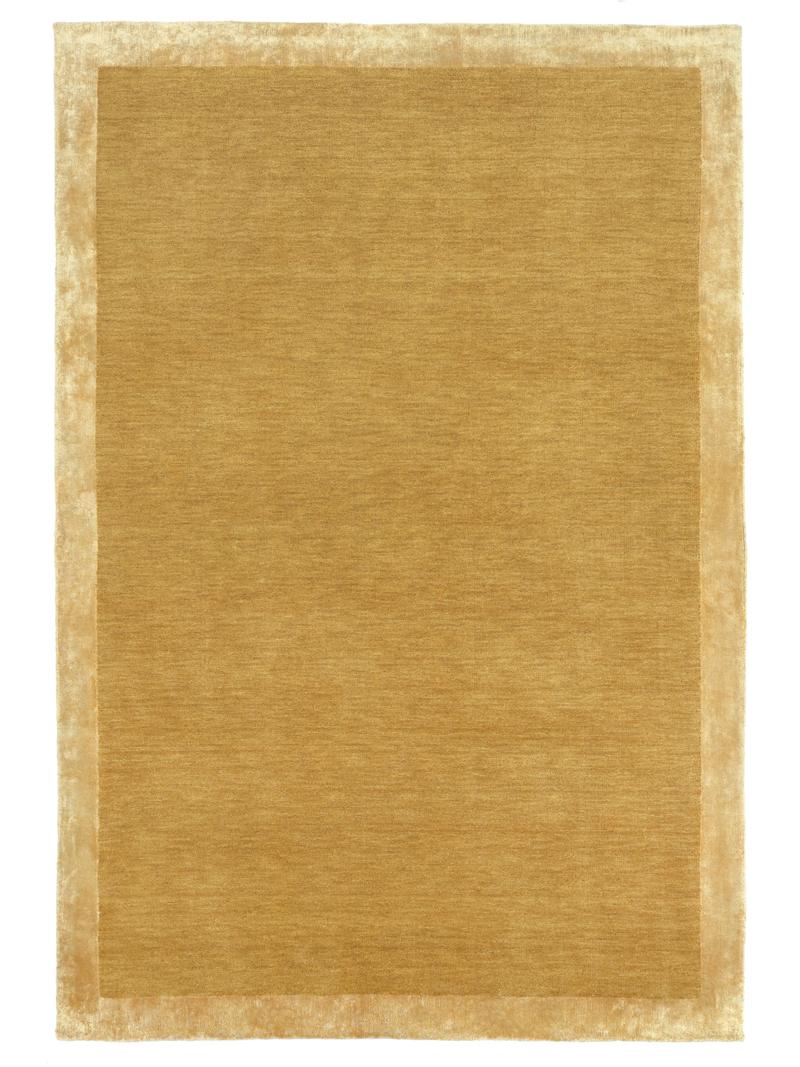
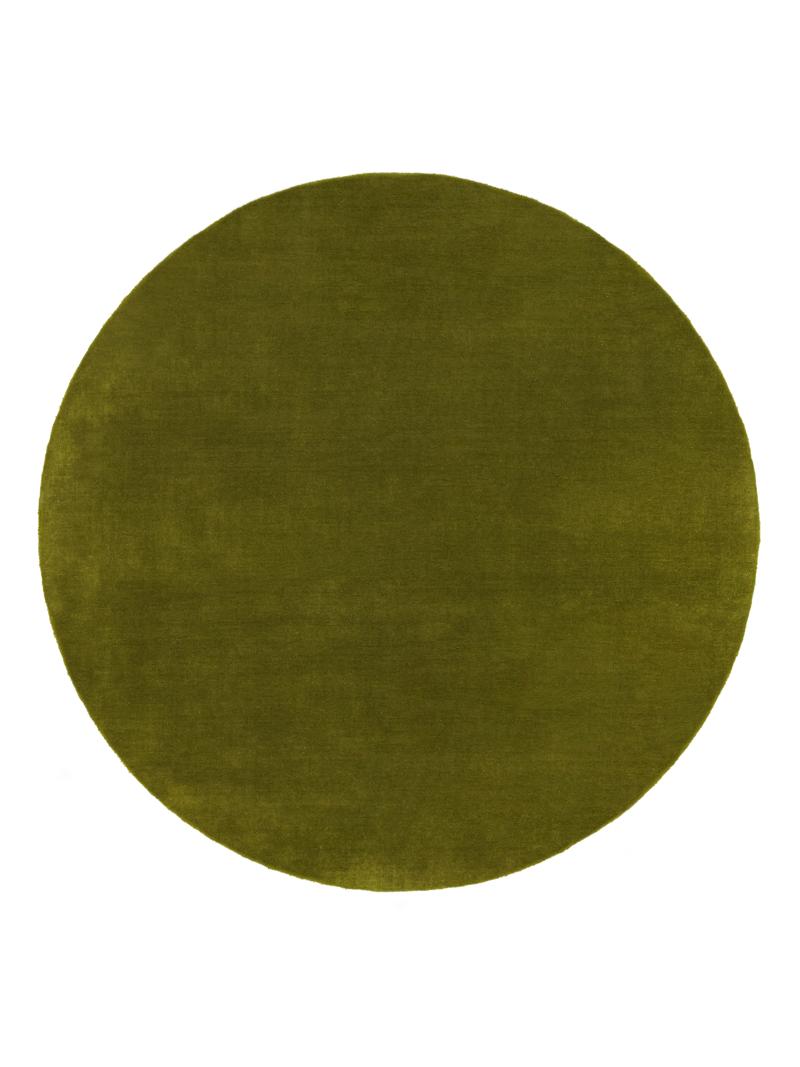
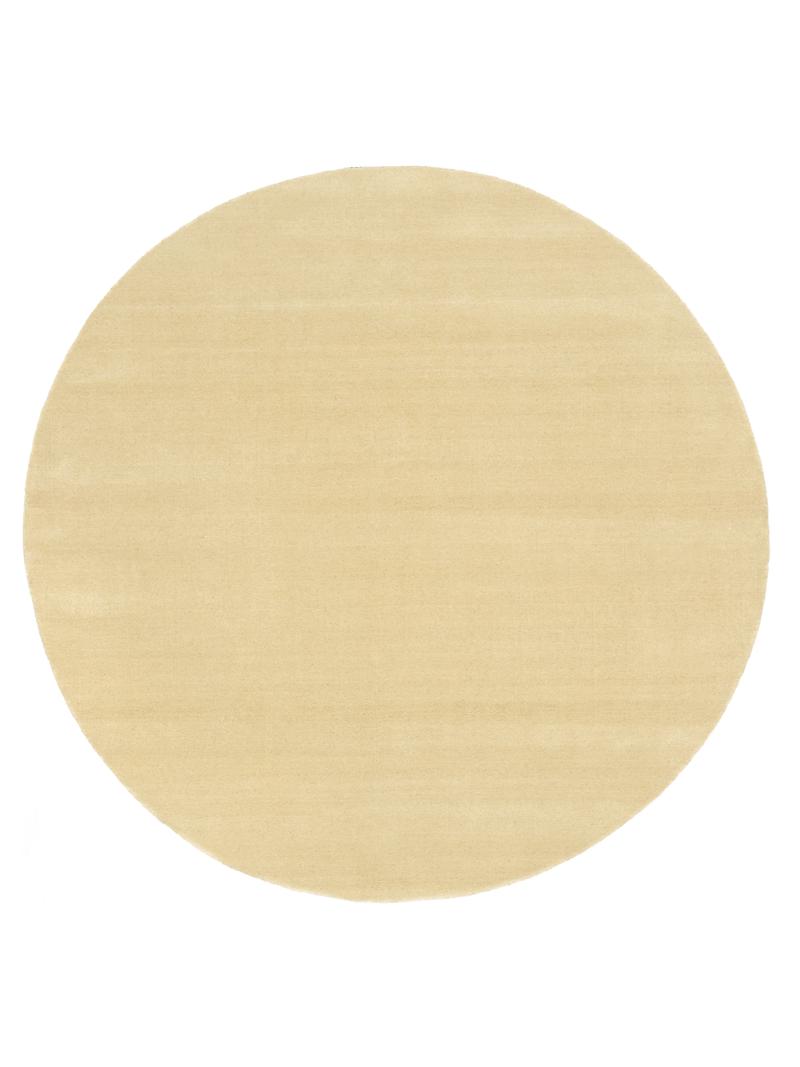
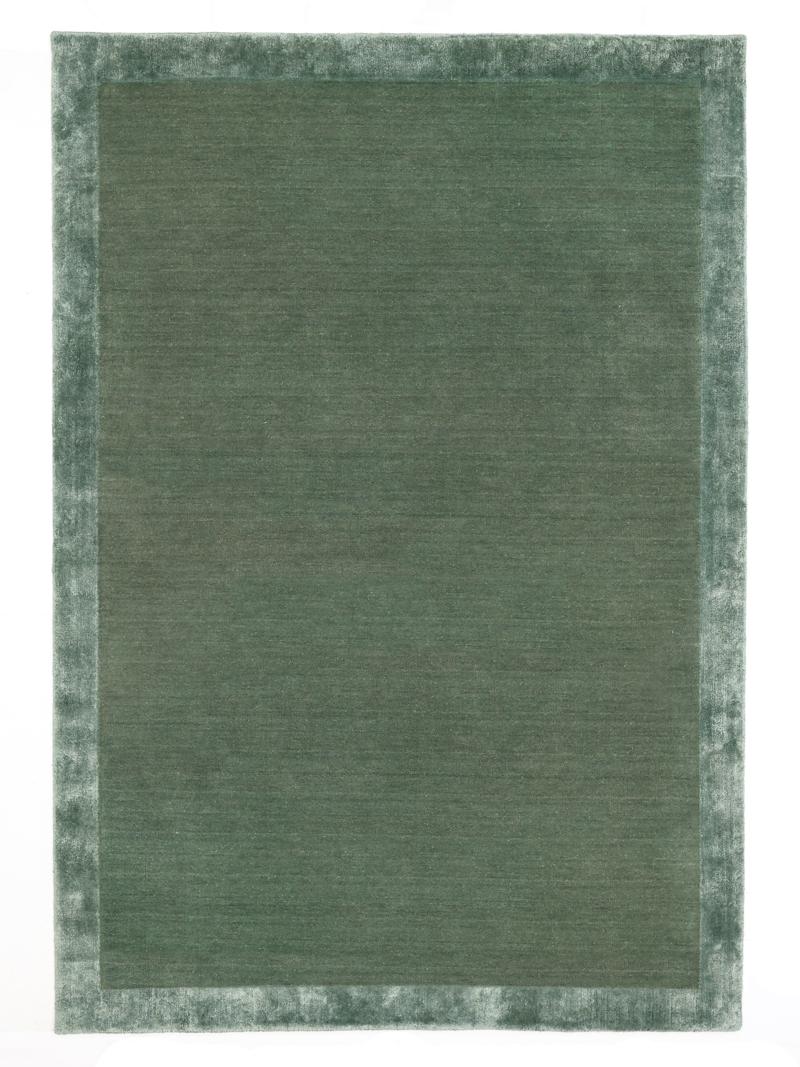
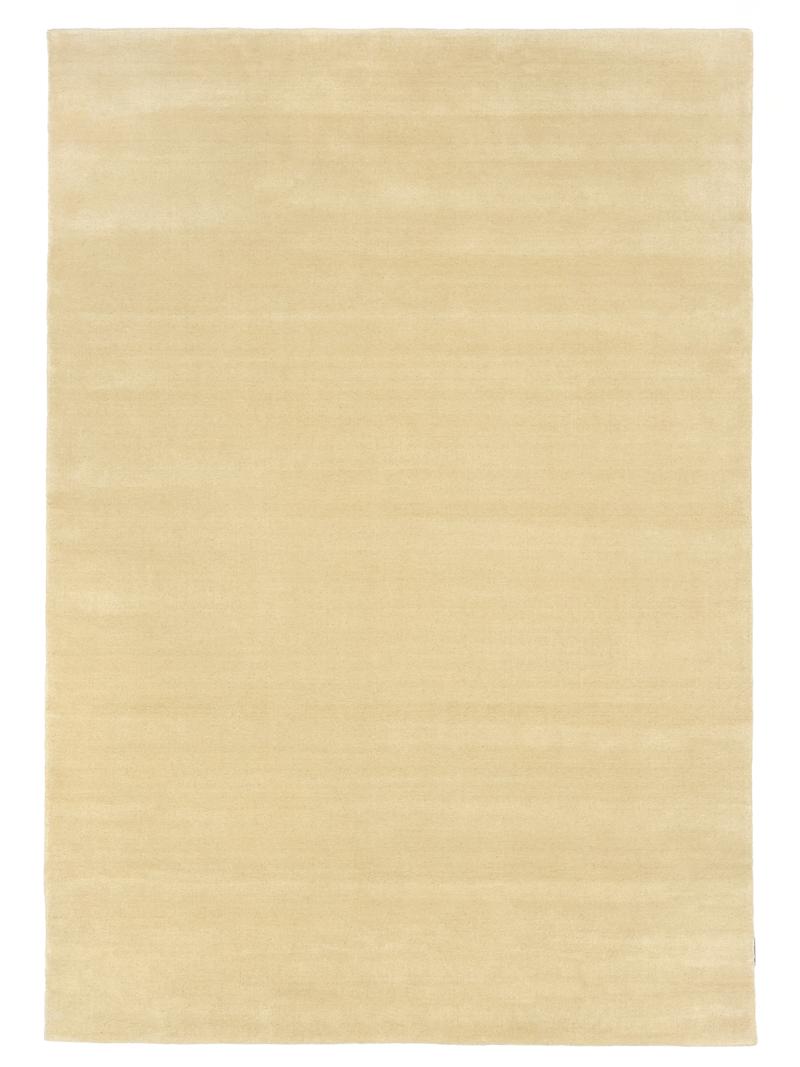
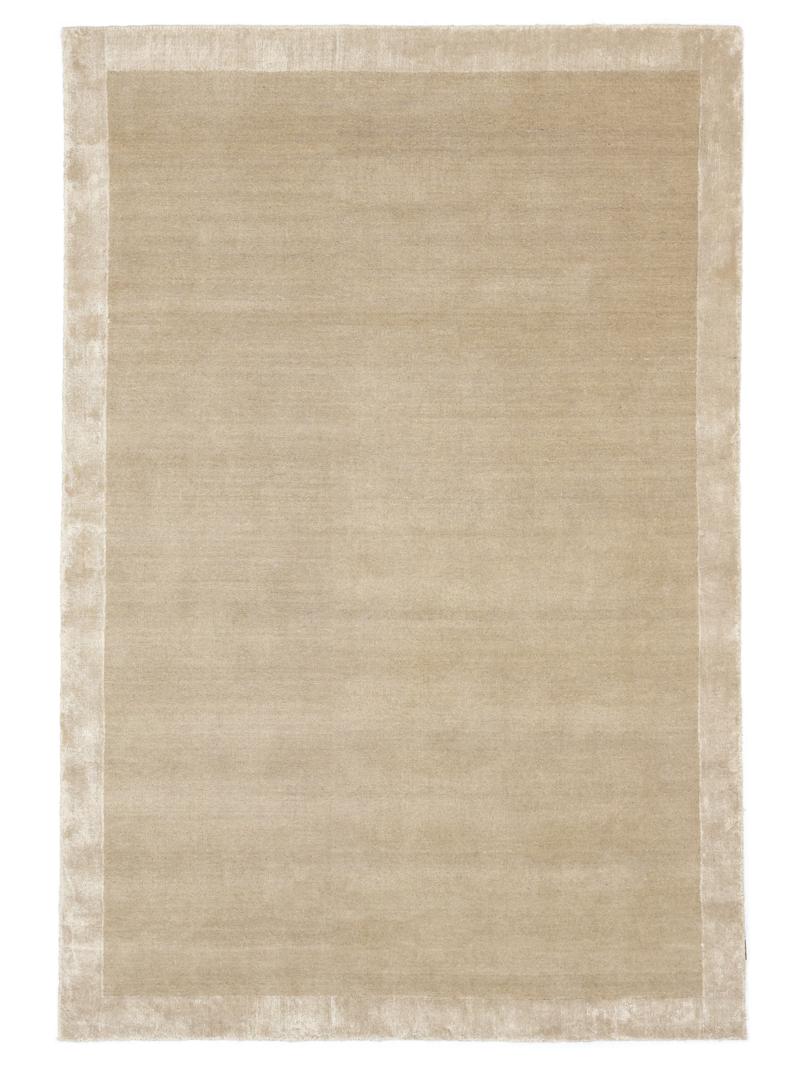
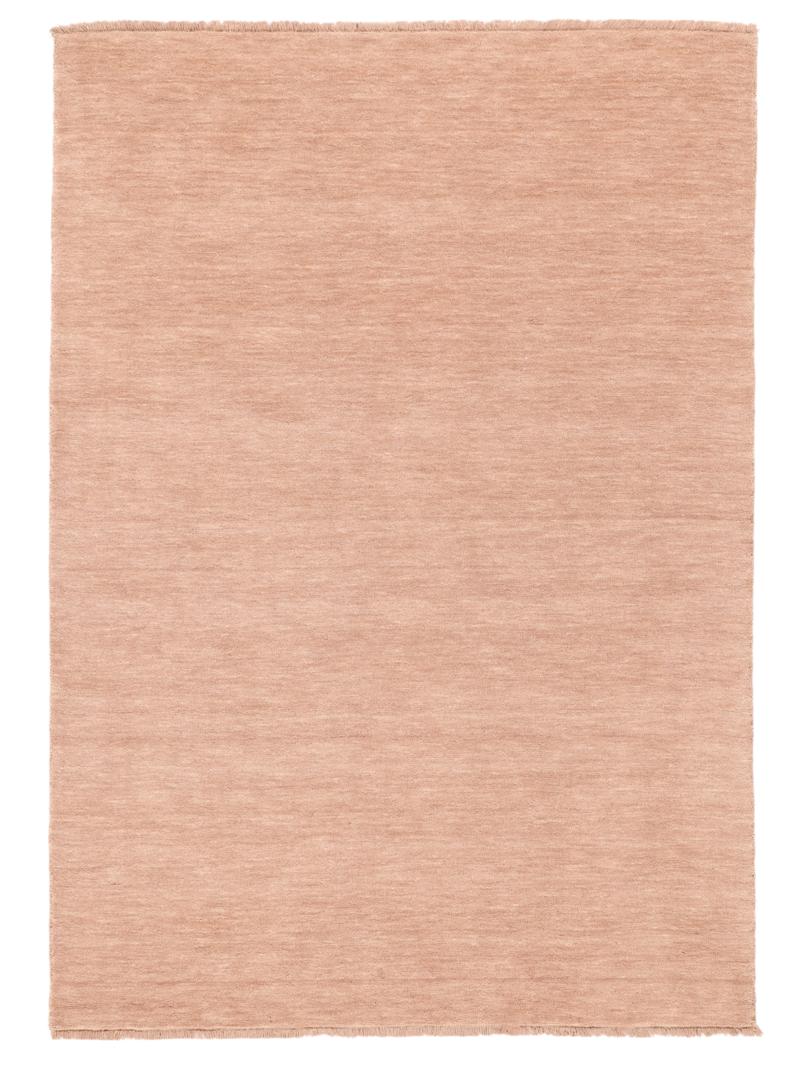
Handloom rugs carry the evidence of how they were made. The visible melange effect, those gentle, natural colour shifts caused by abrash yarn character, means that no two rugs from the same design are ever quite identical. The soft woven texture, the hand-finished details, and the irregular yarn texture are all evidence of the craft behind every piece.
Texture and comfort underfoot
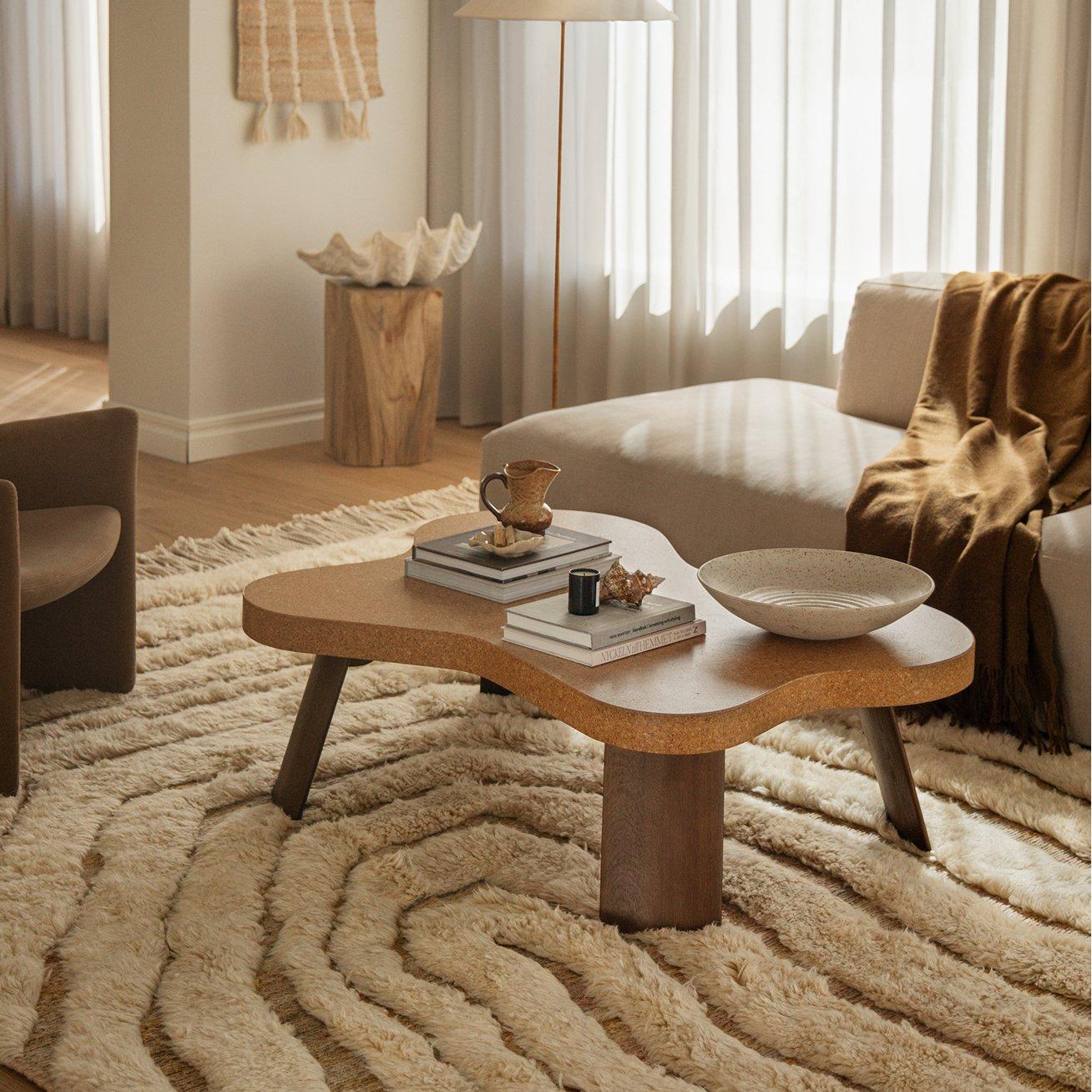
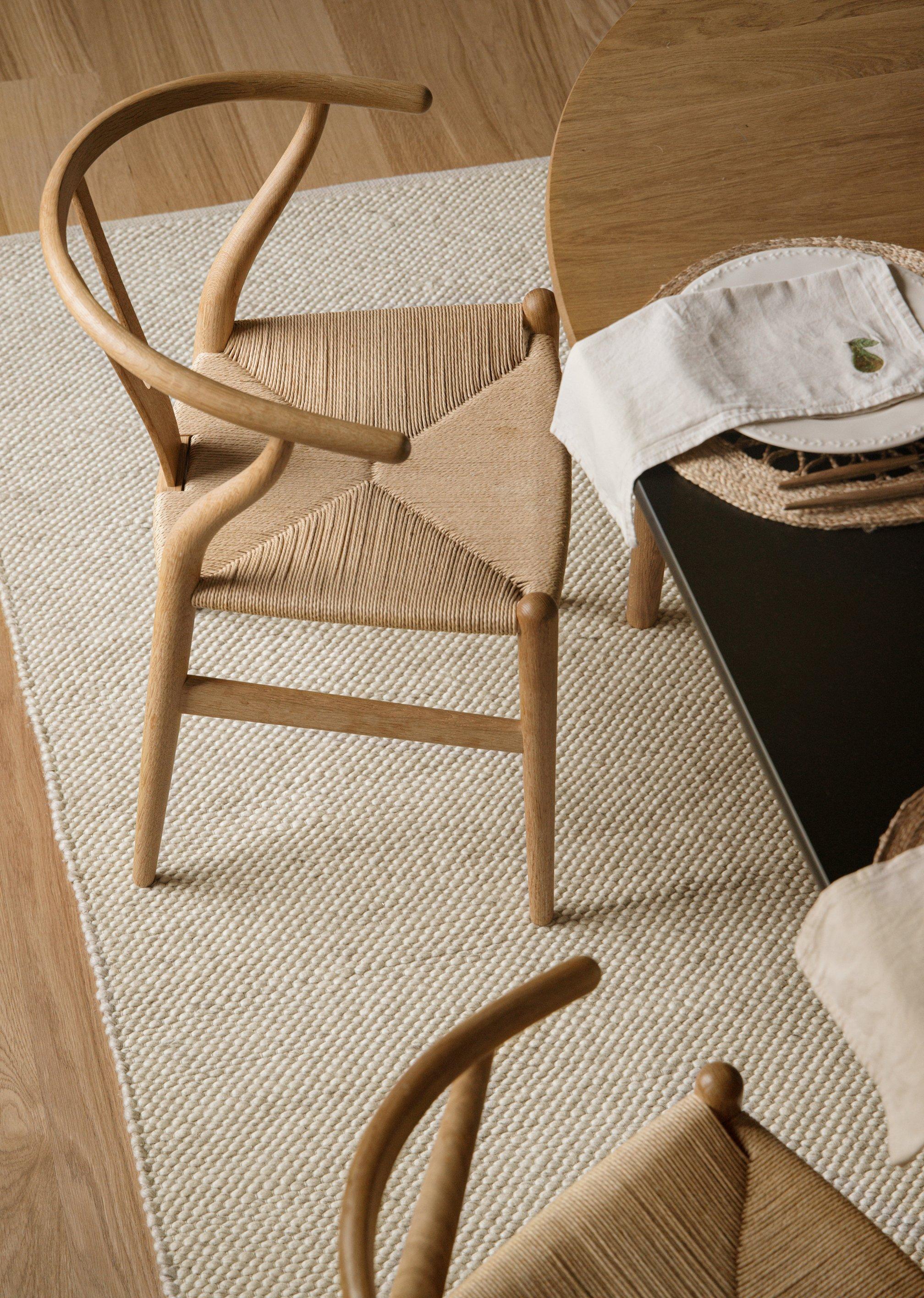
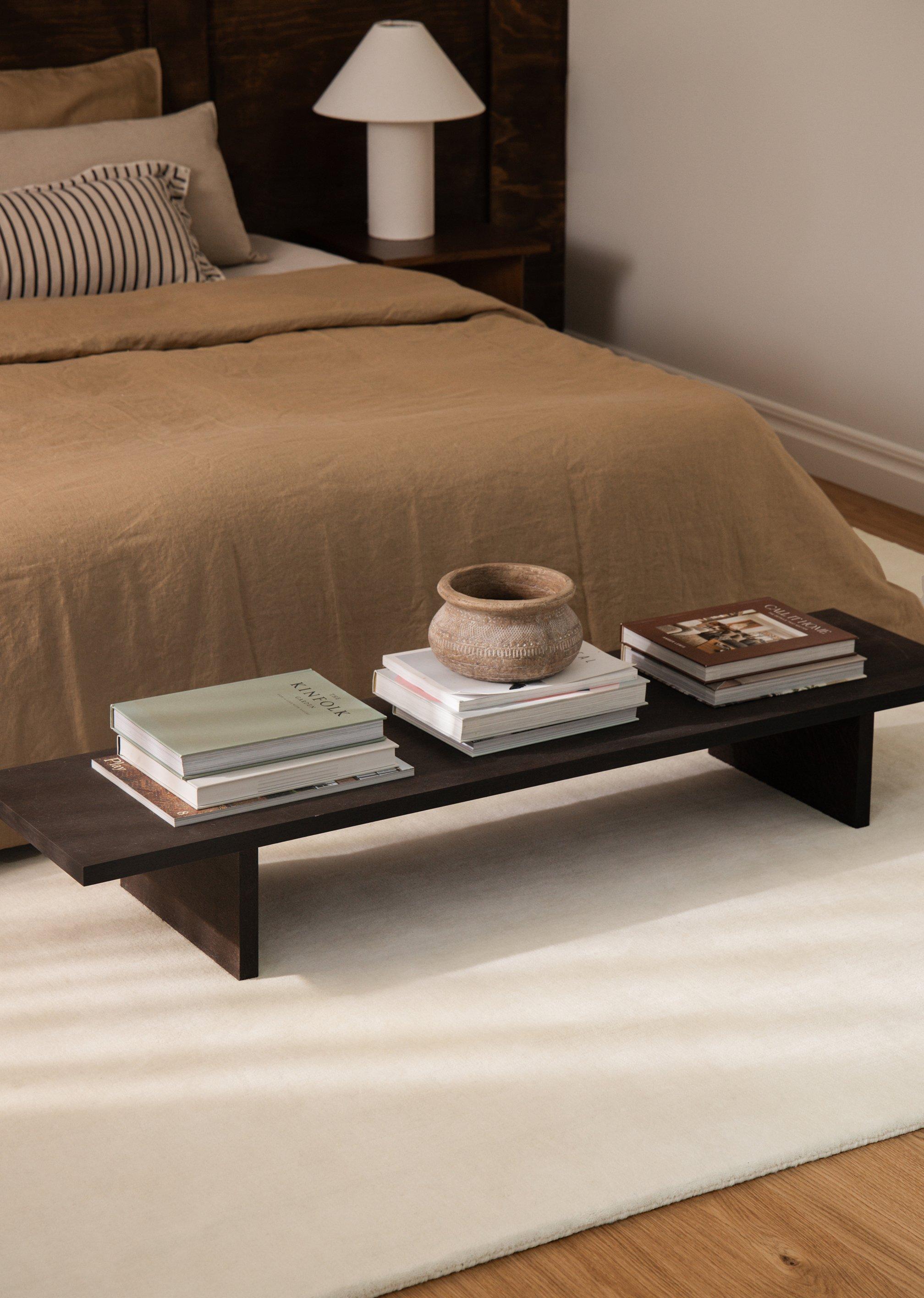
Pile weaving creates a soft, raised surface with tactile depth, well suited to living rooms and bedrooms where texture and warmth underfoot matter most. Flatweave construction produces a thinner, more durable rug that works equally well in hallways and everyday spaces.
Natural variation and handmade character
Because the yarn is hand-dyed in batches, each rug develops its own tonal identity. Organic colour shifts, irregular yarn texture, and the abrash effect mean that no two handloom rugs are ever completely identical, even within the same design.
Woven by hand, built to last
From the first pass of the shuttle to the final hand-finished details, every handloom rug carries the visible marks of skilled artisan weaving and careful craftsmanship. Browse our full range of large rugs for living rooms or explore styles suited to narrower spaces with our hallway runners.
Handloom vs other rug types
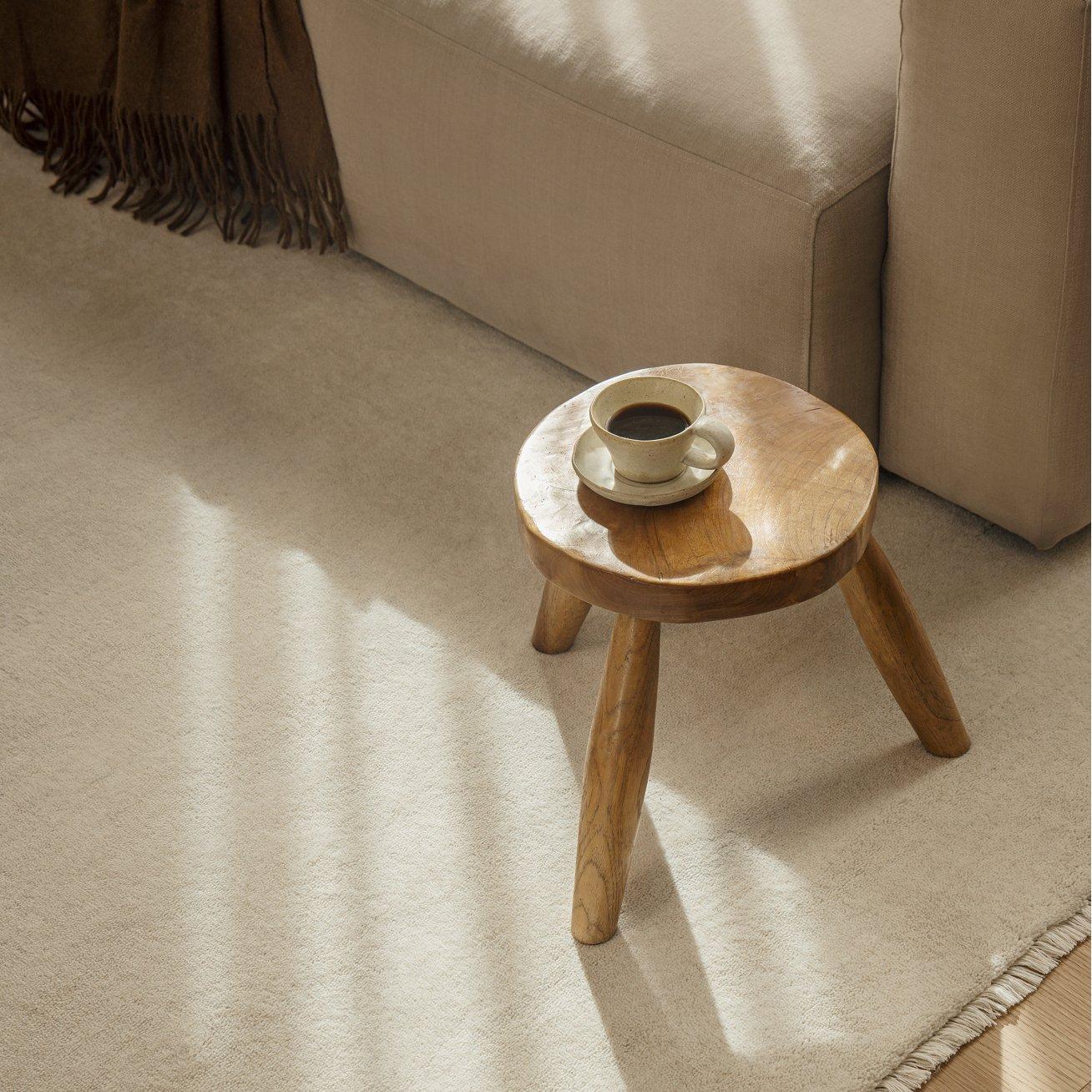
Handloom rugs
- Woven by hand on a loom; production takes days to weeks
- Pile or flatweave construction with natural abrash colour variation
- Mid-range price point; lower than hand-knotted, higher than machine-made
Hand-knotted rugs
- Each knot is tied entirely by hand; production takes months to years
- Dense pile construction with intricate detailing and natural variation
- Premium price point reflecting the time and skill involved
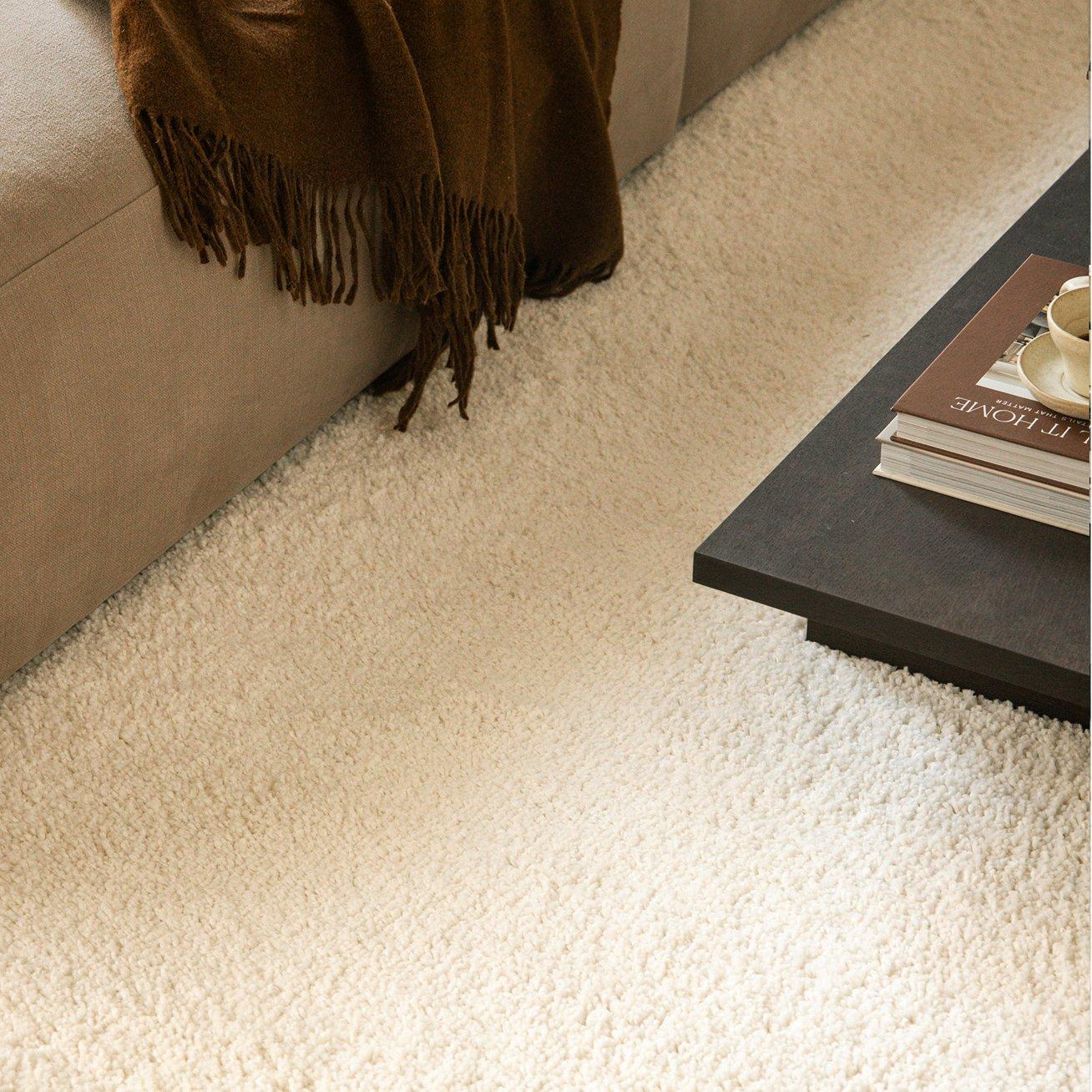
Machine-made rugs
- Fully automated production with consistent, uniform construction
- Digitally controlled colour with little natural variation or individual character
- Typically lower in price than handloom and hand-knotted rugs
Frequently asked questions about handloom rugs
Handloom weaving means producing a rug on a manually operated loom, without automated machinery. Using a shuttle weaving tool, skilled weavers guide yarn across warp threads row by row, with loom setup, warp preparation, and weaving rhythm all managed by hand, often by several people working together on a single loom.
Abrash is the natural colour variation in hand-dyed yarn. Because the hand dyeing process works in batches, small differences in dye absorption create organic tonal shifts and irregular yarn texture, the visible melange effect that marks genuine artisan yarn craftsmanship.
Yes. Because they are woven throughout, handloom rugs have a consistent structure that holds up well with regular use. With basic care, regular hoovering, prompt attention to spills, and occasional rotation, a good handloom rug will last for many years.
Look for three things:
- Slight irregularities in the pattern and gentle colour shifts across the surface, the natural result of abrash yarn character
- Hand-knotted fringes at each end, finished by hand rather than machine-cut
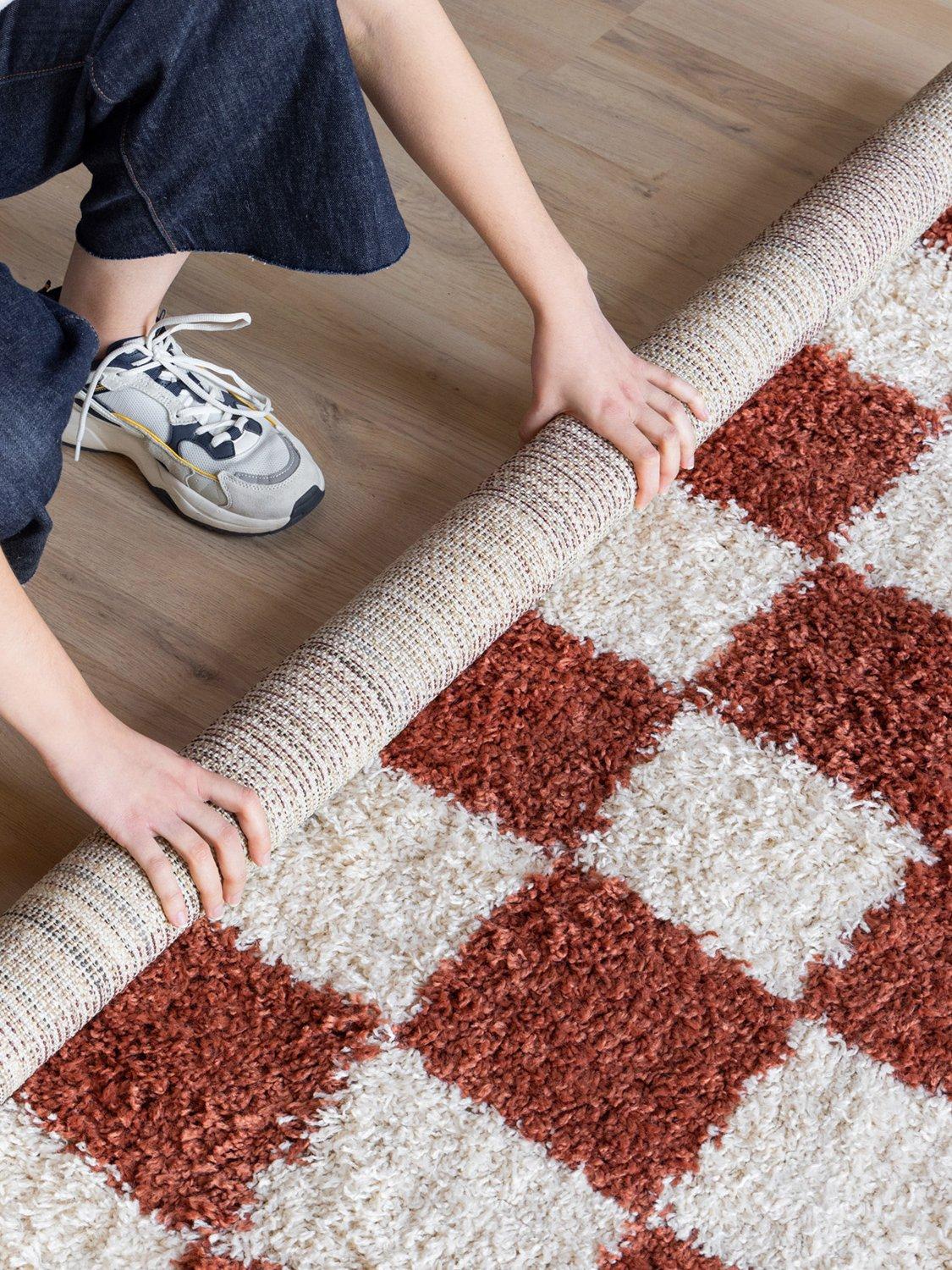
- A woven back that reveals the structure of the weave, not the perfectly uniform reverse of a machine-made rug
These small differences are exactly what give handloom rugs their unique woven expression.
Yes, depending on the construction:
- Flatweave handloom rugs are ideal for busy areas such as hallways and kitchens, low-profile, easy to clean, and very durable.
- Pile weaving constructions work well in moderate-traffic areas such as living rooms and bedrooms, where their soft woven texture and textural depth can be appreciated.
Caring for your handloom rug
Using an anti-slip underlay beneath any handloom rug will protect both the rug and the floor. For more advice, see our rug care guide.
Shop handloom rugs at Rugvista
Our Handloom rugs are made by skilled artisan weavers using traditional weaving techniques, from loom setup and warp preparation to shuttle weaving, shearing, and hand-finished details, resulting in a rug with natural colour variation, soft woven texture, and a unique woven expression. For individual character and genuine artisan craft, explore our full collection of handmade rugs at Rugvista.